
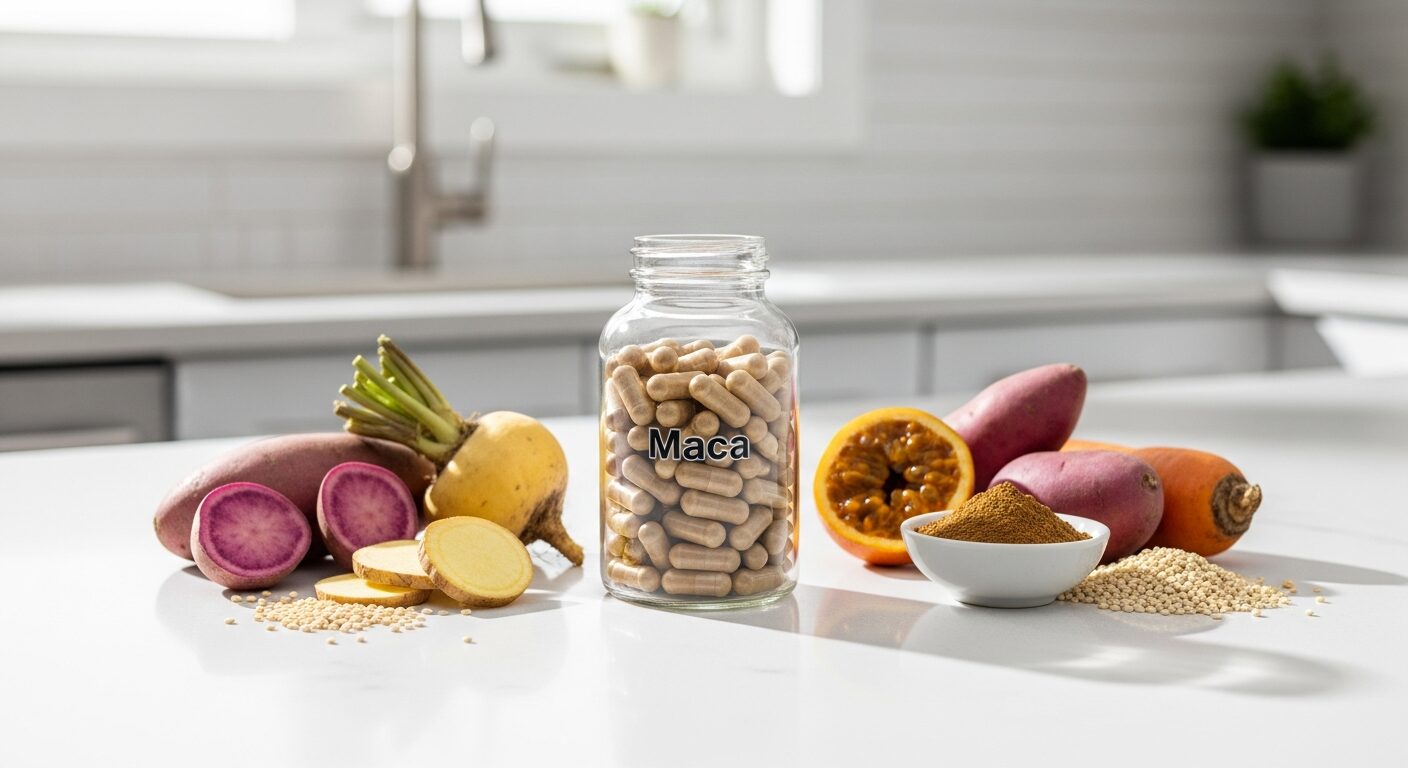
Deep in the Peruvian Andes, at altitudes where most plants cannot survive, grows a remarkable root that has sustained indigenous communities for over 2,000 years. Maca root, known scientifically as Lepidium meyenii, has captured the attention of modern science and health enthusiasts worldwide for its potential to enhance energy, balance hormones, and improve overall vitality.
This hardy cruciferous vegetable, related to broccoli and radishes, thrives in some of the harshest conditions on Earth—surviving freezing temperatures, intense UV radiation, and oxygen-depleted air at elevations exceeding 14,000 feet. What makes maca so special isn’t just its incredible resilience, but the unique compounds it develops to survive these extreme conditions, compounds that may offer significant health benefits when consumed as a supplement.
Despite its growing popularity in the wellness community, maca remains one of the most misunderstood supplements on the market. From exaggerated claims about its effects to confusion about proper dosing, many people aren’t getting the full story about this powerful adaptogenic root. This comprehensive guide will separate fact from fiction, exploring what science really says about maca’s benefits, optimal usage, and potential risks.
Contents
What is Maca
Maca (Lepidium meyenii) is a biennial herbaceous plant native to the high plateaus of the Peruvian Andes. The plant produces a small, turnip-shaped root that serves as the primary source of nutrition and bioactive compounds. For centuries, indigenous Peruvian communities have cultivated and consumed maca as both a food source and traditional medicine, often calling it “Peruvian ginseng” for its energizing properties.
The maca plant belongs to the Brassicaceae family, making it a close relative of common vegetables like cabbage, kale, and mustard. However, unlike its leafy cousins, maca stores most of its valuable nutrients in its underground storage root, which can range in color from cream and yellow to red, purple, and black. Each color variety contains slightly different concentrations of bioactive compounds, leading to variations in their therapeutic effects.
What sets maca apart from other root vegetables is its unique nutritional profile and concentration of specialized compounds. The root contains significant amounts of protein (10-14%), carbohydrates (60-75%), fiber, and essential fatty acids. More importantly, maca contains unique alkaloids called macamides and macaenes, along with glucosinolates—sulfur-containing compounds that contribute to its distinctive taste and potential health benefits.
Modern maca supplements are typically made from dried and powdered maca root, though concentrated extracts are also available. The traditional preparation involves harvesting the roots, drying them in the sun, and then grinding them into a flour-like powder that can be stored for years without losing potency. This time-tested preservation method ensures that the bioactive compounds remain stable and effective.
Key Benefits of Maca
Scientific research has identified several evidence-based benefits of maca supplementation, though it’s important to note that many studies are preliminary and more research is needed to fully understand its mechanisms of action.
Enhanced Energy and Stamina: One of maca’s most well-documented effects is its ability to increase energy levels and reduce fatigue. A randomized, double-blind study published in 2009 found that participants taking maca extract for 14 days experienced significant improvements in endurance performance and subjective feelings of energy compared to placebo. The energy-boosting effects appear to be related to maca’s ability to support mitochondrial function and optimize cellular energy production.
Hormonal Balance and Sexual Health: Maca has gained considerable attention for its potential effects on sexual function and hormonal balance in both men and women. Research suggests that maca may help improve libido, sexual satisfaction, and reproductive health without directly affecting hormone levels like testosterone or estrogen. Instead, it appears to work by supporting the hypothalamic-pituitary axis, helping the body naturally regulate hormone production.
Mood and Cognitive Function: Some studies indicate that regular maca consumption may help reduce anxiety, improve mood, and enhance cognitive performance. These effects are likely related to maca’s adaptogenic properties—its ability to help the body better manage stress and maintain homeostasis during challenging conditions.
Bone Health Support: Preliminary research suggests that certain varieties of maca, particularly red maca, may help support bone density and strength. This benefit appears to be especially relevant for postmenopausal women, who are at higher risk for bone loss due to declining estrogen levels.
Antioxidant Protection: Maca contains various phenolic compounds and other antioxidants that help protect cells from oxidative stress and free radical damage. These protective effects may contribute to maca’s anti-aging properties and its ability to support overall health and longevity.
What Most People Get Wrong About Maca
Despite its growing popularity, several persistent myths and misconceptions surround maca supplementation. Understanding these common errors can help you make more informed decisions about whether and how to use this supplement.
Myth 1: Maca is a Natural Steroid or Hormone Booster
Many marketing claims suggest that maca directly increases testosterone, growth hormone, or other anabolic hormones. However, scientific evidence doesn’t support these claims. Research published in 2002 specifically examined maca’s effects on hormone levels and found no significant changes in testosterone, luteinizing hormone, follicle-stimulating hormone, or other key hormones despite improvements in sexual function. Maca appears to work through other mechanisms, possibly by improving the body’s sensitivity to existing hormones or supporting overall endocrine function.
Myth 2: All Maca Colors Have the Same Effects
Another common misconception is that the color of maca root doesn’t matter—that yellow, red, and black maca all provide identical benefits. Scientific research reveals significant differences between varieties. Black maca appears to be most effective for male fertility and memory enhancement, red maca shows superior benefits for prostate health and bone density, while yellow maca provides more general energy and mood benefits. Choosing the right color variety based on your specific health goals can significantly impact the effectiveness of supplementation.
Myth 3: More is Always Better
Many people assume that taking larger doses of maca will produce faster or more dramatic results. However, research suggests that maca follows a biphasic response curve—meaning that moderate doses often produce better results than very high doses. Taking excessive amounts of maca can actually lead to diminished benefits and increased risk of side effects like digestive upset or sleep disturbances. The optimal dose appears to be in the range of 1.5-3 grams daily for most people.
Myth 4: Maca Works Immediately Like a Stimulant
Unlike caffeine or other stimulants, maca doesn’t provide an immediate energy rush. Instead, it works as an adaptogen, gradually helping the body optimize its natural energy production and stress response systems. This means that the full benefits of maca supplementation typically take several weeks to manifest, and the effects are more sustainable and balanced than those produced by stimulants.
What Happens to Your Body After 30 Days of Taking Maca
Understanding the timeline of maca’s effects can help set realistic expectations and ensure you give the supplement adequate time to work. Based on clinical research and user reports, here’s what typically occurs during the first month of consistent maca supplementation.
Week 1: Initial Adaptation
During the first week, your body begins adapting to maca’s bioactive compounds. Many people notice subtle improvements in energy levels, particularly a reduction in afternoon fatigue or energy crashes. Some individuals may experience mild digestive changes as their system adjusts to the increased fiber and unique compounds in maca. Sleep quality may begin to improve slightly, with some users reporting more restful sleep and easier morning wake-ups.
Week 2: Noticeable Energy Changes
By the second week, the energy-enhancing effects typically become more pronounced. Users often report sustained energy throughout the day without the jittery feelings associated with stimulants. Mental clarity and focus may begin to improve, and some people notice reduced sensitivity to stress. For those using maca for sexual health benefits, initial improvements in libido may start to emerge during this period.
Week 3-4: Full Adaptogenic Benefits
The third and fourth weeks are when maca’s adaptogenic properties typically reach full effectiveness. Research has shown that consistent maca use for 6-8 weeks produces optimal results for mood, energy, and sexual function. During this period, users often experience more stable mood, improved stress resilience, and enhanced physical endurance. Sleep patterns typically stabilize, and many people report waking up feeling more refreshed and energized.
For women experiencing menopausal symptoms, this is often when improvements in hot flashes, mood swings, and energy become most apparent. Men may notice continued improvements in sexual function and overall vitality. The key during this phase is consistency—taking maca daily allows the body’s adaptive systems to fully optimize in response to the supplement.
Who Should NOT Take Maca
While maca is generally considered safe for most healthy adults, certain individuals should exercise caution or avoid maca supplementation entirely due to potential risks or contraindications.
Thyroid Conditions: Individuals with thyroid disorders should be particularly cautious with maca supplementation. Maca contains glucosinolates, which can interfere with iodine uptake and potentially worsen hypothyroid conditions. Those with hyperthyroidism may also experience adverse effects due to maca’s stimulating properties. Anyone with thyroid disease should consult their healthcare provider before using maca.
Hormone-Sensitive Conditions: While maca doesn’t directly affect hormone levels, its adaptogenic properties may influence hormone-sensitive conditions. Women with breast cancer, uterine cancer, ovarian cancer, or endometriosis should consult with their oncologist or gynecologist before using maca. Similarly, men with prostate cancer should discuss maca use with their healthcare team.
Pregnancy and Breastfeeding: There is insufficient research on maca’s safety during pregnancy and breastfeeding. Given that maca can influence the endocrine system and has not been thoroughly studied in these populations, pregnant and nursing women should avoid maca supplementation unless specifically recommended by their healthcare provider.
Children and Adolescents: Maca supplementation is not recommended for children or teenagers unless under medical supervision. The developing endocrine system may be particularly sensitive to adaptogenic herbs, and there is no research establishing safe dosing guidelines for pediatric populations.
Medication Interactions: While specific drug interactions with maca are not well-documented, individuals taking medications for diabetes, blood pressure, or hormone replacement therapy should consult their healthcare provider before adding maca to their regimen. Maca’s effects on energy metabolism and stress response could potentially influence the effectiveness of certain medications.
Autoimmune Conditions: People with autoimmune disorders should use caution with adaptogenic supplements like maca, as these substances can potentially stimulate immune function in unpredictable ways. Those with conditions like rheumatoid arthritis, lupus, or multiple sclerosis should consult with their rheumatologist or immunologist before using maca.
Dosage and Best Forms
The optimal maca dosage varies depending on individual factors, health goals, and the form of maca being used. Clinical research has typically used doses ranging from 1.5 to 3 grams daily, with most studies showing benefits at 1.5-2 grams per day.
Powder Form: Raw maca powder is the most traditional and widely available form. The typical dose ranges from 1-3 teaspoons (approximately 3-9 grams) daily. However, many people find this amount difficult to tolerate due to maca’s strong, earthy taste. Starting with 1/2 teaspoon daily and gradually increasing is recommended to assess tolerance.
Capsules: Maca capsules offer convenience and standardized dosing. Most commercial capsules contain 500-750mg of maca powder, with recommended doses of 2-4 capsules daily. This form is ideal for those who want to avoid maca’s distinctive taste while ensuring consistent dosing.
Extracts: Concentrated maca extracts are available in both liquid and powder forms. These products are typically standardized to specific concentrations of macamides or other active compounds. Extract dosages are usually much lower than whole root powder, often ranging from 200-600mg daily. Follow manufacturer guidelines carefully, as potency can vary significantly between brands.
Gelatinized Maca: This form has been pre-cooked to remove starch content, making it easier to digest and potentially more bioavailable. Gelatinized maca is often recommended for individuals with sensitive digestion. The dosing is similar to regular powder, but some people find they need slightly less to achieve the same effects.
Timing and Cycling: Maca is best taken in the morning or early afternoon to avoid potential sleep disturbances. Some practitioners recommend cycling maca supplementation—taking it for 3-4 weeks followed by a 1-week break—to maintain sensitivity and effectiveness. However, research doesn’t strongly support the necessity of cycling for most users.
🌿 Looking for Maca Supplements?
Browse top-rated Maca supplements, independently tested and recommended by our editorial team.
Affiliate disclosure: We may earn a small commission at no extra cost to you.
Frequently Asked Questions
Can I take maca with coffee or other stimulants?
While maca isn’t a stimulant in the traditional sense, combining it with coffee or other stimulants may produce excessive energy or jittery feelings in some individuals. Start with smaller doses of both substances and monitor your response. Many people find that maca actually allows them to reduce their caffeine intake while maintaining energy levels.
How long does it take to see results from maca?
Most people begin noticing subtle energy improvements within the first week, but the full adaptogenic benefits typically take 2-8 weeks of consistent use to manifest. Sexual health benefits may take 6-12 weeks to become apparent. Patience and consistency are key to experiencing maca’s full potential.
Is there a difference between raw and gelatinized maca?
Raw maca retains all of its natural compounds but may be harder to digest for some people. Gelatinized maca has been pre-cooked to remove starch, making it more digestible and potentially more concentrated in certain compounds. Both forms are effective, but gelatinized maca may be better tolerated by those with sensitive digestion.
Can maca help with menopause symptoms?
Some research suggests that maca may help reduce certain menopausal symptoms like hot flashes, mood swings, and sleep disturbances. However, the evidence is limited, and results vary significantly between individuals. Women experiencing menopause should work with their healthcare provider to develop a comprehensive management strategy.
Are there any foods I should avoid while taking maca?
There are no specific foods that must be avoided while taking maca. However, individuals with thyroid conditions should be mindful of consuming large amounts of other goitrogenic foods (like raw broccoli, cabbage, or soy) in combination with maca, as this could potentially compound effects on thyroid function.
Medical Disclaimer
This article is for educational purposes only and is not intended to replace professional medical advice, diagnosis, or treatment. The information provided about maca root and its potential benefits is based on available research and traditional use, but individual results may vary. Always consult with a qualified healthcare provider before starting any new supplement regimen, especially if you have pre-existing health conditions, are pregnant or breastfeeding, or are taking medications. The FDA has not evaluated statements about maca’s health benefits, and maca is not intended to diagnose, treat, cure, or prevent any disease. If you experience any adverse reactions while taking maca, discontinue use immediately and consult your healthcare provider.