
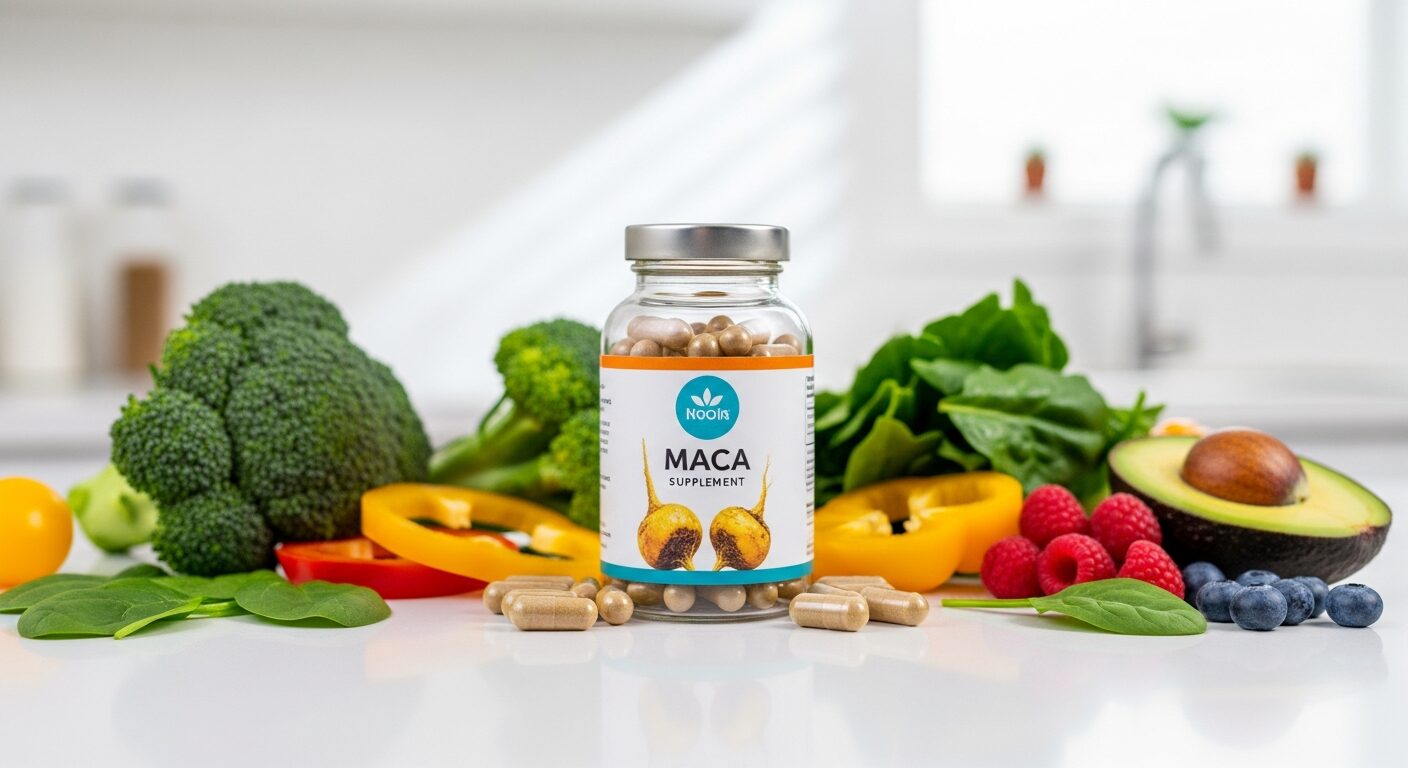
For centuries, women in the high Andes of Peru have turned to a small, turnip-like root called maca to support their health and vitality. Today, this ancient superfood is gaining recognition worldwide for its remarkable ability to support women’s hormonal health naturally. Unlike synthetic hormone treatments that can come with unwanted side effects, maca works gently with your body’s own systems to promote balance and well-being.
What makes maca particularly fascinating is its unique ability to act as an adaptogen – a substance that helps your body adapt to stress and maintain hormonal equilibrium. Research has shown that maca doesn’t contain hormones itself, but rather supports your body’s own hormone production through its rich profile of nutrients and bioactive compounds. Whether you’re dealing with menstrual irregularities, menopausal symptoms, or simply want to optimize your hormonal health, understanding how maca works could be a game-changer for your wellness journey.
In this comprehensive guide, we’ll explore the science behind maca’s hormonal benefits, debunk common misconceptions, and provide you with evidence-based information to help you make informed decisions about incorporating this powerful root into your health routine.
Contents
What is Maca
Maca (Lepidium meyenii) is a cruciferous vegetable native to the high plateaus of the Peruvian Andes, where it has been cultivated for over 2,000 years. Growing at altitudes of 11,000 to 14,000 feet above sea level, this hardy plant has adapted to survive in some of the world’s harshest growing conditions, developing a unique nutritional profile that sets it apart from other superfoods.
The maca root comes in several varieties, distinguished primarily by their colors: yellow, red, and black. Each variety offers slightly different benefits, with red maca being particularly studied for women’s health issues. The root is typically harvested, dried, and ground into powder form, which is how most people consume it today.
What makes maca truly special is its classification as an adaptogen. Adaptogens are natural substances that help your body maintain homeostasis – a state of balance – particularly during times of stress. Unlike stimulants that provide temporary energy followed by a crash, adaptogens work to normalize body functions and support your natural resilience over time.
Nutritionally, maca is impressive, containing significant amounts of protein, fiber, calcium, iron, potassium, and various B vitamins. However, its most intriguing components are the bioactive compounds called macamides and macaenes, which are believed to be responsible for many of its health benefits, particularly those related to hormonal balance and reproductive health.
Key Benefits of Maca
Scientific research has identified several key areas where maca demonstrates significant benefits for women’s health, particularly in relation to hormonal balance and reproductive wellness.
Menstrual Cycle Regulation: One of maca’s most well-documented benefits is its ability to help regulate menstrual cycles. Women experiencing irregular periods, painful menstruation, or PMS symptoms often report improvements after incorporating maca into their routine. The root appears to work by supporting the hypothalamic-pituitary-adrenal axis, which plays a crucial role in hormone regulation.
Menopausal Symptom Relief: Maca reduces menopausal symptoms in postmenopausal women, 2006 found that maca supplementation significantly reduced psychological symptoms, including anxiety and depression, and sexual dysfunction in postmenopausal women. The study showed that maca’s benefits weren’t due to estrogenic activity, but rather through other mechanisms that support overall hormonal balance.
Energy and Mood Enhancement: Many women report increased energy levels and improved mood after taking maca regularly. This isn’t the jittery energy you might get from caffeine, but rather a sustained, balanced energy that supports daily activities without causing crashes. The mood benefits appear to be particularly pronounced in women dealing with hormonal fluctuations.
Libido and Sexual Function: Research has shown that maca can help improve sexual desire and function in women. Unlike pharmaceutical interventions, maca’s effects on libido appear to develop gradually and are often accompanied by improvements in overall well-being and energy levels.
Bone Health Support: Some studies suggest that maca may help support bone density, which is particularly important for women as they age and estrogen levels decline. The root’s rich mineral content, including calcium and phosphorus, may contribute to this benefit.
What Most People Get Wrong About Maca
Despite its growing popularity, there are several widespread misconceptions about maca that can lead to unrealistic expectations or improper use. Understanding these myths is crucial for anyone considering maca supplementation.
Myth 1: Maca Contains Hormones
One of the most persistent myths is that maca works because it contains plant hormones or phytoestrogens. This is simply not true. Unlike soy or red clover, maca doesn’t contain estrogen-like compounds. Instead, research shows that maca works by supporting your body’s own hormone production and regulation systems. It acts on the hypothalamus and pituitary glands, which are the “master controllers” of your endocrine system, helping them function more efficiently rather than providing external hormones.
Myth 2: All Maca Varieties Are the Same
Many people assume that yellow, red, and black maca are interchangeable, but research reveals important differences. Red maca has unique effects on prostate size and bone microarchitecture, 2005 demonstrated that different maca varieties have distinct biological activities. Red maca, in particular, has shown superior benefits for women’s reproductive health, while black maca is more associated with memory and learning enhancement. Choosing the right variety for your specific needs can significantly impact your results.
Myth 3: More Is Always Better
A common mistake is assuming that higher doses of maca will produce faster or better results. However, maca works best within an optimal dosage range, typically 1.5 to 3 grams per day. Taking excessive amounts can actually be counterproductive and may cause digestive upset or hormonal imbalances. The key is consistency and patience, not megadoses.
Myth 4: Maca Works Immediately
Perhaps the most disappointing misconception is expecting immediate results from maca. Unlike pharmaceutical drugs, maca is a food-based adaptogen that works gradually to restore balance. Most research shows that significant benefits begin to appear after 6-8 weeks of consistent use. This gradual action is actually a strength, as it indicates that maca is supporting your body’s natural processes rather than forcing dramatic changes that could cause side effects.
What Happens to Your Body After 30 Days of Taking Maca
Understanding the timeline of maca’s effects can help set realistic expectations and encourage consistency during the initial weeks when benefits may not yet be obvious.
Week 1: Subtle Energy Shifts
During the first week, most women notice subtle changes in energy levels. Unlike the immediate jolt from caffeine, maca’s energy enhancement feels more natural and sustained. Some women report sleeping slightly better, while others notice they’re less affected by their usual afternoon energy dips. Digestively, some people may experience mild changes as their body adjusts to this new food, but these typically resolve quickly.
Week 2: Mood and Mental Clarity
By the second week, many women begin to notice improvements in mood stability and mental clarity. The adaptogenic properties of maca start to become more apparent, with users reporting feeling more resilient to daily stressors. Some women notice that their typical PMS mood swings are less severe, even if other symptoms haven’t yet improved. Energy levels often become more consistent throughout the day.
Week 3-4: Hormonal Balance Emerges
Maca improves sexual desire in adult healthy men and women, 2008 showed that significant improvements in sexual function typically emerge around this timeframe. By weeks three and four, women often report the most noticeable changes in hormonal symptoms. Menstrual cycles may begin to regulate, menopausal symptoms like hot flashes might decrease in frequency or intensity, and overall reproductive health often shows signs of improvement. Energy levels typically stabilize at a higher baseline, and mood benefits become more consistent.
It’s important to note that individual responses vary significantly. Factors such as age, overall health status, diet, stress levels, and the specific maca variety used can all influence the timeline and magnitude of benefits. Some women may notice changes sooner, while others might need 6-8 weeks to experience the full spectrum of maca’s benefits.
Who Should NOT Take Maca
While maca is generally considered safe for most healthy adults, there are specific situations where caution is warranted or where maca should be avoided entirely.
Pregnancy and Breastfeeding: Pregnant and breastfeeding women should avoid maca supplementation. While traditional use in Peru includes consumption during pregnancy, there isn’t sufficient modern research to confirm safety during these critical periods. The hormonal effects of maca, while generally balancing, could potentially interfere with the complex hormonal changes necessary during pregnancy and lactation.
Hormone-Sensitive Conditions: Women with hormone-sensitive conditions such as breast cancer, ovarian cancer, endometriosis, or uterine fibroids should consult with their healthcare provider before using maca. While maca doesn’t contain hormones itself, its effects on the endocrine system could potentially influence these conditions.
Thyroid Disorders: Maca belongs to the brassica family (like cabbage and broccoli) and contains compounds called goitrogens that can interfere with thyroid function in susceptible individuals. Women with hypothyroidism or other thyroid disorders should use maca cautiously and under medical supervision.
Medication Interactions: While specific drug interactions haven’t been extensively studied, maca could potentially interact with hormone replacement therapy, birth control pills, or other medications that affect hormone levels. Always consult with a healthcare provider if you’re taking prescription medications.
High Blood Pressure: Some individuals with hypertension report that maca affects their blood pressure. If you have cardiovascular conditions, monitor your blood pressure closely when starting maca and discontinue use if you notice any adverse effects.
When to Consult a Doctor: Before starting maca, consult with a healthcare provider if you have any chronic health conditions, are taking prescription medications, or are experiencing severe hormonal symptoms that haven’t been properly diagnosed. Professional medical evaluation is essential to rule out serious underlying conditions that might require specific treatment.
Dosage and Best Forms
The effectiveness of maca supplementation depends significantly on choosing the right form and dosage for your individual needs and goals.
Optimal Dosage: Research suggests that the most effective dosage range for hormonal benefits is 1.5 to 3 grams per day, typically divided into two doses. Starting with a lower dose (1.5 grams) and gradually increasing allows your body to adjust and helps identify your optimal amount. Some women find that 2 grams daily provides optimal benefits, while others may need the full 3 grams.
Powder vs. Capsules: Maca powder offers the most versatility and is often more cost-effective. It can be mixed into smoothies, yogurt, or other foods, making it easy to incorporate into your daily routine. Capsules provide convenience and precise dosing but may be more expensive per serving. Both forms can be equally effective when sourced from reputable manufacturers.
Raw vs. Gelatinized: Raw maca powder retains all of its natural compounds but can be harder to digest for some people. Gelatinized maca has been heated and pressurized to remove starches, making it easier to digest and potentially more concentrated. If you experience digestive issues with raw maca, gelatinized forms may be a better option.
Timing: Most experts recommend taking maca with food to minimize any potential digestive upset. Many women find that taking maca with breakfast provides sustained energy throughout the day, though some prefer to split their dose between morning and early afternoon to maintain consistent levels.
Quality Considerations: Look for organic, Peruvian-grown maca from reputable suppliers. Third-party testing for purity and potency is important, as is proper storage to maintain the root’s beneficial compounds. Avoid products with unnecessary additives or fillers.
🌿 Looking for Maca Supplements?
Browse top-rated Maca supplements, independently tested and recommended by our editorial team.
Affiliate disclosure: We may earn a small commission at no extra cost to you.
Frequently Asked Questions
Can I take maca while on birth control?
While there are no known direct interactions between maca and hormonal birth control, it’s important to consult with your healthcare provider before combining them. Maca’s effects on hormone regulation could theoretically influence how your body responds to birth control hormones, though this hasn’t been extensively studied. Some women report changes in their menstrual cycle when using maca alongside birth control, so monitoring and professional guidance are recommended.
How long should I take maca to see results?
Most women begin to notice subtle changes within 2-4 weeks, with more significant benefits typically emerging after 6-8 weeks of consistent daily use. Hormonal balance improvements often continue to develop over 3-6 months. The key is consistency rather than expecting immediate results. If you haven’t noticed any benefits after 3 months of regular use at an appropriate dosage, maca may not be the right supplement for you.
Can maca help with weight management?
While maca isn’t specifically a weight loss supplement, many women report that hormonal balance improvements help with weight management, particularly around the midsection. Maca’s effects on energy levels and mood can also support more consistent exercise routines and better dietary choices. However, sustainable weight management requires a comprehensive approach including proper nutrition and regular physical activity.
Is it safe to take maca long-term?
Traditional use in Peru suggests that long-term maca consumption is generally safe for healthy individuals. However, some practitioners recommend taking occasional breaks (such as one week off every three months) to prevent your body from becoming too accustomed to the supplement. Long-term safety studies in modern populations are limited, so it’s wise to have regular check-ups with your healthcare provider if you plan to use maca for extended periods.
Can maca interact with other supplements?
Maca is generally compatible with most other supplements, but there are some considerations. It may enhance the effects of other adaptogens, so start with lower doses if combining multiple adaptogenic herbs. Be cautious when combining with supplements that affect hormone levels, and always space out supplement intake throughout the day to optimize absorption and minimize any potential interactions.
Medical Disclaimer
The information provided in this article is for educational purposes only and is not intended to diagnose, treat, cure, or prevent any disease. The statements made about maca have not been evaluated by the Food and Drug Administration. This content should not be considered a substitute for professional medical advice, diagnosis, or treatment.
Always consult with a qualified healthcare provider before starting any new supplement regimen, especially if you are pregnant, nursing, have a medical condition, or are taking prescription medications. Individual results may vary, and what works for one person may not work for another.
If you experience any adverse reactions while taking maca, discontinue use immediately and consult with your healthcare provider. This is particularly important if you have hormone-sensitive conditions, thyroid disorders, or cardiovascular issues.