
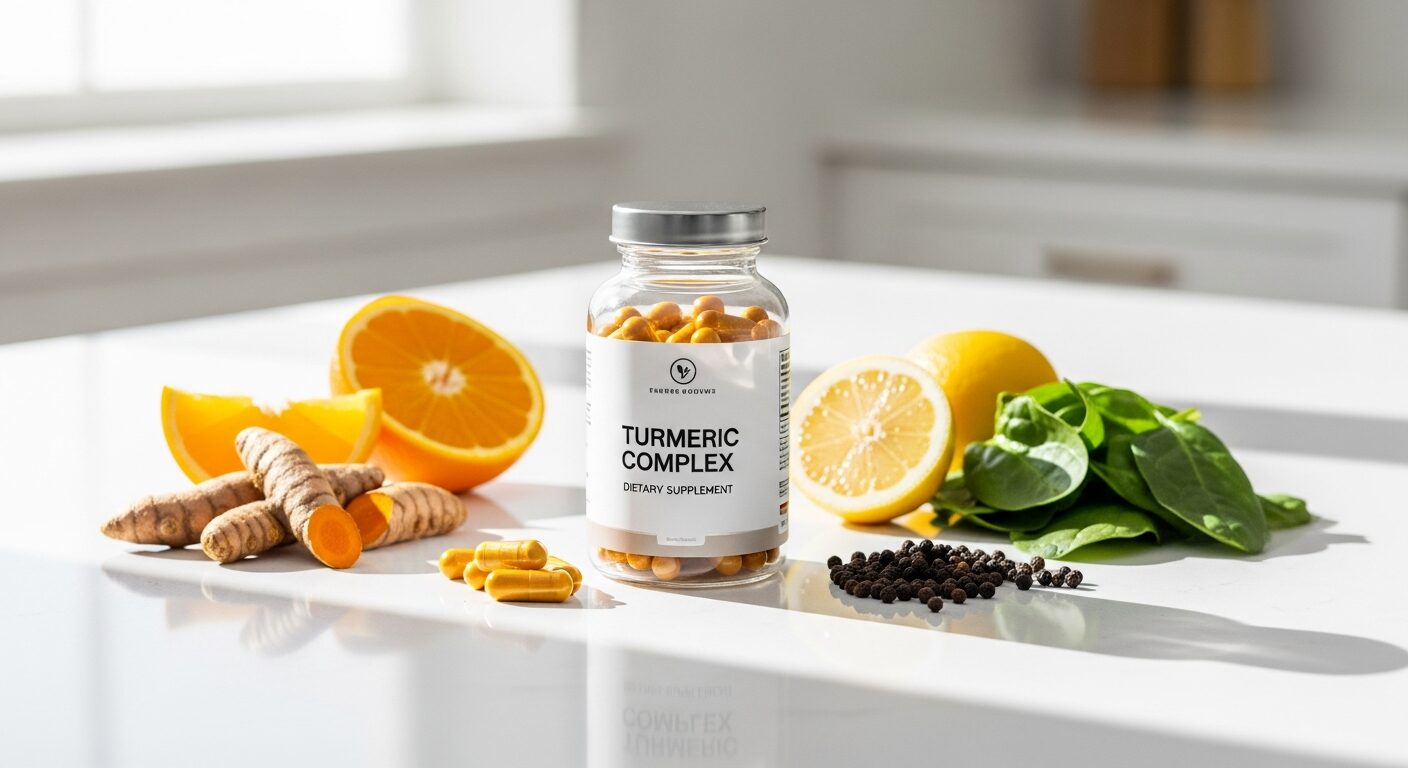
Inflammation is at the root of countless health conditions, from arthritis and heart disease to diabetes and depression. While modern medicine offers powerful anti-inflammatory drugs, these often come with concerning side effects when used long-term. This has led millions of people to seek natural alternatives, with turmeric emerging as one of the most promising and well-researched options available.
For over 4,000 years, turmeric has been revered in traditional medicine systems across Asia, but only recently has Western science begun to understand why this golden spice is so remarkably effective. The research is compelling: turmeric contains compounds that can rival prescription medications in their anti-inflammatory power, yet they work through entirely different mechanisms that support rather than burden your body’s natural healing processes.
However, not all turmeric supplements are created equal, and there are several critical factors that determine whether you’ll experience life-changing benefits or waste your money on ineffective products. This evidence-based guide will cut through the marketing hype to give you the scientific truth about turmeric’s anti-inflammatory properties, optimal dosing strategies, and what you can realistically expect from supplementation.
🌿 Looking for Turmeric supplements? Shop Amazon →
Contents
- 1 What is Turmeric
- 2 Key Benefits of Turmeric
- 3 What Most People Get Wrong About Turmeric
- 4 What Happens to Your Body After 30 Days of Taking Turmeric
- 5 Who Should NOT Take Turmeric
- 6 Dosage and Best Forms
- 7 Frequently Asked Questions
- 7.1 How long does it take to see results from turmeric supplementation?
- 7.2 Can I take turmeric with other supplements?
- 7.3 Is it better to take turmeric on an empty stomach or with food?
- 7.4 What’s the difference between turmeric and curcumin supplements?
- 7.5 Are there any side effects I should watch for?
- 8 Medical Disclaimer
What is Turmeric
Turmeric (Curcuma longa) is a flowering plant in the ginger family, native to Southeast Asia. The root of this plant is dried and ground into the familiar golden-yellow powder that has been used both as a culinary spice and medicinal herb for millennia. While turmeric contains over 300 chemical compounds, the most studied and therapeutically active components are a group called curcuminoids.
Curcumin is the primary curcuminoid, making up about 2-8% of most turmeric preparations and giving the spice its characteristic bright color. This compound is responsible for most of turmeric’s anti-inflammatory, antioxidant, and therapeutic effects that researchers have documented. However, curcumin has one significant limitation: it’s poorly absorbed by the human digestive system when taken alone.
This bioavailability challenge has led to the development of various enhanced formulations, including curcumin combined with piperine (black pepper extract), liposomal curcumin, and curcumin phytosomes. These advanced forms can increase absorption by 2000% or more compared to standard curcumin powder, making them far more effective for therapeutic purposes.
Key Benefits of Turmeric
The anti-inflammatory effects of turmeric work through multiple pathways in the body, making it remarkably versatile for addressing various health conditions. A comprehensive review published in Advances in Experimental Medicine and Biology, 2007 identified that curcumin can inhibit the activity of cyclooxygenase-2 (COX-2), lipoxygenase, and nuclear factor kappa B (NF-κB) – key inflammatory mediators involved in chronic disease processes.
Joint health represents one of turmeric’s most well-established benefits. Multiple studies have shown that curcumin supplementation can reduce joint pain, stiffness, and swelling in people with osteoarthritis and rheumatoid arthritis. The compound appears to work by blocking inflammatory cytokines and enzymes that break down cartilage, while also promoting the production of natural joint lubricants.
Cardiovascular protection is another significant benefit, with research indicating that turmeric can help reduce several risk factors for heart disease. The anti-inflammatory properties help protect blood vessels from damage, while curcumin has been shown to improve endothelial function, reduce LDL cholesterol oxidation, and decrease markers of systemic inflammation like C-reactive protein.
Brain health benefits are increasingly recognized, with studies suggesting that curcumin may help protect against neurodegenerative diseases and support cognitive function. The compound can cross the blood-brain barrier and has been shown to reduce brain inflammation, clear amyloid plaques associated with Alzheimer’s disease, and support the production of brain-derived neurotrophic factor (BDNF), which promotes new neural connections.
What Most People Get Wrong About Turmeric
Myth 1: All Turmeric Supplements Are the Same
One of the biggest misconceptions is that turmeric powder from the spice aisle offers the same benefits as standardized supplements. While cooking with turmeric provides some health benefits, the curcumin content in culinary turmeric is typically only 2-3%, and it’s poorly absorbed without enhancement technologies. Therapeutic doses used in research typically require 500-1000mg of curcumin daily – equivalent to consuming several tablespoons of turmeric powder, which is neither practical nor palatable.
Myth 2: More Curcumin Always Means Better Results
Many people assume that higher curcumin percentages automatically translate to better outcomes, but this ignores the critical importance of bioavailability. A supplement containing 95% curcumin that’s poorly absorbed may be far less effective than a lower-concentration formula that’s properly enhanced for absorption. Research shows that 180mg of highly bioavailable curcumin can be more effective than 1800mg of standard curcumin extract.
Myth 3: Turmeric Works Immediately Like Pain Medication
Unlike NSAIDs that can provide rapid pain relief, turmeric’s anti-inflammatory effects are cumulative and work by addressing underlying inflammatory processes rather than simply masking symptoms. A randomized controlled trial published in Clinical Interventions in Aging, 2014 found that while some participants experienced benefits within the first week, optimal results typically required 6-8 weeks of consistent supplementation as tissue levels of curcumin accumulated.
Myth 4: Natural Means Completely Safe for Everyone
The assumption that natural supplements are universally safe can be dangerous. Turmeric can interact with blood-thinning medications, may exacerbate gastroesophageal reflux disease (GERD), and can stimulate uterine contractions. High doses may also increase the risk of kidney stones in susceptible individuals due to turmeric’s oxalate content.
What Happens to Your Body After 30 Days of Taking Turmeric
Week 1: Cellular Changes Begin
During the first week of consistent turmeric supplementation, cellular changes begin occurring even before you notice obvious symptoms. Curcumin starts accumulating in tissues and begins modulating inflammatory pathways at the genetic level. Some individuals with acute inflammation may notice mild improvements in joint comfort or digestive issues, but most changes remain imperceptible as your body adjusts to the bioactive compounds.
Week 2: Anti-Inflammatory Cascades Activate
By the second week, curcumin has begun significantly influencing inflammatory mediators like NF-κB and reducing the production of pro-inflammatory cytokines. Many people start noticing subtle improvements in joint flexibility, reduced morning stiffness, and potentially better sleep quality as systemic inflammation decreases. Energy levels may also begin to stabilize as the compound’s effects on cellular metabolism become more pronounced.
Weeks 3-4: Full Therapeutic Benefits Emerge
The third and fourth weeks typically represent when the full spectrum of turmeric’s benefits becomes apparent. Research published in the Journal of Medicinal Food, 2016 demonstrated that participants taking bioavailable curcumin showed significant improvements in pain scores and physical function after 30 days of supplementation. Joint pain and stiffness often show marked improvement, and many people report enhanced mood and mental clarity as neuroinflammation subsides.
Cardiovascular markers also show improvement by this point, with studies indicating reductions in inflammatory markers like C-reactive protein and improvements in endothelial function. Some individuals may notice better exercise recovery and reduced muscle soreness as the anti-inflammatory effects extend to exercise-induced inflammation.
Who Should NOT Take Turmeric
While turmeric is generally safe for most people, several groups should exercise caution or avoid supplementation entirely. Individuals taking anticoagulant medications like warfarin, heparin, or even aspirin should consult their healthcare provider before using turmeric supplements, as curcumin can enhance the blood-thinning effects and increase bleeding risk.
People with gallstones or bile duct obstruction should avoid turmeric supplements, as curcumin can stimulate bile production and potentially worsen these conditions. Similarly, individuals with gastroesophageal reflux disease (GERD) may find that turmeric exacerbates their symptoms, particularly when taken on an empty stomach.
Pregnant and breastfeeding women should limit turmeric to culinary amounts, as therapeutic doses may stimulate uterine contractions and could potentially affect fetal development. There’s insufficient research on safety during pregnancy and lactation to recommend supplemental doses.
Individuals scheduled for surgery should discontinue turmeric supplements at least two weeks beforehand, as the blood-thinning effects could increase surgical bleeding risk. Those with diabetes should monitor blood sugar closely when starting turmeric, as it may enhance the effects of diabetes medications and potentially cause hypoglycemia.
People with kidney stones or a history of kidney disease should be cautious, as turmeric contains oxalates that could contribute to stone formation in susceptible individuals. Iron-deficient individuals should also be aware that curcumin can bind to iron and potentially worsen deficiency if taken with iron-rich meals.
Dosage and Best Forms
The optimal turmeric dosage varies significantly depending on the specific condition being addressed and the form of supplement used. For general anti-inflammatory support, research suggests 180-500mg of bioavailable curcumin daily is effective. For more specific therapeutic applications like joint pain management, doses may range from 500-1000mg daily, typically divided into two or three doses.
Standardized curcumin extracts containing 95% curcuminoids represent the most potent option, but they must be combined with absorption enhancers to be effective. Curcumin with piperine (BioPerine) is widely available and can increase absorption by up to 2000%. Liposomal curcumin encases the compound in fat molecules for better absorption, while curcumin phytosomes combine curcumin with phospholipids for enhanced bioavailability.
Whole turmeric root powder contains additional beneficial compounds beyond curcumin, including turmerones and other curcuminoids that may work synergistically. However, therapeutic doses typically require standardized extracts rather than whole root powder due to the relatively low curcumin content.
Timing can influence effectiveness, with most research suggesting divided doses throughout the day rather than a single large dose. Taking turmeric with meals containing healthy fats can enhance absorption, as curcumin is fat-soluble. Some people prefer taking it with black pepper or in golden milk preparations that include coconut oil or other fats.
🌿 Looking for Turmeric Supplements?
Browse top-rated Turmeric supplements, independently tested and recommended by our editorial team.
Affiliate disclosure: We may earn a small commission at no extra cost to you.
Frequently Asked Questions
How long does it take to see results from turmeric supplementation?
Most people begin noticing subtle improvements within 2-3 weeks of consistent supplementation, with full benefits typically emerging after 4-8 weeks. However, some individuals with acute inflammation may experience benefits sooner, while others with chronic conditions may need 8-12 weeks to see significant improvements. Consistency is key, as curcumin needs time to accumulate in tissues and modulate inflammatory pathways.
Can I take turmeric with other supplements?
Turmeric generally combines well with other anti-inflammatory supplements like omega-3 fatty acids, ginger, and boswellia. However, it should be separated from iron supplements by at least two hours, as curcumin can bind to iron and reduce absorption. Always consult with a healthcare provider when combining multiple supplements, especially if you’re taking prescription medications.
Is it better to take turmeric on an empty stomach or with food?
Turmeric is generally better absorbed when taken with food, particularly meals containing healthy fats like olive oil, avocado, or nuts. Taking it on an empty stomach may cause digestive upset in some individuals and typically results in lower absorption rates. The fat content helps improve the bioavailability of fat-soluble curcumin compounds.
What’s the difference between turmeric and curcumin supplements?
Turmeric supplements contain the whole root extract with all naturally occurring compounds, while curcumin supplements contain concentrated extracts of the primary active compound. Curcumin supplements typically provide higher potency and better standardization, while whole turmeric may offer broader spectrum benefits from additional compounds. For therapeutic purposes, standardized curcumin extracts are generally more effective.
Are there any side effects I should watch for?
Common side effects are generally mild and may include stomach upset, nausea, or diarrhea, particularly when starting supplementation or taking high doses. Some people may experience increased bleeding risk, especially if taking blood-thinning medications. Rare allergic reactions can occur, and individuals with gallbladder disease may experience worsening symptoms. Start with lower doses to assess tolerance and discontinue use if adverse effects occur.
Medical Disclaimer
The information provided in this article is for educational purposes only and is not intended to replace professional medical advice, diagnosis, or treatment. Always consult with a qualified healthcare provider before starting any new supplement regimen, especially if you have pre-existing medical conditions, are taking medications, or are pregnant or nursing. Individual results may vary, and what works for one person may not work for another. The statements in this article have not been evaluated by the Food and Drug Administration, and turmeric supplements are not intended to diagnose, treat, cure, or prevent any disease. If you experience any adverse reactions while taking turmeric supplements, discontinue use immediately and consult your healthcare provider.