
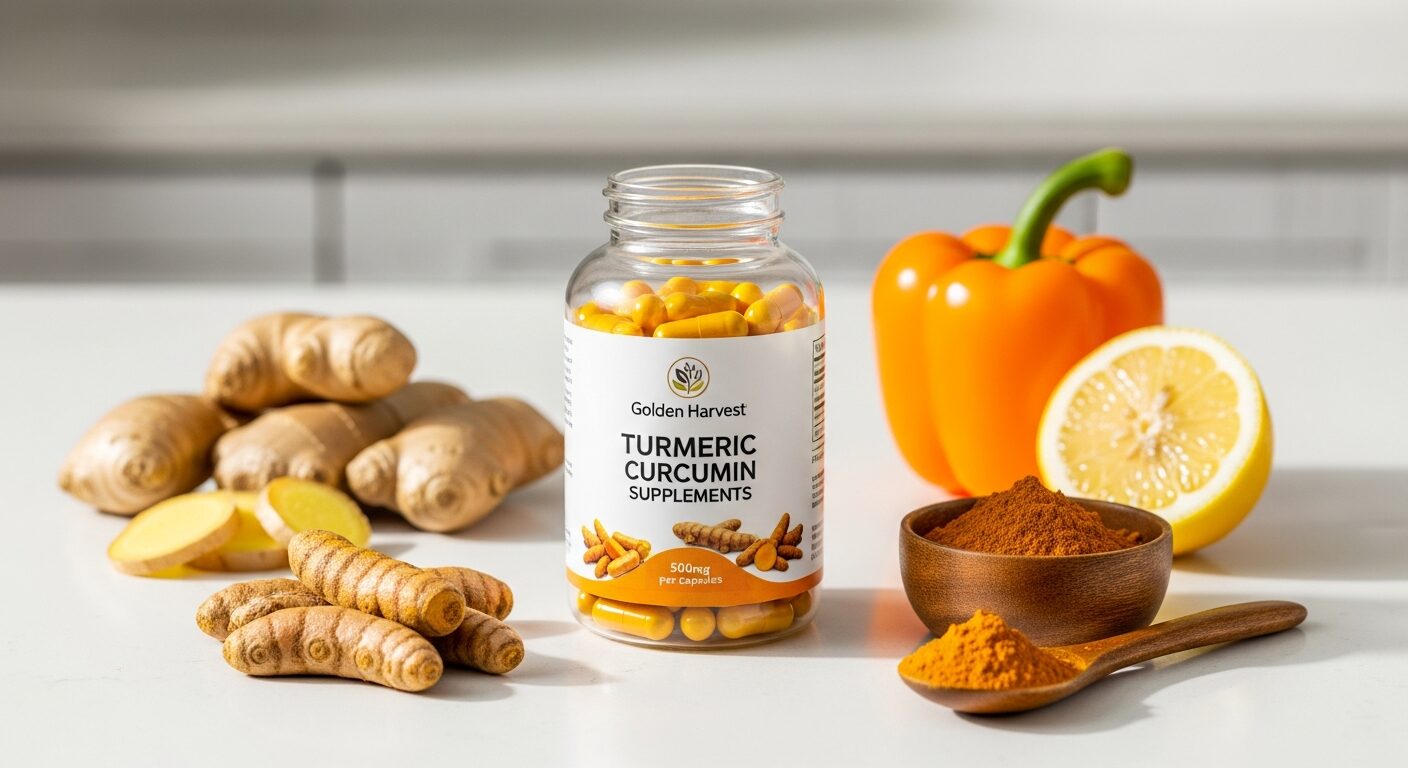
Turmeric, the golden spice that has colored curries and traditional medicines for thousands of years, has emerged as one of the most researched natural compounds in modern science. With over 14,000 published studies examining its health benefits, turmeric’s active compound curcumin has captured the attention of researchers, doctors, and health-conscious consumers worldwide.
Yet despite its popularity, most people remain confused about proper turmeric dosage. How much curcumin should you take daily? What form works best? Are there people who shouldn’t take it at all? The answers aren’t as straightforward as many supplement labels suggest, and getting the dosage wrong could mean missing out on benefits or experiencing unwanted side effects.
This comprehensive guide cuts through the marketing hype to deliver science-based recommendations on turmeric dosage, timing, and safety considerations. Whether you’re considering turmeric for joint health, inflammation, or general wellness, understanding proper dosing is crucial for maximizing benefits while minimizing risks.
🌿 Looking for Turmeric supplements? Shop Amazon →
Contents
What is Turmeric
Turmeric (Curcuma longa) is a flowering plant in the ginger family, native to Southeast Asia. The dried and ground root creates the vibrant yellow-orange powder commonly used as a spice, food coloring, and traditional medicine. While turmeric contains over 300 chemical compounds, its primary bioactive ingredient is curcumin, which typically comprises 2-8% of most turmeric powders.
Curcumin belongs to a group of compounds called curcuminoids, which are responsible for turmeric’s distinctive color and most of its therapeutic properties. The three main curcuminoids found in turmeric are curcumin (the most abundant), demethoxycurcumin, and bisdemethoxycurcumin. Together, these compounds work synergistically to provide turmeric’s wide range of health benefits.
It’s important to distinguish between turmeric powder and curcumin extracts. Whole turmeric contains curcumin along with other beneficial compounds, fiber, and essential oils. Curcumin extracts, on the other hand, are concentrated forms that may contain 95% curcuminoids or higher. Both forms have their place in health applications, but they require different dosing approaches.
Key Benefits of Turmeric
Scientific research has identified numerous health benefits of turmeric and curcumin supplementation. The most well-established benefits include powerful anti-inflammatory effects that may rival some pharmaceutical drugs without the associated side effects. Chronic inflammation underlies many modern diseases, making turmeric’s anti-inflammatory properties particularly valuable for long-term health.
Turmeric also demonstrates significant antioxidant activity, helping protect cells from damage caused by free radicals. This antioxidant action works through multiple mechanisms, including direct scavenging of harmful molecules and boosting the body’s own antioxidant enzyme systems. These combined effects may help slow aging processes and reduce disease risk.
Joint health represents another area where turmeric shows promise. Multiple studies suggest that curcumin supplementation may help reduce joint pain and stiffness, particularly in people with osteoarthritis. Some research indicates that curcumin’s effects on joint comfort may be comparable to certain non-steroidal anti-inflammatory drugs (NSAIDs).
Emerging research also points to potential benefits for brain health, heart health, digestive function, and immune system support. While more research is needed to fully understand these effects, the current evidence suggests turmeric’s benefits extend far beyond traditional uses.
What Most People Get Wrong About Turmeric
One of the biggest misconceptions about turmeric is that simply adding the spice to food provides therapeutic benefits. While culinary turmeric certainly has nutritional value, the curcumin content in cooking spices is typically too low to produce the effects seen in research studies. Most studies use curcumin doses equivalent to consuming several tablespoons of turmeric powder daily, which is impractical and may cause digestive upset.
Another common myth is that all turmeric supplements are equally effective. In reality, curcumin has notoriously poor bioavailability, meaning very little of what you consume actually reaches your bloodstream. Plain curcumin is rapidly metabolized by the liver and eliminated from the body, which is why many people don’t experience noticeable benefits from basic turmeric supplements. Modern formulations address this issue through various enhancement technologies, but not all products utilize these approaches.
Many people also believe that “natural” means “harmless” when it comes to turmeric supplementation. While turmeric is generally safe for most people, high-dose curcumin supplements can interact with medications, affect blood clotting, and cause side effects in sensitive individuals. The concentration matters significantly – therapeutic doses of curcumin extracts are much more potent than culinary amounts and should be treated with appropriate respect.
Finally, there’s widespread confusion about timing and consistency. Some people take turmeric sporadically, expecting immediate results, while others assume that more is always better. Research suggests that curcumin’s benefits develop over time with consistent use, and that there’s an optimal dosage range beyond which additional amounts don’t provide extra benefits and may increase the risk of side effects.
What Happens to Your Body After 30 Days of Taking Turmeric
During the first week of consistent turmeric supplementation, your body begins adapting to the new compound. Most people won’t notice dramatic changes initially, as curcumin’s effects are generally subtle and cumulative. However, some individuals with sensitive systems may experience mild digestive changes as their gut microbiome adjusts to the new supplement. Blood levels of curcumin and its metabolites begin to stabilize with regular dosing.
By the second week, early anti-inflammatory effects may become apparent. People taking turmeric for joint discomfort often report the first noticeable improvements around this time. A randomized controlled trial published in 2014 found that participants experienced significant improvements in joint function within two weeks of starting curcumin supplementation. Antioxidant markers in the blood also begin to improve as the body’s cellular defense systems respond to curcumin’s presence.
Weeks three and four typically bring the most noticeable benefits for most people. Anti-inflammatory effects reach their peak, and many users report improved joint comfort, better recovery from exercise, and enhanced overall well-being. Research published in the Journal of Medicinal Food demonstrated that inflammatory markers significantly decreased after four weeks of curcumin supplementation in healthy adults.
By the end of 30 days, consistent users often experience sustained improvements in their target health areas. However, it’s important to note that curcumin’s benefits are largely dependent on continued supplementation. Unlike some interventions that provide lasting changes, curcumin’s effects typically diminish when supplementation stops, as the compound is eliminated from the body relatively quickly.
Who Should NOT Take Turmeric
Despite its generally good safety profile, turmeric supplementation isn’t appropriate for everyone. People taking blood-thinning medications like warfarin, clopidogrel, or aspirin should exercise particular caution, as curcumin can enhance anticoagulant effects and potentially increase bleeding risk. This interaction is dose-dependent, with higher curcumin doses posing greater risks.
Individuals with gallstones or bile duct obstruction should avoid turmeric supplements, as curcumin can stimulate bile production and potentially worsen these conditions. Similarly, people with active gallbladder disease should consult their healthcare provider before beginning supplementation, as turmeric may exacerbate symptoms.
Pregnant and breastfeeding women should limit turmeric intake to culinary amounts and avoid therapeutic doses. While cooking with turmeric is generally considered safe during pregnancy, high-dose curcumin supplements could potentially stimulate uterine contractions or affect fetal development. The safety data for curcumin during pregnancy and lactation is limited, making caution the wisest approach.
People with hormone-sensitive conditions, including certain types of breast cancer, uterine cancer, or endometriosis, should discuss turmeric supplementation with their oncologist or healthcare provider. Some research suggests that curcumin may have estrogen-like effects in certain contexts, though other studies indicate potential anti-estrogenic properties. Given this uncertainty, professional guidance is essential for individuals with hormone-sensitive conditions.
Those scheduled for surgery should discontinue turmeric supplements at least two weeks beforehand due to increased bleeding risk. Additionally, people with gastroesophageal reflux disease (GERD) or peptic ulcers may find that turmeric supplements worsen their symptoms, particularly when taken on an empty stomach.
Dosage and Best Forms
Determining the optimal turmeric dosage depends on several factors, including the specific form used, the intended health goal, and individual tolerance. For general wellness and anti-inflammatory support, most research suggests effective curcumin doses range from 500-1000mg daily. However, this refers to curcumin content, not total turmeric powder weight.
Standard turmeric powder contains only 2-8% curcumin, meaning you’d need to consume 12-25 grams of powder daily to reach therapeutic curcumin levels. This approach is impractical and may cause digestive distress. Instead, most people benefit from curcumin extracts standardized to contain 95% curcuminoids.
The bioavailability challenge makes form selection crucial. Plain curcumin extracts have poor absorption, but several enhancement technologies significantly improve bioavailability. Curcumin combined with piperine (black pepper extract) can increase absorption by up to 2000%. Other enhanced forms include curcumin phytosomes, liposomal curcumin, and curcumin nanoparticles, each using different approaches to improve absorption.
For enhanced curcumin formulations with piperine, effective doses typically range from 500-1000mg of curcumin daily, divided into two doses with meals. Phytosome and liposomal forms may be effective at lower doses due to superior bioavailability. Always follow manufacturer recommendations, as potency can vary significantly between products.
A comprehensive review published in Foods journal noted that timing matters for optimal absorption. Taking curcumin with fatty meals enhances absorption, as curcumin is fat-soluble. Dividing doses throughout the day also maintains more stable blood levels compared to single large doses.
🌿 Looking for Turmeric Supplements?
Browse top-rated Turmeric supplements, independently tested and recommended by our editorial team.
Affiliate disclosure: We may earn a small commission at no extra cost to you.
Frequently Asked Questions
Can I take turmeric with other medications?
Turmeric can interact with various medications, particularly blood thinners, diabetes medications, and certain chemotherapy drugs. Always consult your healthcare provider before combining turmeric supplements with prescription medications. The interaction risk is generally low with culinary amounts but increases significantly with therapeutic doses of curcumin extracts.
How long does it take to see results from turmeric?
Most people begin noticing subtle benefits within 2-4 weeks of consistent use, with full effects typically developing over 4-8 weeks. The timeline varies based on individual factors, dosage, bioavailability of the chosen form, and the specific health concern being addressed. Joint-related benefits often appear sooner than other effects.
Should I take turmeric on an empty stomach or with food?
Turmeric is best absorbed when taken with food, particularly meals containing healthy fats. Taking curcumin on an empty stomach may reduce absorption and increase the likelihood of stomach upset. Dividing doses between meals can help maintain steady blood levels throughout the day.
What’s the difference between turmeric and curcumin supplements?
Turmeric supplements contain the whole root powder or extract, including curcumin plus other beneficial compounds. Curcumin supplements contain concentrated curcuminoids, typically 95% pure curcumin. Both have merits, but curcumin extracts provide higher concentrations of the primary active compound and are used in most research studies.
Are there any side effects of taking turmeric daily?
Most people tolerate turmeric well, but potential side effects include stomach upset, nausea, diarrhea, and increased bleeding risk. High doses may cause headaches or skin rash in sensitive individuals. Starting with lower doses and gradually increasing can help minimize side effects. Discontinue use if adverse reactions occur.
Medical Disclaimer
The information provided in this article is for educational purposes only and is not intended to replace professional medical advice, diagnosis, or treatment. Always seek the advice of your physician or other qualified healthcare provider with any questions you may have regarding a medical condition or before starting any new supplement regimen.
Individual responses to turmeric supplementation may vary, and what works for one person may not be suitable for another. The dosage recommendations provided are based on current research but may not be appropriate for all individuals. Pregnant or nursing women, individuals with medical conditions, and those taking medications should consult their healthcare provider before using turmeric supplements.
This article does not constitute medical advice, and NaturStack does not assume any liability for the information provided. If you experience any adverse reactions while taking turmeric supplements, discontinue use immediately and consult your healthcare provider.