
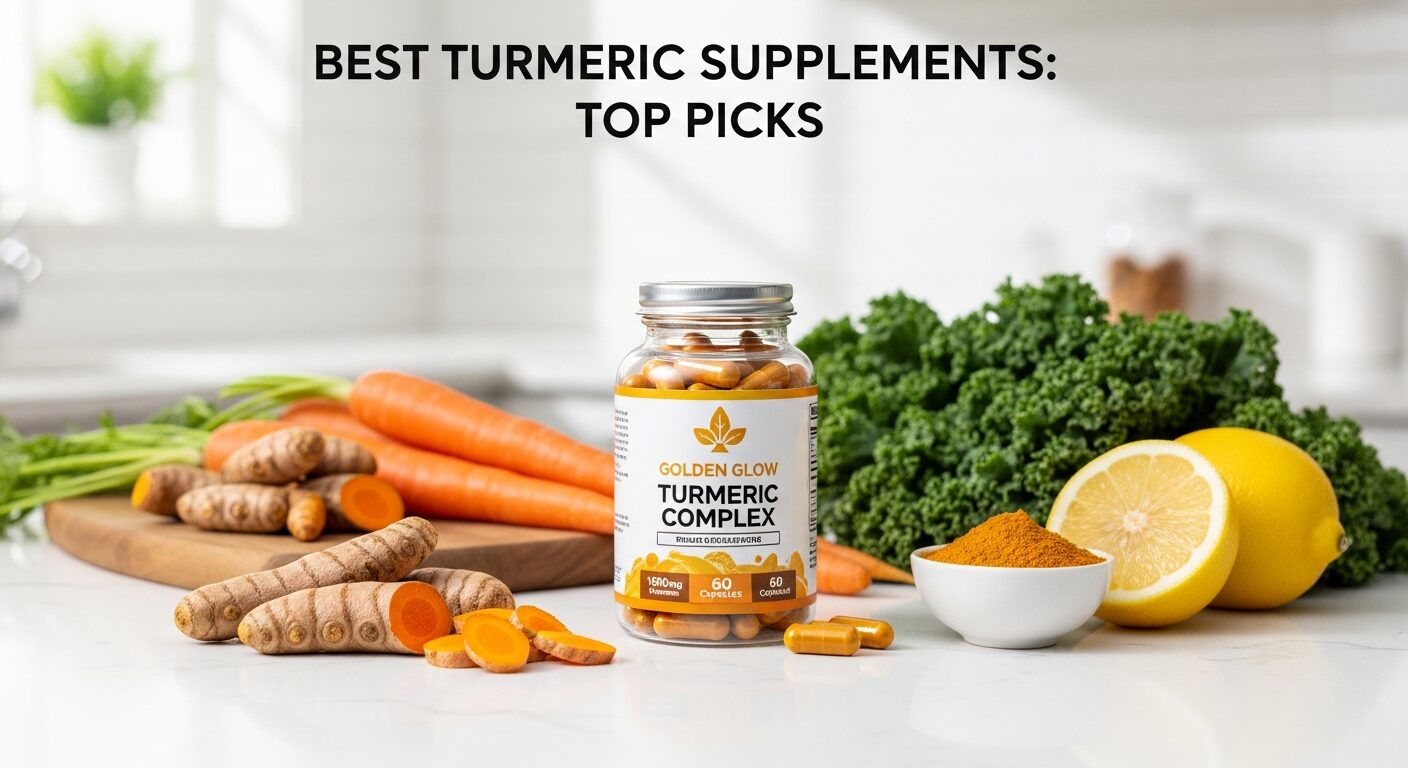
Turmeric has emerged as one of the most researched and sought-after natural supplements in modern wellness, with over 14,000 published studies exploring its remarkable health properties. This golden-yellow spice, which has been a cornerstone of traditional medicine for thousands of years, contains powerful compounds that modern science is finally beginning to understand and validate.
However, with the explosion of turmeric products flooding the market, choosing the right supplement can feel overwhelming. Many consumers fall prey to marketing claims without understanding the crucial differences between various formulations, bioavailability factors, and quality standards that separate effective supplements from expensive placebos.
This comprehensive guide cuts through the confusion to provide you with evidence-based insights into turmeric supplementation, debunking common myths while revealing what really happens in your body when you start taking this remarkable compound consistently.
🌿 Looking for Turmeric supplements? Shop Amazon →
Contents
- 1 What is Turmeric
- 2 Key Benefits of Turmeric
- 3 What Most People Get Wrong About Turmeric
- 4 What Happens to Your Body After 30 Days of Taking Turmeric
- 5 Who Should NOT Take Turmeric
- 6 Dosage and Best Forms
- 7 Frequently Asked Questions
- 7.1 How long does it take for turmeric supplements to work?
- 7.2 Can I take turmeric supplements with other medications?
- 7.3 Is it better to take turmeric supplements on an empty stomach or with food?
- 7.4 What’s the difference between turmeric and curcumin supplements?
- 7.5 Are there any side effects from taking turmeric supplements?
- 8 Medical Disclaimer
What is Turmeric
Turmeric (Curcuma longa) is a flowering plant belonging to the ginger family, native to Southeast Asia and primarily cultivated in India. The root of this plant is dried and ground to create the familiar golden powder that has been used both as a culinary spice and medicinal remedy for over 4,000 years.
The primary bioactive compound responsible for turmeric’s health benefits is curcumin, which typically comprises 2-8% of most turmeric preparations. Curcumin belongs to a group of compounds called curcuminoids, which give turmeric its distinctive color and potent therapeutic properties. However, turmeric contains over 300 chemical constituents, including other curcuminoids like demethoxycurcumin and bisdemethoxycurcumin, as well as volatile oils and proteins.
While culinary turmeric provides some health benefits, therapeutic supplementation typically requires concentrated extracts standardized to contain higher percentages of curcuminoids. This concentration is necessary because curcumin has inherently poor bioavailability when consumed alone, meaning the body absorbs and utilizes only small amounts of the compound when taken in its natural form.
Key Benefits of Turmeric
The scientific literature supporting turmeric’s health benefits is extensive and continues to grow. The primary mechanisms through which turmeric exerts its effects include powerful anti-inflammatory activity, antioxidant properties, and modulation of various cellular signaling pathways.
Inflammation reduction represents perhaps the most well-documented benefit of turmeric supplementation. Curcumin inhibits multiple inflammatory pathways, including cyclooxygenase-2 (COX-2) and lipoxygenase, while suppressing nuclear factor-kappa B (NF-κB), a key regulator of inflammatory gene expression, 2007. This broad anti-inflammatory activity explains why turmeric shows promise for numerous conditions characterized by chronic inflammation.
Joint health and mobility represent another major area where turmeric demonstrates significant benefits. Studies indicate that curcumin supplementation can reduce joint pain and stiffness while improving mobility in individuals with osteoarthritis. The compound appears to work by reducing inflammatory mediators in joint tissue while potentially slowing cartilage degradation.
Cardiovascular health benefits include improved endothelial function, which refers to the health of blood vessel linings. Regular turmeric supplementation may help maintain healthy cholesterol levels, support normal blood pressure, and promote overall heart health through its anti-inflammatory and antioxidant mechanisms.
Brain health and cognitive function also benefit from turmeric’s neuroprotective properties. The compound can cross the blood-brain barrier and may help protect neurons from oxidative stress and inflammation, two key factors in age-related cognitive decline.
What Most People Get Wrong About Turmeric
Despite turmeric’s popularity, several persistent misconceptions continue to mislead consumers and potentially reduce the effectiveness of their supplementation efforts.
The most common myth is that all turmeric supplements are essentially the same. Many people assume that as long as they’re taking “turmeric,” they’ll receive the same benefits regardless of the product they choose. This couldn’t be further from the truth. The bioavailability of curcumin varies dramatically depending on the formulation, with some products being absorbed up to 2000% better than others. Standard curcumin powder has extremely poor bioavailability, while specialized formulations using piperine, liposomal delivery, or nano-particle technology can dramatically improve absorption.
Another widespread misconception is that cooking with turmeric provides the same therapeutic benefits as supplementation. While culinary turmeric certainly has value and contributes to overall health, the amounts used in cooking typically provide only 20-40mg of curcuminoids per serving. Therapeutic studies generally use doses ranging from 500-1000mg of curcuminoids daily, making it virtually impossible to achieve medicinal levels through food alone.
Many people also believe that taking turmeric with black pepper is sufficient to maximize absorption. While piperine (the active compound in black pepper) does enhance curcumin absorption by inhibiting certain liver enzymes, this combination only increases bioavailability by about 2000% – which sounds impressive but still leaves curcumin with relatively poor absorption compared to advanced delivery systems. Modern formulations using liposomal encapsulation or specialized complexes often outperform the simple turmeric-pepper combination.
Perhaps the most dangerous myth is that turmeric is completely harmless because it’s “natural.” While turmeric is generally safe for most people, it can interact with certain medications, particularly blood thinners, and may not be appropriate for individuals with gallstones, iron deficiency, or those scheduled for surgery. The assumption that natural equals risk-free has led some people to ignore important safety considerations.
What Happens to Your Body After 30 Days of Taking Turmeric
Understanding the timeline of turmeric’s effects can help set realistic expectations and encourage consistent supplementation during the initial weeks when benefits may not be immediately apparent.
During the first week of supplementation, most people don’t notice significant changes, though some individuals with acute inflammation may experience subtle improvements in comfort levels. At the cellular level, however, important changes are beginning. Curcumin starts accumulating in tissues and begins modulating inflammatory pathways, though these early changes typically occur below the threshold of conscious awareness.
Week two often brings the first noticeable benefits for many users. Those taking turmeric primarily for joint discomfort frequently report the first signs of improved mobility and reduced stiffness, particularly in the morning. Studies suggest that curcumin’s anti-inflammatory effects become measurable in blood markers within 2-4 weeks of consistent supplementation, 2014. Some users also report improved energy levels and better sleep quality during this timeframe.
Weeks three and four typically represent when turmeric’s full spectrum of benefits becomes most apparent. Joint comfort improvements tend to plateau at their maximum benefit around this time. Individuals taking turmeric for general wellness may notice improved recovery from exercise, more stable energy levels throughout the day, and enhanced overall sense of well-being. Digestive benefits, when present, usually become apparent during this timeframe as well.
It’s important to note that the timeline and intensity of benefits vary significantly between individuals based on factors including baseline inflammation levels, overall health status, diet quality, supplement formulation, and dosage. Some people may notice benefits sooner, while others may require 6-8 weeks to experience the full effects. Research indicates that curcumin’s effects are generally progressive, with benefits typically increasing over the first 2-3 months of consistent use before reaching a steady state, 2016.
Who Should NOT Take Turmeric
While turmeric is generally well-tolerated by most healthy adults, certain individuals should exercise caution or avoid supplementation entirely due to potential health risks or drug interactions.
Individuals taking blood-thinning medications such as warfarin, heparin, or even aspirin should consult their healthcare provider before starting turmeric supplements. Curcumin can enhance the effects of anticoagulant medications, potentially increasing bleeding risk. This interaction is particularly concerning for people scheduled for surgery, who should discontinue turmeric supplementation at least two weeks before any procedure.
People with gallstones or bile duct obstruction should avoid turmeric supplements, as curcumin can stimulate bile production and potentially worsen these conditions. Similarly, individuals with a history of kidney stones may need to limit turmeric intake, as it contains oxalates that could contribute to stone formation in susceptible individuals.
Pregnant and breastfeeding women should avoid therapeutic doses of turmeric supplements, though culinary amounts are generally considered safe. High doses of curcumin may stimulate uterine contractions and could potentially affect fetal development, though research in this area remains limited.
Individuals with iron deficiency anemia should use caution with turmeric supplementation, as curcumin can inhibit iron absorption. If supplementation is desired, it should be taken separately from iron-rich meals or iron supplements, with at least a two-hour gap.
People with gastroesophageal reflux disease (GERD) or stomach ulcers may find that turmeric supplements exacerbate their symptoms, as curcumin can increase stomach acid production in some individuals. Those with diabetes should monitor blood sugar levels closely when starting turmeric supplementation, as it may enhance the effects of diabetes medications.
Anyone taking medications metabolized by certain liver enzymes should consult their healthcare provider, as turmeric can affect drug metabolism rates, potentially altering medication effectiveness.
Dosage and Best Forms
Optimal turmeric supplementation requires understanding both appropriate dosing and the various formulations available, as these factors dramatically impact therapeutic outcomes.
Most clinical studies showing health benefits use curcuminoid doses ranging from 500mg to 1000mg daily, typically divided into two or three doses with meals to minimize potential stomach irritation. However, the actual amount of turmeric extract needed to achieve these curcuminoid levels varies significantly depending on the extract’s standardization.
Standard turmeric powder supplements typically contain only 2-5% curcuminoids, requiring very large doses to achieve therapeutic levels. Standardized extracts containing 95% curcuminoids are far more efficient, allowing smaller capsules to deliver meaningful doses.
Bioavailability-enhanced formulations represent the gold standard for turmeric supplementation. These include curcumin combined with piperine (black pepper extract), liposomal curcumin preparations, and specialized complexes like curcumin phytosome or BCM-95. Each technology improves absorption through different mechanisms, with some formulations requiring significantly lower doses to achieve blood levels equivalent to much higher doses of standard curcumin.
Turmeric supplements should ideally be taken with meals containing some fat, as curcumin is fat-soluble and absorption improves in the presence of dietary lipids. For individuals with sensitive stomachs, starting with lower doses and gradually increasing can help minimize any initial digestive discomfort.
Liquid turmeric supplements and fresh turmeric root preparations are also available, though these typically provide lower concentrations of active compounds compared to standardized extracts.
🌿 Looking for Turmeric Supplements?
Browse top-rated Turmeric supplements, independently tested and recommended by our editorial team.
Affiliate disclosure: We may earn a small commission at no extra cost to you.
Frequently Asked Questions
How long does it take for turmeric supplements to work?
Most people begin noticing benefits within 2-4 weeks of consistent daily supplementation, though some individuals may experience improvements sooner or may require up to 8 weeks to see full effects. The timeline depends on factors including your baseline health status, the specific condition being addressed, supplement quality and bioavailability, and dosage used.
Can I take turmeric supplements with other medications?
Turmeric can interact with several types of medications, most notably blood thinners, diabetes medications, and certain chemotherapy drugs. It may also affect how quickly your liver processes certain medications. Always consult your healthcare provider before adding turmeric supplements to your routine if you take any prescription medications.
Is it better to take turmeric supplements on an empty stomach or with food?
Turmeric supplements are best taken with meals, preferably ones containing some fat, as this improves absorption of the fat-soluble curcumin compounds. Taking supplements with food also reduces the likelihood of stomach irritation, which some people experience with turmeric on an empty stomach.
What’s the difference between turmeric and curcumin supplements?
Turmeric supplements contain the whole turmeric root extract with all its naturally occurring compounds, while curcumin supplements contain concentrated or isolated curcumin, the primary active compound. Curcumin supplements typically provide higher concentrations of the active ingredient, while turmeric supplements offer a broader spectrum of compounds that may work synergistically.
Are there any side effects from taking turmeric supplements?
Most people tolerate turmeric supplements well, but some may experience mild digestive upset, heartburn, or nausea, especially when starting supplementation. Rare but more serious concerns include increased bleeding risk in people taking blood thinners, potential liver problems with very high doses, and allergic reactions in sensitive individuals. Starting with lower doses can help minimize initial side effects.
Medical Disclaimer
The information provided in this article is for educational and informational purposes only and is not intended as medical advice, diagnosis, or treatment. Always consult with a qualified healthcare professional before starting any new supplement regimen, especially if you have existing health conditions, take medications, or are pregnant or breastfeeding.
Individual results may vary, and the statements made regarding turmeric supplements have not been evaluated by the Food and Drug Administration. These products are not intended to diagnose, treat, cure, or prevent any disease. If you experience any adverse effects while taking turmeric supplements, discontinue use immediately and consult your healthcare provider.