
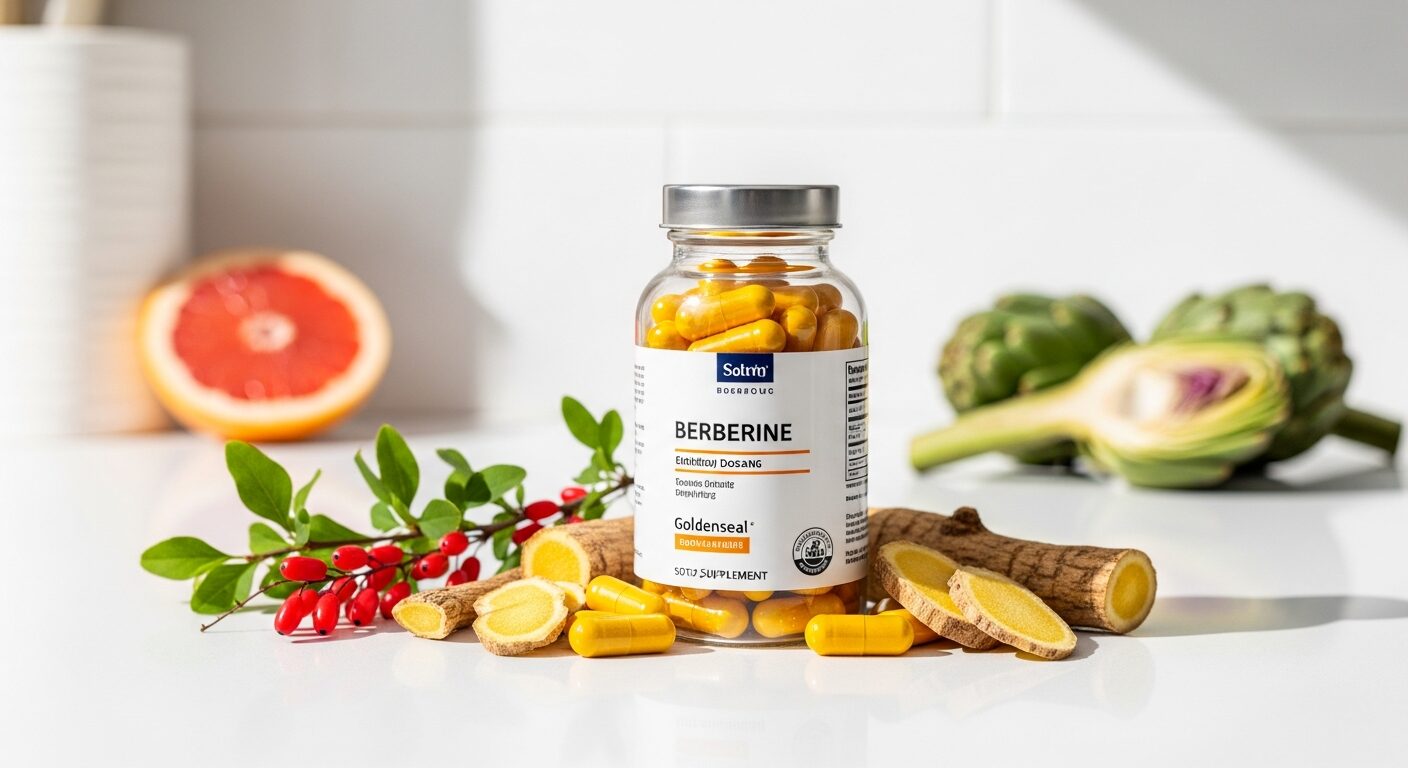
Berberine has emerged as one of the most promising natural supplements in recent years, with research suggesting it may rival prescription medications for certain health conditions. Yet despite its growing popularity, most people remain confused about proper dosing, timing, and what to realistically expect from this powerful plant compound.
If you’ve been wondering whether berberine lives up to the hype, or more importantly, how much you should actually take to see results, you’re not alone. The supplement industry is flooded with conflicting information, and berberine’s unique properties make dosing more complex than your typical vitamin. This comprehensive guide cuts through the confusion with science-backed recommendations to help you make informed decisions about berberine supplementation.
🌿 Looking for Berberine supplements? Shop Amazon →
Contents
What is Berberine
Berberine is a bioactive alkaloid compound extracted from several plants, including goldenseal, barberry, Oregon grape, and tree turmeric. This bright yellow substance has been used in traditional Chinese and Ayurvedic medicine for thousands of years, primarily to treat digestive issues and infections.
From a biochemical perspective, berberine works primarily by activating an enzyme called AMP-activated protein kinase (AMPK), often referred to as the body’s “metabolic master switch.” This enzyme plays a crucial role in regulating cellular energy metabolism, glucose uptake, and fat oxidation. When activated, AMPK essentially tells your cells to stop storing energy and start using it more efficiently.
What makes berberine particularly interesting to researchers is its ability to cross cellular membranes and directly influence mitochondrial function. Unlike many plant compounds that are poorly absorbed or quickly eliminated, berberine can accumulate in tissues and exert sustained biological effects, though this also means proper dosing becomes more critical.
Key Benefits of Berberine
Clinical research has identified several well-documented benefits of berberine supplementation, with the strongest evidence supporting its effects on metabolic health.
Blood Sugar Management: Multiple studies demonstrate berberine’s ability to lower blood glucose levels comparably to prescription diabetes medications. It works through several mechanisms, including increasing insulin sensitivity, reducing glucose production in the liver, and slowing carbohydrate breakdown in the intestines.
Cardiovascular Support: Research indicates berberine can help improve lipid profiles by reducing total cholesterol, LDL cholesterol, and triglycerides while potentially raising HDL cholesterol. These effects appear to occur through enhanced cholesterol metabolism and reduced synthesis.
Weight Management: Clinical trials have shown modest but consistent weight loss effects, typically ranging from 2-5 pounds over 8-12 weeks when combined with lifestyle modifications. The weight loss appears to be primarily from fat tissue rather than muscle mass.
Anti-inflammatory Effects: Berberine exhibits anti-inflammatory properties by modulating various inflammatory pathways and reducing markers like C-reactive protein and interleukin-6.
Gut Health: Emerging research suggests berberine may positively influence gut microbiota composition, promoting beneficial bacteria while suppressing harmful strains.
What Most People Get Wrong About Berberine
Despite berberine’s growing popularity, several persistent misconceptions can undermine its effectiveness or create unrealistic expectations.
Myth: Berberine Works Immediately Like a Drug
Many people expect berberine to produce immediate, dramatic effects similar to prescription medications. In reality, berberine’s benefits typically develop gradually over weeks to months. While some people may notice changes in energy or digestion within days, meaningful improvements in blood sugar, cholesterol, or weight usually require consistent use for 4-8 weeks. This delayed onset occurs because berberine works by gradually rebalancing cellular metabolism rather than providing acute pharmacological effects.
Myth: Higher Doses Always Work Better
There’s a common assumption that doubling or tripling berberine doses will accelerate results. However, research suggests a clear dose-response ceiling, with optimal benefits typically occurring at 1000-1500mg daily. Higher doses don’t necessarily provide additional benefits and may increase the risk of gastrointestinal side effects. The key lies in consistent, moderate dosing rather than aggressive supplementation.
Myth: All Berberine Supplements Are Equally Effective
Bioavailability represents berberine’s biggest challenge. Standard berberine has relatively poor absorption, with much of an oral dose being eliminated before reaching target tissues. This has led to the development of enhanced formulations using techniques like liposomal encapsulation or combination with absorption enhancers. Assuming all berberine products are equivalent can lead to disappointing results with lower-quality formulations.
Myth: Berberine is Safe for Everyone Because It’s Natural
The “natural equals safe” fallacy is particularly problematic with berberine due to its potent biological activity. Berberine can significantly affect blood sugar levels, potentially causing hypoglycemia in people taking diabetes medications. It also interacts with various enzymes involved in drug metabolism, potentially altering the effectiveness of prescription medications. Natural doesn’t mean risk-free, especially with compounds as bioactive as berberine.
What Happens to Your Body After 30 Days of Taking Berberine
Understanding berberine’s timeline helps set realistic expectations and optimize supplementation strategies.
Week 1: Initial Adaptations
During the first week, your body begins adapting to berberine’s presence. Some people experience mild digestive changes, including slight nausea, stomach upset, or changes in bowel movements as gut bacteria begin responding to the compound. Energy levels may fluctuate as cellular metabolism starts adjusting. Blood glucose meters might show subtle improvements in post-meal glucose spikes, though these changes are often within normal variation ranges.
Week 2: Noticeable Metabolic Shifts
By the second week, AMPK activation becomes more consistent, leading to more stable energy levels throughout the day. Many users report reduced cravings for sugary foods and improved satiety after meals. Digestive side effects typically diminish as the gut microbiome adapts. Blood glucose patterns may show more consistent improvements, particularly in postprandial (after-meal) responses.
Weeks 3-4: Full Benefit Emergence
The most significant changes typically emerge during weeks three and four. Yin et al., 2008 demonstrated that berberine’s glucose-lowering effects reached full magnitude after 4-6 weeks of consistent supplementation. Weight loss, if it occurs, usually becomes apparent during this period. Improvements in lipid profiles typically require at least 4 weeks to manifest on laboratory tests, as cholesterol turnover is a relatively slow process.
Sleep quality often improves during this timeframe, possibly due to better glucose regulation and reduced inflammatory markers. Some users report improved mental clarity and reduced afternoon energy crashes, likely reflecting more stable blood sugar patterns throughout the day.
Who Should NOT Take Berberine
While berberine is generally well-tolerated, certain individuals should avoid supplementation or use it only under medical supervision.
People Taking Diabetes Medications
Berberine can potentiate the blood sugar-lowering effects of insulin, metformin, and other diabetes medications, potentially causing dangerous hypoglycemia. Anyone taking prescription diabetes medications should consult their healthcare provider before adding berberine, as medication adjustments may be necessary.
Pregnant and Breastfeeding Women
Berberine crosses the placenta and can stimulate uterine contractions, potentially increasing miscarriage risk. It’s also unknown whether berberine passes into breast milk or affects infant development. Pregnant and breastfeeding women should avoid berberine supplementation entirely.
Individuals with Low Blood Pressure
Berberine may lower blood pressure through various mechanisms. People with hypotension or those taking blood pressure medications should monitor their blood pressure closely and consult healthcare providers before supplementation.
Those with Scheduled Surgeries
Berberine’s effects on blood glucose and blood clotting may complicate surgical procedures and anesthesia management. Discontinue berberine at least two weeks before scheduled surgeries.
Drug Interaction Considerations
Berberine inhibits certain cytochrome P450 enzymes, particularly CYP3A4, which metabolizes numerous prescription medications. This can increase blood levels of affected drugs, potentially causing toxicity. Medications with known interactions include cyclosporine, certain antibiotics, and some heart medications. Always consult healthcare providers when combining berberine with prescription drugs.
Dosage and Best Forms
Optimal berberine dosing balances efficacy with tolerability, based on extensive clinical research.
Standard Dosing Protocol
The most commonly studied and effective dose is 500mg taken three times daily with meals, totaling 1500mg per day. Zhang et al., 2010 found this protocol optimal for glucose control and lipid management. Taking berberine with meals reduces gastrointestinal side effects and may enhance absorption.
Starting Recommendations
Begin with 500mg once daily for the first week to assess tolerance, then gradually increase to 500mg twice daily, and finally to the full three-times-daily protocol if well-tolerated. This graduated approach minimizes digestive upset while allowing your body to adapt.
Enhanced Formulations
Due to berberine’s poor bioavailability, several enhanced forms have been developed. Berberine phytosome uses phospholipid complexation to improve absorption, potentially allowing for lower effective doses. Dihydroberberine represents another approach, converting to berberine in the body but with reportedly better absorption characteristics.
Timing Considerations
Take berberine 15-30 minutes before meals to maximize glucose-lowering effects. The compound’s relatively short half-life necessitates multiple daily doses rather than once-daily supplementation for sustained benefits.
🌿 Looking for Berberine Supplements?
Browse top-rated Berberine supplements, independently tested and recommended by our editorial team.
Affiliate disclosure: We may earn a small commission at no extra cost to you.
Frequently Asked Questions
How Long Should I Take Berberine?
Clinical studies typically range from 8 weeks to 6 months, with benefits maintained throughout supplementation periods. Many people use berberine long-term as part of their health regimen, though periodic breaks every 3-6 months may help prevent tolerance and allow assessment of continued need.
Can I Take Berberine on an Empty Stomach?
While possible, taking berberine without food significantly increases the likelihood of nausea, stomach upset, and diarrhea. The compound is much better tolerated when taken with meals, and food may actually enhance its absorption and effectiveness for glucose control.
Will Berberine Interfere with My Other Supplements?
Berberine generally plays well with most supplements, though it may enhance the effects of other glucose-lowering compounds like chromium or alpha-lipoic acid. Avoid taking berberine simultaneously with probiotics, as its antimicrobial properties might reduce probiotic effectiveness. Space them apart by at least 2-3 hours.
What Should I Do If I Experience Side Effects?
Mild digestive upset is common initially and usually resolves within 1-2 weeks. If side effects persist or worsen, reduce the dose or temporarily discontinue use. Severe symptoms like persistent vomiting, severe diarrhea, or signs of hypoglycemia require immediate medical attention and discontinuation of supplementation.
How Do I Know If Berberine Is Working?
Lan et al., 2015 showed that berberine’s effects can be objectively measured through blood glucose monitoring, lipid panels, and body weight tracking. Subjective improvements might include better energy stability, reduced cravings, improved digestion, and better sleep quality. Laboratory testing after 6-8 weeks provides the most objective assessment of berberine’s effectiveness.
Medical Disclaimer
This article is for educational and informational purposes only and should not be considered medical advice. The information provided is not intended to diagnose, treat, cure, or prevent any disease or health condition. Individual responses to berberine supplementation may vary significantly based on genetics, health status, medications, and other factors.
Before starting berberine supplementation, especially if you have diabetes, cardiovascular disease, take prescription medications, or have any underlying health conditions, consult with a qualified healthcare provider. Berberine can interact with various medications and may not be appropriate for everyone.
If you experience any adverse reactions while taking berberine, discontinue use immediately and seek medical attention if symptoms are severe or persistent. Regular monitoring by healthcare professionals is recommended for individuals using berberine long-term or in combination with other treatments.
The statements in this article have not been evaluated by the Food and Drug Administration. Berberine supplements are not intended to diagnose, treat, cure, or prevent any disease.