
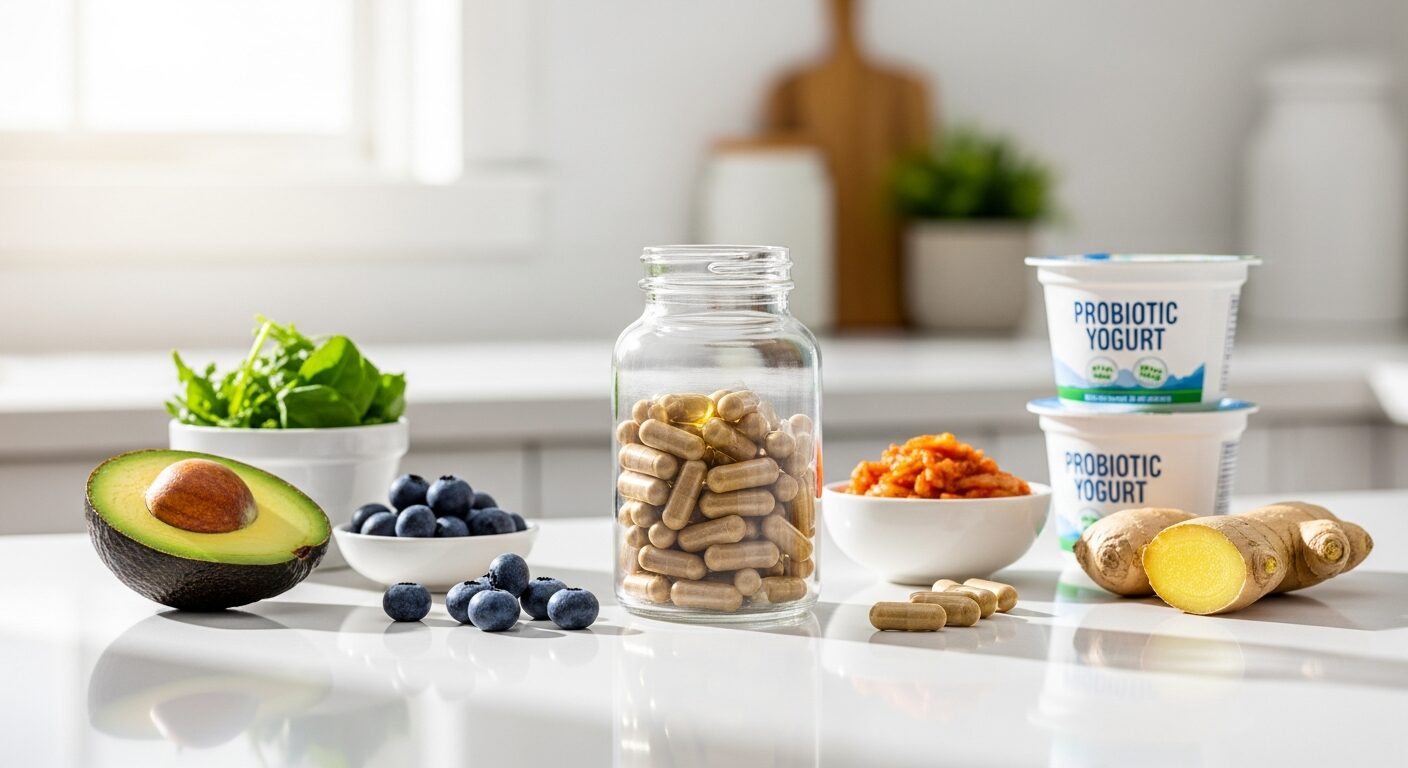
Your gut health influences far more than just digestion. This complex ecosystem of trillions of microorganisms affects your immune system, mental health, weight management, and overall wellbeing. When your gut microbiome falls out of balance due to stress, poor diet, antibiotics, or other factors, it can trigger a cascade of health issues ranging from bloating and fatigue to mood disorders and autoimmune conditions.
While a healthy diet forms the foundation of good gut health, targeted supplementation can provide the specific support your digestive system needs to restore balance and function optimally. The right gut health supplements work by replenishing beneficial bacteria, healing the intestinal lining, reducing inflammation, and supporting the complex processes that keep your digestive system running smoothly.
Understanding which supplements offer genuine benefits—and which ones are simply marketing hype—can be challenging in today’s oversaturated wellness market. This comprehensive guide examines the science behind the most effective gut health supplements, helping you make informed decisions about supporting your digestive wellness.
🌿 Looking for supplements supplements? Shop Amazon →
Contents
- 1 What is Gut Health Supplements
- 2 Key Benefits of Gut Health Supplements
- 3 What Most People Get Wrong About Gut Health Supplements
- 4 What Happens to Your Body After 30 Days of Taking Gut Health Supplements
- 5 Who Should NOT Take Gut Health Supplements
- 6 Dosage and Best Forms
- 7 Frequently Asked Questions
- 8 Medical Disclaimer
What is Gut Health Supplements
Gut health supplements encompass a diverse range of products designed to support and optimize digestive function and the intestinal microbiome. These supplements work through various mechanisms to address different aspects of digestive wellness, from replenishing beneficial bacteria to healing damaged intestinal tissue.
The primary categories of gut health supplements include probiotics, which introduce live beneficial bacteria to the digestive tract; prebiotics, which feed existing good bacteria; digestive enzymes that break down food components; and specialized compounds like L-glutamine that support intestinal barrier function. Some formulations combine multiple approaches, creating synergistic effects that address gut health from several angles simultaneously.
Unlike general wellness supplements, gut health products are specifically formulated to survive the harsh acidic environment of the stomach and deliver their active ingredients to the appropriate sections of the digestive tract. This requires specialized delivery systems, protective coatings, and careful selection of strains or compounds that can remain stable and effective throughout the digestive process.
Key Benefits of Gut Health Supplements
Research has consistently demonstrated that targeted gut health supplementation can produce measurable improvements in digestive function and overall health. One of the most significant benefits is the restoration of microbiome diversity, which often becomes compromised due to antibiotic use, stress, or dietary factors. Gut microbiota and inflammatory bowel disease, 2020 shows how specific probiotic strains can help rebalance the gut ecosystem and reduce inflammatory markers.
Improved digestive symptoms represent another major benefit category. Clinical studies show that appropriate supplementation can reduce bloating, gas, irregular bowel movements, and abdominal discomfort. These improvements occur through multiple pathways: enhanced food breakdown, reduced pathogenic bacteria overgrowth, and strengthened intestinal barrier function.
The immune system benefits substantially from gut health supplementation, since approximately 70% of immune tissue is located in the digestive tract. Beneficial bacteria support immune function by producing antimicrobial compounds, training immune cells, and maintaining the intestinal barrier that prevents harmful substances from entering the bloodstream.
Emerging research also highlights mental health benefits, often called the gut-brain connection. Certain bacterial strains produce neurotransmitters like serotonin and GABA, while others reduce inflammation that can negatively impact mood and cognitive function. Many users report improved mood, reduced anxiety, and better sleep quality after consistent supplementation.
What Most People Get Wrong About Gut Health Supplements
One of the most persistent misconceptions is that all probiotic supplements are essentially the same. In reality, different bacterial strains have vastly different effects on health. Lactobacillus acidophilus may help with lactose digestion, while Bifidobacterium longum supports immune function, and Saccharomyces boulardii specifically helps during antibiotic treatment. Taking a random probiotic supplement without understanding strain-specific benefits is like taking random medication and hoping for the best results.
Another common mistake is believing that higher CFU (colony-forming unit) counts automatically mean better results. While adequate numbers of viable bacteria are important, research shows that strain quality, survival through stomach acid, and ability to colonize the gut matter more than raw numbers. A supplement with 10 billion CFUs of well-researched, stable strains often outperforms products boasting 100 billion CFUs of poorly selected or unstable bacteria.
Many people also assume that gut health supplements work immediately, like over-the-counter pain relievers. The reality is that meaningful changes to the gut microbiome take time to develop. Beneficial bacteria need to establish themselves, compete with existing microorganisms, and gradually influence the gut environment. Expecting instant results leads to premature discontinuation of potentially beneficial supplementation.
Perhaps the most dangerous misconception is that gut health supplements are universally safe for everyone. While generally well-tolerated, these products can cause serious complications in immunocompromised individuals, people with certain medical conditions, or those taking specific medications. The “natural equals safe” assumption has led to problematic interactions and adverse effects that could have been avoided with proper medical consultation.
What Happens to Your Body After 30 Days of Taking Gut Health Supplements
During the first week of supplementation, your body begins the initial adaptation process. You may notice changes in bowel movement frequency or consistency as new bacterial strains start establishing themselves in your digestive tract. Some people experience temporary bloating or gas as the gut microbiome begins shifting—this is often called the “die-off” effect as harmful bacteria are displaced by beneficial ones. Energy levels might fluctuate as your digestive system adjusts to improved nutrient absorption.
Week two typically brings more noticeable digestive improvements. Bloating and gas usually decrease as the gut environment stabilizes. Many people report more regular bowel movements and reduced abdominal discomfort. Sleep quality often begins improving during this period, likely due to increased production of sleep-regulating neurotransmitters by beneficial bacteria. Some users also notice initial improvements in skin clarity, reflecting the gut-skin connection.
By weeks three and four, the full spectrum of benefits typically emerges. Probiotics and prebiotics in human health, 2019 demonstrates that sustained supplementation produces measurable changes in immune markers and inflammatory responses. Digestive symptoms usually show significant improvement, with reduced bloating, more comfortable digestion, and normalized bowel movements. Many users report enhanced mood stability, reduced anxiety, and improved mental clarity as the gut-brain axis optimizes.
Energy levels often stabilize at higher baseline levels due to improved nutrient absorption and reduced systemic inflammation. Food cravings, particularly for sugar and processed foods, frequently decrease as the gut microbiome shifts toward a healthier balance. Some people also experience improved exercise recovery and reduced seasonal illness frequency, reflecting enhanced immune function.
Who Should NOT Take Gut Health Supplements
Immunocompromised individuals face the highest risk from probiotic supplementation. People undergoing chemotherapy, organ transplant recipients, or those with severe underlying immune disorders can develop serious infections from bacteria that would be beneficial for healthy individuals. The same applies to people with damaged intestinal barriers, such as those with severe inflammatory bowel disease or recent abdominal surgery, where bacteria could potentially enter the bloodstream.
Individuals with central venous catheters, heart valve disorders, or other conditions that increase infection risk should avoid live probiotic supplements. The bacteria, while generally beneficial, can potentially cause bacteremia or endocarditis in vulnerable populations. Similarly, people with severe acute pancreatitis should avoid probiotics, as some case reports have linked supplementation to increased mortality in this population.
Certain medications create contraindications for gut health supplements. Antifungal medications may reduce the effectiveness of beneficial yeast strains like Saccharomyces boulardii, while some antibiotics can completely eliminate supplemented bacteria. People taking immunosuppressive drugs need medical supervision, as these medications can increase infection risk from probiotic bacteria.
Pregnant and breastfeeding women should exercise caution with gut health supplements, particularly those containing lesser-studied strains or multiple bacterial species. While some probiotics are considered safe during pregnancy, others lack sufficient safety data. Children, especially infants under 12 months, have developing immune systems that may react unpredictably to bacterial supplementation.
Anyone with a history of severe allergic reactions should carefully review supplement ingredients, as many contain dairy, soy, or other common allergens used as bacterial growth media. People with histamine intolerance may react poorly to certain bacterial strains that produce histamine as a metabolic byproduct.
Dosage and Best Forms
Optimal dosing for gut health supplements varies significantly based on the specific product type and intended use. For general probiotic maintenance, research supports doses ranging from 1 billion to 10 billion CFUs daily of well-researched strains. Therapeutic applications, such as supporting recovery from antibiotic treatment, may require higher doses of 10-50 billion CFUs daily, but should be used under professional guidance.
Timing plays a crucial role in supplement effectiveness. Most probiotics are best taken on an empty stomach or with a small amount of food to minimize exposure to stomach acid. However, some strains are specifically designed to be taken with meals. Digestive enzyme supplements should always be taken with food to support the breakdown of that specific meal.
Capsule forms generally offer the best stability and protection for probiotic bacteria, especially those with enteric coatings that prevent stomach acid damage. Powder forms can be effective but are more susceptible to moisture and temperature fluctuations that can kill beneficial bacteria. Liquid probiotics require refrigeration and have shorter shelf lives, but may offer faster colonization for some individuals.
For prebiotic supplements, effective doses typically range from 3-8 grams daily, though some people may need to start with smaller amounts to avoid digestive discomfort. Prebiotic effects on gut microbiota, 2020 shows that consistent daily dosing produces better results than intermittent higher doses.
Storage conditions significantly impact supplement effectiveness. Most probiotics require refrigeration to maintain bacterial viability, though some shelf-stable formulations can withstand room temperature. Always check expiration dates, as bacterial counts decline over time even under proper storage conditions.
🌿 Looking for supplements Supplements?
Browse top-rated supplements supplements, independently tested and recommended by our editorial team.
Affiliate disclosure: We may earn a small commission at no extra cost to you.
Frequently Asked Questions
How long does it take to see results from gut health supplements?
Most people begin noticing initial changes within 3-7 days, such as altered bowel movement patterns or temporary digestive adjustments. Meaningful improvements in symptoms like bloating, regularity, and comfort typically emerge after 2-3 weeks of consistent use. Full benefits, including immune and mood improvements, generally require 4-8 weeks of regular supplementation as the gut microbiome gradually rebalances.
Can I take gut health supplements with antibiotics?
Yes, but timing and strain selection are critical. Take probiotic supplements at least 2-3 hours away from antibiotic doses to prevent the antibiotic from killing the beneficial bacteria. Saccharomyces boulardii, a beneficial yeast, is particularly effective during antibiotic treatment since it’s not affected by antibacterial medications. Continue supplementation for at least 2 weeks after finishing the antibiotic course to support microbiome recovery.
Are expensive gut health supplements always better?
Price doesn’t guarantee effectiveness, but quality manufacturing and research do cost money. Look for supplements with clinically studied strains, third-party testing for purity and potency, and proper storage requirements. Generic probiotics may lack strain-specific research or viable bacterial counts. However, the most expensive option isn’t always necessary—focus on products with transparent labeling and scientific backing rather than premium pricing.
Should I take gut health supplements forever?
The need for long-term supplementation depends on individual circumstances. People with ongoing digestive issues, frequent antibiotic use, or high stress levels may benefit from continuous supplementation. Others might use supplements for specific periods to address particular concerns, then maintain gut health through diet and lifestyle. Many people find success with cycling approaches—using supplements for 2-3 months, then taking breaks while monitoring symptoms.
Can children take adult gut health supplements?
Children require specifically formulated products with age-appropriate strains and dosing. Adult supplements often contain bacterial counts and strain combinations not tested for pediatric use. Children’s digestive systems and immune responses differ from adults, making specialized formulations necessary. Always consult a pediatrician before giving gut health supplements to children, especially those under 2 years old or with any health conditions.
Medical Disclaimer
The information provided in this article is for educational purposes only and is not intended to replace professional medical advice, diagnosis, or treatment. Always consult with a qualified healthcare provider before starting any new supplement regimen, especially if you have existing medical conditions, are taking medications, or are pregnant or breastfeeding. Individual responses to supplements can vary significantly, and what works for one person may not be appropriate for another. The FDA has not evaluated statements about dietary supplements for diagnosing, treating, curing, or preventing any disease or health condition. Never delay or disregard seeking professional medical advice because of information you have read in this article.