
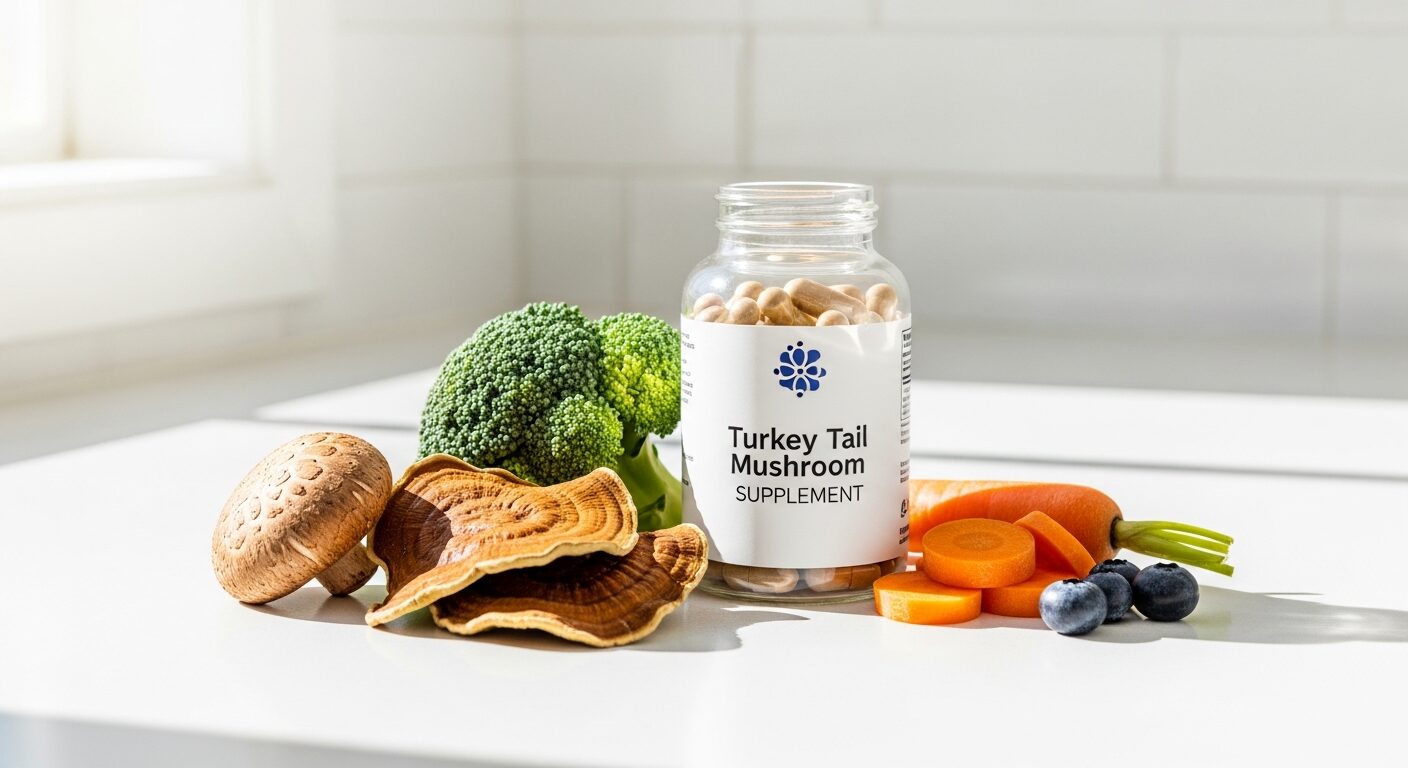
In the vast world of medicinal mushrooms, few species have captured the attention of researchers and health enthusiasts quite like Turkey Tail (Trametes versicolor). This remarkable fungus, easily recognizable by its distinctive fan-shaped appearance that resembles the plumage of a wild turkey, has been used in traditional Chinese medicine for over 2,000 years. Yet despite its ancient pedigree, Turkey Tail has only recently begun receiving the rigorous scientific scrutiny it deserves.
What makes Turkey Tail particularly fascinating isn’t just its impressive safety profile or widespread availability—it’s the mounting body of research suggesting this humble mushroom may offer some of the most potent immune-supporting compounds found in nature. From supporting cellular health to potentially enhancing the body’s natural defense mechanisms, Turkey Tail represents a bridge between ancient wisdom and modern scientific understanding.
However, with popularity comes misinformation, and Turkey Tail is no exception. Many of the claims circulating about this mushroom are either exaggerated, oversimplified, or based on preliminary research that hasn’t been properly contextualized. This comprehensive guide will separate fact from fiction, exploring what the science actually says about Turkey Tail while addressing the most common misconceptions that could impact your health decisions.
🌿 Looking for Turkey Tail supplements? Shop Amazon →
Contents
What is Turkey Tail
Turkey Tail (Trametes versicolor) is a polypore mushroom that grows as a bracket fungus on dead hardwood trees throughout North America, Europe, and Asia. Unlike mushrooms with stems and caps, Turkey Tail forms thin, leathery, semicircular brackets that overlap like roof shingles. The mushroom gets its common name from the distinctive concentric rings of varying colors—typically browns, grays, and whites—that mirror the tail feathers of wild turkeys.
From a biological perspective, Turkey Tail serves as a decomposer in forest ecosystems, breaking down lignin and cellulose in dead wood. This natural role as a decomposer is crucial to understanding why Turkey Tail produces such powerful bioactive compounds—these molecules originally evolved as chemical weapons to help the fungus compete with bacteria and other microorganisms for resources.
The mushroom’s most studied compounds include polysaccharopeptides (PSP) and polysaccharide-K (PSK), both of which are protein-bound beta-glucans. These complex carbohydrates have demonstrated remarkable biological activity in laboratory studies. PSK, in particular, has been approved as an adjunct cancer therapy in Japan since 1977 and is one of the most widely prescribed anti-cancer drugs in that country.
Turkey Tail also contains other bioactive compounds including phenolic compounds, flavonoids, and various enzymes. The mushroom’s mycelium (the vegetative part of the fungus) and fruiting body (the visible mushroom) contain different concentrations of these compounds, which is why the extraction method and mushroom part used can significantly impact a supplement’s effectiveness.
Key Benefits of Turkey Tail
The most extensively researched benefit of Turkey Tail relates to immune system support. Multiple studies have demonstrated that the polysaccharopeptides in Turkey Tail can help modulate immune function by activating various immune cells including macrophages, natural killer cells, and T-lymphocytes. This immune modulation appears to work bidirectionally—potentially enhancing immune response when needed while helping to prevent excessive inflammation.
Research has also focused heavily on Turkey Tail’s potential role in supporting individuals undergoing conventional cancer treatments. Standish et al., 2012 conducted a clinical trial demonstrating that Turkey Tail supplementation helped improve immune function in breast cancer patients following conventional treatment. The study found significant improvements in lymphocyte counts and natural killer cell activity among participants taking Turkey Tail extract.
Digestive health represents another area where Turkey Tail shows promise. The mushroom contains prebiotic compounds that may help support beneficial gut bacteria. Some research suggests that Turkey Tail can help promote the growth of beneficial Bifidobacterium and Lactobacillus species while potentially inhibiting harmful bacteria. This gut health connection is particularly important given the growing understanding of the gut-immune axis and how intestinal health influences overall immune function.
Antioxidant activity is another well-documented benefit of Turkey Tail. The mushroom contains various phenolic compounds and flavonoids that can help neutralize free radicals and reduce oxidative stress. This antioxidant activity may contribute to Turkey Tail’s other health benefits and could play a role in supporting healthy aging processes.
Some preliminary research has also suggested potential benefits for liver health, blood sugar regulation, and energy levels, though these areas require more research before definitive conclusions can be drawn. The liver health benefits may be related to Turkey Tail’s antioxidant properties and its potential ability to support the body’s natural detoxification processes.
What Most People Get Wrong About Turkey Tail
Myth 1: All Turkey Tail Supplements Are Equally Effective
Perhaps the most dangerous misconception about Turkey Tail is that all supplements are created equal. In reality, the bioactive compound content can vary dramatically based on extraction methods, mushroom parts used, and quality control measures. Many products on the market contain mostly mycelium grown on grain substrates, which may have significantly lower concentrations of the key polysaccharopeptides that drive Turkey Tail’s benefits. Research-grade extracts typically use hot water extraction or alcohol extraction methods to concentrate the active compounds, while lower-quality products may simply contain ground whole mushrooms with minimal bioactive content.
Myth 2: Turkey Tail Works Immediately
Another common misconception is that Turkey Tail provides immediate benefits. Unlike stimulants or pharmaceuticals that can produce rapid effects, Turkey Tail works by gradually modulating immune function and supporting cellular processes. The compounds need time to accumulate in the body and begin influencing immune cell activity. Most research studies showing significant benefits use supplementation periods of at least 4-12 weeks, suggesting that patience and consistency are essential for optimal results.
Myth 3: More is Always Better
Many people assume that taking massive doses of Turkey Tail will amplify its benefits, but research suggests this isn’t necessarily true. Immune modulation appears to follow more of a bell curve response, where moderate doses may be more effective than extremely high doses. Additionally, taking excessive amounts may potentially overstimulate certain immune pathways, which could theoretically be counterproductive for individuals with autoimmune conditions or overactive immune systems.
Myth 4: Turkey Tail is a Miracle Cancer Cure
While Turkey Tail has shown promise in supporting individuals undergoing conventional cancer treatment, it’s crucial to understand that no mushroom extract is a standalone cancer cure. The research showing benefits has primarily focused on Turkey Tail as an adjunct therapy—meaning it’s used alongside conventional treatments to potentially enhance their effectiveness or reduce side effects. Presenting Turkey Tail as an alternative to proven cancer treatments is not only scientifically inaccurate but potentially dangerous.
What Happens to Your Body After 30 Days of Taking Turkey Tail
Week 1: Initial Adaptation
During the first week of Turkey Tail supplementation, your body begins the initial adaptation process. The polysaccharopeptides start accumulating in your system, though significant effects aren’t typically noticeable yet. Some individuals may experience mild digestive changes as the prebiotic compounds in Turkey Tail begin influencing gut bacteria populations. A small percentage of people report slight fatigue during this initial period, which researchers believe may be related to immune system activation.
Week 2: Early Immune Changes
By the second week, more substantial changes begin occurring at the cellular level. Research suggests that immune cell activity starts to increase around this timeframe, particularly among natural killer cells and macrophages. Some people report improved energy levels and better sleep quality during this period, though these effects can vary significantly between individuals. Digestive improvements may become more noticeable as beneficial gut bacteria populations continue to shift.
Weeks 3-4: Full Benefit Manifestation
The third and fourth weeks typically represent the period when Turkey Tail’s most significant benefits become apparent. Doherty et al., 2010 found that immune parameters showed the most dramatic improvements after 3-4 weeks of consistent supplementation in their study of prostate cancer patients. During this timeframe, many users report enhanced overall well-being, improved resistance to minor infections, and sustained energy levels.
It’s important to note that individual responses can vary considerably based on factors including baseline health status, diet, stress levels, and the quality of the Turkey Tail supplement being used. Some individuals may notice benefits earlier, while others may require 6-8 weeks to experience the full effects. The key is maintaining consistent supplementation while monitoring your body’s response.
Who Should NOT Take Turkey Tail
While Turkey Tail is generally considered safe for most adults, several groups should exercise caution or avoid supplementation entirely. Individuals with autoimmune conditions such as rheumatoid arthritis, lupus, or multiple sclerosis should consult with a healthcare provider before using Turkey Tail. Since the mushroom can stimulate immune function, it may potentially exacerbate autoimmune conditions in some individuals.
Pregnant and breastfeeding women should avoid Turkey Tail supplements due to insufficient safety data in these populations. While Turkey Tail has a long history of traditional use, the concentrated extracts used in modern supplements haven’t been adequately studied in pregnant or lactating women. The potential effects on fetal development or infant health through breast milk remain unknown.
People taking immunosuppressive medications should be particularly cautious with Turkey Tail. Since the mushroom can enhance immune function, it may theoretically interfere with medications designed to suppress immune activity, such as those used after organ transplants or for certain autoimmune conditions. This interaction could potentially reduce the effectiveness of critical medications.
Individuals scheduled for surgery should discontinue Turkey Tail supplementation at least two weeks before any procedure. The mushroom’s immune-stimulating effects could potentially interfere with healing or interact with anesthetic medications. Additionally, anyone with bleeding disorders or taking anticoagulant medications should consult a healthcare provider, as some mushroom extracts may affect blood clotting.
Children under 18 should not use Turkey Tail supplements without explicit medical supervision. Their developing immune systems may respond differently to immune-modulating compounds, and appropriate dosing for pediatric populations hasn’t been established through clinical research.
Dosage and Best Forms
The optimal Turkey Tail dosage varies depending on the extract concentration and intended use. Most clinical studies have used doses ranging from 1-9 grams daily of standardized extract, typically divided into 2-3 doses throughout the day. For general immune support, many practitioners recommend starting with 1-2 grams daily of a high-quality extract containing at least 30% polysaccharides.
Extract concentration is crucial when determining appropriate dosing. Products standardized to contain specific percentages of polysaccharides or beta-glucans provide more predictable results than non-standardized powders. Look for extracts that specify their polysaccharide content and use extraction ratios (such as 8:1 or 10:1) to indicate concentration levels.
Timing can also influence effectiveness. Taking Turkey Tail on an empty stomach may improve absorption, though individuals with sensitive digestion may prefer taking it with food to minimize potential stomach upset. Splitting the daily dose into 2-3 smaller doses throughout the day may help maintain more consistent blood levels of active compounds.
Quality markers to look for include organic certification, third-party testing for heavy metals and contaminants, and products that specify whether they use fruiting bodies versus mycelium. Fruiting body extracts typically contain higher concentrations of the key bioactive compounds compared to mycelium-based products.
🌿 Looking for Turkey Tail Supplements?
Browse top-rated Turkey Tail supplements, independently tested and recommended by our editorial team.
Affiliate disclosure: We may earn a small commission at no extra cost to you.
Frequently Asked Questions
How long does it take for Turkey Tail to start working?
Most people begin noticing benefits from Turkey Tail supplementation after 2-4 weeks of consistent use. However, immune system changes may begin occurring at the cellular level within the first week, even if they’re not immediately noticeable. For optimal results, plan to supplement consistently for at least 8-12 weeks while monitoring your body’s response.
Can I take Turkey Tail with other medications?
Turkey Tail may interact with certain medications, particularly immunosuppressants and anticoagulants. Eliza et al., 2017 noted potential interactions between medicinal mushrooms and various pharmaceutical drugs. Always consult with a healthcare provider before adding Turkey Tail to your regimen if you’re taking any medications, especially those affecting immune function or blood clotting.
Is it safe to take Turkey Tail long-term?
Current research suggests that Turkey Tail is safe for long-term use in most healthy adults. Some studies have used supplementation periods of 6-12 months without significant adverse effects. However, it’s advisable to take periodic breaks (such as one week off every 2-3 months) to prevent potential immune system overstimulation and to reassess your ongoing need for supplementation.
What’s the difference between Turkey Tail powder and extract?
Turkey Tail extracts are concentrated forms that contain higher levels of bioactive compounds compared to simple powders. Extracts typically undergo hot water or alcohol extraction processes that concentrate the polysaccharides and other active compounds. Powders may contain the whole ground mushroom but often have lower concentrations of the key beneficial compounds studied in research.
Can Turkey Tail cause side effects?
Turkey Tail is generally well-tolerated, but some people may experience mild side effects including digestive upset, diarrhea, or darkened stool color. These effects are typically temporary and resolve as the body adapts to supplementation. Rare allergic reactions are possible, so discontinue use and seek medical attention if you experience symptoms like rash, difficulty breathing, or severe digestive distress.
Medical Disclaimer
The information provided in this article is for educational purposes only and is not intended as medical advice. Turkey Tail supplements have not been evaluated by the FDA for the diagnosis, treatment, cure, or prevention of any disease. Individual results may vary, and the information presented should not be used as a substitute for professional medical advice, diagnosis, or treatment.
Always consult with a qualified healthcare provider before starting any new supplement regimen, especially if you have existing health conditions, are taking medications, or are pregnant or breastfeeding. If you experience any adverse reactions while taking Turkey Tail supplements, discontinue use immediately and consult with a healthcare professional.
The research cited in this article represents current scientific understanding, but ongoing studies may reveal new information that could change these recommendations. NaturStack encourages readers to stay informed about the latest research and to work with healthcare providers to make informed decisions about their health and wellness strategies.