
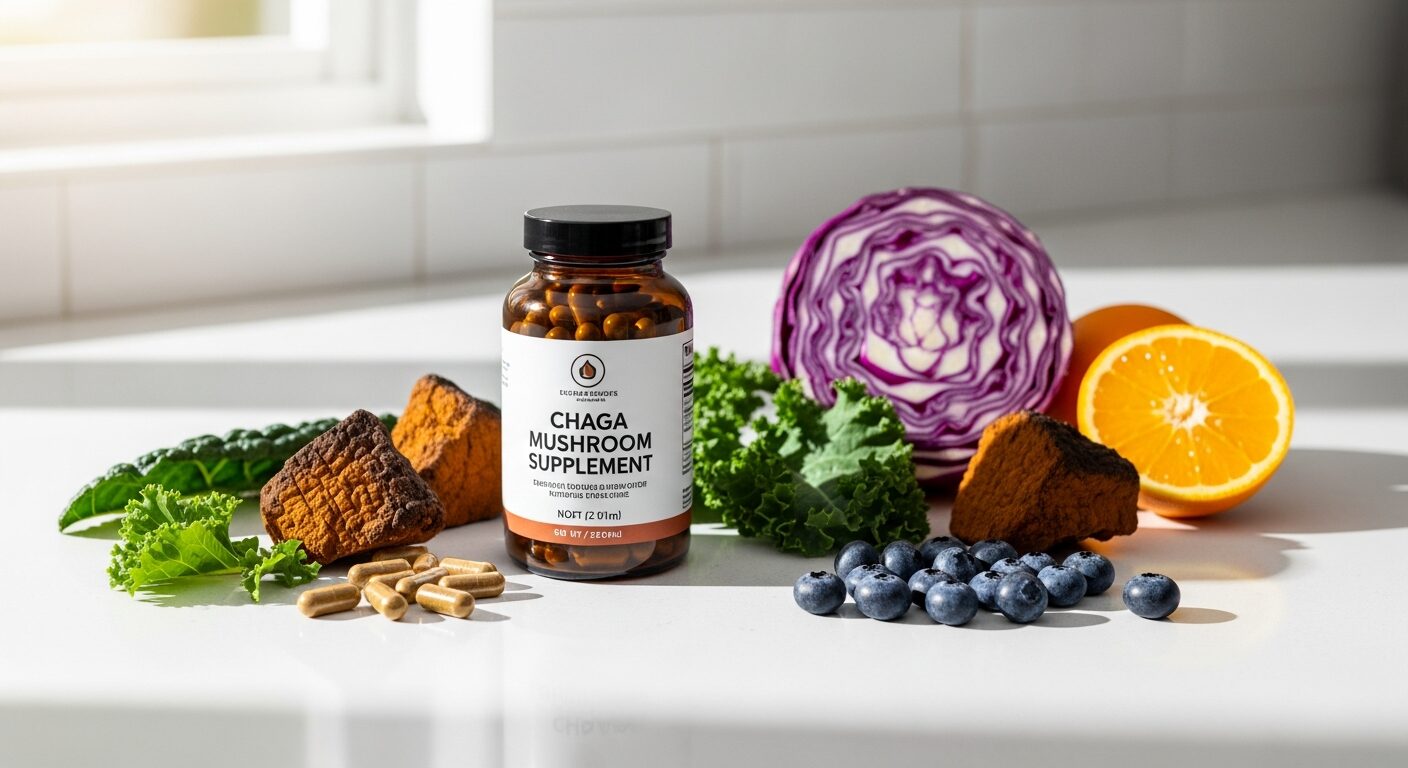
In the world of functional mushrooms, two powerhouses have captured the attention of health enthusiasts and researchers alike: Chaga and Reishi. These ancient fungi have been revered for centuries in traditional medicine, but modern science is only beginning to unlock their remarkable potential. While both mushrooms offer impressive health benefits, they work in distinctly different ways within your body.
Choosing between Chaga and Reishi isn’t simply a matter of picking the “better” mushroom—it’s about understanding which one aligns with your specific health goals and lifestyle needs. Chaga, often called the “king of medicinal mushrooms,” excels as a potent antioxidant powerhouse, while Reishi, known as the “mushroom of immortality,” shines as an adaptogen for stress and sleep support. This comprehensive comparison will help you make an informed decision based on scientific evidence rather than marketing hype.
🌿 Looking for Chaga supplements? Shop Amazon →
Contents
What is Chaga
Chaga (Inonotus obliquus) is a parasitic fungus that grows primarily on birch trees in cold climates across the Northern Hemisphere, including Alaska, Canada, Siberia, and Northern Europe. Unlike typical mushrooms, Chaga doesn’t have the classic cap-and-stem appearance. Instead, it forms a black, crusty exterior called a sclerotium that resembles burnt charcoal, while the interior reveals a vibrant orange color.
What makes Chaga truly remarkable is its unique growing environment and nutritional profile. The fungus slowly extracts nutrients from birch trees over 15-20 years, concentrating powerful bioactive compounds including betulinic acid from the birch bark. This lengthy maturation process creates one of nature’s most potent sources of antioxidants, with an ORAC (Oxygen Radical Absorbance Capacity) score that surpasses most superfoods.
Traditional use of Chaga dates back centuries, particularly in Russian folk medicine where it was consumed as a tea for general wellness and longevity. Indigenous Siberian populations called it the “gift from God” and the “mushroom of immortality,” using it to boost physical endurance and support immune function during harsh winters.
Key Benefits of Chaga
Chaga’s impressive health benefits stem from its rich concentration of bioactive compounds, including beta-glucans, triterpenes, melanin, and over 200 phytonutrients. Scientific research has identified several key areas where Chaga supplementation may provide significant health advantages.
The most well-documented benefit of Chaga is its exceptional antioxidant activity. Park et al., 2005 demonstrated that Chaga extracts exhibit potent free radical scavenging abilities, potentially protecting cells from oxidative damage that contributes to aging and chronic disease. This antioxidant power comes primarily from melanin and phenolic compounds that give Chaga its distinctive dark exterior.
Immune system support represents another major benefit of Chaga supplementation. The mushroom contains high concentrations of beta-glucans, complex polysaccharides that help modulate immune responses. Research suggests these compounds can enhance the activity of beneficial immune cells while helping to regulate overactive immune responses that contribute to inflammation.
Blood sugar regulation is an emerging area of Chaga research, with studies indicating that regular consumption may help maintain healthy glucose levels. The mushroom’s polysaccharides appear to influence glucose metabolism and insulin sensitivity, though more human studies are needed to confirm these effects.
Additionally, Chaga shows promise for cardiovascular health support through its ability to help maintain healthy cholesterol levels and support overall heart function. Some research suggests that Chaga’s triterpenes may contribute to these cardiovascular benefits, though the exact mechanisms are still being studied.
What Most People Get Wrong About Chaga
Despite growing popularity, several persistent myths and misconceptions surround Chaga that can lead to unrealistic expectations or improper use. Understanding these common mistakes is crucial for anyone considering Chaga supplementation.
Myth 1: All Chaga Products Are the Same
One of the biggest misconceptions is that all Chaga supplements offer identical benefits regardless of source, processing method, or form. In reality, the quality and potency of Chaga products vary dramatically. Wild-harvested Chaga from birch trees contains significantly different compound profiles compared to lab-grown mycelium. The extraction method also matters enormously—water extracts primarily capture beta-glucans, while alcohol extracts concentrate triterpenes and other fat-soluble compounds. Many commercial products use cheap mycelium grown on grain, which lacks many of the beneficial compounds found in wild sclerotium.
Myth 2: More Antioxidants Always Equal Better Results
While Chaga’s high ORAC score is impressive, the “more is better” mentality doesn’t apply to antioxidants. Your body maintains a delicate balance between free radicals and antioxidants, and excessive antioxidant supplementation can actually interfere with beneficial oxidative processes like exercise adaptations and immune responses. The goal should be optimal antioxidant support, not maximum antioxidant intake.
Myth 3: Chaga Works Immediately Like a Pharmaceutical
Many people expect immediate, dramatic results from Chaga supplementation, similar to pharmaceutical medications. However, Chaga works gradually by supporting your body’s natural processes over time. The benefits typically manifest slowly as your system builds up beneficial compounds and adapts to the mushroom’s bioactive components. This gradual action is actually a strength, as it indicates Chaga is working with your body’s natural rhythms rather than forcing rapid changes.
Myth 4: Chaga is Completely Safe for Everyone
The perception of Chaga as a completely benign natural supplement overlooks important safety considerations. Chaga can interact with certain medications, particularly blood thinners and diabetes medications. It’s also exceptionally high in oxalates, which can be problematic for individuals with kidney stones or kidney disease. Additionally, Chaga’s immune-modulating effects may not be appropriate for people with autoimmune conditions or those taking immunosuppressive medications.
What Happens to Your Body After 30 Days of Taking Chaga
Understanding the timeline of Chaga’s effects can help set realistic expectations and optimize your supplementation strategy. Based on clinical research and user reports, here’s what you can typically expect during your first month of consistent Chaga use.
Week 1: Initial Adaptation
During the first week, your body begins processing Chaga’s bioactive compounds, though noticeable effects are typically minimal. Some users report subtle improvements in energy levels and digestive comfort, likely due to the mushroom’s prebiotic effects on gut bacteria. Your immune system starts responding to the beta-glucans, beginning a gradual optimization process. Some individuals may experience mild detox symptoms like headaches or fatigue as their bodies adjust to increased antioxidant activity.
Week 2: Early Benefits Emerge
By the second week, many users notice the first tangible benefits of Chaga supplementation. Energy levels often become more stable throughout the day, without the peaks and crashes associated with stimulants. Sleep quality may begin to improve as oxidative stress decreases and the body’s natural rhythms stabilize. Some people report better mental clarity and focus, though these cognitive benefits are typically subtle at this stage.
Week 3-4: Full Benefits Manifest
The third and fourth weeks typically bring the most noticeable improvements as Chaga’s compounds reach optimal levels in your system. Cui et al., 2007 found that polysaccharide levels in the blood peaked after 3-4 weeks of consistent supplementation. Users often report enhanced immune resilience, with fewer minor illnesses and faster recovery from physical stress. Skin health may improve due to reduced oxidative damage and enhanced cellular repair processes. Energy levels typically stabilize at a higher baseline, providing sustained vitality without stimulant-like effects.
It’s important to note that individual responses vary significantly based on factors like baseline health status, dosage, product quality, and genetic factors. Some people may notice benefits earlier, while others require 6-8 weeks to experience the full effects of Chaga supplementation.
Who Should NOT Take Chaga
While Chaga is generally well-tolerated by most healthy adults, certain individuals should avoid or carefully consider supplementation due to potential risks and contraindications.
People with bleeding disorders or those taking anticoagulant medications should exercise extreme caution with Chaga supplementation. The mushroom contains compounds that may enhance blood-thinning effects, potentially increasing the risk of excessive bleeding. This includes individuals taking warfarin, heparin, aspirin, or other blood-thinning medications.
Individuals with diabetes or blood sugar regulation issues should consult healthcare providers before using Chaga. While the mushroom may help regulate blood glucose levels, it could potentially interact with diabetes medications, leading to hypoglycemia or requiring medication adjustments.
Those with kidney disease or a history of kidney stones should avoid Chaga due to its exceptionally high oxalate content. Oxalates can contribute to kidney stone formation and may worsen existing kidney problems. Even individuals without kidney issues should monitor their oxalate intake if consuming Chaga regularly.
People with autoimmune conditions such as multiple sclerosis, lupus, or rheumatoid arthritis should use Chaga cautiously. The mushroom’s immune-modulating effects could potentially stimulate immune system activity, which might exacerbate autoimmune symptoms in some individuals.
Pregnant and breastfeeding women should avoid Chaga supplementation due to insufficient safety data. While no specific adverse effects have been documented, the lack of research in these populations makes supplementation inadvisable.
Individuals scheduled for surgery should discontinue Chaga at least two weeks prior to the procedure due to potential effects on blood clotting and blood sugar levels during and after surgery.
Dosage and Best Forms
Optimal Chaga dosage varies depending on the form of supplement, individual health goals, and body weight. Most research suggests effective doses range from 1-3 grams of dried Chaga powder daily, or 300-1000mg of concentrated extract.
Chaga is available in several forms, each with distinct advantages. Powder form offers versatility and cost-effectiveness, easily mixed into beverages or smoothies. However, powder requires larger serving sizes and may have a bitter taste. Standardized extracts provide concentrated bioactive compounds in convenient capsule form, offering precise dosing and improved bioavailability. Liquid extracts allow for flexible dosing and rapid absorption but may have shorter shelf lives.
For optimal results, choose products that specify the extraction method and standardization of active compounds. Look for dual-extracted products that capture both water-soluble beta-glucans and alcohol-soluble triterpenes. Third-party testing for purity and potency ensures product quality and safety.
Begin with lower doses to assess tolerance, gradually increasing to the target dose over 1-2 weeks. Taking Chaga with meals may improve absorption and reduce the likelihood of digestive upset. Consistency is crucial—daily supplementation typically produces better results than sporadic use.
🌿 Looking for Chaga Supplements?
Browse top-rated Chaga supplements, independently tested and recommended by our editorial team.
Affiliate disclosure: We may earn a small commission at no extra cost to you.
Frequently Asked Questions
Can I take Chaga and Reishi together?
Yes, Chaga and Reishi can be safely combined and may offer complementary benefits. Chaga provides potent antioxidant support and immune system enhancement, while Reishi excels at stress reduction and sleep improvement. Many people find this combination provides comprehensive wellness support. Start with lower doses of each mushroom when combining to assess tolerance, and consider cycling between them rather than taking both continuously.
How long does it take to see results from Chaga?
Most people begin noticing subtle effects within 1-2 weeks of consistent use, with more pronounced benefits typically appearing after 3-4 weeks. However, some individuals may require 6-8 weeks to experience the full effects. Factors affecting timeline include dosage, product quality, individual health status, and consistency of use. Glamočlija et al., 2015 showed that beneficial compounds accumulate in the system over time, explaining why consistent use is more effective than sporadic supplementation.
Is wild-harvested Chaga better than cultivated?
Wild-harvested Chaga from birch trees generally contains higher concentrations of beneficial compounds compared to laboratory-cultivated mycelium. The natural growing process allows Chaga to accumulate unique compounds from birch bark, including betulinic acid, which isn’t present in cultivated forms. However, sustainable harvesting practices are crucial to protect wild Chaga populations. Some high-quality cultivated products can still provide significant benefits, though they may require higher doses.
What’s the best time of day to take Chaga?
Chaga can be taken at any time of day, as it doesn’t contain stimulants that might interfere with sleep. Many people prefer morning consumption to support energy levels throughout the day, while others take it in the evening as part of their wellness routine. Taking Chaga with meals may improve absorption and reduce the likelihood of digestive upset. The most important factor is consistency rather than timing.
Are there any side effects of Chaga?
Chaga is generally well-tolerated, but some individuals may experience mild side effects, particularly when first starting supplementation. These can include digestive upset, headaches, or fatigue as the body adjusts. More serious concerns include potential interactions with blood-thinning medications and the high oxalate content, which may be problematic for individuals with kidney issues. Starting with lower doses and gradually increasing can help minimize side effects.
Medical Disclaimer
The information provided in this article is for educational purposes only and is not intended to replace professional medical advice, diagnosis, or treatment. Always consult with a qualified healthcare provider before starting any new supplement regimen, especially if you have existing health conditions or are taking medications. Individual responses to supplements can vary significantly, and what works for one person may not be appropriate for another. Never disregard professional medical advice or delay seeking treatment based on information from this article. If you experience any adverse reactions while taking Chaga, discontinue use and consult your healthcare provider immediately.