
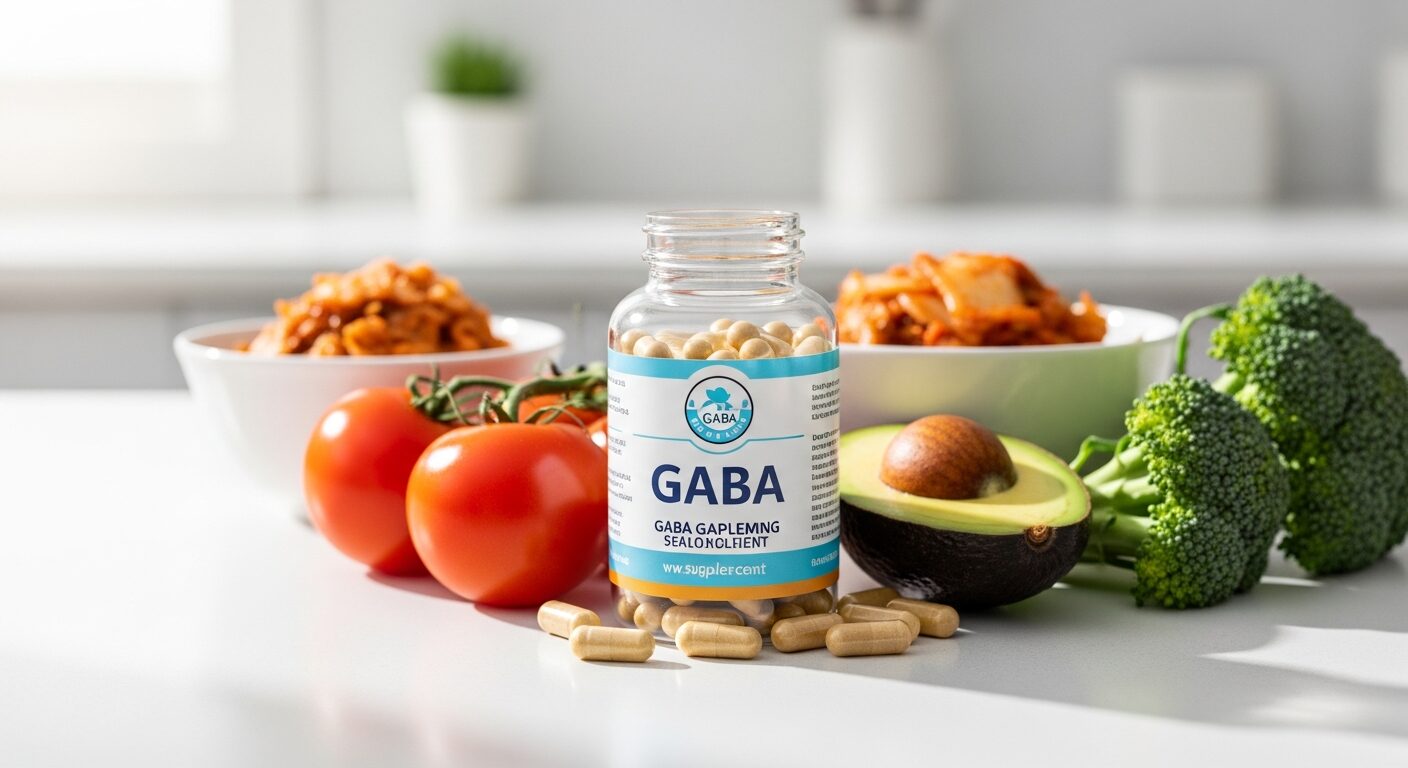
When it comes to natural anxiety relief, two supplements frequently dominate the conversation: GABA and L-Theanine. Both promise to calm racing thoughts and ease tension, but they work through entirely different mechanisms in your body. Understanding these differences isn’t just academic curiosity—it could be the key to finding the right solution for your specific needs.
While L-Theanine gently promotes relaxation without drowsiness, GABA acts as your brain’s primary “brake pedal,” directly inhibiting overactive neural circuits. The choice between them depends on factors like your anxiety type, lifestyle, and even your brain’s unique chemistry. Let’s dive deep into what science reveals about GABA, how it compares to L-Theanine, and which might work better for your situation.
🌿 Looking for GABA supplements? Shop Amazon →
Contents
What is GABA
Gamma-aminobutyric acid (GABA) is your brain’s most important inhibitory neurotransmitter, responsible for calming neural activity and preventing overstimulation. Think of it as your nervous system’s built-in tranquilizer, naturally produced to counterbalance excitatory signals that can lead to anxiety, restlessness, and mental agitation.
Unlike L-Theanine, which is an amino acid derived from tea leaves, GABA is actually synthesized within your brain from glutamate, an excitatory neurotransmitter. This creates a beautiful biological balance—your brain literally transforms its primary “accelerator” into its primary “brake.” When GABA binds to its receptors, it opens chloride channels that hyperpolarize neurons, making them less likely to fire and creating that sought-after sense of calm.
However, here’s where it gets interesting: the GABA you take as a supplement faces significant challenges reaching your brain due to the blood-brain barrier. This has led to considerable debate in the scientific community about oral GABA supplementation’s effectiveness, though emerging research suggests it may work through alternative pathways including the gut-brain axis and peripheral nervous system effects.
Key Benefits of GABA
Research on GABA supplementation has revealed several compelling benefits that extend beyond simple anxiety relief. A 2006 study published in the American Journal of Medicine found that GABA supplementation significantly reduced stress markers and improved mood in participants under psychological stress, suggesting its effects reach beyond the central nervous system.
One of GABA’s most notable benefits is its impact on sleep quality. Unlike L-Theanine, which primarily promotes relaxation without sedation, GABA appears to directly influence sleep architecture. Users often report falling asleep faster and experiencing deeper, more restorative sleep cycles. This makes it particularly valuable for individuals whose anxiety manifests as racing thoughts at bedtime.
GABA also shows promise for physical tension relief. Many people carry stress in their muscles, leading to tight shoulders, jaw clenching, and general physical discomfort. GABA’s inhibitory effects can help reduce this muscular tension, creating a more comprehensive relaxation response than what you might experience with L-Theanine alone.
Additionally, some research suggests GABA may support cognitive performance under stress. While L-Theanine is famous for promoting “calm focus,” GABA appears to help maintain mental clarity when anxiety would otherwise impair concentration. This makes it potentially valuable for people who experience test anxiety or performance-related stress.
What Most People Get Wrong About GABA
The most persistent myth about GABA is that it doesn’t work because it can’t cross the blood-brain barrier. While it’s true that GABA faces challenges reaching the brain directly, this doesn’t mean oral supplementation is useless. Recent research has revealed that GABA can influence the nervous system through multiple pathways, including effects on the enteric nervous system (your “second brain” in the gut) and interactions with the vagus nerve.
Another common misconception is that GABA and L-Theanine are interchangeable anxiety supplements. This oversimplification ignores their distinct mechanisms and optimal use cases. GABA tends to produce more pronounced relaxation effects and is better suited for evening use or acute stress situations, while L-Theanine excels at maintaining alertness alongside calmness, making it ideal for daytime anxiety management.
Many people also believe that higher GABA doses automatically mean better results. This reflects a fundamental misunderstanding of how neurotransmitter systems work. Your brain maintains delicate balances, and overwhelming the system with excessive GABA can actually lead to tolerance, rebound anxiety, or paradoxical effects. The optimal dose is often much lower than what anxious individuals assume they need.
Perhaps the most dangerous misconception is that GABA is always safe because it’s “natural.” While generally well-tolerated, GABA can interact with medications, particularly those affecting the central nervous system. It can also cause dependency-like effects in some individuals, especially when used in high doses or combined with other GABAergic substances like alcohol or benzodiazepines.
What Happens to Your Body After 30 Days of Taking GABA
During the first week of GABA supplementation, most people notice subtle changes in their stress response and sleep patterns. Initial effects often include falling asleep more easily and experiencing slightly deeper sleep. Some individuals report feeling less physically tense, particularly in areas where they typically hold stress like the neck and shoulders. However, these early changes can be inconsistent as your body adjusts to the supplementation.
Week two typically brings more noticeable and consistent effects. Research published in BioFactors in 2004 suggests that GABA’s effects on stress hormone regulation become more pronounced with consistent use. Users often report improved emotional regulation, with less intense reactions to daily stressors. Sleep quality improvements become more reliable, and many people notice they wake up feeling more refreshed.
By weeks three and four, the full spectrum of GABA’s benefits typically emerges. This is when people often experience the most significant improvements in their overall anxiety levels and stress management. The body appears to optimize its response to supplementation during this period, with effects becoming more predictable and sustained. Some users report improved exercise recovery and better mood stability throughout the day.
It’s important to note that individual responses vary significantly based on factors like baseline GABA production, overall health status, and concurrent supplements or medications. Some people may experience peak benefits earlier, while others might need 6-8 weeks to see full effects. Unlike L-Theanine, which often provides immediate benefits, GABA’s effects tend to build gradually over time.
Who Should NOT Take GABA
Pregnant and breastfeeding women should avoid GABA supplementation due to insufficient safety data. The effects of supplemental GABA on developing fetuses and infants remain unknown, and the potential risks outweigh any theoretical benefits. These individuals should focus on safer anxiety management strategies or consult healthcare providers for pregnancy-safe alternatives.
Individuals taking medications that affect the central nervous system require special caution with GABA. This includes benzodiazepines, barbiturates, sleep medications, certain antidepressants, and anti-seizure drugs. GABA can potentially amplify these medications’ effects, leading to excessive sedation, cognitive impairment, or dangerous interactions. Always consult a healthcare provider before combining GABA with any prescription medications.
People with bipolar disorder or other mood disorders should approach GABA supplementation carefully. While it may seem beneficial for anxiety, GABA can potentially interfere with mood stabilization and might trigger mood episodes in susceptible individuals. Those with a history of substance abuse should also exercise caution, as GABA can potentially reinforce addictive patterns or interact dangerously with alcohol and other substances.
Children and adolescents should not take GABA supplements without medical supervision. Their developing nervous systems may be more sensitive to GABAergic effects, and there’s insufficient research on long-term developmental impacts. Elderly individuals may also experience enhanced sensitivity to GABA’s effects and should start with lower doses under medical guidance.
Dosage and Best Forms
Most research supports GABA dosages between 100-750mg daily, with 500mg being a common starting point for anxiety relief. Unlike L-Theanine, which can be taken multiple times daily, GABA is often most effective when taken once in the evening due to its potential sedating effects. Some people benefit from splitting the dose, taking a smaller amount (100-250mg) in the afternoon and the remainder before bed.
Timing is crucial with GABA supplementation. For sleep benefits, take it 30-60 minutes before bedtime on an empty stomach for optimal absorption. For general anxiety relief, taking GABA between meals can improve its effectiveness. Avoid taking it with protein-rich foods, as other amino acids can compete for absorption.
Several forms of GABA are available, each with different characteristics. Standard GABA is the most researched form, while PharmaGABA (a naturally fermented form) claims better bioavailability. GABA combined with other calming nutrients like magnesium, melatonin, or L-Theanine may provide synergistic effects, though this also increases the complexity of dosing and potential interactions.
Quality matters significantly with GABA supplements. Look for products that are third-party tested for purity and potency, as amino acid supplements can vary widely in quality. Avoid products with unnecessary additives or those making exaggerated claims about crossing the blood-brain barrier.
🌿 Looking for GABA Supplements?
Browse top-rated GABA supplements, independently tested and recommended by our editorial team.
Affiliate disclosure: We may earn a small commission at no extra cost to you.
Frequently Asked Questions
Can I take GABA and L-Theanine together?
Yes, GABA and L-Theanine can be safely combined and may provide complementary effects. L-Theanine’s ability to promote calm focus pairs well with GABA’s more direct relaxation effects. However, start with lower doses of each when combining them, as their effects can be additive. A common combination is 100-200mg L-Theanine with 250-500mg GABA.
How long does it take for GABA to work?
GABA’s effects can vary significantly between individuals and intended uses. For sleep benefits, some people notice effects within 30-60 minutes. For general anxiety relief, consistent daily use for 1-2 weeks often provides the most noticeable benefits. Unlike L-Theanine’s relatively quick onset, GABA’s full therapeutic effects typically develop over time with regular use.
Will GABA make me drowsy during the day?
GABA can cause drowsiness, especially in higher doses or when first starting supplementation. This is why many people prefer taking it in the evening. If you want to use GABA during the day, start with a lower dose (100-250mg) and assess your response. Some people can take moderate doses without significant sedation, while others are more sensitive.
Is GABA addictive or habit-forming?
While GABA is not considered addictive in the traditional sense, some people may develop psychological dependence on its calming effects. Physical dependence is rare with standard doses, but abrupt discontinuation after long-term high-dose use might cause temporary rebound anxiety. A 2012 study in Neuropharmacology suggests that moderate, appropriate use of GABA supplements carries minimal risk of dependence compared to prescription anxiolytics.
Can GABA help with panic attacks?
GABA may help reduce the frequency and intensity of panic attacks when used consistently, but it’s not typically fast-acting enough to stop an acute panic attack in progress. For immediate panic relief, L-Theanine might be more effective due to its faster onset. GABA is better viewed as a preventive measure that can help reduce overall anxiety levels that contribute to panic attacks.
Medical Disclaimer
This article is for informational purposes only and does not constitute medical advice. GABA supplementation can interact with medications and may not be appropriate for everyone. The information provided should not replace professional medical consultation, diagnosis, or treatment. Always consult with a qualified healthcare provider before starting any new supplement regimen, especially if you have existing health conditions, take medications, or are pregnant or breastfeeding. Individual responses to supplements vary, and what works for one person may not be suitable for another. If you experience any adverse effects while taking GABA or any other supplement, discontinue use and consult a healthcare professional immediately.