
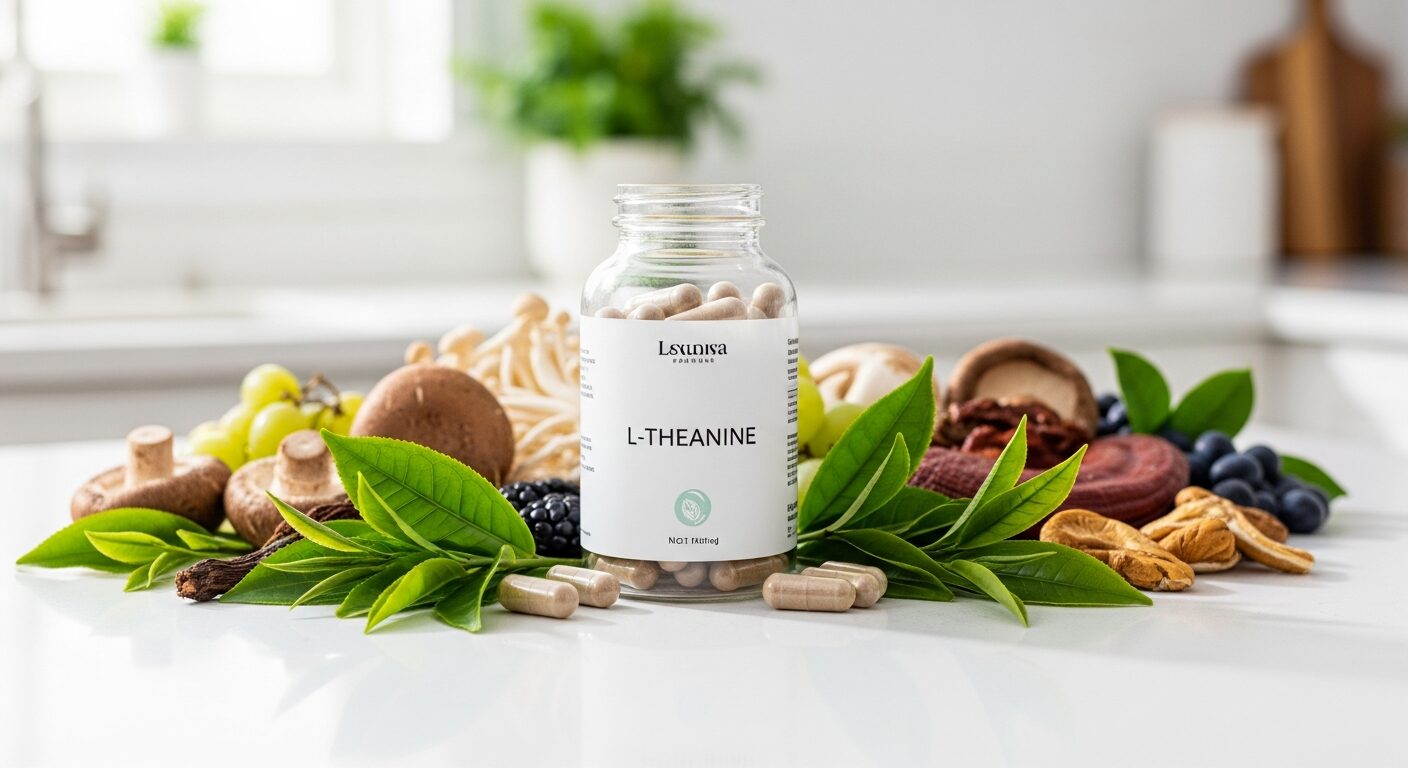
In a world where stress seems to be the default state and quality sleep feels like a luxury, millions of people are turning to an amino acid that’s been quietly working its magic in tea leaves for centuries. L-theanine, a compound found naturally in tea plants, has emerged as one of the most scientifically validated supplements for promoting calm focus and mental clarity without the drowsiness associated with traditional relaxation aids.
What makes L-theanine particularly fascinating is its unique ability to promote relaxation while simultaneously enhancing cognitive performance – a combination that seems almost too good to be true. Unlike caffeine, which can leave you jittery and anxious, or melatonin, which makes you sleepy, L-theanine works by gently modulating your brain’s neurotransmitters to create what researchers describe as “relaxed alertness.”
This comprehensive guide will explore everything you need to know about L-theanine, from its mechanism of action and scientifically-proven benefits to common misconceptions and what you can realistically expect from supplementation. Whether you’re struggling with anxiety, seeking better focus, or simply looking for a natural way to take the edge off daily stress, understanding L-theanine could be the key to unlocking a calmer, more focused version of yourself.
Contents
What is L-Theanine
L-theanine is a naturally occurring amino acid found primarily in tea leaves (Camellia sinensis), particularly green tea, as well as in certain mushroom species. Chemically known as N-ethyl-L-glutamine, this unique compound was first isolated from tea leaves in 1949 by Japanese scientists who were investigating what gave tea its distinctive relaxing properties despite containing caffeine.
Unlike the 20 standard amino acids that make up proteins in the human body, L-theanine is considered a non-proteinogenic amino acid, meaning it doesn’t participate in protein synthesis. Instead, it acts as a neuromodulator, crossing the blood-brain barrier within 30-50 minutes of consumption to directly influence brain chemistry and neural activity.
The “L” in L-theanine refers to its molecular structure – specifically, it’s the left-handed (levo) form of theanine, which is the biologically active form found in nature. This is important because synthetic versions can contain both L-theanine and D-theanine, but only the L-form provides the desired neurological benefits.
What makes L-theanine particularly interesting from a biochemical perspective is its structural similarity to glutamate, one of the brain’s primary excitatory neurotransmitters. However, instead of exciting neurons like glutamate, L-theanine actually promotes relaxation by increasing the production of calming neurotransmitters like GABA, dopamine, and serotonin while simultaneously reducing stress-related brain chemicals.
Key Benefits of L-Theanine
The scientific literature on L-theanine reveals a impressive range of benefits that extend far beyond simple stress reduction. Research consistently demonstrates that L-theanine can significantly improve various aspects of mental and physical well-being through its unique neurological effects.
One of the most well-documented benefits is L-theanine’s ability to reduce anxiety and stress without causing sedation. Kimura et al., 2007 found that L-theanine administration significantly reduced stress responses in individuals exposed to psychological stressors, with participants showing lower cortisol levels and improved subjective feelings of calmness.
L-theanine also demonstrates remarkable cognitive benefits, particularly in the area of attention and focus. Studies show that it can improve both selective attention and overall cognitive performance, especially when combined with caffeine. The compound appears to smooth out caffeine’s stimulating effects while enhancing its cognitive benefits, creating a state of calm alertness that’s ideal for mental tasks requiring sustained concentration.
Sleep quality represents another significant area of benefit. While L-theanine doesn’t act as a sedative, it helps improve sleep quality by reducing racing thoughts and promoting the relaxed mental state conducive to falling asleep naturally. Research indicates that people taking L-theanine fall asleep faster and report feeling more refreshed upon waking.
Additionally, emerging research suggests that L-theanine may support cardiovascular health by helping to regulate blood pressure during stressful situations and potentially supporting healthy immune system function through its stress-reducing properties.
What Most People Get Wrong About L-Theanine
Despite its growing popularity, several persistent misconceptions about L-theanine continue to circulate, often leading to unrealistic expectations or improper usage. Understanding these myths is crucial for anyone considering L-theanine supplementation.
Myth 1: L-Theanine is a Sleep Aid
One of the most common misconceptions is that L-theanine works like melatonin or other sleep aids. Many people expect it to make them drowsy or knock them out, but this fundamentally misunderstands how L-theanine works. L-theanine promotes relaxation without sedation – it doesn’t make you sleepy, it makes you calm. In fact, studies show that L-theanine can actually improve alertness and cognitive performance while reducing anxiety. The sleep benefits come from its ability to quiet mental chatter and reduce stress, making it easier to fall asleep naturally, not from any sedative properties.
Myth 2: More L-Theanine Always Equals Better Results
Another widespread misconception is that higher doses automatically provide better benefits. Research actually suggests that L-theanine follows an inverted U-curve response, meaning there’s an optimal dose range (typically 100-200mg) beyond which additional benefits plateau or may even diminish. Taking excessive amounts doesn’t enhance the calming effects and may lead to mild side effects like headaches or digestive upset. The key is finding your individual optimal dose, not maximizing intake.
Myth 3: L-Theanine Works Immediately for Everyone
While L-theanine does cross the blood-brain barrier relatively quickly, the subjective effects aren’t always immediately apparent to everyone. Some individuals notice benefits within 30-60 minutes, while others require several days or weeks of consistent use to experience significant effects. This variation depends on factors like individual brain chemistry, stress levels, sensitivity to supplements, and even genetics. The expectation of immediate, dramatic effects often leads to premature discontinuation before the compound has had time to build up and demonstrate its full potential.
Myth 4: L-Theanine Can Replace Prescription Anxiety Medications
Perhaps the most dangerous misconception is viewing L-theanine as a direct replacement for prescription anxiety medications. While L-theanine can be an excellent complementary tool for managing mild to moderate stress and anxiety, it’s not equivalent to prescription medications in terms of potency or mechanism of action. Individuals taking prescription anxiety medications should never discontinue them in favor of L-theanine without consulting their healthcare provider, as this could lead to withdrawal symptoms or inadequate treatment of serious anxiety disorders.
What Happens to Your Body After 30 Days of Taking L-Theanine
Understanding the timeline of L-theanine’s effects can help set realistic expectations and ensure you give the supplement adequate time to demonstrate its benefits. Based on clinical research and user reports, here’s what typically occurs during the first month of consistent L-theanine supplementation.
Week 1: Initial Neurochemical Changes
During the first week, L-theanine begins establishing its presence in your system and initiating neurochemical changes, though these may not always translate to immediately noticeable subjective effects. Nobre et al., 2008 demonstrated that alpha brain wave activity increases within 40 minutes of L-theanine consumption, indicating a shift toward a more relaxed but alert mental state.
Some individuals may notice subtle changes during this period, such as slightly improved ability to handle stressful situations or a general sense of feeling less “on edge.” Others may not perceive any significant changes yet, as their brain chemistry adjusts to the new compound. It’s important not to increase dosage during this period, as your body is still adapting to the initial amount.
Week 2: Noticeable Stress Response Improvements
By the second week, most people begin experiencing more consistent and noticeable effects. The most commonly reported changes include improved stress resilience – situations that previously triggered anxiety or stress responses feel more manageable. Sleep quality often begins improving during this period, not because L-theanine is sedating, but because the reduced mental chatter makes it easier to fall asleep naturally.
Cognitive benefits also become more apparent during week two. Many users report improved focus and concentration, particularly when performing tasks that require sustained attention. The jittery effects of caffeine become more manageable for those who combine L-theanine with their coffee or tea consumption.
Weeks 3-4: Full Benefit Realization
The third and fourth weeks typically represent the period when L-theanine’s full benefits become apparent. By this point, the compound has had sufficient time to create lasting changes in neurotransmitter balance and stress response patterns. Users often report a general sense of improved emotional regulation – they feel more even-keeled and less reactive to daily stressors.
Sleep improvements become more pronounced and consistent during this period. While initial sleep benefits might have been sporadic, most people experience more reliable improvements in both sleep onset and sleep quality by the end of the first month. Additionally, the cognitive benefits often stabilize, with users reporting sustained improvements in focus, mental clarity, and the ability to maintain attention during demanding tasks.
It’s worth noting that some individuals may need longer than 30 days to experience L-theanine’s full benefits, particularly those with high baseline stress levels or those taking other medications that might influence its effectiveness.
Who Should NOT Take L-Theanine
While L-theanine is generally considered safe for most healthy adults, certain individuals should exercise caution or avoid it altogether. Understanding these contraindications is essential for safe and effective supplementation.
Pregnant and breastfeeding women should avoid L-theanine supplements due to insufficient safety data. While green tea consumption in moderate amounts is generally considered safe during pregnancy, the concentrated doses found in supplements haven’t been adequately studied in these populations. The potential effects on fetal development or nursing infants remain unknown, making avoidance the safest approach.
Individuals taking blood pressure medications should consult their healthcare provider before using L-theanine, as it may have additive hypotensive effects. While this isn’t necessarily dangerous, it could potentially lead to excessively low blood pressure when combined with antihypertensive medications. Regular monitoring and possible dose adjustments of prescription medications might be necessary.
People scheduled for surgery should discontinue L-theanine at least two weeks before the procedure. L-theanine may enhance the effects of anesthesia and other central nervous system depressants used during surgery, potentially complicating anesthetic management. Additionally, its potential effects on blood pressure could interfere with surgical protocols.
Children under 18 should generally avoid L-theanine supplements unless specifically recommended and supervised by a pediatrician. While children consume L-theanine naturally through tea consumption, the safety and appropriate dosing of concentrated supplements in developing individuals hasn’t been established through adequate research.
Individuals with severe mental health conditions, particularly those involving psychosis or severe depression, should consult mental health professionals before adding L-theanine to their regimen. While it may be beneficial as part of a comprehensive treatment plan, it shouldn’t be used as a substitute for appropriate psychiatric care, and its interactions with psychiatric medications need professional evaluation.
Dosage and Best Forms
Determining the optimal L-theanine dosage depends on individual factors including body weight, sensitivity to supplements, stress levels, and intended use. Clinical studies have used doses ranging from 50mg to 400mg, but most research supports 100-200mg as the sweet spot for most adults.
For general stress management and daily calm, 100-200mg taken once or twice daily is typically effective. Those using L-theanine primarily for focus and cognitive enhancement often find 100mg combined with 50-100mg of caffeine provides optimal results. For sleep support, 200mg taken 30-60 minutes before bedtime is commonly recommended, though some individuals may need only 100mg.
When it comes to forms, L-theanine supplements are available as capsules, tablets, powders, and even gummies. Capsules and tablets offer precise dosing and convenience, while powder forms provide flexibility for dose adjustment and faster absorption when dissolved in liquid. Avoid products that don’t specify “L-theanine” on the label, as these may contain inferior synthetic mixtures of L- and D-theanine.
Quality considerations are crucial when selecting an L-theanine supplement. Look for products that use Suntheanine®, a patented form of L-theanine produced through fermentation that ensures 100% L-isomer content. Third-party testing for purity and potency provides additional quality assurance. Avoid products with unnecessary fillers, artificial colors, or allergens that might interfere with absorption or cause adverse reactions.
Timing can significantly impact L-theanine’s effectiveness. For stress and anxiety management, taking it with or without food is generally fine, though some people find it more effective on an empty stomach. When combining with caffeine, simultaneous consumption typically provides the best synergistic effects. For sleep support, consistency in timing is important – take it at the same time each evening to establish a routine.
🌿 Looking for L-Theanine Supplements?
Browse top-rated L-Theanine supplements, independently tested and recommended by our editorial team.
Affiliate disclosure: We may earn a small commission at no extra cost to you.
Frequently Asked Questions
Can I take L-theanine with coffee?
Yes, L-theanine and caffeine actually work synergistically together. Owen et al., 2008 demonstrated that the combination of L-theanine and caffeine improves cognitive performance while reducing the jittery side effects typically associated with caffeine alone. A common ratio is 2:1 L-theanine to caffeine, such as 200mg L-theanine with 100mg caffeine. This combination provides alertness and focus without the anxiety or crash often experienced with caffeine alone.
How long does L-theanine stay in your system?
L-theanine has a relatively short half-life of approximately 3-4 hours, meaning most of it is eliminated from your system within 8-10 hours. However, its effects on neurotransmitter balance and stress response may persist longer than its direct presence in the bloodstream. This is why some people notice cumulative benefits with consistent daily use, even though individual doses are cleared relatively quickly.
Is it safe to take L-theanine daily?
Yes, daily L-theanine consumption appears to be safe for most healthy adults. Studies have used daily dosing for extended periods without significant adverse effects. In fact, many of L-theanine’s benefits, particularly for stress management and sleep quality, appear to be enhanced with consistent daily use rather than sporadic supplementation. However, it’s always wise to take periodic breaks from any supplement to assess your ongoing need and prevent tolerance.
Will L-theanine show up on drug tests?
No, L-theanine will not show up on standard drug tests. It’s a naturally occurring amino acid that doesn’t fall into any of the substance categories typically screened for in employment, athletic, or legal drug testing. L-theanine is legal in all countries where supplements are sold and is not considered a controlled substance or performance-enhancing drug.
Can L-theanine cause side effects?
L-theanine is generally well-tolerated with minimal side effects. The most commonly reported side effects are mild and include headaches, dizziness, or gastrointestinal upset, typically only occurring with very high doses exceeding 400mg. Some individuals may experience lowered blood pressure, which could cause lightheadedness, particularly when standing up quickly. Rarely, some people report feeling overly relaxed or slightly drowsy, though this is uncommon at standard doses.
Medical Disclaimer
This article is for educational and informational purposes only and is not intended as medical advice. The information provided should not be used to diagnose, treat, cure, or prevent any disease or health condition. L-theanine supplements have not been evaluated by the Food and Drug Administration for the treatment of any medical condition.
Individual responses to L-theanine may vary significantly, and what works for one person may not work for another. Always consult with a qualified healthcare provider before starting any new supplement regimen, especially if you are pregnant, nursing, taking medications, or have any underlying health conditions. If you experience any adverse reactions while taking L-theanine, discontinue use immediately and consult your healthcare provider.
The studies and research cited in this article are provided for informational purposes and do not constitute an endorsement or recommendation for use. Always rely on the guidance of qualified medical professionals for decisions regarding your health and wellness.