
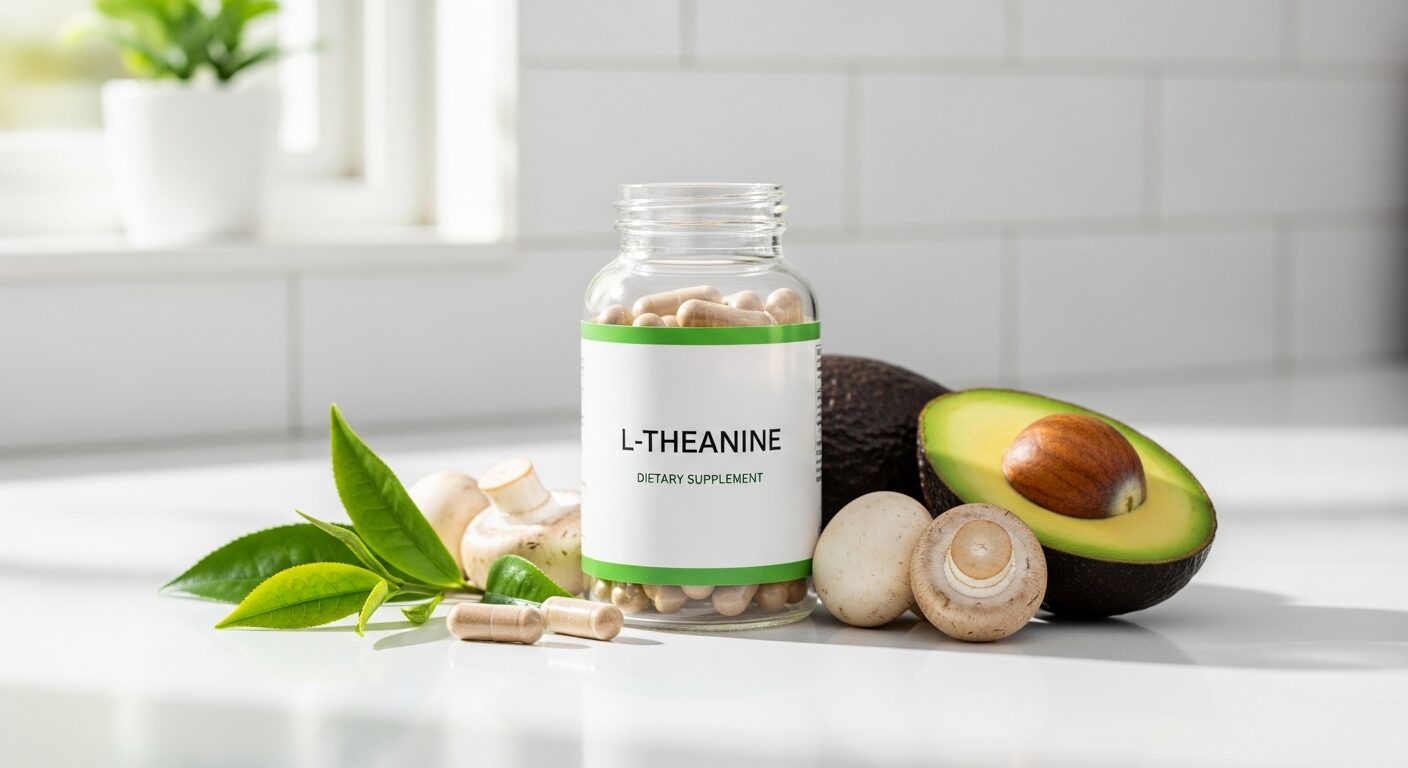
If you’ve ever struggled with restless nights or felt your mind racing when your head hits the pillow, you’re not alone. Millions of people worldwide grapple with sleep issues, often turning to various remedies that promise better rest. Among the natural solutions gaining significant attention is L-theanine, an amino acid that’s been quietly revolutionizing how we approach sleep support.
Unlike harsh sleep medications that can leave you groggy the next morning, L-theanine offers a gentler approach to promoting relaxation and improving sleep quality. This naturally occurring compound, primarily found in tea leaves, has caught the attention of researchers and health enthusiasts alike for its unique ability to calm the mind without causing sedation. What makes L-theanine particularly intriguing is its dual action: it promotes relaxation while maintaining mental clarity, creating an ideal state for natural sleep onset.
The growing body of scientific research surrounding L-theanine reveals fascinating insights into how this amino acid works at the neurological level to support better sleep patterns. From influencing brain wave activity to modulating neurotransmitter levels, L-theanine’s mechanisms are both complex and elegantly simple in their effectiveness.
Contents
What is L-Theanine
L-theanine is a unique amino acid discovered in 1949 by Japanese scientists studying the leaves of Camellia sinensis, the plant used to make green and black tea. Unlike the 20 standard amino acids that serve as building blocks for proteins, L-theanine doesn’t participate in protein synthesis. Instead, it acts as a psychoactive compound that can cross the blood-brain barrier and directly influence brain function.
Structurally, L-theanine is remarkably similar to glutamate, one of the brain’s primary excitatory neurotransmitters. This similarity allows L-theanine to interact with glutamate receptors, but instead of exciting them, it has a modulatory effect that promotes calmness. The compound is found almost exclusively in tea plants, with green tea containing the highest concentrations, typically ranging from 1-2% of the tea’s dry weight.
What sets L-theanine apart from other relaxation compounds is its ability to promote what researchers call “relaxed alertness.” This state is characterized by increased alpha brain wave activity, which is associated with wakeful relaxation – the same brain state experienced during meditation. This unique property makes L-theanine particularly valuable for sleep support, as it helps quiet mental chatter without causing drowsiness or cognitive impairment during waking hours.
Key Benefits of L-Theanine
The scientific literature reveals several compelling benefits of L-theanine supplementation, particularly for sleep and relaxation. Research published in the Journal of Clinical Medicine, 2019 demonstrated that L-theanine supplementation significantly improved sleep quality and reduced sleep latency – the time it takes to fall asleep – in healthy adults.
One of the most well-documented effects of L-theanine is its ability to increase alpha brain wave activity. Alpha waves, which oscillate between 8-13 Hz, are associated with relaxed wakefulness and are prominent during meditation and light sleep stages. This increase in alpha activity helps create the mental conditions conducive to natural sleep onset while reducing the beta wave activity associated with stress and anxiety.
L-theanine also influences several key neurotransmitters involved in sleep regulation. It increases levels of GABA (gamma-aminobutyric acid), the brain’s primary inhibitory neurotransmitter, which helps reduce neuronal excitability and promote calmness. Additionally, it modulates dopamine and serotonin levels, both crucial for mood regulation and sleep-wake cycles.
Beyond sleep benefits, L-theanine has been shown to reduce cortisol levels, the primary stress hormone that can interfere with sleep quality. By helping to regulate the body’s stress response, L-theanine creates a more favorable physiological environment for restorative sleep. Studies have also indicated that L-theanine can improve REM sleep quality, which is essential for memory consolidation and emotional processing.
What Most People Get Wrong About L-Theanine
Despite its growing popularity, several misconceptions about L-theanine persist, leading to unrealistic expectations and suboptimal usage patterns. Understanding these myths is crucial for maximizing the compound’s benefits.
Myth 1: L-theanine is a sedative that will make you drowsy. This is perhaps the most common misunderstanding about L-theanine. Unlike traditional sleep aids or sedatives, L-theanine doesn’t cause drowsiness or impair cognitive function. Instead, it promotes relaxed alertness, making it safe to take during the day. The confusion likely stems from L-theanine’s ability to improve sleep quality, but its mechanism is fundamentally different from sedative compounds. It works by reducing stress and anxiety that interfere with natural sleep processes, not by forcing drowsiness.
Myth 2: Higher doses always work better. Many people assume that if a little L-theanine is good, more must be better. However, research suggests that L-theanine follows a bell curve response, meaning there’s an optimal dosage range beyond which benefits may plateau or even diminish. Studies typically show peak benefits at doses between 100-400mg, with higher doses not necessarily providing additional sleep improvements. Taking excessive amounts may even counteract some benefits due to potential interactions with other neurotransmitter systems.
Myth 3: L-theanine works immediately like a sleeping pill. Unlike pharmaceutical sleep medications that can work within 30-60 minutes, L-theanine’s effects are more subtle and cumulative. While some people may notice immediate relaxation effects, the sleep-supportive benefits often develop over days to weeks of consistent use. This gradual onset is actually advantageous, as it allows the body to naturally adjust sleep patterns without creating dependency.
Myth 4: All L-theanine supplements are the same. The source, purity, and form of L-theanine can significantly impact its effectiveness. Synthetic L-theanine may not have the same bioavailability as naturally derived forms. Additionally, many products contain D-theanine or mixtures of L and D forms, which don’t provide the same benefits as pure L-theanine. The presence of other ingredients, such as caffeine or additives, can also influence how L-theanine works in the body.
What Happens to Your Body After 30 Days of Taking L-Theanine
Understanding the timeline of L-theanine’s effects can help set appropriate expectations and optimize supplementation strategies. Research indicates that while some benefits may be immediate, the full sleep-supportive effects typically develop over several weeks.
Week 1: Initial Adaptation During the first week, most people begin to notice subtle changes in their stress response and overall sense of calm. Studies show that L-theanine can reduce stress-related symptoms within the first few days, 2006. You may find that daily stressors feel more manageable, and there’s often a noticeable reduction in that “wired but tired” feeling that prevents sleep onset. Some individuals report falling asleep slightly faster, though sleep architecture changes are still minimal at this stage.
Week 2: Noticeable Sleep Improvements By the second week, sleep quality improvements typically become more apparent. Users often report waking up feeling more refreshed, with less middle-of-the-night awakening. The increased alpha brain wave activity becomes more pronounced, leading to a deeper sense of relaxation before bedtime. Anxiety-related sleep disturbances begin to diminish as GABA modulation becomes more established. Dreams may become more vivid as REM sleep quality improves.
Weeks 3-4: Full Benefits Emerge The third and fourth weeks often represent the period when L-theanine’s full sleep-supportive benefits manifest. Research indicates that consistent L-theanine use over 3-4 weeks produces the most significant improvements in sleep quality measures, 2018. Sleep onset time typically stabilizes at improved levels, and sleep efficiency – the percentage of time in bed actually spent sleeping – often increases notably. The stress-buffering effects become more robust, helping to maintain good sleep quality even during challenging periods.
At this stage, many users report improved daytime energy and mental clarity, likely resulting from better sleep quality rather than direct stimulant effects. The body’s natural circadian rhythms often become more regulated, with more consistent sleep and wake times. Stress-related physical symptoms, such as muscle tension that can interfere with sleep, typically show significant improvement.
Who Should NOT Take L-Theanine
While L-theanine is generally considered safe for most adults, certain individuals should exercise caution or avoid supplementation entirely. Understanding these contraindications is essential for safe and effective use.
Pregnant and Breastfeeding Women should avoid L-theanine supplements due to insufficient safety data during pregnancy and lactation. While L-theanine from tea consumption is likely safe in normal amounts, concentrated supplements may pose unknown risks to developing fetuses or nursing infants.
Children and Adolescents under 18 should not take L-theanine supplements without medical supervision. The developing brain may respond differently to amino acid supplementation, and appropriate dosing guidelines for younger populations haven’t been established through clinical research.
Individuals with Low Blood Pressure should use L-theanine cautiously, as it may have mild hypotensive effects. While these effects are generally subtle, people with already low blood pressure or those taking antihypertensive medications should monitor their blood pressure closely and consult with healthcare providers.
People Taking Sedative Medications should be cautious about combining L-theanine with prescription sleep aids, benzodiazepines, or other central nervous system depressants. While L-theanine isn’t sedating itself, it may potentiate the effects of these medications, potentially leading to excessive sedation.
Those with Upcoming Surgery should discontinue L-theanine at least two weeks before scheduled procedures. Its potential interactions with anesthesia and other surgical medications haven’t been fully studied, making discontinuation the safer approach.
Individuals should consult healthcare providers before starting L-theanine if they have any chronic medical conditions, take prescription medications, or experience unexplained sleep disturbances that may require medical evaluation.
Dosage and Best Forms
The optimal L-theanine dosage for sleep support typically ranges from 100-400mg, taken 30-60 minutes before bedtime. Most research studies use doses within this range, with 200mg being the most commonly studied amount. Starting with a lower dose of 100mg allows for individual tolerance assessment and gradual titration if needed.
For daytime stress management that supports better evening sleep, doses of 100-200mg can be taken 1-2 times daily, preferably between meals. This approach helps maintain consistent blood levels and provides ongoing stress-buffering effects throughout the day.
The most effective forms of L-theanine are typically standardized extracts that guarantee specific concentrations of the active compound. Look for products that specify “L-theanine” rather than just “theanine,” as some supplements contain less active D-theanine or racemic mixtures. Suntheanine, a patented form of L-theanine produced through fermentation, is often considered the gold standard due to its purity and research backing.
Capsules and tablets are the most common and convenient forms, though some people prefer powder forms that can be mixed into beverages. Timing is important – for sleep support, take L-theanine 30-60 minutes before your desired bedtime to allow for absorption and onset of effects.
🌿 Looking for L-Theanine Supplements?
Browse top-rated L-Theanine supplements, independently tested and recommended by our editorial team.
Affiliate disclosure: We may earn a small commission at no extra cost to you.
Frequently Asked Questions
How long does L-theanine stay in your system?
L-theanine has a relatively short half-life of approximately 1-3 hours, meaning it’s largely metabolized and eliminated within 5-8 hours of ingestion. However, its effects on neurotransmitter balance and brain wave activity may persist longer, contributing to improved sleep quality throughout the night.
Can you build tolerance to L-theanine?
Unlike many sleep aids, L-theanine doesn’t typically lead to tolerance or dependency. Most users maintain consistent benefits with regular use, and there’s no evidence of withdrawal symptoms when discontinuing. Some people may find their optimal dose changes over time based on stress levels and individual response.
Is it safe to take L-theanine with caffeine?
Yes, L-theanine and caffeine are often taken together and may have synergistic effects. L-theanine can help smooth out caffeine’s stimulating effects while maintaining alertness. However, avoid caffeine within 6-8 hours of bedtime, as it can counteract L-theanine’s sleep-supporting benefits.
What’s the difference between L-theanine from tea and supplements?
A typical cup of green tea contains 20-50mg of L-theanine, significantly less than therapeutic supplement doses. Additionally, tea contains caffeine and other compounds that may influence L-theanine’s effects. Supplements provide standardized, higher doses without additional compounds that might interfere with sleep.
Can L-theanine help with sleep disorders like insomnia?
While L-theanine may help improve sleep quality and reduce sleep onset time, it shouldn’t be considered a treatment for clinical sleep disorders. People with persistent insomnia or other sleep disorders should consult healthcare providers for proper diagnosis and treatment. L-theanine may serve as a helpful adjunct to other treatments but shouldn’t replace professional medical care.
Medical Disclaimer
The information provided in this article is for educational purposes only and is not intended as medical advice. L-theanine supplements have not been evaluated by the FDA for the treatment, cure, or prevention of any disease. Individual responses to supplementation may vary, and this information should not replace consultation with qualified healthcare professionals.
Before starting any new supplement regimen, especially if you have pre-existing health conditions, take medications, or experience persistent sleep problems, consult with your physician or a qualified healthcare provider. Pregnant or nursing women, children, and individuals with medical conditions should seek professional medical advice before using L-theanine supplements.
If you experience any adverse reactions or if your sleep problems persist or worsen, discontinue use and consult with a healthcare professional immediately. This article does not constitute medical advice and should not be used as a substitute for professional medical diagnosis, treatment, or care.