
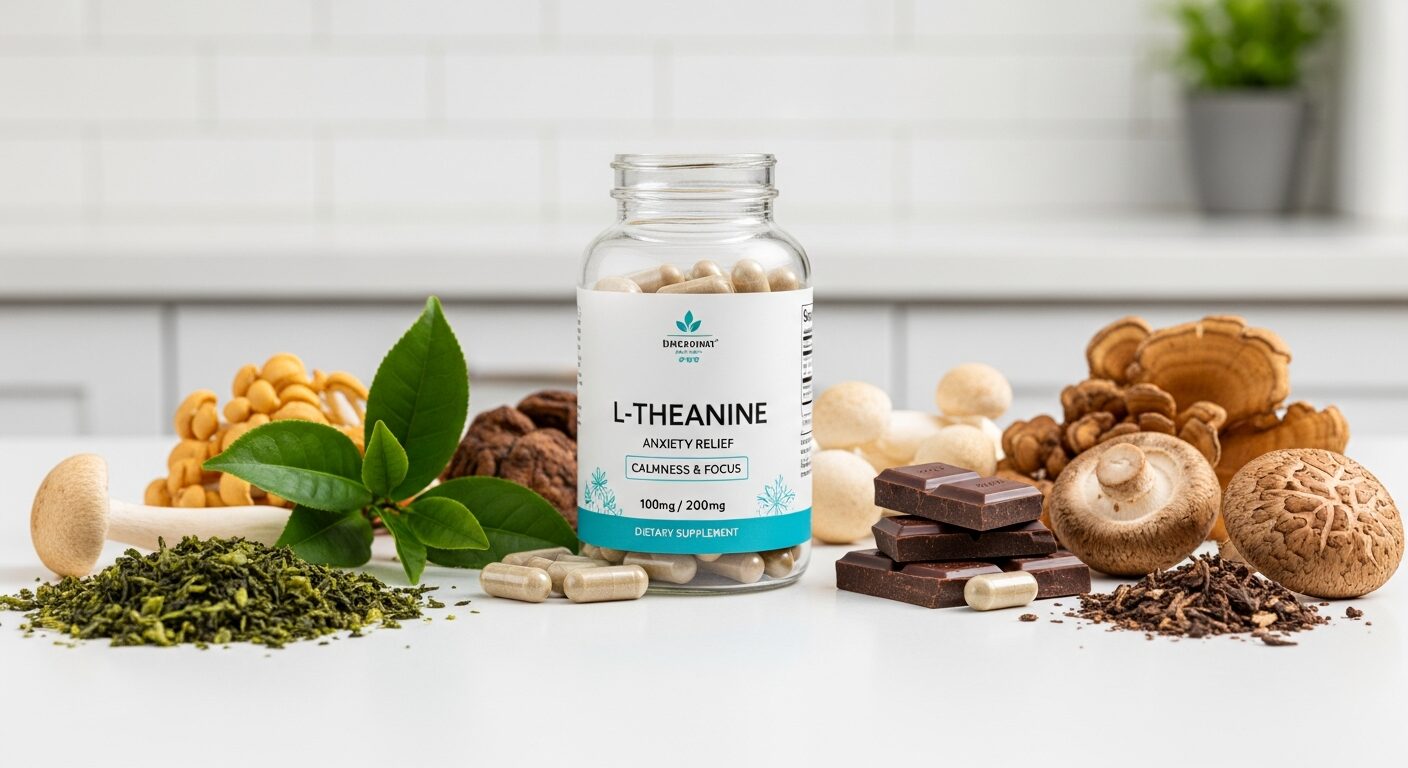
If you’ve ever felt that familiar wave of anxiety wash over you—heart racing, mind spiraling, unable to focus—you’re not alone. Millions of people worldwide struggle with anxiety disorders, and many are turning to natural alternatives to conventional medications. Among these alternatives, L-theanine has emerged as one of the most promising compounds, backed by solid scientific research and centuries of traditional use.
L-theanine, an amino acid found naturally in tea leaves, offers a unique approach to managing anxiety without the sedating effects of many pharmaceutical options. Unlike quick fixes that mask symptoms, L-theanine works with your brain’s natural chemistry to promote a state of calm alertness—what researchers call “relaxed attention.” This isn’t just marketing speak; it’s a measurable neurological state that can be observed in brain scans and quantified through cognitive tests.
What makes L-theanine particularly intriguing is its dual nature: it can reduce anxiety while simultaneously improving focus and cognitive performance. This seemingly contradictory effect has captured the attention of neuroscientists and supplement researchers alike, leading to a growing body of evidence that supports its use as both an anxiolytic and nootropic compound.
Contents
What is L-Theanine
L-theanine is a naturally occurring amino acid discovered in 1949 by Japanese scientists studying the leaves of Camellia sinensis, the plant used to make all true teas. Structurally similar to glutamate, one of the brain’s primary neurotransmitters, L-theanine can cross the blood-brain barrier and directly influence neural activity.
In nature, L-theanine is found almost exclusively in tea plants, with green tea containing the highest concentrations—typically 1-2% of the dry weight of leaves. Some mushroom species also contain trace amounts, but tea remains the primary dietary source. The amino acid is responsible for the umami taste in tea and contributes to the sense of calm alertness that many tea drinkers experience.
Once in the brain, L-theanine influences several neurotransmitter systems simultaneously. It increases levels of GABA, the brain’s primary inhibitory neurotransmitter, while also affecting dopamine and serotonin production. Additionally, L-theanine modulates alpha brain wave activity, creating the characteristic state of relaxed focus that makes it so valuable for anxiety management.
The compound’s molecular structure allows it to be easily absorbed in the small intestine and transported across the blood-brain barrier via the leucine-preferring transport system. Peak blood levels are typically reached within 30-50 minutes after oral administration, with effects lasting 8-12 hours depending on the dose and individual metabolism.
Key Benefits of L-Theanine
The primary benefit of L-theanine for anxiety management lies in its ability to promote relaxation without sedation. Multiple studies have demonstrated that L-theanine can significantly reduce both subjective feelings of stress and objective measures of stress response, including cortisol levels and heart rate variability. This makes it particularly valuable for individuals who need to manage anxiety while maintaining cognitive performance.
Research has shown that L-theanine can reduce anxiety-related symptoms within 30-60 minutes of administration. Study participants report feeling calmer, less tense, and more focused after taking L-theanine supplements. These effects are accompanied by measurable changes in brain activity, including increased alpha wave production in the occipital and parietal regions of the brain.
Beyond anxiety reduction, L-theanine offers several complementary benefits that enhance overall mental well-being. It can improve sleep quality without causing daytime drowsiness, enhance attention and focus during stressful situations, and may even support immune function by reducing the negative effects of chronic stress on the immune system.
The cognitive benefits of L-theanine are particularly noteworthy. Unlike anxiolytic medications that often impair cognitive function, L-theanine can actually enhance certain aspects of mental performance. Studies have shown improvements in attention, reaction time, and working memory, especially when L-theanine is combined with caffeine—explaining why tea has been valued for centuries as a beverage that promotes both calm and alertness.
What Most People Get Wrong About L-Theanine
Despite its growing popularity, several persistent myths and misconceptions surround L-theanine that can lead to unrealistic expectations or suboptimal use. Understanding these misconceptions is crucial for anyone considering L-theanine supplementation.
Myth 1: L-Theanine is Just a Mild Relaxation Aid
Many people dismiss L-theanine as a weak, barely-noticeable supplement that provides only mild relaxation. This misconception likely stems from comparing L-theanine’s effects to pharmaceutical anxiolytics, which often produce obvious sedation. However, L-theanine’s effectiveness lies precisely in its subtlety—it reduces anxiety without the cognitive impairment, dependency risk, or rebound anxiety associated with many prescription medications.
Research demonstrates that L-theanine produces measurable changes in brain chemistry and electrical activity that correspond to reduced anxiety and improved cognitive performance. The effects may be subtle, but they are real and clinically significant. The goal isn’t to feel dramatically different, but to function better under stress.
Myth 2: All L-Theanine Supplements Are the Same
Another common misconception is that L-theanine source and quality don’t matter. In reality, there are significant differences between synthetic L-theanine, naturally extracted L-theanine, and the racemic mixture (D,L-theanine) that some manufacturers use to cut costs. Only the L-isomer is active in the brain, making pure L-theanine essential for therapeutic effects.
Additionally, some supplements combine L-theanine with other compounds that may interfere with its absorption or metabolism. The manufacturing process, purity testing, and storage conditions all affect the final product’s bioavailability and effectiveness.
Myth 3: More is Always Better
Some users assume that taking higher doses of L-theanine will produce proportionally greater benefits. However, research suggests that L-theanine follows an inverted U-curve for many of its effects—moderate doses (100-200mg) often produce better results than very high doses (400mg+). Excessive amounts may actually reduce the compound’s effectiveness or cause mild side effects like headaches or dizziness.
The optimal dose varies based on individual factors including body weight, stress levels, caffeine intake, and genetic variations in neurotransmitter metabolism. Starting with moderate doses and adjusting based on response is more effective than immediately jumping to maximum amounts.
Myth 4: L-Theanine Works Immediately for Everyone
While some people notice L-theanine’s effects within an hour of taking it, others require consistent daily use for several weeks before experiencing significant benefits. Individual differences in absorption, metabolism, and baseline neurotransmitter levels all influence how quickly and noticeably L-theanine works.
Factors such as gut health, concurrent medications, stress levels, and even genetics can affect L-theanine’s bioavailability and efficacy. Some individuals may need to experiment with timing, dosage, and formulation to find their optimal regimen.
What Happens to Your Body After 30 Days of Taking L-Theanine
Understanding the timeline of L-theanine’s effects can help set realistic expectations and optimize supplementation strategies. The compound’s benefits unfold in distinct phases as your brain chemistry gradually adapts to regular supplementation.
Week 1: Initial Adaptation
During the first week of L-theanine supplementation, most users experience subtle but noticeable changes in their stress response. Studies show that acute L-theanine administration can reduce stress-related increases in heart rate and salivary cortisol within the first few doses. You may notice that typically stressful situations feel slightly more manageable, and your recovery from stress episodes becomes faster.
Sleep quality often improves during this initial phase, even though L-theanine isn’t primarily a sleep aid. Users frequently report falling asleep more easily and experiencing less middle-of-the-night anxiety. This improvement in sleep can create a positive feedback loop, as better rest enhances daytime stress resilience.
Week 2: Noticeable Cognitive Changes
By the second week, the cognitive benefits of L-theanine become more apparent. Many users report improved ability to concentrate during stressful periods and reduced mental fatigue throughout the day. The combination of reduced anxiety and maintained alertness becomes more consistent and predictable.
Brain wave patterns show more pronounced changes during this period, with sustained increases in alpha wave activity indicating a state of calm focus. This neurological shift often translates into improved performance on attention-demanding tasks and better emotional regulation during challenging situations.
Weeks 3-4: Full Therapeutic Benefits
The complete benefits of L-theanine supplementation typically emerge after three to four weeks of consistent use. At this point, many users report a significant shift in their baseline anxiety levels and stress resilience. The improvements become less about acute symptom relief and more about sustained changes in how the nervous system responds to stressors.
Long-term adaptations include improved stress recovery, enhanced cognitive flexibility, and better overall emotional stability. Some research suggests that prolonged L-theanine use may support neuroplasticity and stress resilience mechanisms in the brain, creating lasting benefits that extend beyond the immediate effects of each dose.
Who Should NOT Take L-Theanine
While L-theanine is generally considered safe for most adults, certain individuals should exercise caution or avoid supplementation entirely. Understanding these contraindications is essential for safe and effective use.
Pregnant and breastfeeding women should avoid L-theanine supplements due to insufficient safety data. Although L-theanine is naturally present in tea, concentrated supplements provide much higher doses than would be consumed through normal tea drinking. The effects of these elevated levels on fetal development or nursing infants remain unknown.
Individuals taking blood pressure medications should consult their healthcare provider before using L-theanine, as the amino acid may have mild hypotensive effects. While this interaction is typically minimal, it could potentially enhance the effects of antihypertensive drugs, leading to excessively low blood pressure in some cases.
Children under 18 should only use L-theanine supplements under medical supervision. Although no serious adverse effects have been reported in pediatric populations, the long-term effects of regular L-theanine supplementation on developing brains are not well-established.
People with severe psychiatric conditions, including major depression, bipolar disorder, or schizophrenia, should discuss L-theanine use with their mental health provider. While L-theanine is not known to interact negatively with psychiatric medications, any supplement that affects neurotransmitter function could potentially influence the effectiveness of psychiatric treatments.
Individuals scheduled for surgery should discontinue L-theanine at least two weeks beforehand, as it may theoretically interact with anesthesia or affect blood pressure during surgical procedures. Although no specific interactions have been documented, this precaution helps minimize any potential complications.
Dosage and Best Forms
The optimal L-theanine dosage varies based on individual needs, but research supports a general range of 100-400mg daily for anxiety management. Most studies demonstrating anxiolytic effects have used doses between 200-250mg, taken either as a single dose or divided throughout the day.
For acute anxiety relief, a single dose of 100-200mg taken 30-60 minutes before a stressful event often provides noticeable benefits. For ongoing anxiety management, dividing the daily dose into two smaller amounts (morning and afternoon) may provide more consistent effects throughout the day.
L-theanine supplements come in several forms, with capsules and tablets being most common. Pure L-theanine powder offers flexible dosing options but requires careful measurement and has a somewhat bitter taste. Chewable tablets and sublingual forms may provide faster absorption but often contain additional ingredients.
When selecting an L-theanine supplement, look for products that specify “L-theanine” rather than “theanine” or “D,L-theanine,” as only the L-isomer is biologically active. Third-party testing for purity and potency provides additional quality assurance, particularly important given the wide variation in supplement quality across manufacturers.
Timing can significantly influence L-theanine’s effectiveness. Taking it on an empty stomach typically provides faster absorption, while consuming it with food may reduce potential stomach irritation in sensitive individuals. Many users find that taking L-theanine 30-45 minutes before anticipated stress provides optimal anxiety prevention.
🌿 Looking for L-Theanine Supplements?
Browse top-rated L-Theanine supplements, independently tested and recommended by our editorial team.
Affiliate disclosure: We may earn a small commission at no extra cost to you.
Frequently Asked Questions
Can I take L-theanine with coffee or other caffeine sources?
Yes, L-theanine and caffeine actually work synergistically to provide calm focus without jitters. Research shows that combining L-theanine with caffeine can improve attention and reduce the anxiety-inducing effects of caffeine alone. A typical ratio is 2:1 L-theanine to caffeine, so 200mg L-theanine with 100mg caffeine. This combination is naturally found in tea and can be replicated with supplements.
How long does it take for L-theanine to work for anxiety?
L-theanine typically begins working within 30-60 minutes of oral administration, with peak effects occurring 1-2 hours after ingestion. However, some individuals may notice benefits sooner, while others require several days or weeks of consistent use to experience significant anxiety reduction. The timeline depends on factors including absorption rate, baseline anxiety levels, and individual brain chemistry.
Can L-theanine cause withdrawal symptoms if I stop taking it?
L-theanine does not cause physical dependence or withdrawal symptoms when discontinued. Unlike benzodiazepines or other anxiolytic medications, L-theanine can be stopped abruptly without tapering. However, users may notice a return of their baseline anxiety levels once the supplement’s effects wear off, which is different from true withdrawal.
Is it safe to take L-theanine every day long-term?
Current research suggests that daily L-theanine supplementation is safe for most healthy adults when used at recommended doses. Studies lasting several months have not identified significant adverse effects with regular use. However, long-term safety data spanning years is limited, so periodic breaks or consultation with a healthcare provider for extended use is prudent.
Can L-theanine help with panic attacks?
While L-theanine may help reduce general anxiety that can contribute to panic attacks, it’s not typically effective as an acute treatment for panic attacks themselves. Panic attacks involve intense physiological arousal that usually requires faster-acting interventions. L-theanine is better suited for preventing anxiety buildup and managing chronic anxiety that might predispose someone to panic episodes.
Medical Disclaimer
This article is for informational purposes only and does not constitute medical advice. L-theanine supplements are not intended to diagnose, treat, cure, or prevent any disease. Individual responses to supplements can vary significantly, and what works for one person may not work for another.
Before starting any new supplement regimen, especially if you have existing health conditions, take medications, or are pregnant or nursing, consult with a qualified healthcare provider. This is particularly important for individuals with anxiety disorders, as proper diagnosis and treatment planning should involve mental health professionals.
If you experience severe anxiety, panic attacks, or other mental health symptoms that interfere with daily functioning, seek professional medical evaluation. While natural supplements like L-theanine can be valuable tools for managing mild to moderate anxiety, they should not replace comprehensive mental health care when needed.
Always purchase supplements from reputable manufacturers and follow dosage instructions carefully. If you experience any adverse effects while taking L-theanine, discontinue use and consult your healthcare provider promptly.