
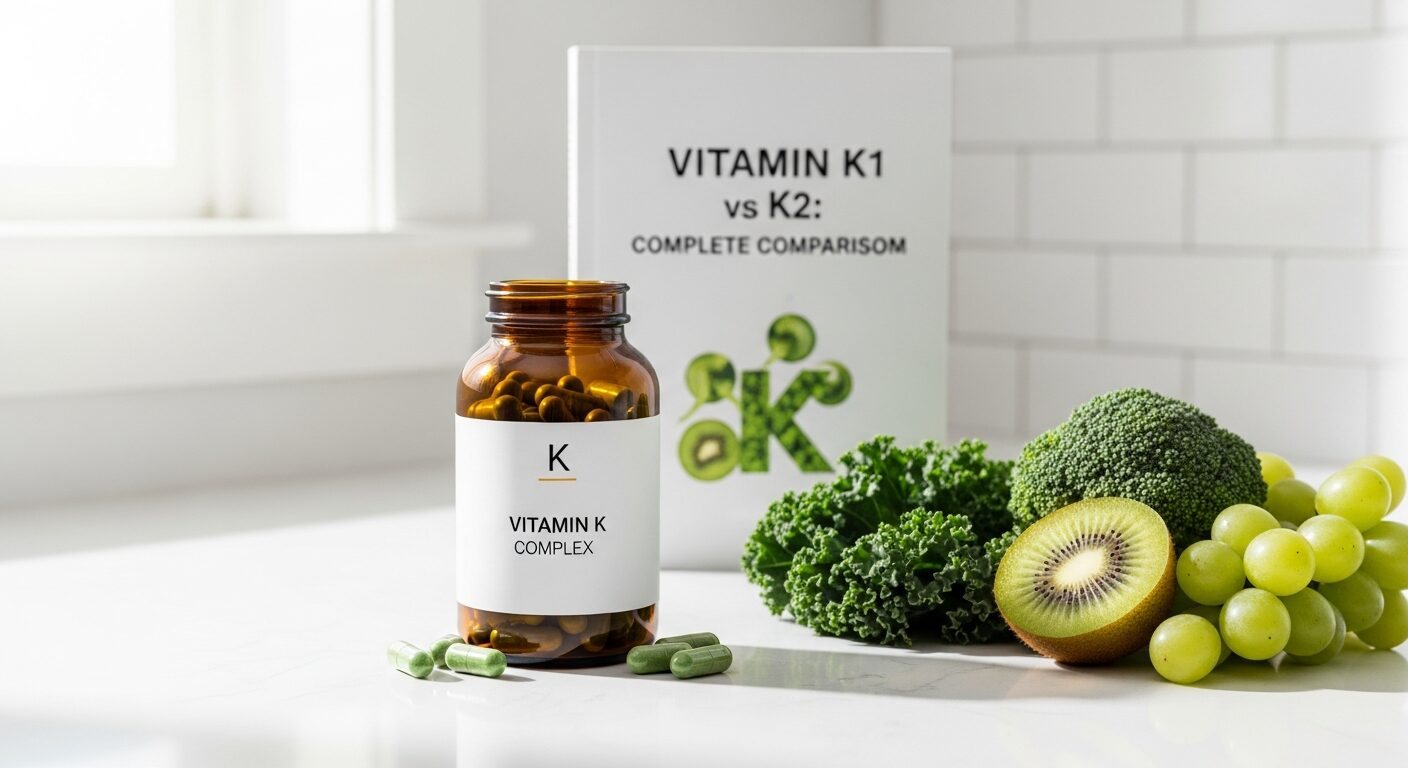
Vitamin K is an essential fat-soluble vitamin that plays crucial roles in blood clotting, bone health, and cardiovascular function. However, many people don’t realize that “vitamin K” actually refers to a family of compounds, with two primary forms being vitamin K1 (phylloquinone) and vitamin K2 (menaquinone). While these vitamins share some similarities, they have distinct sources, functions, and health benefits that make understanding their differences important for optimal health.
Contents
- 1 What is Vitamin K1?
- 2 What is Vitamin K2?
- 3 Key Differences Between K1 and K2
- 4 Health Benefits Comparison
- 5 Supplementation Considerations
- 6 Safety and Interactions
- 7 FAQ Section
- 7.1 Can I get enough vitamin K2 from diet alone?
- 7.2 Should I take both K1 and K2 supplements?
- 7.3 How long does it take to see benefits from vitamin K2 supplementation?
- 7.4 Can vitamin K2 reverse arterial calcification?
- 7.5 Is it better to take vitamin K2 with other vitamins?
- 7.6 🌿 Looking for Vitamin K Supplements?
- 8 Medical Disclaimer
What is Vitamin K1?
Vitamin K1, scientifically known as phylloquinone, is the most abundant form of vitamin K in the typical Western diet. This compound is primarily found in green leafy vegetables and plays a fundamental role in the body’s blood clotting mechanism.
Sources of Vitamin K1
The richest sources of vitamin K1 include:
- Dark leafy greens (kale, spinach, collard greens)
- Broccoli and Brussels sprouts
- Cabbage and lettuce
- Green beans and asparagus
- Herbs like parsley and cilantro
Since vitamin K1 is fat-soluble, consuming these foods with healthy fats can improve absorption.
Primary Functions of Vitamin K1
Vitamin K1’s most well-established function is activating clotting factors in the liver, particularly factors II, VII, IX, and X. This process is essential for proper blood coagulation and wound healing. Without adequate vitamin K1, the blood clotting cascade cannot function effectively, leading to increased bleeding risk.
What is Vitamin K2?
Vitamin K2, or menaquinone, exists in several subtypes, with MK-4 and MK-7 being the most studied. Unlike K1, vitamin K2 is primarily produced by bacteria and has distinct roles in bone and cardiovascular health.
Sources of Vitamin K2
Vitamin K2 sources include:
- Fermented foods (natto, sauerkraut, kimchi)
- Aged cheeses
- Egg yolks from pasture-raised chickens
- Organ meats
- Grass-fed butter
- Some bacterial production in the gut
Natto, a traditional Japanese fermented soybean dish, contains exceptionally high levels of vitamin K2 (MK-7).
Primary Functions of Vitamin K2
Vitamin K2’s unique role involves activating proteins outside the liver, particularly osteocalcin in bones and matrix Gla protein (MGP) in blood vessels. This activation process helps direct calcium to bones while preventing calcium deposits in arteries and soft tissues.
Key Differences Between K1 and K2
Absorption and Metabolism
The two forms of vitamin K have different absorption patterns and tissue distribution. Vitamin K1 is rapidly absorbed but quickly metabolized by the liver, with most being used for clotting factor production. In contrast, vitamin K2, especially the MK-7 form, has a longer half-life and better tissue distribution, allowing it to reach bones and other tissues more effectively.
Tissue Distribution
While vitamin K1 concentrates primarily in the liver, vitamin K2 distributes more widely throughout the body, reaching bones, blood vessels, kidneys, and other tissues. This broader distribution explains why K2 has more diverse physiological functions beyond blood clotting.
Biological Activity Duration
Vitamin K2, particularly MK-7, remains active in the body much longer than K1. MK-7 has a half-life of approximately 72 hours compared to K1’s half-life of just a few hours. This extended presence allows K2 to maintain more consistent activation of vitamin K-dependent proteins throughout the body.
Health Benefits Comparison
Blood Clotting
Both K1 and K2 support proper blood clotting, but K1 is considered more critical for this function due to its preferential uptake by the liver. Research has shown that vitamin K1 supplementation effectively corrects vitamin K deficiency-related bleeding disorders.
Bone Health
While both forms contribute to bone health, vitamin K2 appears more effective at activating osteocalcin, a protein that helps bind calcium to the bone matrix. Studies suggest that K2 supplementation may reduce fracture risk more effectively than K1, particularly in postmenopausal women.
Cardiovascular Health
Vitamin K2 shows superior benefits for cardiovascular health by activating MGP, which prevents arterial calcification. The Rotterdam Study demonstrated that higher K2 intake was associated with reduced cardiovascular disease risk and arterial calcification, while K1 showed no such association.
Cancer Prevention
Some research suggests both forms may have anti-cancer properties, but K2 has shown more promising results in certain cancer types, particularly liver and prostate cancers. However, more research is needed to establish definitive conclusions.
Supplementation Considerations
Who Should Consider K1 Supplements
Vitamin K1 supplementation may benefit individuals with:
- Limited green vegetable intake
- Malabsorption disorders
- Certain medications that interfere with vitamin K
- Bleeding disorders related to vitamin K deficiency
Who Should Consider K2 Supplements
Vitamin K2 supplementation might be appropriate for:
- Individuals at risk for osteoporosis
- People with cardiovascular disease risk factors
- Those following diets low in fermented foods
- Individuals taking vitamin D supplements (K2 works synergistically with vitamin D)
Dosage Recommendations
The adequate intake (AI) for vitamin K is 90-120 micrograms daily for adults, based primarily on K1. For K2 supplementation, typical doses range from 45-180 micrograms daily, though some studies have used higher amounts safely. Clinical trials have demonstrated the safety of vitamin K2 supplementation at doses up to 45mg daily.
Safety and Interactions
Both forms of vitamin K are generally safe, with no established upper limit for healthy individuals. However, people taking blood-thinning medications like warfarin should consult healthcare providers before supplementing, as vitamin K can affect medication effectiveness.
Unlike some fat-soluble vitamins, vitamin K doesn’t accumulate to toxic levels in healthy individuals, as the body efficiently recycles and eliminates excess amounts.
FAQ Section
Can I get enough vitamin K2 from diet alone?
Most Western diets are low in vitamin K2 unless they include significant amounts of fermented foods, aged cheeses, or organ meats. Many people may benefit from supplementation or increasing K2-rich foods in their diet.
Should I take both K1 and K2 supplements?
If you eat plenty of green vegetables, you likely get adequate K1. Most people would benefit more from K2 supplementation, particularly the MK-7 form, due to its superior bioavailability and broader health benefits.
How long does it take to see benefits from vitamin K2 supplementation?
Some markers of vitamin K2 status can improve within days to weeks, but benefits for bone and cardiovascular health typically require months to years of consistent supplementation to become apparent.
Can vitamin K2 reverse arterial calcification?
While vitamin K2 may help prevent further arterial calcification and potentially slow its progression, current evidence suggests it’s more effective at prevention than reversal of existing calcification.
Is it better to take vitamin K2 with other vitamins?
Vitamin K2 works synergistically with vitamins D3, A, and magnesium. Taking these nutrients together may enhance their individual benefits, particularly for bone and cardiovascular health.
🌿 Looking for Vitamin K Supplements?
Browse top-rated Vitamin K supplements, independently tested and recommended by our editorial team.
Affiliate disclosure: We may earn a small commission at no extra cost to you.
Medical Disclaimer
This information is for educational purposes only and should not replace professional medical advice. Always consult with a qualified healthcare provider before starting any supplementation regimen, especially if you have existing health conditions or take medications. Individual nutritional needs vary, and what works for one person may not be appropriate for another.