
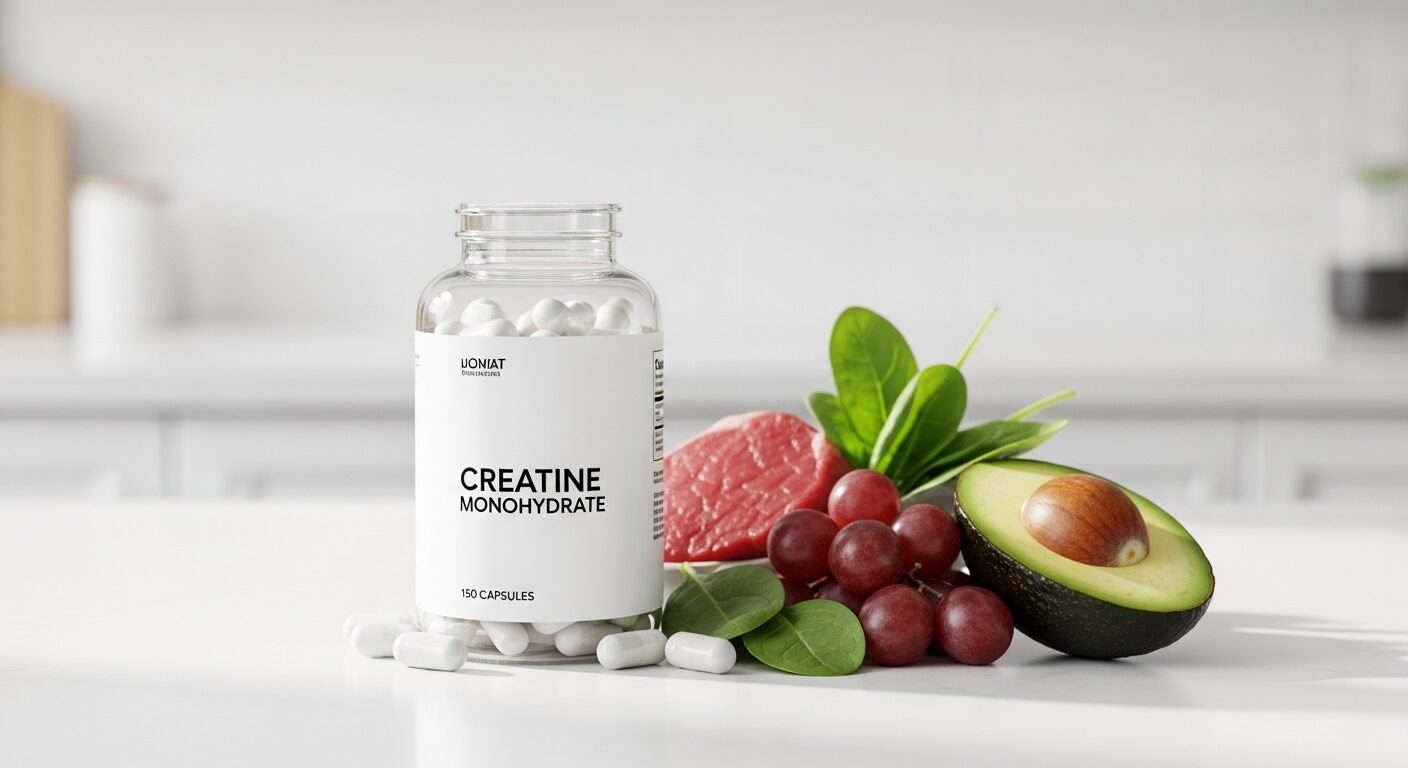
For decades, creatine has been primarily marketed to male bodybuilders and athletes, creating an unfortunate gender gap in supplement awareness. This has led many women to miss out on one of the most researched and effective supplements available today. The truth is, creatine offers remarkable benefits for women that extend far beyond muscle building, including improved brain function, bone health, and energy levels.
Recent scientific research has shattered many long-held misconceptions about creatine supplementation in women. Contrary to popular belief, creatine doesn’t cause unwanted bulk, water retention, or hormonal disruption. Instead, it supports lean muscle development, cognitive performance, and overall health in ways that are particularly beneficial for women’s unique physiological needs.
This comprehensive guide examines the science behind creatine supplementation for women, addressing common myths while providing evidence-based information about benefits, safety considerations, and proper usage. Whether you’re an athlete looking to enhance performance or simply seeking to optimize your health and vitality, understanding creatine’s role in women’s wellness could be a game-changer for your supplement routine.
Contents
What is Creatine
Creatine is a naturally occurring compound found in muscle cells that plays a crucial role in energy production during high-intensity, short-duration activities. Approximately 95% of the body’s creatine is stored in skeletal muscles, with the remaining 5% found in the brain, kidneys, and liver. Your body produces about half of its creatine needs naturally from amino acids, while the other half typically comes from dietary sources like red meat, fish, and poultry.
The primary function of creatine involves the phosphocreatine energy system, which rapidly regenerates adenosine triphosphate (ATP) – the cellular currency of energy. During intense physical activity, ATP stores deplete quickly, and creatine phosphate donates its phosphate group to ADP (adenosine diphosphate) to rapidly recreate ATP. This process allows muscles to maintain high-intensity output for longer periods.
Creatine monohydrate, the most studied and widely used form, consists of creatine bound to a water molecule. When consumed as a supplement, it increases the body’s phosphocreatine stores by approximately 10-40%, depending on baseline levels. Individuals with naturally lower creatine stores, including many women and vegetarians, often experience the most dramatic improvements from supplementation.
Key Benefits of Creatine
The benefits of creatine supplementation for women extend well beyond traditional athletic performance enhancement. Research has identified several key areas where women may experience particularly significant improvements.
Enhanced muscle strength and power represent the most well-established benefits of creatine supplementation. Studies consistently show improvements in high-intensity exercise performance, with women experiencing similar relative gains to men. This translates to better performance in resistance training, sprint activities, and any exercise requiring explosive power output.
Cognitive function improvements have emerged as one of the most exciting areas of creatine research. The brain has high energy demands and relies heavily on the phosphocreatine system. Supplementation with oral creatine improves performance on neuropsychological tests, 2003 demonstrated significant improvements in working memory and intelligence test scores following creatine supplementation, particularly during mentally demanding tasks or periods of stress.
Lean muscle mass preservation becomes increasingly important as women age, and creatine supplementation can help combat age-related muscle loss. Combined with resistance training, creatine helps maintain and build lean tissue while supporting bone health through improved muscle-bone interactions.
Recovery enhancement is another significant benefit, with research showing reduced muscle damage markers and faster restoration of performance between training sessions. This allows for more frequent, high-quality workouts and reduced risk of overtraining.
Mood and mental health support have also been observed in several studies, with potential benefits for depression, particularly in women. The mechanism may involve improved brain energy metabolism and enhanced neurotransmitter function.
What Most People Get Wrong About Creatine
Despite extensive research, several persistent myths continue to discourage women from using creatine supplementation. Understanding the scientific reality behind these misconceptions is crucial for making informed decisions.
Myth 1: Creatine Causes Unwanted Weight Gain and Bloating
One of the most pervasive myths is that creatine causes significant water retention and a “puffy” appearance. While creatine does increase intracellular water content, this occurs within muscle cells, not under the skin. This intracellular hydration actually enhances muscle definition and firmness rather than causing bloating. Any initial weight gain (typically 1-3 pounds) represents increased muscle water content and lean tissue, not fat or uncomfortable fluid retention.
Myth 2: Women Need Different Dosing Protocols Than Men
Many sources suggest women require special loading phases or different dosing strategies, but research shows this is unnecessary. Creatine supplementation with specific view to exercise/sports performance: an update, 2017 confirms that standard protocols work equally well for both sexes. A consistent daily dose of 3-5 grams provides optimal results regardless of gender, with no need for complex cycling or loading phases.
Myth 3: Creatine Interferes with Fat Loss
Some believe creatine supplementation impairs fat loss efforts, but research indicates the opposite. By improving workout quality and intensity, creatine actually supports fat loss goals. The enhanced training capacity leads to greater caloric expenditure and improved body composition over time. The slight increase in scale weight reflects beneficial changes in muscle tissue, not increased body fat.
Myth 4: Creatine is Only Useful for Bodybuilders
Perhaps the most limiting misconception is that creatine only benefits serious strength athletes. In reality, anyone engaged in high-intensity activities – from weekend warriors to busy professionals dealing with mental fatigue – can benefit from creatine’s effects on energy production and cognitive function. The supplement’s benefits extend to daily activities requiring quick energy bursts or sustained mental focus.
What Happens to Your Body After 30 Days of Taking Creatine
Understanding the timeline of creatine’s effects helps set realistic expectations and optimize supplementation strategies. The changes occur progressively, with different benefits emerging at various stages.
Week 1: Initial Cellular Changes
During the first week, your muscle creatine stores begin increasing, though changes may not be immediately noticeable. Some individuals experience slight increases in training capacity and reduced fatigue during high-intensity exercises. Intracellular water content starts to increase, contributing to better muscle hydration and potentially a slight increase in scale weight. Sleep quality may begin to improve as cellular energy systems become more efficient.
Week 2: Noticeable Performance Improvements
By the second week, muscle creatine stores have increased substantially, leading to more obvious performance benefits. You’ll likely notice improved power output during resistance training, with the ability to complete additional repetitions at the same weight or lift heavier loads. Recovery between sets becomes faster, allowing for more productive training sessions. Mental clarity and focus during demanding cognitive tasks typically improve during this period.
Week 3-4: Full Benefits Realized
The third and fourth weeks represent the period when creatine stores reach near-maximum levels, providing the full spectrum of benefits. Effects of creatine supplementation on performance and training adaptations, 2005 showed that muscle strength and power improvements become most pronounced during this timeframe. Cognitive benefits stabilize, with consistent improvements in working memory and reduced mental fatigue. Body composition changes become apparent, with increased lean muscle mass and improved muscle definition. Energy levels throughout daily activities reach their peak improvement.
It’s important to note that individual responses vary based on baseline creatine levels, muscle fiber type distribution, and overall health status. Women who are vegetarian or have naturally lower creatine stores often experience more dramatic improvements and may notice benefits earlier in the supplementation period.
Who Should NOT Take Creatine
While creatine is generally safe for most healthy individuals, certain populations should exercise caution or avoid supplementation entirely. Understanding these contraindications ensures safe and appropriate use.
Individuals with kidney disease or significantly impaired kidney function should avoid creatine supplementation, as the kidneys process creatinine, a breakdown product of creatine. While creatine doesn’t cause kidney problems in healthy individuals, existing kidney dysfunction may impair the body’s ability to process increased creatine loads safely.
Pregnant and breastfeeding women should avoid creatine supplementation due to insufficient research on safety during these critical periods. While no evidence suggests harm, the lack of comprehensive studies on maternal and fetal effects makes avoidance the prudent choice.
People taking certain medications may experience interactions. Diuretics, nonsteroidal anti-inflammatory drugs (NSAIDs), and medications that affect kidney function could potentially interact with creatine supplementation. Additionally, individuals taking medications for diabetes should monitor blood sugar levels closely, as creatine may influence glucose metabolism.
Those with liver disease should consult healthcare providers before beginning supplementation, as the liver plays a role in creatine synthesis and metabolism. While not absolutely contraindicated, medical supervision is advisable.
Individuals with bipolar disorder should exercise caution, as some case reports suggest creatine might influence mood cycling, though research remains limited. Anyone with a history of mood disorders should discuss supplementation with their healthcare provider.
It’s essential to consult with a healthcare provider before starting creatine supplementation if you have any chronic medical conditions, take prescription medications, or have concerns about potential interactions with your health status.
Dosage and Best Forms
Optimal creatine dosing for women follows the same general principles established through decades of research, with some considerations for individual factors and goals.
Creatine monohydrate remains the gold standard form, offering the most extensive research backing and proven effectiveness. Despite marketing claims for newer forms, no alternative has demonstrated superior benefits compared to monohydrate. It’s also the most cost-effective option, providing excellent value for the proven benefits.
The most effective dosing protocol involves taking 3-5 grams daily, preferably at the same time each day to maintain consistent blood levels. Contrary to popular belief, loading phases are unnecessary and may cause digestive discomfort in some individuals. The steady daily approach achieves the same creatine store saturation within 3-4 weeks without potential side effects.
Timing of consumption shows minimal impact on effectiveness, though taking creatine post-workout with a meal containing carbohydrates may slightly enhance uptake. The key factor is consistency rather than precise timing. Many women find taking creatine with breakfast or their post-workout meal most convenient for maintaining a daily routine.
Mixing creatine with adequate liquid (8-16 ounces) helps ensure complete dissolution and absorption. While various beverages work effectively, water or fruit juice provide simple, effective delivery methods without unnecessary additives.
🌿 Looking for Creatine Supplements?
Browse top-rated Creatine supplements, independently tested and recommended by our editorial team.
Affiliate disclosure: We may earn a small commission at no extra cost to you.
Frequently Asked Questions
Will creatine make me look bulky or masculine?
No, creatine does not cause bulky or masculine appearance changes. It supports lean muscle development and improved muscle definition, but cannot override your natural muscle-building limitations determined by genetics and hormones. Women have significantly lower testosterone levels than men, making it physiologically impossible to develop masculine muscle mass from creatine alone.
Can I take creatine while trying to lose weight?
Yes, creatine can actually support weight loss goals by improving workout quality and intensity. While you might see a slight increase in scale weight due to increased muscle water content, this represents positive changes in body composition. The enhanced training capacity from creatine supplementation typically leads to greater fat loss over time.
Do I need to cycle creatine or take breaks?
No cycling is necessary with creatine supplementation. Research shows continuous use is safe and effective, with no evidence supporting the need for periodic breaks. Your body’s natural creatine production adjusts appropriately, and stopping supplementation simply allows muscle stores to return to baseline levels over several weeks.
What side effects should I expect?
Most women experience no side effects from proper creatine supplementation. Occasionally, individuals may experience mild digestive discomfort if taking large doses on an empty stomach, which can be avoided by taking smaller amounts with food. The slight weight increase from improved muscle hydration is a beneficial effect, not a harmful side effect.
How long before I see results?
Most women notice initial improvements in training performance within 1-2 weeks, with full benefits typically apparent by 3-4 weeks of consistent supplementation. Cognitive benefits may be noticeable sooner, sometimes within the first week. Individual responses vary based on baseline creatine levels and overall health status.
Medical Disclaimer
This article is for educational and informational purposes only and should not be considered medical advice. The information provided is not intended to diagnose, treat, cure, or prevent any disease or health condition. Always consult with a qualified healthcare provider before starting any new supplement regimen, especially if you have pre-existing medical conditions, are taking medications, are pregnant or breastfeeding, or have concerns about potential interactions with your current health status. Individual responses to supplements may vary, and what works for one person may not be appropriate for another. The statements in this article have not been evaluated by the Food and Drug Administration. If you experience any adverse reactions while taking creatine or any supplement, discontinue use immediately and consult with your healthcare provider.