
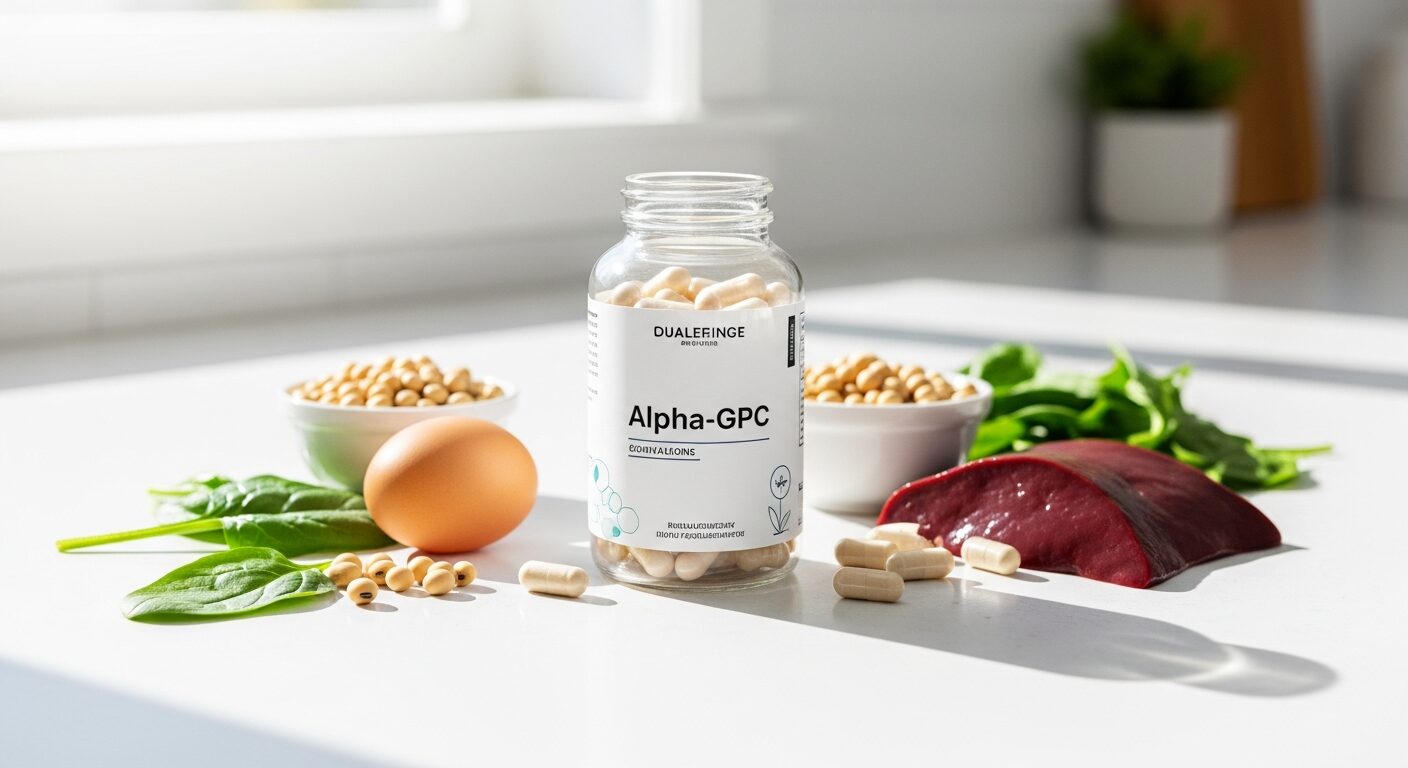
Alpha-GPC has quietly become one of the most researched nootropic compounds in the supplement world, yet most people have never heard of it. This naturally occurring choline compound has captured the attention of neuroscientists, athletes, and health enthusiasts alike for its unique ability to cross the blood-brain barrier and directly support brain function in ways that other choline sources simply cannot match.
Unlike typical supplements that promise vague cognitive benefits, Alpha-GPC has been extensively studied in clinical trials involving everyone from elderly patients with cognitive decline to young athletes seeking peak performance. What makes this compound particularly fascinating is its dual role as both a cognitive enhancer and a physical performance booster, making it one of the few supplements that can legitimately claim to benefit both mind and body.
In this comprehensive guide, we’ll explore the science behind Alpha-GPC, debunk common misconceptions, and provide you with everything you need to know to make an informed decision about whether this remarkable compound deserves a place in your supplement regimen.
Contents
What is Alpha-GPC
Alpha-GPC, or L-alpha-glycerylphosphorylcholine, is a natural choline compound that serves as a highly bioavailable source of choline for the brain and body. Unlike other choline supplements that struggle to cross the blood-brain barrier, Alpha-GPC is uniquely structured to deliver choline directly where it’s needed most.
Choline itself is an essential nutrient that plays crucial roles in brain development, neurotransmitter synthesis, cell membrane signaling, and fat metabolism. However, the challenge with most choline supplements is that they’re poorly absorbed or fail to reach the brain in meaningful concentrations. Alpha-GPC solves this problem through its glycerophosphate backbone, which acts as a molecular taxi, efficiently transporting choline across biological barriers.
Once Alpha-GPC reaches the brain, it’s rapidly metabolized into choline and glycerol-3-phosphate. The choline is then used to synthesize acetylcholine, a critical neurotransmitter involved in memory, learning, and muscle contractions. Meanwhile, the glycerol-3-phosphate contributes to the synthesis of phosphatidylcholine, an essential component of cell membranes.
Alpha-GPC occurs naturally in small amounts in the brain and in foods like organ meats, dairy products, and wheat germ. However, obtaining therapeutic doses from food alone is virtually impossible, which is why supplementation has become increasingly popular among those seeking cognitive and physical performance benefits.
Key Benefits of Alpha-GPC
The scientific literature on Alpha-GPC reveals several well-documented benefits that span cognitive function, physical performance, and neuroprotection. Research has consistently shown that Alpha-GPC supplementation can enhance memory formation and recall, particularly in tasks requiring sustained attention and working memory.
Cognitive deterioration in mild cognitive impairment treated with Alpha-GPC, 2003 demonstrated significant improvements in cognitive function scores among elderly participants with mild cognitive impairment who received Alpha-GPC supplementation compared to placebo groups.
For physical performance, Alpha-GPC has shown remarkable effects on power output and growth hormone response. Athletes supplementing with Alpha-GPC have demonstrated increased peak force production during resistance training and enhanced recovery between training sessions. This occurs because Alpha-GPC supports the synthesis of acetylcholine, which is essential for proper muscle contractions and motor unit recruitment.
The neuroprotective benefits of Alpha-GPC extend beyond immediate cognitive enhancement. Regular supplementation appears to support the maintenance of healthy brain aging by preserving acetylcholine levels, which naturally decline with age. This preservation of cholinergic function may help maintain cognitive flexibility, processing speed, and executive function as we age.
Additionally, Alpha-GPC has been studied for its potential role in stroke recovery and neurodegenerative conditions. While more research is needed in these areas, preliminary studies suggest that Alpha-GPC’s ability to support membrane phospholipid synthesis and neurotransmitter production may contribute to neural repair and regeneration processes.
What Most People Get Wrong About Alpha-GPC
Despite its growing popularity, several persistent myths and misconceptions surround Alpha-GPC that can lead to unrealistic expectations or improper use. Understanding these misconceptions is crucial for anyone considering Alpha-GPC supplementation.
Myth 1: Alpha-GPC Works Immediately Like Caffeine
Many people expect Alpha-GPC to provide immediate, noticeable effects similar to stimulants like caffeine. This misconception leads to disappointment when users don’t feel dramatically different within hours of their first dose. The reality is that Alpha-GPC works by supporting fundamental biological processes that take time to manifest as noticeable benefits. While some users may notice subtle improvements in focus within a few days, the most significant benefits typically emerge after consistent use over weeks.
Myth 2: Higher Doses Always Mean Better Results
The “more is better” mentality has led many users to take excessive doses of Alpha-GPC, believing this will amplify benefits. However, research indicates that Alpha-GPC follows a dose-response curve with an optimal range beyond which additional benefits plateau or may even reverse. Taking megadoses can potentially lead to side effects like headaches or digestive issues without providing additional cognitive benefits. The key is finding the minimum effective dose for your individual needs.
Myth 3: Alpha-GPC Only Benefits Older Adults
Because much of the clinical research on Alpha-GPC has focused on elderly populations with cognitive decline, many younger adults assume it’s only beneficial for age-related cognitive issues. This misconception ignores the substantial body of research showing benefits in healthy young adults, particularly athletes and students. Alpha-GPC supplementation and resistance training performance, 2015 clearly demonstrated performance benefits in young, healthy athletes.
Myth 4: All Choline Supplements Are Essentially the Same
Perhaps the most common misconception is that Alpha-GPC is interchangeable with other choline sources like choline bitartrate or CDP-choline. While all provide choline, their bioavailability, tissue distribution, and metabolic pathways differ significantly. Alpha-GPC’s unique ability to cross the blood-brain barrier and its rapid conversion to acetylcholine make it distinctly different from other choline supplements, which is why research specifically on Alpha-GPC cannot be generalized to all choline supplements.
What Happens to Your Body After 30 Days of Taking Alpha-GPC
Understanding the timeline of Alpha-GPC’s effects can help set realistic expectations and optimize supplementation protocols. Research indicates that the benefits of Alpha-GPC supplementation unfold progressively over several weeks.
Week 1: Initial Adaptation
During the first week, your body begins adapting to increased choline availability. While dramatic changes are unlikely, some users report subtle improvements in mental clarity and reduced afternoon mental fatigue. At the cellular level, Alpha-GPC is being incorporated into cell membranes and contributing to acetylcholine synthesis. Any side effects, such as mild headaches or digestive upset, typically occur during this initial period as your body adjusts to the supplement.
Week 2: Emerging Benefits
By the second week, many users begin noticing more consistent cognitive improvements. Working memory tasks may feel easier, and sustained attention during mentally demanding activities often improves. For those using Alpha-GPC for athletic performance, this is when improvements in mind-muscle connection during workouts typically become apparent. The brain’s cholinergic system is becoming more optimized, leading to more efficient neurotransmission.
Weeks 3-4: Full Therapeutic Effects
The most significant benefits typically emerge during weeks three and four of consistent supplementation. Acute supplementation with alpha-glycerylphosphorylcholine augments growth hormone response to resistance exercise, 2008 showed that the full hormonal and performance benefits of Alpha-GPC supplementation are most pronounced after several weeks of consistent use. Users often report improved memory consolidation, better sleep quality, enhanced mood stability, and increased exercise performance during this period.
At the four-week mark, cellular adaptations are well-established. Cell membrane composition has been optimized with increased phosphatidylcholine content, and acetylcholine synthesis is functioning at enhanced levels. This is why consistency is crucial with Alpha-GPC supplementation – the compound works by supporting long-term cellular health rather than providing acute pharmacological effects.
Who Should NOT Take Alpha-GPC
While Alpha-GPC has an excellent safety profile for most people, certain individuals should exercise caution or avoid supplementation entirely. Understanding these contraindications is essential for safe and responsible use.
Individuals with trimethylaminuria, a rare genetic condition affecting the metabolism of choline-containing compounds, should avoid Alpha-GPC supplementation. This condition prevents the proper breakdown of choline metabolites, leading to a characteristic fishy body odor that can worsen with increased choline intake.
People taking anticholinergic medications, including certain antidepressants, antihistamines, and medications for overactive bladder, should consult their healthcare provider before using Alpha-GPC. The supplement’s ability to increase acetylcholine levels could potentially counteract these medications or lead to unpredictable interactions.
Pregnant and breastfeeding women should avoid Alpha-GPC supplementation due to insufficient safety data in these populations. While choline is essential during pregnancy and lactation, the concentrated nature of Alpha-GPC supplements and their effects on developing neural systems haven’t been adequately studied.
Individuals with bipolar disorder or other mood disorders should use caution with Alpha-GPC, as changes in neurotransmitter levels can potentially trigger mood episodes. Those with a history of seizures should also consult with their neurologist before supplementation, as alterations in acetylcholine levels could theoretically affect seizure threshold.
People scheduled for surgery should discontinue Alpha-GPC at least two weeks beforehand, as it may interact with anesthesia and other medications used during surgical procedures. Additionally, individuals with cardiovascular disease should discuss Alpha-GPC use with their cardiologist, as acetylcholine plays important roles in heart rhythm and blood pressure regulation.
Dosage and Best Forms
The optimal dosage of Alpha-GPC varies depending on individual goals, body weight, and sensitivity to the compound. Clinical research has used dosages ranging from 300mg to 1200mg daily, with most studies showing benefits in the 600-800mg range for cognitive enhancement.
For cognitive support, a typical starting dose is 300-400mg taken once daily, preferably in the morning or early afternoon to avoid potential sleep disruption. This can be gradually increased to 600-800mg daily if well-tolerated and additional benefits are desired. For athletic performance, many users find 600mg taken 30-45 minutes before training to be effective.
Alpha-GPC is available in several forms, with powder and capsules being most common. The powder form offers flexibility in dosing and faster absorption but has a slightly bitter taste that some find unpalatable. Capsules provide convenience and consistent dosing but may have slower absorption rates.
When selecting an Alpha-GPC supplement, look for products that specify the percentage of active Alpha-GPC, as some products are diluted with fillers. High-quality supplements typically contain 50% Alpha-GPC by weight, meaning a 600mg capsule provides approximately 300mg of active Alpha-GPC.
Timing can influence effectiveness. Taking Alpha-GPC with a small amount of healthy fats may enhance absorption, as it’s a lipophilic compound. Avoid taking it late in the day, as the increased acetylcholine activity could potentially interfere with sleep quality in sensitive individuals.
🌿 Looking for Alpha-GPC Supplements?
Browse top-rated Alpha-GPC supplements, independently tested and recommended by our editorial team.
Affiliate disclosure: We may earn a small commission at no extra cost to you.
Frequently Asked Questions
Can I take Alpha-GPC with other nootropics?
Alpha-GPC generally combines well with other cognitive enhancers and is often used as part of nootropic stacks. It’s particularly synergistic with racetam-family compounds, which can deplete choline levels. However, avoid combining multiple choline sources simultaneously to prevent excessive acetylcholine levels, which could lead to headaches or mood changes.
How long should I cycle Alpha-GPC?
Alpha-GPC doesn’t require cycling like some supplements, as tolerance doesn’t typically develop with normal dosages. Many users take it continuously for months or years without diminishing effects. However, taking occasional breaks every few months can help assess whether you still need supplementation and maintain sensitivity to its effects.
Will Alpha-GPC help with ADHD symptoms?
While Alpha-GPC may support some aspects of attention and focus, it’s not a substitute for proven ADHD treatments. Some individuals with ADHD report modest improvements in sustained attention, but results vary significantly. Anyone with ADHD should work with their healthcare provider to develop an appropriate treatment plan rather than relying solely on supplements.
Can Alpha-GPC cause dependency?
Alpha-GPC is not addictive and doesn’t cause physical dependency. However, some users may experience a temporary decline in cognitive performance when discontinuing after long-term use, as their brain readjusts to normal choline levels. This is not true withdrawal but rather a return to baseline function.
Is synthetic Alpha-GPC as effective as natural sources?
Synthetic Alpha-GPC is molecularly identical to naturally occurring Alpha-GPC and provides the same biological effects. The synthetic form is actually preferred for supplements because it’s more concentrated and free from contaminants that might be present in natural sources. Your body cannot distinguish between synthetic and natural Alpha-GPC once absorbed.
Medical Disclaimer
The information provided in this article is for educational purposes only and is not intended as medical advice, diagnosis, or treatment recommendations. Alpha-GPC supplementation may not be appropriate for everyone, and individual responses can vary significantly. Before starting any new supplement regimen, especially if you have existing health conditions, take medications, or are pregnant or breastfeeding, consult with a qualified healthcare professional.
The statements and information in this article have not been evaluated by the Food and Drug Administration. Alpha-GPC supplements are not intended to diagnose, treat, cure, or prevent any disease. Always read supplement labels carefully and follow manufacturer instructions unless otherwise directed by your healthcare provider.
If you experience any adverse effects while taking Alpha-GPC, discontinue use immediately and consult with a healthcare professional. This article does not replace professional medical advice, and NaturStack encourages all readers to maintain open communication with their healthcare providers regarding all supplements and health decisions.