
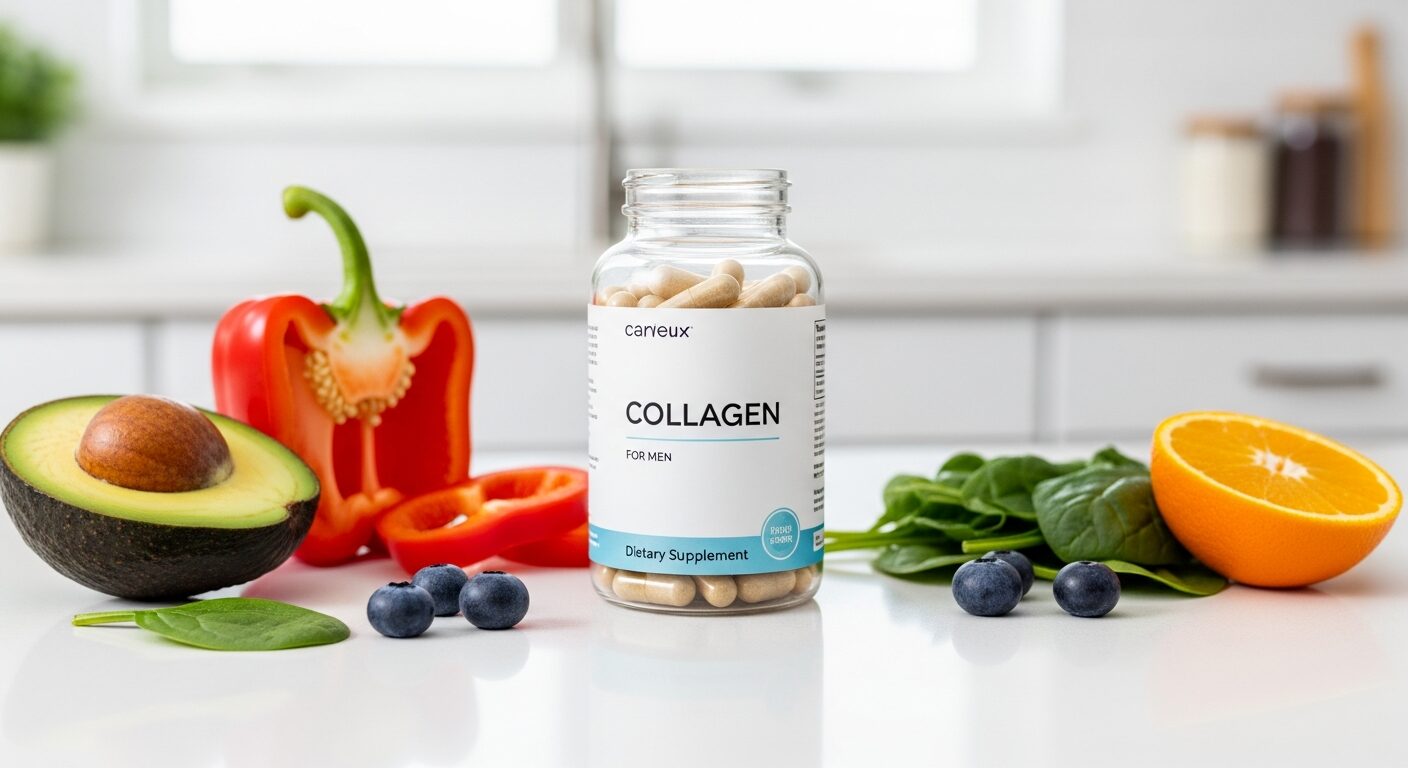
Collagen supplements have exploded in popularity over the past decade, but there’s a persistent myth that they’re primarily for women concerned about anti-aging and skin health. This couldn’t be further from the truth. Men actually have unique physiological needs that make collagen supplementation potentially even more beneficial than it is for women.
As the most abundant protein in the human body, collagen plays crucial roles in joint health, muscle recovery, bone density, and cardiovascular function—areas where men often face significant challenges as they age. The question isn’t whether collagen works (the science is clear), but whether the specific benefits align with men’s health priorities and lifestyle demands.
Let’s cut through the marketing hype and examine the real science behind collagen supplementation for men, including some surprising truths that might change how you think about this ubiquitous protein powder.
🌿 Looking for Collagen supplements? Shop Amazon →
Contents
What is Collagen
Collagen is a structural protein that acts as the body’s scaffolding, providing strength and structure to skin, bones, tendons, ligaments, blood vessels, and organs. Think of it as the glue that holds your body together—literally, the word “collagen” comes from the Greek word “kólla,” meaning glue.
There are at least 28 different types of collagen, but about 90% of the collagen in your body consists of types I, II, and III. Type I collagen is found primarily in skin, bones, and tendons. Type II is concentrated in cartilage and joint tissue. Type III collagen supports the structure of organs, arteries, and muscles.
Your body naturally produces collagen by combining amino acids—primarily glycine, proline, and hydroxyproline—with vitamin C, zinc, and copper. However, collagen production begins declining around age 25, dropping by approximately 1-2% per year. By age 40, you’ve lost about 15-30% of your collagen production capacity, which explains why joint stiffness, slower recovery times, and other age-related changes become more noticeable during middle age.
Collagen supplements typically contain hydrolyzed collagen peptides—collagen that has been broken down into smaller, more easily absorbed fragments. These peptides can be derived from bovine (cow), marine (fish), or chicken sources, each offering slightly different amino acid profiles and potential benefits.
Key Benefits of Collagen
The scientific evidence supporting collagen supplementation has grown substantially in recent years, with studies demonstrating measurable benefits across several areas particularly relevant to men’s health.
Joint Health and Mobility: One of the most robust areas of collagen research involves joint health. A 2019 systematic review found that collagen supplementation significantly improved joint pain and mobility in both athletes and individuals with osteoarthritis. For men who engage in regular physical activity or high-impact sports, this can translate to reduced injury risk and faster recovery between training sessions.
Muscle Mass and Recovery: Collagen contains high amounts of glycine and arginine, amino acids that support creatine synthesis and muscle protein synthesis. Research indicates that collagen supplementation, when combined with resistance training, can enhance gains in muscle mass and strength, particularly in older men experiencing age-related muscle loss.
Bone Density: Men experience significant bone density loss starting around age 30, increasing fracture risk later in life. Studies show that collagen peptides can stimulate osteoblast activity (bone-building cells) while reducing osteoclast activity (bone-breaking cells), potentially slowing age-related bone loss.
Cardiovascular Support: Collagen provides structural support to arteries and blood vessels. Research suggests that collagen supplementation may help maintain arterial flexibility and support healthy blood pressure levels, which is particularly relevant given that cardiovascular disease is the leading cause of death among men.
Skin Health: While often marketed primarily to women, skin health benefits are equally important for men. Collagen supplementation can improve skin elasticity, hydration, and thickness while reducing signs of aging and sun damage—benefits that are particularly valuable for men who spend significant time outdoors or have neglected sun protection.
What Most People Get Wrong About Collagen
Despite collagen’s popularity, several persistent myths and misconceptions continue to circulate, leading to unrealistic expectations and suboptimal supplementation strategies.
Myth 1: Collagen Goes Directly to Where You Need It
Many people believe that taking collagen supplements directly replaces lost collagen in specific areas—drink collagen for better skin, take joint-specific collagen for knee pain, etc. This is a fundamental misunderstanding of how protein digestion works. When you consume collagen, your digestive system breaks it down into individual amino acids and small peptides, which then enter your bloodstream and are distributed throughout your body based on physiological priorities, not your personal preferences.
However, this doesn’t mean collagen is ineffective. Research shows that certain collagen peptides do accumulate in target tissues and can stimulate the body’s own collagen production through cellular signaling mechanisms.
Myth 2: All Collagen Supplements Are the Same
The supplement industry has flooded the market with collagen products of vastly different quality, molecular weight, and bioavailability. Many consumers assume that “collagen is collagen,” but this couldn’t be further from the truth. Hydrolyzed collagen peptides with specific molecular weights (typically 2,000-5,000 daltons) have been shown to be more bioavailable than larger collagen molecules or gelatin.
Additionally, the source matters. Marine collagen tends to have higher bioavailability than bovine collagen, while bovine collagen provides a more complete amino acid profile. The processing method, third-party testing, and presence of co-factors like vitamin C also significantly impact effectiveness.
Myth 3: You Can Get Enough Collagen from Food
While collagen-rich foods like bone broth, organ meats, and fish skin do provide collagen and collagen-building nutrients, the amounts are typically insufficient to produce the therapeutic effects seen in research studies. Most clinical trials use 10-20 grams of collagen peptides daily—equivalent to drinking 3-4 cups of high-quality bone broth every day.
Moreover, the collagen in food sources hasn’t undergone the hydrolysis process that makes supplemental collagen peptides more bioavailable. While including collagen-rich foods in your diet is beneficial, it’s unlikely to provide the concentrated dose needed for measurable health improvements.
Myth 4: Collagen Works Immediately
Social media and supplement marketing often create unrealistic expectations about how quickly collagen works. Unlike stimulants or acute medications, collagen supplementation works through gradual tissue remodeling processes that take weeks to months to produce noticeable results. Setting realistic timelines prevents disappointment and supports long-term adherence to supplementation protocols.
What Happens to Your Body After 30 Days of Taking Collagen
Understanding the realistic timeline of collagen supplementation helps set appropriate expectations and optimize your supplementation strategy.
Week 1: Metabolic Integration
During the first week, your body is primarily focused on digesting, absorbing, and distributing the collagen peptides. You’re unlikely to notice any dramatic changes, though some people report improved sleep quality due to collagen’s high glycine content. Glycine acts as an inhibitory neurotransmitter that can promote relaxation and deeper sleep stages.
At the cellular level, collagen peptides are being transported to various tissues and beginning to interact with fibroblasts and other cells responsible for collagen synthesis. This is the foundation phase where your body is essentially “learning” how to utilize the additional collagen building blocks.
Week 2: Early Adaptations
By the second week, some men begin noticing subtle improvements in joint comfort, particularly in areas that were previously stiff or sore. This isn’t necessarily due to new collagen formation, but rather improved hydration and lubrication of joint tissues. The amino acids from collagen supplementation may also be supporting the synthesis of other important compounds like hyaluronic acid.
Digestive improvements are also common during this phase, as collagen provides amino acids that support the integrity of the intestinal lining. Men with mild digestive issues may notice reduced bloating or improved regularity.
Week 3-4: Structural Benefits Emerge
This is typically when the most noticeable benefits begin to appear. Research shows that measurable improvements in skin elasticity and hydration can occur within 4-8 weeks of consistent collagen supplementation. For men, this might manifest as reduced appearance of fine lines, improved skin texture, or faster healing of minor cuts and scrapes.
Joint-related benefits become more pronounced during weeks 3-4, with many men reporting improved mobility, reduced stiffness upon waking, and better recovery between workouts. The amino acids from collagen are now being incorporated into new tissue synthesis, leading to structural improvements rather than just symptomatic relief.
Muscle recovery improvements may also become apparent, particularly for men who engage in regular resistance training. The additional glycine and arginine from collagen supplementation support creatine synthesis and may enhance muscle protein synthesis when combined with adequate protein intake from other sources.
Who Should NOT Take Collagen
While collagen supplementation is generally safe for most healthy adults, certain individuals should exercise caution or avoid collagen supplements entirely.
Kidney Disease: Men with chronic kidney disease or reduced kidney function should consult their healthcare provider before starting collagen supplementation. The high protein content can place additional stress on compromised kidneys, and the specific amino acid profile of collagen may not be appropriate for individuals on protein-restricted diets.
Allergies and Sensitivities: Collagen supplements can trigger allergic reactions in individuals with sensitivities to the source materials. Marine collagen can cause reactions in men with fish or shellfish allergies, while bovine collagen may be problematic for those with beef allergies. Additionally, some collagen supplements contain additives, flavorings, or processing aids that can trigger reactions in sensitive individuals.
Medication Interactions: While direct drug interactions are rare, collagen’s effects on blood clotting and cardiovascular function may theoretically interact with certain medications. Men taking blood thinners, blood pressure medications, or other cardiovascular drugs should discuss collagen supplementation with their healthcare provider.
Digestive Disorders: Men with severe digestive disorders, inflammatory bowel disease, or specific enzyme deficiencies may have difficulty processing collagen supplements. In some cases, collagen supplementation may exacerbate digestive symptoms or interfere with the absorption of other nutrients or medications.
High Calcium Levels: Some marine collagen supplements may contain significant amounts of calcium from shell fragments or processing. Men with hypercalcemia or those taking calcium channel blockers should be aware of potential calcium content in their collagen supplements.
When to Consult a Doctor: Before starting collagen supplementation, consult with a healthcare provider if you have any chronic health conditions, take prescription medications, have a history of allergic reactions to supplements, or are planning any surgical procedures (collagen may affect wound healing and should be discontinued before surgery).
Dosage and Best Forms
The optimal collagen dosage varies based on your specific health goals, but research provides clear guidance on effective dosing ranges.
General Health and Anti-Aging: 10-15 grams daily of hydrolyzed collagen peptides provides sufficient amino acids to support natural collagen synthesis and maintenance. This dose is well-tolerated by most men and provides broad-spectrum benefits for skin, joints, and overall health.
Athletic Performance and Recovery: Active men and athletes may benefit from higher doses of 15-20 grams daily, particularly when taken around workout times. Studies in athletes show that this range can significantly improve recovery time and reduce exercise-induced joint pain.
Joint Support: For men with existing joint issues or arthritis, therapeutic doses of 10-40 grams daily have been used in clinical studies, with most benefits observed in the 10-20 gram range when taken consistently for at least 12 weeks.
Best Forms: Hydrolyzed collagen peptides are the gold standard for supplementation, offering superior bioavailability compared to gelatin or whole collagen. Marine collagen tends to have the highest absorption rates, while bovine collagen provides a more complete amino acid profile. Type II collagen (undenatured) may be particularly beneficial for joint health, though it’s typically taken in much smaller doses (40-80mg daily).
Timing: Collagen can be taken at any time, but taking it on an empty stomach may improve absorption. Some men prefer taking it post-workout to support recovery, while others take it before bed to maximize the glycine benefits for sleep quality.
🌿 Looking for Collagen Supplements?
Browse top-rated Collagen supplements, independently tested and recommended by our editorial team.
Affiliate disclosure: We may earn a small commission at no extra cost to you.
Frequently Asked Questions
Can collagen supplementation replace protein powder for muscle building?
No, collagen should not be your primary protein source for muscle building. While collagen does contain protein (typically 18-20 grams per serving), it’s not a complete protein and lacks sufficient amounts of essential amino acids like leucine that are crucial for muscle protein synthesis. Collagen works best as a complement to, not a replacement for, high-quality complete proteins like whey, casein, or plant-based protein blends.
Will I lose the benefits if I stop taking collagen?
The benefits of collagen supplementation gradually diminish when you stop taking it, but they don’t disappear immediately. Structural improvements in skin and joints may persist for several weeks to months, while benefits related to ongoing processes like muscle recovery and sleep quality may diminish more quickly. The rate of benefit loss depends on your age, lifestyle, diet, and genetic factors affecting natural collagen production.
Is bovine or marine collagen better for men?
Both have advantages. Marine collagen typically has higher bioavailability and is absorbed more quickly, making it potentially better for skin and general health benefits. Bovine collagen provides a more complete amino acid profile and may be more beneficial for joint and bone health. Consider your primary health goals, budget (marine collagen is typically more expensive), and any dietary restrictions or preferences when choosing.
Can I take collagen with other supplements?
Yes, collagen generally combines well with other supplements. Taking it with vitamin C can enhance collagen synthesis, while combining it with hyaluronic acid may provide additional joint benefits. However, avoid taking collagen simultaneously with other protein supplements to prevent digestive issues and ensure optimal absorption. Space them apart by at least 30-60 minutes when possible.
How long should I take collagen to see maximum benefits?
While initial benefits may appear within 2-4 weeks, maximum benefits typically require 3-6 months of consistent supplementation. The timeline varies based on your age, baseline collagen levels, lifestyle factors, and specific health goals. For best results, view collagen as a long-term investment in your health rather than a quick fix, and maintain consistent daily intake rather than sporadic use.
Medical Disclaimer
The information provided in this article is for educational purposes only and is not intended as medical advice, diagnosis, or treatment. Always consult with a qualified healthcare provider before starting any new supplement regimen, especially if you have existing health conditions, take medications, or have concerns about potential interactions. Individual results may vary, and the statements in this article have not been evaluated by the Food and Drug Administration. Collagen supplements are not intended to diagnose, treat, cure, or prevent any disease.