
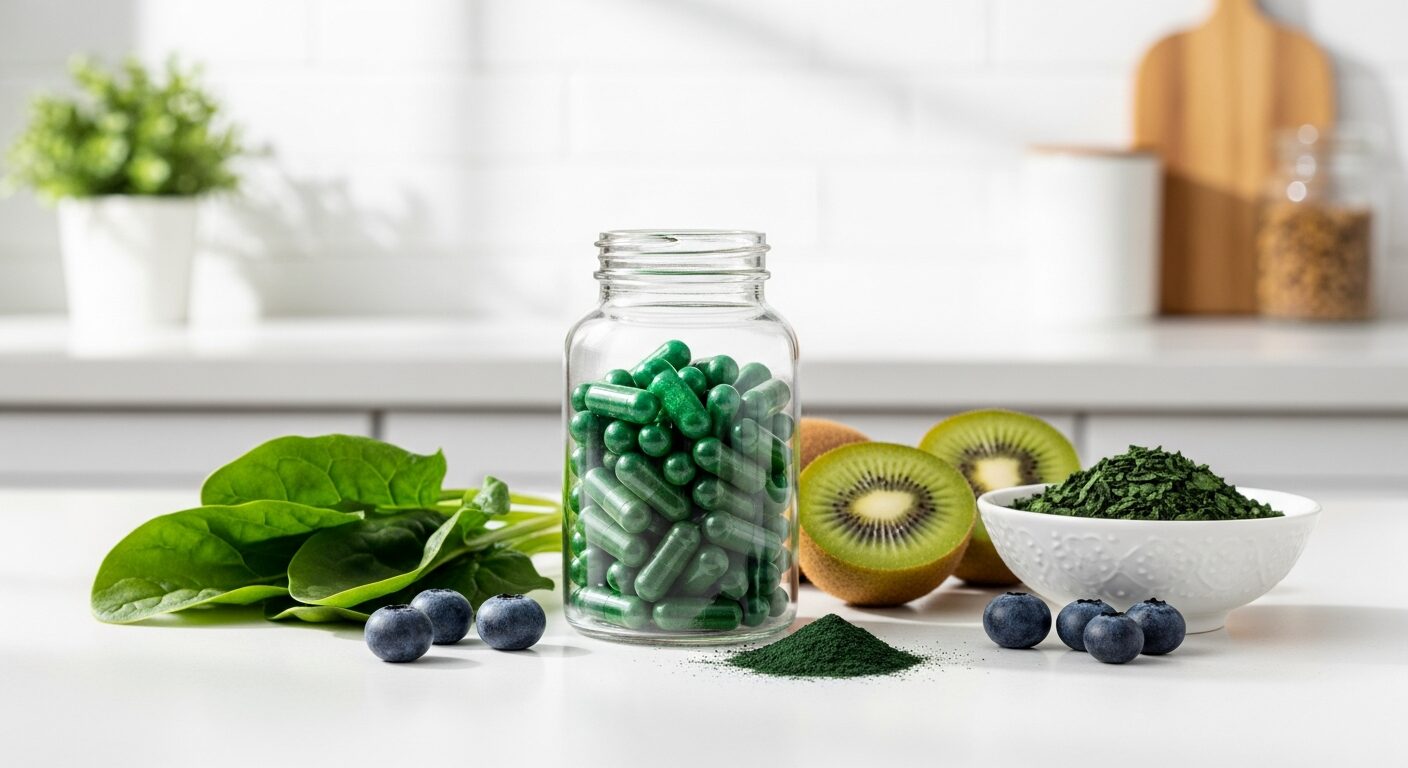
In the vast ocean of nutritional supplements, few have generated as much scientific interest as spirulina, a microscopic blue-green algae that has been consumed for centuries. What was once considered a simple pond scum has emerged as one of nature’s most nutrient-dense foods, backed by hundreds of peer-reviewed studies and endorsed by organizations like NASA for its exceptional nutritional profile.
Despite its growing popularity, spirulina remains shrouded in misconceptions and exaggerated claims. While some tout it as a miracle cure-all, others dismiss it as expensive pond water. The truth, as revealed by rigorous scientific research, lies somewhere in between. This comprehensive analysis cuts through the marketing hype to examine what peer-reviewed studies actually say about spirulina’s effects on human health.
From immune system support to cardiovascular health, the research on spirulina spans multiple therapeutic areas. But perhaps more importantly, studies have begun to reveal the timeline of how spirulina works in the human body, showing measurable changes that occur within days and weeks of supplementation. Understanding these mechanisms and timelines is crucial for anyone considering adding this ancient superfood to their wellness routine.
🌿 Looking for Spirulina supplements? Shop Amazon →
Contents
What is Spirulina
Spirulina is a type of cyanobacteria, often called blue-green algae, that grows naturally in alkaline lakes and ponds in tropical and subtropical regions. The two main species used in supplements are Arthrospira platensis and Arthrospira maxima, both of which have been consumed as food sources for over 500 years by communities around Lake Chad in Africa and Lake Texcoco in Mexico.
What makes spirulina unique from a nutritional standpoint is its remarkable protein density and bioavailability. Spirulina is approximately 60-70% protein by weight, containing all essential amino acids in ratios that closely match human nutritional needs. This protein is highly digestible, with a biological value comparable to eggs and superior to most plant-based proteins.
Beyond protein, spirulina contains significant amounts of B vitamins, particularly B12, iron, gamma-linolenic acid (GLA), and powerful antioxidants including phycocyanin, the blue pigment that gives spirulina its distinctive color. Phycocyanin, in particular, has attracted considerable research attention due to its potent anti-inflammatory and neuroprotective properties.
Modern spirulina production involves carefully controlled cultivation in specialized facilities that maintain optimal pH, temperature, and nutrient conditions. This controlled environment ensures consistent quality and eliminates contamination risks associated with wild-harvested algae products.
Key Benefits of Spirulina
Scientific research has identified several well-documented benefits of spirulina supplementation, with effects ranging from immune system modulation to cardiovascular support. The most robust evidence centers around spirulina’s antioxidant and anti-inflammatory properties, which appear to underlie many of its health benefits.
Immune system support represents one of spirulina’s most studied benefits. A randomized controlled trial published in 2011 found that spirulina supplementation significantly enhanced immune function in healthy adults, increasing natural killer cell activity and reducing inflammatory markers. Participants taking 3 grams daily showed measurable improvements in immune parameters within 6 weeks.
Cardiovascular health benefits have been demonstrated in multiple studies, with spirulina showing ability to reduce cholesterol levels, lower blood pressure, and improve arterial function. The mechanisms appear related to spirulina’s content of phycocyanin and other bioactive compounds that support nitric oxide production and reduce oxidative stress in blood vessels.
Blood sugar management represents another area of strong scientific support. Research indicates that spirulina can help improve insulin sensitivity and reduce post-meal blood sugar spikes, making it particularly relevant for individuals with metabolic syndrome or type 2 diabetes risk factors.
Athletic performance and recovery have also shown improvement with spirulina supplementation. Studies document reduced exercise-induced oxidative stress, improved endurance, and faster recovery times in athletes taking spirulina regularly. These effects likely stem from spirulina’s high antioxidant content and its ability to support cellular energy production.
What Most People Get Wrong About Spirulina
Despite extensive research, several persistent myths continue to circulate about spirulina, often leading to unrealistic expectations or inappropriate use. Understanding these misconceptions is crucial for making informed decisions about spirulina supplementation.
Myth 1: Spirulina is a Complete Source of Vitamin B12
One of the most widespread misconceptions is that spirulina provides bioavailable vitamin B12 suitable for treating deficiency. While spirulina does contain compounds that register as B12 in laboratory tests, most of this exists as pseudovitamin B12 analogs that cannot be utilized by human metabolism. Studies have shown that relying on spirulina for B12 can actually worsen deficiency by interfering with true B12 absorption. Vegans and vegetarians should not depend on spirulina as their primary B12 source.
Myth 2: All Spirulina Products are Equally Effective
Quality varies dramatically between spirulina products, yet many consumers assume all supplements are equivalent. Factors like cultivation methods, processing temperatures, storage conditions, and contamination testing significantly impact the final product’s bioactivity. Some low-quality spirulina products contain virtually no active phycocyanin due to poor processing, while others may harbor harmful contaminants like microcystins from uncontrolled growing conditions. Third-party testing and proper sourcing are essential but often overlooked.
Myth 3: More Spirulina Always Means More Benefits
Research suggests that spirulina follows a dose-response curve with an optimal range rather than a linear “more is better” relationship. Studies have found that doses between 1-8 grams daily provide measurable benefits, but higher doses don’t necessarily amplify effects and may even reduce absorption efficiency. Some individuals experience digestive upset or detoxification symptoms at very high doses, making moderate, consistent intake more effective than megadosing.
Myth 4: Spirulina Works Immediately
Many people expect to feel dramatic effects within days of starting spirulina, leading to disappointment and discontinuation when immediate results don’t materialize. Scientific studies show that most of spirulina’s benefits develop gradually over weeks to months of consistent use. The bioactive compounds need time to accumulate in tissues and exert their effects on cellular processes. Expecting overnight transformation sets unrealistic expectations and overlooks spirulina’s true mechanism of action.
What Happens to Your Body After 30 Days of Taking Spirulina
Understanding the timeline of spirulina’s effects helps set realistic expectations and optimize supplementation strategies. Research reveals a predictable progression of physiological changes that occur with consistent spirulina intake.
Week 1: Initial Adaptation
During the first week, most people experience minimal noticeable changes, though important cellular processes are already beginning. The digestive system adapts to processing spirulina’s concentrated nutrients, and some individuals may experience mild detoxification symptoms like slight fatigue or digestive changes. These typically resolve as the body adjusts. Blood tests during this period often show initial increases in antioxidant markers as phycocyanin and other compounds begin accumulating in tissues.
Week 2: Emerging Benefits
By the second week, many people report the first noticeable effects, particularly increased energy levels and improved exercise recovery. This coincides with research showing that spirulina’s effects on cellular energy production and antioxidant status become measurable around 10-14 days of supplementation. Some individuals notice improvements in skin clarity and reduced inflammation markers during this period.
Week 3-4: Full Benefit Expression
The most significant changes typically emerge during weeks three and four, aligning with research timelines. Studies document peak improvements in immune function markers around 21-28 days of consistent spirulina intake. During this period, users often report enhanced mental clarity, improved exercise performance, and better overall vitality. Blood pressure and cholesterol improvements, when they occur, are usually detectable by the end of the first month.
Long-term users report that benefits continue to build beyond the first month, with some effects like cardiovascular improvements becoming more pronounced over 2-3 months of consistent use. This extended timeline reflects spirulina’s role in supporting fundamental cellular processes rather than providing acute symptom relief.
Who Should NOT Take Spirulina
While spirulina has an excellent safety profile for most people, certain individuals should exercise caution or avoid supplementation entirely. Understanding these contraindications is essential for safe use.
Individuals with autoimmune conditions including multiple sclerosis, rheumatoid arthritis, and lupus should consult healthcare providers before using spirulina. The supplement’s immune-stimulating properties could potentially exacerbate autoimmune activity, though research in this area remains limited and conflicting.
People taking immunosuppressive medications, including those prescribed after organ transplants or for autoimmune conditions, should avoid spirulina unless specifically approved by their physician. Spirulina’s immune-enhancing effects could theoretically interfere with immunosuppressive therapy.
Those with phenylketonuria (PKU) must avoid spirulina due to its high phenylalanine content. This essential amino acid, while beneficial for most people, can cause serious complications in individuals who cannot properly metabolize it.
Pregnant and breastfeeding women should exercise caution, not because spirulina is known to be harmful, but because comprehensive safety data for these populations is lacking. While spirulina is generally considered safe, the concentrated nature of supplements makes medical supervision advisable during pregnancy and lactation.
Individuals with bleeding disorders or those taking anticoagulant medications should monitor their condition closely, as spirulina may have mild blood-thinning effects. This interaction is generally minor but could be significant for people on prescription blood thinners.
Anyone scheduled for surgery should discontinue spirulina at least two weeks beforehand due to potential interactions with anesthesia and its mild effects on blood clotting. Always inform your surgical team about all supplements you’ve been taking.
Dosage and Best Forms
Optimal spirulina dosing varies based on individual goals and tolerance, but research provides clear guidance on effective ranges. Most studies demonstrating health benefits use doses between 1-8 grams daily, with 3-6 grams representing the sweet spot for most adults.
Spirulina is available in several forms, each with distinct advantages. Powder form offers the highest concentration and versatility, allowing easy mixing into smoothies or other foods. However, the taste can be challenging for some users. Tablets provide convenience and mask the flavor but may contain binders and fillers that reduce the concentration of active compounds.
Capsules represent a middle ground, offering convenience without many additives, though they’re typically more expensive per gram of spirulina. Liquid extracts are less common but may offer enhanced bioavailability, though they’re often significantly more costly.
Timing of supplementation can influence effectiveness. Taking spirulina with meals may reduce potential stomach upset and enhance absorption of fat-soluble compounds. However, some people prefer taking it on an empty stomach for potentially better absorption, though this increases the risk of digestive discomfort.
Starting with lower doses (1-2 grams daily) and gradually increasing allows assessment of individual tolerance and helps identify the optimal dose for each person. This approach also minimizes the risk of detoxification symptoms that some people experience when beginning spirulina supplementation.
🌿 Looking for Spirulina Supplements?
Browse top-rated Spirulina supplements, independently tested and recommended by our editorial team.
Affiliate disclosure: We may earn a small commission at no extra cost to you.
Frequently Asked Questions
Can spirulina help with weight loss?
Research suggests spirulina may support weight management through several mechanisms, including appetite regulation and improved metabolism. Studies show that spirulina’s high protein content can increase satiety and reduce food cravings. However, spirulina is not a magic weight loss solution and works best as part of a comprehensive approach including proper diet and exercise.
Is spirulina safe for children?
Spirulina is generally considered safe for children when used appropriately, though pediatric dosing should be proportionally reduced based on body weight. Most experts recommend consulting with a pediatrician before giving spirulina to children under 12. The typical adult dose should be reduced to approximately 0.5-2 grams daily for children, depending on age and weight.
Can I take spirulina with other supplements?
Spirulina is generally compatible with most other supplements and may even enhance the absorption of certain nutrients due to its nutrient cofactor content. However, it’s best taken separately from calcium or iron supplements, as these minerals can compete for absorption. Spacing doses by at least 2 hours optimizes the uptake of all supplements.
How long can I safely take spirulina?
Long-term spirulina use appears safe based on available research, with some studies following participants for over a year without adverse effects. Traditional populations have consumed spirulina for centuries without documented problems. However, periodic breaks or cycling may be beneficial, and regular monitoring by a healthcare provider is advisable for long-term users.
What should I look for when buying spirulina?
Quality spirulina should be organic, third-party tested for contaminants including heavy metals and microcystins, and processed at low temperatures to preserve bioactive compounds. Look for products that specify the phycocyanin content and avoid those with unnecessary additives or fillers. Reputable brands will provide certificates of analysis showing purity testing results.
Medical Disclaimer
The information provided in this article is for educational purposes only and is not intended as medical advice, diagnosis, or treatment. Always consult with a qualified healthcare professional before starting any new supplement regimen, especially if you have existing health conditions, take medications, or are pregnant or breastfeeding. Individual responses to supplements can vary significantly, and what works for one person may not be appropriate for another.
While the research cited in this article comes from peer-reviewed scientific sources, supplement research is ongoing and evolving. The FDA has not evaluated statements about spirulina for the diagnosis, treatment, cure, or prevention of any disease. If you experience adverse reactions while taking spirulina, discontinue use immediately and consult your healthcare provider.