
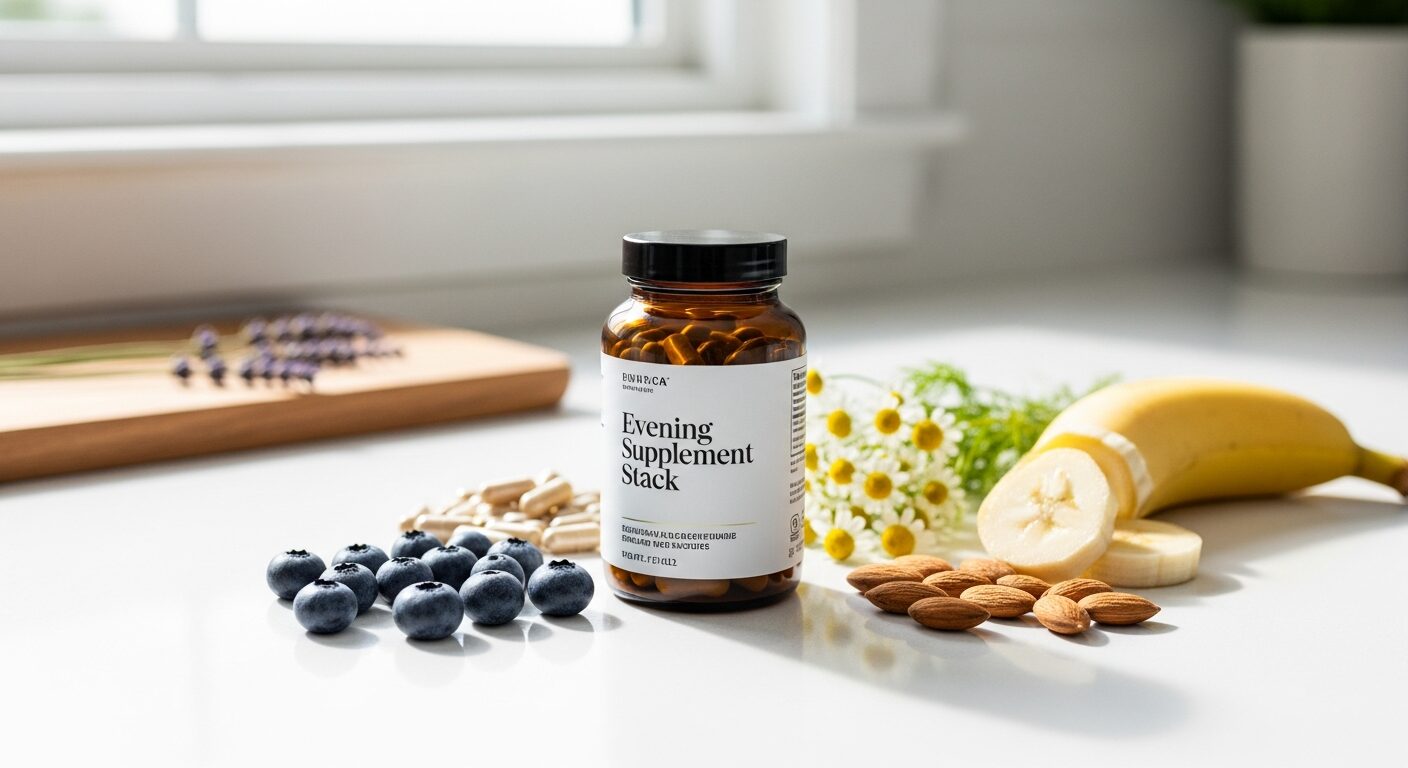
As the sun sets and your body prepares for its nightly restoration cycle, the supplements you choose can make or break your recovery, sleep quality, and next-day performance. While most people focus obsessively on their morning routines, the evening hours present a unique opportunity to optimize your body’s natural repair mechanisms through strategic supplementation.
Your circadian rhythm doesn’t just control when you feel sleepy—it orchestrates a complex symphony of hormone release, cellular repair, and metabolic processes that determine how you’ll feel tomorrow. The right evening supplement stack works in harmony with these natural processes, supporting everything from deep sleep cycles to growth hormone release and tissue recovery.
Yet despite the growing interest in evening supplementation, most people approach it haphazardly, missing key synergies and timing protocols that could dramatically enhance their results. This comprehensive guide will reveal the science-backed strategies for building an evening supplement stack that transforms your nights and supercharges your days.
🌿 Looking for supplements supplements? Shop Amazon →
Contents
- 1 What is an Evening Supplement Stack
- 2 Key Benefits of Evening Supplements
- 3 What Most People Get Wrong About Evening Supplements
- 4 What Happens to Your Body After 30 Days of Taking Evening Supplements
- 5 Who Should NOT Take Evening Supplements
- 6 Dosage and Best Forms
- 7 Frequently Asked Questions
- 8 Medical Disclaimer
What is an Evening Supplement Stack
An evening supplement stack is a carefully curated combination of nutrients, herbs, and compounds taken in the hours before bedtime to optimize sleep quality, recovery, and overnight physiological processes. Unlike random supplement taking, a properly designed evening stack considers the timing, synergistic effects, and circadian-specific needs of your body.
The foundation of any effective evening stack typically includes sleep-promoting compounds like melatonin, magnesium, or L-theanine, but extends far beyond basic sleep aids. Advanced stacks incorporate recovery accelerators like zinc and vitamin D3, stress modulators such as ashwagandha, and even cognitive enhancers that work during sleep to consolidate memories and clear metabolic waste from the brain.
The key differentiator between evening and morning supplementation lies in working with your natural circadian rhythms rather than against them. While morning supplements often aim to energize and activate, evening supplements support the parasympathetic nervous system’s “rest and digest” mode, facilitating the deep physiological maintenance your body performs while you sleep.
Key Benefits of Evening Supplements
The strategic use of evening supplements delivers benefits that extend far beyond simply falling asleep faster. Research demonstrates that optimizing your evening supplement timing can enhance sleep architecture, increase growth hormone release, and improve next-day cognitive performance.
Sleep quality improvements represent the most immediate and noticeable benefit. Compounds like magnesium glycinate and L-theanine help activate GABA receptors, promoting the calm alertness that transitions into deep sleep. Magnesium supplementation and sleep quality study, 2012 showed significant improvements in sleep efficiency and sleep time when magnesium was taken before bedtime.
Recovery acceleration occurs through multiple pathways during evening supplementation. Zinc, when taken at night, supports protein synthesis and immune function during the body’s natural repair window. Growth hormone release, which peaks during deep sleep stages, can be enhanced by specific amino acids and minerals taken in the evening hours.
Stress hormone regulation represents another crucial benefit. Adaptogenic herbs like ashwagandha help normalize cortisol patterns, supporting the natural evening decline that prepares your body for restorative sleep. This cortisol optimization has cascading effects on metabolism, immune function, and emotional regulation.
Memory consolidation and cognitive enhancement occur naturally during sleep, but certain evening supplements can amplify these processes. Compounds that support brain detoxification and neurotransmitter balance create optimal conditions for the brain’s nightly maintenance routines.
What Most People Get Wrong About Evening Supplements
The biggest misconception about evening supplements is that they’re just “sleep pills” designed to knock you out. This reductive thinking leads people to reach for sedating compounds that may help them fall asleep but actually impair sleep quality and morning alertness. True evening supplementation supports natural sleep architecture rather than forcing unconsciousness.
Many people believe that taking more supplements equals better results, leading to overly complex stacks that can actually interfere with each other. The truth is that supplement interactions become more complex in the evening when your body’s processing capacity is naturally reduced. A focused approach with 3-5 synergistic compounds typically outperforms megadose combinations.
Another widespread myth is that timing doesn’t matter as long as you take supplements “sometime in the evening.” Research shows that the specific timing window can dramatically impact effectiveness. For example, melatonin taken too early can actually shift your circadian rhythm in undesirable ways, while magnesium absorption varies significantly based on food timing and other competing minerals.
Perhaps the most dangerous misconception is that evening supplements are universally safe because they’re “natural.” This thinking ignores the fact that many evening supplements can interact with medications, affect hormone levels, or cause morning grogginess when used inappropriately. The relaxed, sleepy state that makes evening supplementation effective also makes your body more vulnerable to adverse effects.
Finally, many people expect immediate dramatic results and abandon effective protocols too quickly. Unlike stimulants that provide instant effects, evening supplements often work by supporting and optimizing natural processes that may take weeks to fully manifest. This leads to premature protocol changes that prevent people from experiencing the cumulative benefits of consistent use.
What Happens to Your Body After 30 Days of Taking Evening Supplements
Week 1 brings the most immediate and noticeable changes, primarily in sleep onset and subjective sleep quality. Most people experience faster sleep initiation within 2-3 days of starting a properly designed evening stack. Muscle tension decreases noticeably, and the racing thoughts that often plague bedtime begin to quiet. However, some people may experience mild morning grogginess as their body adjusts to the new routine.
Week 2 marks the beginning of deeper physiological adaptations. Sleep architecture changes with melatonin supplementation, 2013 demonstrates that sleep architecture improvements—increased deep sleep and REM sleep percentages—typically begin manifesting in the second week of consistent use. Energy levels during the day start to stabilize, and stress resilience noticeably improves.
Week 3-4 reveals the full spectrum of benefits as your circadian rhythms fully adapt to the new protocol. Hormonal optimization becomes apparent through improved mood stability, better stress response, and enhanced recovery from exercise. Cognitive benefits emerge as memory consolidation improves and brain fog decreases. Physical recovery accelerates, with reduced muscle soreness and faster adaptation to training stimuli.
The most profound changes often occur in stress hormone patterns during this final phase. Cortisol rhythms normalize, leading to more natural energy patterns throughout the day. Growth hormone release optimization contributes to improved body composition, with some people noticing better muscle tone and fat distribution even without dietary changes.
By day 30, most people report that quality sleep has become automatic rather than effortful. The supplements have essentially “trained” their nervous system to transition into restorative modes more efficiently, creating sustainable improvements that often persist even if supplementation is temporarily discontinued.
Who Should NOT Take Evening Supplements
Pregnant and breastfeeding women should approach evening supplementation with extreme caution, as many compounds can cross the placental barrier or appear in breast milk. Melatonin, in particular, can affect fetal development and infant sleep patterns. Even seemingly benign minerals like magnesium require careful dosing consideration during pregnancy.
Individuals taking prescription medications face significant interaction risks with evening supplements. Sleep medications can have dangerous additive effects with natural sleep aids, while blood pressure medications may interact unpredictably with magnesium and potassium-containing supplements. Antidepressants present particular concerns, as many evening supplements affect neurotransmitter pathways.
People with autoimmune conditions should exercise caution with immune-modulating supplements commonly found in evening stacks. Compounds like zinc and certain adaptogenic herbs can potentially overstimulate or misdirect immune responses, potentially exacerbating autoimmune symptoms.
Those with severe sleep disorders, including sleep apnea, narcolepsy, or REM sleep behavior disorder, require medical supervision before adding evening supplements. These conditions often involve complex neurological mechanisms that can be unpredictably affected by supplementation, potentially masking symptoms or interfering with prescribed treatments.
Shift workers and frequent travelers should be particularly cautious with circadian-affecting supplements like melatonin. These compounds can worsen circadian disruption when used inappropriately or make adaptation to new time zones more difficult.
Anyone experiencing persistent insomnia lasting more than two weeks should consult a healthcare provider before self-treating with supplements, as chronic sleep issues often indicate underlying medical conditions that require professional evaluation and treatment.
Dosage and Best Forms
Magnesium represents the cornerstone of most evening stacks, with magnesium glycinate being the preferred form due to superior absorption and minimal digestive upset. Effective dosages range from 200-400mg taken 1-2 hours before bedtime. Avoid magnesium oxide, which is poorly absorbed and can cause digestive issues.
Melatonin dosing requires precision, as more is definitely not better. Low-dose melatonin effectiveness study, 2005 demonstrates that doses as low as 0.5-3mg are often more effective than the 5-10mg commonly found in supplements. Time-release formulations can help maintain sleep throughout the night.
L-theanine works synergistically with other calming compounds at doses of 100-200mg. This amino acid promotes relaxation without sedation and can enhance the effectiveness of other stack components. Look for suntheanine, which is the patented, well-researched form.
Zinc should be taken as zinc bisglycinate at doses of 15-30mg to support overnight recovery and immune function. Taking zinc on an empty stomach can cause nausea, so timing with a light snack is often beneficial.
Adaptogenic herbs like ashwagandha require standardized extracts for consistent results. KSM-66 ashwagandha at 300-600mg provides stress-reducing benefits without morning sedation. Always choose third-party tested products to ensure purity and potency.
🌿 Looking for supplements Supplements?
Browse top-rated supplements supplements, independently tested and recommended by our editorial team.
Affiliate disclosure: We may earn a small commission at no extra cost to you.
Frequently Asked Questions
How long before bed should I take my evening supplements?
Most evening supplements should be taken 1-2 hours before your intended bedtime. This timing allows for proper absorption while avoiding the peak effects occurring too early or too late. Melatonin is an exception, working best when taken 30-60 minutes before bed. Experiment within these windows to find your optimal timing.
Can I take evening supplements with food?
Some evening supplements are better absorbed with food, while others work best on an empty stomach. Magnesium and fat-soluble vitamins benefit from being taken with a light snack, while amino acids like L-theanine are more effective when taken alone. Avoid large meals within 2 hours of bedtime, as this can interfere with sleep quality regardless of supplementation.
What should I do if I feel groggy in the morning?
Morning grogginess usually indicates that dosages are too high, timing is off, or you’re using poorly absorbed forms. Reduce dosages by 25-50% and ensure you’re getting 7-9 hours of sleep. If grogginess persists after one week of adjustments, discontinue use and consider consulting a healthcare provider.
Is it safe to take evening supplements long-term?
Most evening supplements are safe for long-term use when taken at appropriate dosages, but periodic breaks can help prevent tolerance and assess ongoing necessity. Consider taking a one-week break every 2-3 months to evaluate your natural sleep patterns and avoid psychological dependence.
Can children take evening supplements?
Children should only use evening supplements under medical supervision. Their developing nervous systems and different sleep needs require specialized protocols. Melatonin, in particular, can affect pubertal development and should only be used when prescribed by a pediatric healthcare provider.
Medical Disclaimer
The information provided in this article is for educational purposes only and is not intended as medical advice. Always consult with a qualified healthcare provider before starting any supplement regimen, especially if you have existing medical conditions, take prescription medications, or are pregnant or breastfeeding. Individual responses to supplements can vary significantly, and what works for one person may not be appropriate for another. This content has not been evaluated by the FDA and is not intended to diagnose, treat, cure, or prevent any disease.