
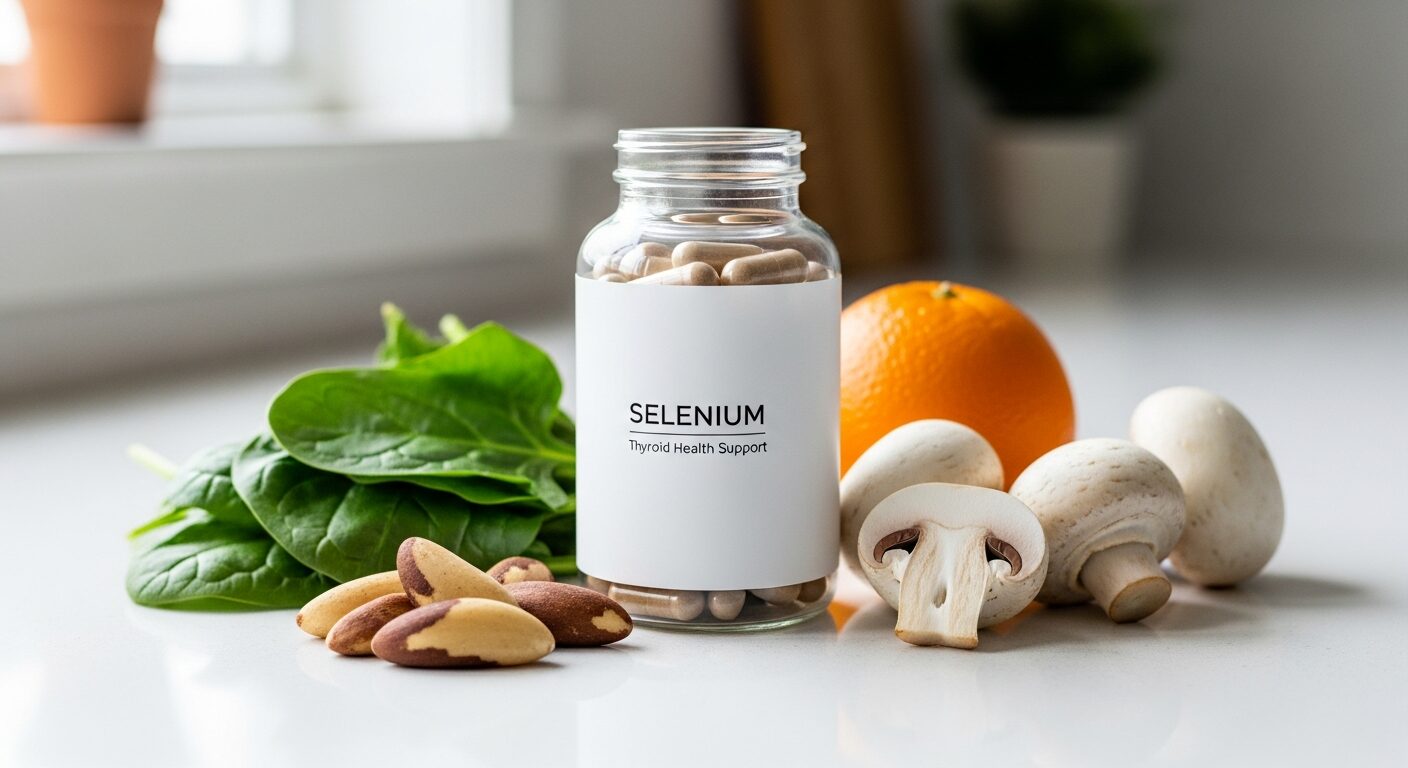
Selenium, a trace mineral that many people overlook, plays a critical role in thyroid function and overall health. While your body only needs tiny amounts of this essential nutrient, selenium deficiency can lead to serious thyroid disorders, compromised immune function, and increased oxidative stress throughout the body.
Despite its importance, selenium remains one of the most misunderstood supplements in the health world. Many people either take too much, choose the wrong form, or have completely incorrect beliefs about how it works. This comprehensive guide will separate fact from fiction, providing you with evidence-based information about selenium’s benefits, proper dosing, and what to realistically expect when you start supplementing.
Whether you’re dealing with thyroid issues, looking to boost your antioxidant defenses, or simply want to optimize your nutritional status, understanding selenium is crucial for making informed decisions about your health.
Contents
What is Selenium
Selenium is an essential trace mineral that functions as a cofactor for several important enzymes in the human body, particularly selenoproteins. These selenium-containing proteins serve as powerful antioxidants and play crucial roles in thyroid hormone metabolism, immune system function, and cellular protection against oxidative damage.
Unlike many other minerals, selenium’s biological activity depends heavily on its chemical form. The body utilizes organic forms of selenium, such as selenomethionine and selenocysteine, more efficiently than inorganic forms like sodium selenite. Selenomethionine, found naturally in Brazil nuts, seafood, and organ meats, represents the most bioavailable form for human consumption.
The mineral is naturally present in soil, and its concentration in plant foods depends largely on the selenium content of the soil where they’re grown. This geographic variation means that people living in selenium-deficient regions may have higher rates of deficiency, while those in selenium-rich areas might get adequate amounts through their regular diet.
Your body maintains selenium homeostasis through sophisticated regulatory mechanisms, storing excess selenium in muscles and other tissues while eliminating surplus amounts through urine and breath. This built-in regulation system helps prevent toxicity under normal circumstances, but it also means that consistent intake is necessary to maintain optimal levels.
Key Benefits of Selenium
Selenium’s most well-documented benefit involves thyroid health, where it serves as an essential component of iodothyronine deiodinases—enzymes responsible for converting the inactive thyroid hormone T4 into the active form T3. Without adequate selenium, this conversion becomes impaired, potentially leading to hypothyroid symptoms even when T4 levels appear normal.
The mineral also functions as a powerful antioxidant through its role in glutathione peroxidase, one of the body’s primary antioxidant enzyme systems. This selenoprotein helps neutralize harmful free radicals and reduces oxidative stress, which contributes to aging, inflammation, and chronic disease development.
Research has shown selenium’s immune-supporting properties, particularly in enhancing the function of both innate and adaptive immune responses. Selenium supplementation improves immune responses in selenium-deficient populations, 2007 demonstrated significant improvements in immune cell function among individuals with suboptimal selenium status.
Cardiovascular health represents another area where selenium shows promise. The mineral helps protect against lipid peroxidation, supports healthy inflammatory responses, and may contribute to improved endothelial function. Some studies suggest that optimal selenium levels are associated with reduced risk of cardiovascular events, though more research is needed to establish definitive causal relationships.
Selenium also plays a role in male fertility by supporting sperm motility and protecting reproductive cells from oxidative damage. The mineral concentrates in the testes and forms structural components of sperm, making adequate selenium status important for male reproductive health.
What Most People Get Wrong About Selenium
Myth 1: More Selenium Always Equals Better Health
Many people assume that if a little selenium is good, more must be better. This couldn’t be further from the truth. Selenium has one of the narrowest therapeutic windows of any essential nutrient, with the difference between beneficial and toxic doses being relatively small. The tolerable upper limit is set at 400 micrograms daily for adults, and exceeding this amount regularly can lead to selenosis—a condition characterized by hair loss, nail brittleness, garlic breath odor, and neurological symptoms. Optimal benefits occur within a specific range, typically between 55-200 micrograms daily for most adults.
Myth 2: All Forms of Selenium Are Equally Effective
This misconception leads many people to choose inferior selenium supplements. Inorganic forms like sodium selenite require more metabolic processing and may not be as efficiently utilized as organic forms. Selenomethionine, the form found in Brazil nuts and high-quality supplements, integrates directly into proteins and provides a steady release of selenium over time. Selenium yeast, another organic form, offers good bioavailability but may contain variable amounts of different selenium compounds.
Myth 3: You Can’t Get Too Much Selenium from Food
While food sources are generally safer than supplements, it’s still possible to consume excessive amounts through diet alone. Brazil nuts, for example, can contain anywhere from 70-400 micrograms of selenium per nut, depending on where they’re grown. Eating just a few Brazil nuts daily could potentially exceed safe intake levels. Selenium toxicity from Brazil nut consumption, 2008 documented cases of selenium poisoning from excessive Brazil nut intake, proving that “natural” doesn’t always mean “safe in unlimited quantities.”
Myth 4: Selenium Deficiency Is Rare in Developed Countries
Many health professionals and consumers believe selenium deficiency is uncommon in places like the United States and Europe. However, soil depletion and regional variations create pockets of selenium insufficiency even in developed nations. Additionally, certain dietary patterns, digestive disorders, and medical conditions can increase the risk of suboptimal selenium status regardless of geographic location.
What Happens to Your Body After 30 Days of Taking Selenium
Week 1: Cellular Integration Begins
During the first week of selenium supplementation, your body begins incorporating the mineral into selenoproteins, though dramatic changes aren’t typically noticeable yet. At the cellular level, glutathione peroxidase activity may start to increase, providing enhanced antioxidant protection. Some individuals with significant selenium deficiency might notice subtle improvements in energy levels or reduced feelings of fatigue as thyroid hormone conversion begins to optimize.
Week 2: Enzyme Activity Increases
By the second week, selenoprotein synthesis becomes more established, and thyroid hormone metabolism may show measurable improvements in laboratory tests. People with autoimmune thyroid conditions might begin experiencing reduced inflammation, though clinical symptoms typically take longer to resolve. Immune system function may also start to enhance, potentially leading to better resistance to minor infections.
Week 3-4: Full Benefits Emerge
After three to four weeks of consistent selenium supplementation, most people reach steady-state levels in their tissues. Selenium supplementation in autoimmune thyroiditis reduces thyroid peroxidase antibodies, 2002 showed significant reductions in thyroid antibodies after 3 months of selenium supplementation, with initial changes becoming apparent around the 4-week mark.
Those with thyroid dysfunction may notice improvements in symptoms like brain fog, cold intolerance, or sluggish metabolism. Individuals taking selenium for general health support might observe better hair and nail quality, improved skin appearance, and enhanced overall vitality. However, it’s important to note that people with adequate selenium status may not notice dramatic changes, as the mineral works to maintain existing optimal function rather than correct deficiencies.
Who Should NOT Take Selenium
Individuals with a history of selenium toxicity or selenosis should avoid selenium supplements entirely unless under strict medical supervision. Signs of previous selenium toxicity include unexplained hair loss, brittle nails, metallic taste in the mouth, or garlic-like breath odor that occurred during previous supplementation attempts.
People taking certain medications need to exercise caution with selenium supplementation. The mineral can interact with anticoagulant medications like warfarin, potentially altering bleeding times. Additionally, selenium may interfere with certain chemotherapy drugs, as the antioxidant effects could theoretically reduce the oxidative damage that some cancer treatments rely on to kill cancer cells.
Pregnant and breastfeeding women should be particularly careful about selenium dosing. While selenium is essential during pregnancy and lactation, the developing fetus and nursing infant are more susceptible to both deficiency and toxicity. Pregnant women should not exceed 60 micrograms daily without medical supervision, and supplementation should ideally be part of a comprehensive prenatal vitamin rather than standalone selenium supplements.
Individuals with kidney disease may have difficulty eliminating excess selenium, making them more prone to toxicity even at normally safe doses. Similarly, people with certain genetic variations affecting selenium metabolism might require modified dosing strategies.
Anyone considering selenium supplementation should consult with a healthcare provider if they have autoimmune conditions other than thyroid disorders, as selenium’s immune-modulating effects could potentially influence disease activity in unpredictable ways.
Dosage and Best Forms
The recommended dietary allowance (RDA) for selenium is 55 micrograms daily for adults, but therapeutic doses for specific conditions may range from 100-200 micrograms daily. Most people benefit from staying within this therapeutic range, as higher doses don’t provide additional benefits and increase the risk of adverse effects.
Selenomethionine represents the gold standard for selenium supplementation due to its superior bioavailability and sustained release characteristics. This organic form integrates into body proteins and provides a steady supply of selenium over time. Look for supplements that specifically list “selenomethionine” or “selenium yeast” rather than generic “selenium.”
Selenium yeast offers another excellent option, containing primarily selenomethionine along with other organic selenium compounds. This form closely mimics the selenium profile found in selenium-rich foods and provides good bioavailability.
Timing of selenium supplementation can influence absorption. Taking selenium with food, particularly foods containing some fat, may enhance absorption. However, avoid taking selenium supplements with high-dose vitamin C supplements, as ascorbic acid can interfere with selenium absorption when taken simultaneously.
For those preferring food sources, Brazil nuts remain the richest natural source, but their selenium content varies dramatically. Seafood, organ meats, and eggs provide more consistent amounts, while plant foods depend heavily on soil selenium levels in their growing regions.
🌿 Looking for Selenium Supplements?
Browse top-rated Selenium supplements, independently tested and recommended by our editorial team.
Affiliate disclosure: We may earn a small commission at no extra cost to you.
Frequently Asked Questions
Can I take selenium with other thyroid supplements?
Yes, selenium can be safely combined with other thyroid-supporting nutrients like iodine, tyrosine, and zinc. In fact, selenium and iodine work synergistically in thyroid function, with selenium helping to protect the thyroid gland from iodine-induced oxidative stress. However, space out the timing of different supplements by at least 2 hours to optimize absorption, and always inform your healthcare provider about all supplements you’re taking.
How long does it take to correct selenium deficiency?
Correcting selenium deficiency typically takes 8-12 weeks of consistent supplementation, though some improvements may be noticed within 2-4 weeks. Blood selenium levels usually normalize within 6-8 weeks, but tissue saturation takes longer. The timeline depends on the severity of deficiency, absorption efficiency, and individual metabolic factors.
Should I get my selenium levels tested before supplementing?
Testing selenium levels can be helpful but isn’t always necessary for healthy adults taking modest doses (55-100 micrograms daily). However, testing is recommended if you have thyroid disorders, live in a selenium-deficient region, follow restrictive diets, or plan to take higher therapeutic doses. Serum selenium levels between 70-150 ng/mL are generally considered optimal.
Can selenium help with hair loss?
Selenium deficiency can contribute to hair loss, and correcting deficiency may help restore normal hair growth. However, selenium won’t help with androgenetic alopecia (male pattern baldness) or other non-nutritional causes of hair loss. If hair loss is accompanied by other symptoms like fatigue or cold intolerance, thyroid dysfunction should be evaluated.
Is it safe to take selenium long-term?
Yes, selenium supplementation is safe for long-term use when taken at appropriate doses (55-200 micrograms daily for most adults). However, periodic monitoring is wise if taking doses above 100 micrograms daily for extended periods. Signs of excess selenium include garlic breath odor, nail changes, or hair thinning, which indicate the need to reduce dosage or discontinue supplementation.
Medical Disclaimer
This article is for informational purposes only and does not constitute medical advice. The information provided should not be used to diagnose, treat, cure, or prevent any disease or medical condition. Individual responses to selenium supplementation may vary significantly based on genetics, health status, medications, and other factors.
Always consult with a qualified healthcare provider before starting any new supplement regimen, especially if you have existing medical conditions, take medications, are pregnant or breastfeeding, or are considering selenium supplementation for therapeutic purposes. Your healthcare provider can help determine appropriate dosing based on your individual needs and monitor for potential interactions or adverse effects.
The statements in this article have not been evaluated by the Food and Drug Administration. Selenium supplements are not intended to diagnose, treat, cure, or prevent any disease. If you experience any adverse effects while taking selenium, discontinue use and consult your healthcare provider immediately.