
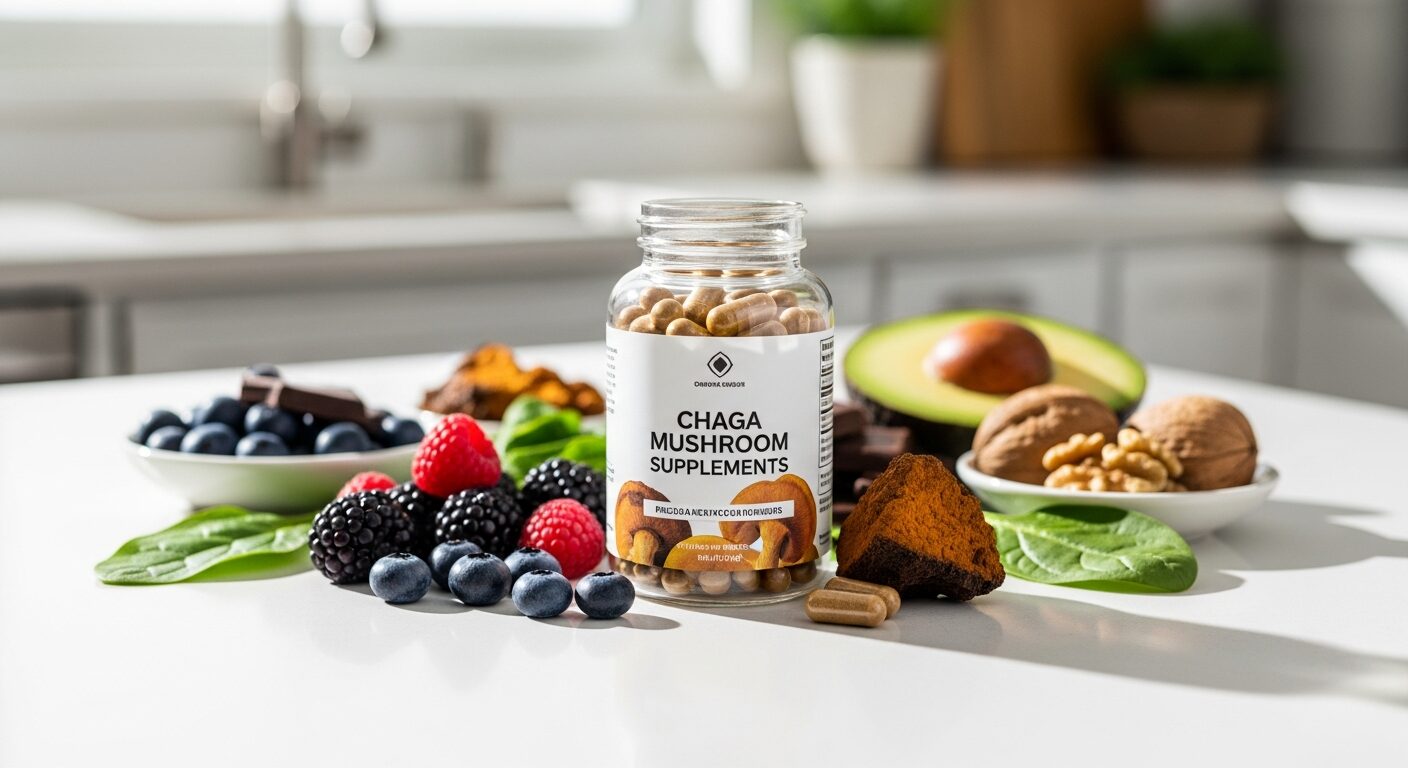
In the dense forests of northern climates, a peculiar black mass clings to birch trees, looking more like burnt charcoal than a medicinal treasure. This is Chaga mushroom, scientifically known as Inonotus obliquus, and it has earned the title “King of Medicinal Mushrooms” for good reason. While its charred exterior might not win any beauty contests, this fungal powerhouse has been revered for centuries in traditional Siberian and Northern European medicine.
What makes Chaga truly remarkable isn’t just its impressive nutritional profile, but the growing body of scientific research supporting its health benefits. From immune system modulation to antioxidant protection, Chaga has captured the attention of both researchers and health enthusiasts worldwide. However, with popularity comes misinformation, and many people hold misconceptions about this unique organism that could impact their health decisions.
🌿 Looking for Chaga supplements? Shop Amazon →
Contents
What is Chaga
Chaga mushroom (Inonotus obliquus) is a parasitic fungus that primarily grows on birch trees in cold climates across Northern Europe, Siberia, Russia, Korea, and parts of North America. Unlike typical mushrooms that fruit above ground, Chaga forms a hard, black, crusty exterior called a sclerotium, which protects the orange interior tissue rich in bioactive compounds.
The fungus has a unique lifecycle that sets it apart from other medicinal mushrooms. It begins as spores that infect birch trees through wounds in the bark, then slowly grows inside the tree for 10-20 years before forming the characteristic black mass we recognize as Chaga. This long maturation process allows the fungus to concentrate nutrients and bioactive compounds from the host tree, creating a potent medicinal substance.
Chaga’s composition is what makes it particularly valuable. It contains high levels of melanin (responsible for its dark color), betulinic acid derived from birch bark, polysaccharides including beta-glucans, triterpenes, and an impressive array of antioxidants. The ORAC (Oxygen Radical Absorbance Capacity) value of Chaga is among the highest recorded for any natural substance, significantly exceeding that of blueberries, dark chocolate, and green tea.
Traditionally, indigenous peoples of Siberia and northern regions have used Chaga for centuries as a folk remedy for various ailments. They would harvest the sclerotium, dry it, and prepare it as a tea or powder. In Russian folk medicine, Chaga was particularly valued for digestive issues and general vitality, earning it the nickname “gift from God.”
Key Benefits of Chaga
The health benefits of Chaga are primarily attributed to its rich concentration of bioactive compounds, particularly beta-glucans, triterpenes, and phenolic compounds. Research has identified several key areas where Chaga supplementation may provide significant health benefits.
Immune System Support: Chaga contains high levels of beta-glucans, complex carbohydrates that help modulate immune function. These compounds can enhance immune response when needed while preventing overactivation that could lead to autoimmune issues. Studies have shown that Chaga polysaccharides can stimulate immune cell activity, including macrophages, natural killer cells, and T-lymphocytes.
Antioxidant Protection: With one of the highest ORAC values among natural substances, Chaga provides exceptional antioxidant protection. This helps combat oxidative stress, which is linked to aging, chronic diseases, and cellular damage. The melanin content in Chaga is particularly effective at neutralizing free radicals and protecting DNA from damage.
Anti-inflammatory Effects: Chronic inflammation is at the root of many modern health issues. Chaga contains compounds that help reduce inflammatory markers in the body, potentially lowering the risk of inflammatory conditions. The betulinic acid derived from birch trees has demonstrated significant anti-inflammatory properties in research studies.
Blood Sugar Regulation: Some studies suggest that Chaga may help regulate blood glucose levels by improving insulin sensitivity and glucose metabolism. This could be particularly beneficial for individuals with diabetes or metabolic syndrome, though more human studies are needed to confirm these effects.
Liver Protection: The hepatoprotective properties of Chaga have been observed in several studies, suggesting it may help protect liver cells from damage caused by toxins, alcohol, or medications. This protective effect is likely due to its antioxidant and anti-inflammatory properties.
What Most People Get Wrong About Chaga
Despite its growing popularity, several misconceptions about Chaga persist, leading to unrealistic expectations and potentially unsafe practices. Understanding these myths is crucial for anyone considering Chaga supplementation.
Myth 1: All Chaga Products Are Created Equal
Many consumers believe that any Chaga product will provide the same benefits, but this couldn’t be further from the truth. The quality, potency, and bioavailability of Chaga supplements vary dramatically based on extraction methods, source material, and processing techniques. Wild-harvested Chaga from birch trees contains different compound concentrations than lab-grown alternatives. Additionally, the extraction process significantly impacts the availability of active compounds – water extraction pulls different compounds than alcohol extraction, and dual extraction methods are often superior for capturing the full spectrum of bioactive substances.
Myth 2: More is Always Better
Another common misconception is that taking massive doses of Chaga will accelerate benefits. However, research suggests that immune-modulating effects of medicinal mushrooms follow a bell curve, where moderate doses provide optimal benefits, and excessive amounts may actually reduce effectiveness or cause adverse effects. Chaga’s immune-modulating properties work best when the body maintains balance, not when overwhelmed with excessive compounds.
Myth 3: Chaga is Safe for Everyone
Perhaps the most dangerous myth is that Chaga is universally safe because it’s “natural.” While generally well-tolerated, Chaga can interact with certain medications, particularly blood thinners and diabetes medications. It’s also high in oxalates, which can be problematic for individuals with kidney stones or kidney disease. Additionally, because Chaga affects immune function, it may not be appropriate for people with autoimmune conditions or those taking immunosuppressive medications.
Myth 4: Chaga Works Immediately
Many people expect immediate results from Chaga supplementation, similar to pharmaceutical medications. However, Chaga works by gradually supporting and modulating body systems, particularly immune function and cellular health. The benefits are typically cumulative and may take weeks or months of consistent use to become noticeable. This slow-acting nature is actually a strength, as it indicates that Chaga is supporting fundamental physiological processes rather than masking symptoms.
What Happens to Your Body After 30 Days of Taking Chaga
Understanding the timeline of Chaga’s effects can help set realistic expectations and encourage consistent supplementation for optimal benefits.
Week 1: Initial Adaptation
During the first week of Chaga supplementation, your body begins processing the influx of bioactive compounds. Most people don’t notice dramatic changes during this period, though some may experience mild digestive adjustments as their system adapts to the new supplement. The antioxidants begin working immediately at the cellular level, but these protective effects aren’t typically felt consciously. Some individuals report subtle improvements in energy levels or sleep quality, though these could be placebo effects during the initial days.
Week 2: Immune System Modulation Begins
By the second week, the beta-glucans and other immune-supporting compounds have had time to interact with immune cells and begin modulating immune function. Some people notice they feel more resilient during this period, particularly if they’re exposed to seasonal illnesses or stress. The anti-inflammatory compounds are also beginning to accumulate in tissues, potentially leading to reduced inflammation markers, though this is typically measured through laboratory tests rather than felt symptoms.
Week 3-4: Full Benefits Emerge
After three to four weeks of consistent use, the cumulative effects of Chaga supplementation typically become more apparent. Research on medicinal mushrooms suggests that immune-modulating effects are most pronounced after 4-8 weeks of consistent use. Users often report improved energy levels, better stress resilience, and enhanced overall vitality. The antioxidant protection has had time to reduce oxidative stress throughout the body, potentially leading to improved skin appearance and better recovery from exercise or daily stressors.
It’s important to note that individual responses vary significantly based on factors such as overall health status, diet, lifestyle, dosage, and the quality of the Chaga supplement being used. Some people may notice benefits earlier, while others may require longer periods of supplementation to experience significant changes.
Who Should NOT Take Chaga
While Chaga is generally considered safe for most healthy adults, several groups should exercise caution or avoid Chaga supplementation entirely.
Blood Clotting Disorders: Chaga may have anticoagulant properties that could increase bleeding risk. Individuals with bleeding disorders or those taking blood-thinning medications such as warfarin, heparin, or even aspirin should consult their healthcare provider before using Chaga, as it may enhance the effects of these medications.
Diabetes Medication Users: Since Chaga may lower blood glucose levels, people taking diabetes medications should monitor their blood sugar closely and work with their healthcare provider to adjust medication dosages if necessary. The combination could potentially cause dangerous drops in blood sugar levels.
Autoimmune Conditions: Individuals with autoimmune diseases such as multiple sclerosis, rheumatoid arthritis, or systemic lupus erythematosus should be cautious with Chaga supplementation. While Chaga is described as immune-modulating rather than simply immune-stimulating, it could potentially exacerbate autoimmune symptoms in some individuals.
Kidney Disease: Chaga is high in oxalates, which can contribute to kidney stone formation and may be problematic for individuals with existing kidney disease or a history of kidney stones. These individuals should avoid Chaga or use it only under medical supervision.
Pregnancy and Breastfeeding: There is insufficient research on Chaga’s safety during pregnancy and breastfeeding. As a precautionary measure, pregnant and nursing women should avoid Chaga supplementation.
Upcoming Surgery: Due to its potential effects on blood clotting and blood sugar, Chaga supplementation should be discontinued at least two weeks before scheduled surgery to prevent complications during and after the procedure.
Dosage and Best Forms
Chaga is available in several forms, each with different potencies and applications. The most common forms include powdered Chaga, liquid extracts, capsules, and whole dried chunks for tea preparation.
Powdered Chaga: Typically ranges from 1-3 grams daily, mixed into beverages or foods. This form provides a broad spectrum of compounds but may have lower bioavailability than concentrated extracts.
Standardized Extracts: Usually contain concentrated levels of active compounds and require smaller doses, typically 300-1000mg daily. Look for extracts standardized to beta-glucan content (at least 20%) for immune support benefits.
Liquid Extracts: Often the most bioavailable form, with typical dosages of 1-2 dropperfuls (about 1-2ml) daily. These are usually alcohol-based or glycerin-based extractions.
Tea Preparation: Traditional method using 1-2 tablespoons of dried Chaga chunks simmered in water for 15-30 minutes, consumed 1-2 times daily.
For optimal absorption, take Chaga on an empty stomach or with minimal food. Start with lower doses and gradually increase to assess individual tolerance. Quality matters significantly – choose products from reputable suppliers that provide third-party testing for purity and potency.
🌿 Looking for Chaga Supplements?
Browse top-rated Chaga supplements, independently tested and recommended by our editorial team.
Affiliate disclosure: We may earn a small commission at no extra cost to you.
Frequently Asked Questions
Can I take Chaga every day?
Yes, Chaga can be taken daily for extended periods. Many traditional uses involve daily consumption, and research studies have used daily dosing for months without significant adverse effects. However, some practitioners recommend periodic breaks (such as 5 days on, 2 days off) to prevent the body from developing tolerance, though this isn’t scientifically established.
How long does it take to see results from Chaga?
Most people begin noticing benefits after 2-4 weeks of consistent daily use. However, some effects like antioxidant protection begin immediately at the cellular level, even if not consciously perceived. For immune system benefits, research suggests 4-8 weeks of consistent use provides optimal results.
Can I take Chaga with coffee or other supplements?
Chaga combines well with coffee and most other supplements. In fact, many people enjoy adding Chaga powder to their morning coffee or tea. However, avoid taking it simultaneously with blood thinners or diabetes medications without medical supervision, as interactions are possible.
Is wild-harvested Chaga better than cultivated?
Wild-harvested Chaga from birch trees typically contains higher concentrations of certain compounds, particularly betulinic acid derived from the host tree. However, sustainable harvesting is crucial since over-harvesting can damage ecosystems. Laboratory-cultivated Chaga ensures consistent quality and sustainability but may have different compound profiles.
What’s the difference between Chaga and other medicinal mushrooms?
Chaga differs significantly from other medicinal mushrooms in its growth pattern, appearance, and compound profile. Unlike mushrooms that fruit above ground, Chaga forms as a sclerotium on trees. It has uniquely high melanin and antioxidant content, while other mushrooms like Reishi focus more on triterpenes, or Lion’s Mane on nerve growth factors. Each mushroom offers distinct benefits, and they can often be used complementarily.
Medical Disclaimer
This article is for informational purposes only and is not intended to replace professional medical advice, diagnosis, or treatment. The statements regarding Chaga mushroom have not been evaluated by the Food and Drug Administration. Chaga supplements are not intended to diagnose, treat, cure, or prevent any disease. Always consult with a qualified healthcare provider before starting any new supplement regimen, especially if you have existing medical conditions, take medications, or are pregnant or breastfeeding. Individual results may vary, and what works for one person may not work for another. If you experience any adverse reactions while taking Chaga, discontinue use immediately and consult your healthcare provider.