
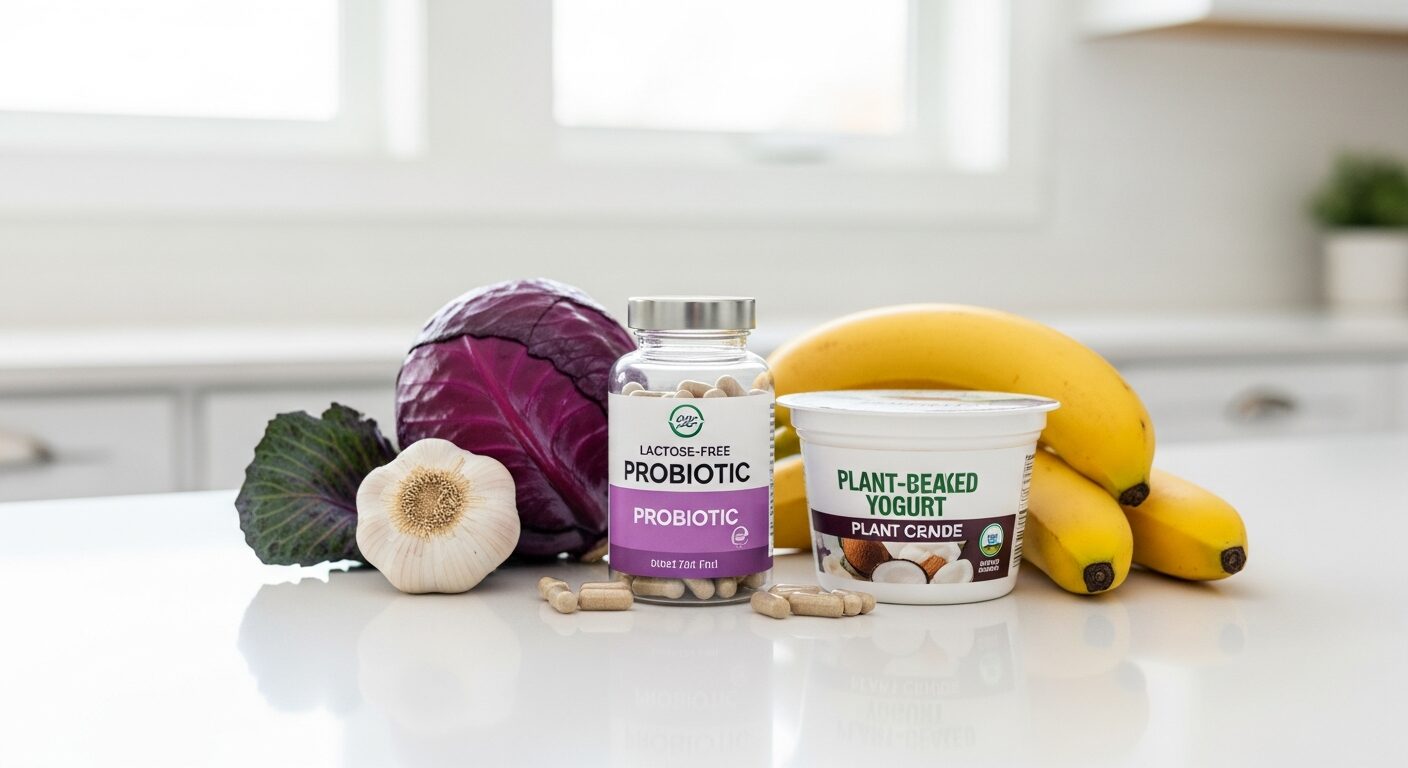
Living with lactose intolerance can feel like navigating a minefield every time you eat. That morning latte, a slice of pizza with friends, or even a seemingly innocent salad dressing can trigger uncomfortable digestive symptoms that leave you feeling bloated, gassy, and miserable. For the estimated 65% of adults worldwide who experience some degree of lactose intolerance, finding effective relief has traditionally meant strict dietary restrictions and enzyme supplements.
However, emerging research suggests there may be a more comprehensive solution: probiotics. These beneficial bacteria are showing remarkable promise not just for general digestive health, but specifically for helping people with lactose intolerance better process dairy products. Unlike quick-fix enzyme pills that only work for individual meals, probiotics may offer a more sustainable approach by actually improving your gut’s ability to handle lactose over time.
The science behind this connection is fascinating and offers hope for millions of people who have resigned themselves to a lifetime of dietary limitations. By understanding how probiotics work and which strains are most effective for lactose intolerance, you may be able to reclaim foods you thought were off-limits forever.
🌿 Looking for Probiotics supplements? Shop Amazon →
Contents
- 1 What is Probiotics
- 2 Key Benefits of Probiotics
- 3 What Most People Get Wrong About Probiotics
- 4 What Happens to Your Body After 30 Days of Taking Probiotics
- 5 Who Should NOT Take Probiotics
- 6 Dosage and Best Forms
- 7 Frequently Asked Questions
- 7.1 Can probiotics completely cure lactose intolerance?
- 7.2 How long do I need to take probiotics to see results for lactose intolerance?
- 7.3 Are probiotic foods as effective as supplements for lactose intolerance?
- 7.4 Can I take probiotics with lactase enzyme supplements?
- 7.5 What should I do if probiotics cause digestive upset?
- 8 Medical Disclaimer
What is Probiotics
Probiotics are live microorganisms that, when consumed in adequate amounts, provide health benefits to the host. Often referred to as “good bacteria,” these microscopic allies primarily consist of beneficial strains of bacteria and yeasts that naturally inhabit your digestive system. The most well-researched probiotic species include Lactobacillus and Bifidobacterium, though many other beneficial strains exist.
Your gut naturally houses trillions of microorganisms collectively known as the gut microbiome. This complex ecosystem plays crucial roles in digestion, immune function, and even mental health. When this delicate balance is disrupted by factors like antibiotics, stress, poor diet, or illness, harmful bacteria can proliferate while beneficial bacteria decline, leading to various digestive issues.
Probiotics work by helping restore this natural balance. They can be consumed through fermented foods like yogurt, kefir, sauerkraut, and kimchi, or taken as concentrated supplements. For people with lactose intolerance, certain probiotic strains are particularly valuable because they produce lactase, the enzyme responsible for breaking down lactose into more digestible sugars.
Key Benefits of Probiotics
Research has identified numerous health benefits associated with regular probiotic consumption, extending far beyond digestive health. For digestive wellness specifically, probiotics help maintain the integrity of the intestinal barrier, reduce inflammation, and promote regular bowel movements. They also enhance the production of digestive enzymes and can help alleviate symptoms of irritable bowel syndrome (IBS).
The immune system benefits significantly from probiotic supplementation, as approximately 70% of immune tissue is located in the gut. Regular probiotic use has been shown to reduce the frequency and duration of respiratory infections, enhance vaccine responses, and modulate inflammatory responses throughout the body.
Mental health connections are increasingly recognized, with the gut-brain axis serving as a communication highway between your digestive system and brain. Certain probiotic strains can influence neurotransmitter production, potentially improving mood, reducing anxiety, and supporting cognitive function. Some studies suggest probiotics may help manage depression symptoms, though more research is needed.
For lactose-intolerant individuals specifically, probiotics offer the unique benefit of lactase enzyme production. Strains like Lactobacillus acidophilus and Lactobacillus bulgaricus naturally produce lactase, potentially reducing the severity of lactose intolerance symptoms when dairy products are consumed.
What Most People Get Wrong About Probiotics
One of the most pervasive misconceptions is that all probiotics are essentially the same. Many people assume that any probiotic supplement or yogurt will provide identical benefits, but this couldn’t be further from the truth. Probiotic effects are highly strain-specific, meaning that Lactobacillus acidophilus NCFM will have different properties than Lactobacillus acidophilus LA-5, even though they’re the same species. For lactose intolerance, specific strains like Lactobacillus bulgaricus and Streptococcus thermophilus have been clinically studied and shown to be particularly effective.
Another common myth is that probiotics work immediately and uniformly for everyone. In reality, probiotic colonization and effectiveness can vary dramatically between individuals based on their existing gut microbiome, genetics, diet, and lifestyle factors. Some people may notice improvements within days, while others require several weeks of consistent use to experience benefits. This individual variation doesn’t mean probiotics aren’t working; it simply reflects the complex nature of gut ecology.
Many people also believe that more CFUs (colony-forming units) automatically means better results. While adequate potency is important, research shows that effectiveness depends more on strain selection and survivability than sheer numbers. Some highly effective probiotic strains work well at relatively modest doses, while others may require higher concentrations. The key is choosing clinically-studied strains at their researched dosages.
Perhaps the most dangerous misconception is that probiotics are always safe for everyone. While generally well-tolerated, probiotics can cause serious complications in immunocompromised individuals, people with severe underlying health conditions, or those with damaged intestinal barriers. The assumption that “natural equals safe” has led some people to use probiotics inappropriately, sometimes resulting in bloodstream infections or other serious adverse events.
What Happens to Your Body After 30 Days of Taking Probiotics
During the first week of probiotic supplementation, your body begins the complex process of microbial colonization. Initial changes are often subtle and may include slight modifications in bowel movement frequency or consistency. Some people experience mild digestive symptoms like gas or bloating as their gut microbiome adjusts to the new bacterial residents. For lactose-intolerant individuals, this is when lactase-producing strains begin establishing themselves in the digestive tract.
Week two typically brings more noticeable improvements in digestive comfort and regularity. Clinical studies demonstrate that many people begin experiencing reduced lactose intolerance symptoms around this timeframe, as beneficial bacteria populations grow and enzyme production increases. Energy levels may improve as nutrient absorption becomes more efficient, and some individuals report better sleep quality due to improved gut-brain axis communication.
By weeks three and four, the full spectrum of probiotic benefits usually becomes apparent. Digestive symptoms tend to stabilize at their improved baseline, and many lactose-intolerant individuals find they can tolerate small to moderate amounts of dairy products without significant discomfort. Immune function enhancements become more evident, with some people reporting fewer minor illnesses or faster recovery times.
Long-term users often experience sustained improvements in overall digestive health, with reduced bloating, more predictable bowel movements, and decreased food sensitivity reactions. However, it’s important to note that these benefits typically require ongoing supplementation, as probiotic bacteria don’t permanently colonize the gut in most cases.
Who Should NOT Take Probiotics
Individuals with compromised immune systems face the highest risk from probiotic supplementation. This includes people undergoing chemotherapy, organ transplant recipients taking immunosuppressive medications, those with HIV/AIDS, and individuals with primary immunodeficiency disorders. In these populations, even beneficial bacteria can potentially cause life-threatening bloodstream infections or other serious complications.
People with severe acute pancreatitis should avoid probiotics, as research has shown increased mortality risk in this population when probiotics are used during the acute phase. Similarly, those with damaged or leaky gut barriers due to conditions like severe inflammatory bowel disease flares may be at increased risk for bacterial translocation.
Certain medications can interact with probiotics, particularly antibiotics, which can kill beneficial probiotic bacteria. While this interaction isn’t dangerous, it can reduce probiotic effectiveness. People taking antifungal medications should consult healthcare providers before using yeast-based probiotics like Saccharomyces boulardii.
Pregnant and breastfeeding women should exercise caution and consult healthcare providers before starting probiotic supplements, though many probiotic foods are generally considered safe. Premature infants and critically ill hospitalized patients also require medical supervision before probiotic use. Recent research emphasizes the importance of medical oversight in vulnerable populations to prevent rare but serious adverse events.
Dosage and Best Forms
Effective probiotic dosing for lactose intolerance typically ranges from 1 billion to 10 billion CFUs daily, though specific requirements vary by strain and individual needs. For lactose intolerance specifically, look for products containing Lactobacillus acidophilus, Lactobacillus bulgaricus, Streptococcus thermophilus, and Bifidobacterium lactis, as these strains have demonstrated lactase-producing capabilities.
Capsules and tablets offer the most convenient and stable delivery method, particularly those with enteric coating that protects bacteria from stomach acid. Powder forms can be mixed into cool foods or beverages and may offer higher potency, though they’re generally less convenient for daily use. Liquid probiotics provide rapid absorption but typically have shorter shelf lives and require refrigeration.
Timing can influence effectiveness, with many experts recommending probiotic consumption 30 minutes before meals or with meals to enhance survival through the acidic stomach environment. For lactose intolerance management, taking probiotics consistently rather than only when consuming dairy products appears most beneficial for maintaining adequate lactase-producing bacterial populations.
Quality considerations include third-party testing for potency and purity, proper storage conditions, and expiration date awareness. Look for products that specify exact strain names rather than just species, and choose reputable manufacturers that provide stability data and proper storage instructions.
🌿 Looking for Probiotics Supplements?
Browse top-rated Probiotics supplements, independently tested and recommended by our editorial team.
Affiliate disclosure: We may earn a small commission at no extra cost to you.
Frequently Asked Questions
Can probiotics completely cure lactose intolerance?
Probiotics cannot cure lactose intolerance, but they can significantly improve lactose digestion and reduce symptoms. The underlying genetic factors that cause lactase enzyme deficiency remain unchanged, but probiotic bacteria can supplement lactase production in the gut, allowing for better dairy tolerance. Most people experience symptom improvement rather than complete elimination.
How long do I need to take probiotics to see results for lactose intolerance?
Most people begin noticing improvements in lactose tolerance within 2-4 weeks of consistent probiotic use. However, individual responses vary significantly based on gut microbiome composition, severity of lactose intolerance, and specific probiotic strains used. Some individuals may experience benefits within days, while others require 6-8 weeks for optimal results.
Are probiotic foods as effective as supplements for lactose intolerance?
Probiotic foods like yogurt and kefir can be beneficial, especially since they often contain lactase-producing strains naturally used in fermentation. However, supplements typically provide higher concentrations of specific therapeutic strains and more predictable potency. For severe lactose intolerance, supplements may offer more reliable results, while mild cases might respond well to probiotic foods.
Can I take probiotics with lactase enzyme supplements?
Yes, probiotics and lactase enzyme supplements can be used together safely and may provide complementary benefits. Lactase enzymes provide immediate lactose digestion for specific meals, while probiotics work long-term to improve overall gut health and natural lactase production. This combination approach often provides the most comprehensive management for lactose intolerance.
What should I do if probiotics cause digestive upset?
Initial digestive symptoms like mild gas or bloating are common and usually resolve within 1-2 weeks as your gut adjusts. Start with lower doses and gradually increase to improve tolerance. If symptoms persist or worsen after two weeks, discontinue use and consult a healthcare provider. Severe symptoms like intense cramping, fever, or persistent diarrhea warrant immediate medical attention.
Medical Disclaimer
This article is for informational purposes only and does not constitute medical advice. The information provided should not be used to diagnose, treat, cure, or prevent any disease or medical condition. Individual responses to probiotics vary significantly, and what works for one person may not work for another. Always consult with a qualified healthcare professional before starting any new supplement regimen, especially if you have existing health conditions, take medications, or are pregnant or breastfeeding. If you experience severe or persistent symptoms related to lactose intolerance or probiotic use, seek immediate medical attention. The authors and NaturStack are not responsible for any adverse effects or consequences resulting from the use of information provided in this article.