
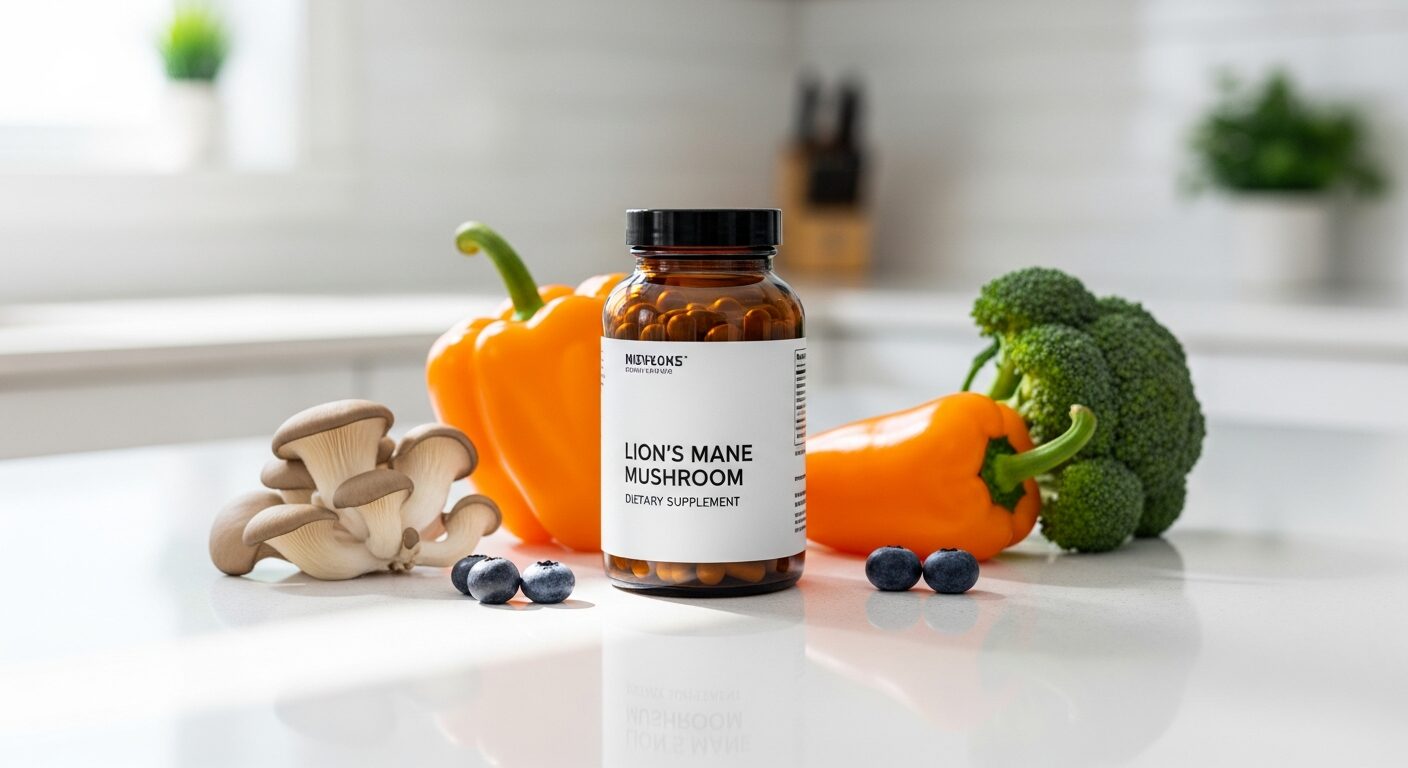
Lion’s Mane mushroom has emerged as one of the most promising natural nootropics in recent years, capturing the attention of researchers, biohackers, and health enthusiasts alike. This distinctive white, shaggy mushroom doesn’t just look unique—it contains powerful bioactive compounds that may support cognitive function, nerve health, and overall brain performance in ways that few other natural substances can match.
With the supplement market flooded with Lion’s Mane products of varying quality and potency, choosing the right one can feel overwhelming. The difference between a high-quality extract and a subpar product isn’t just about value—it’s about whether you’ll experience the remarkable benefits that research suggests this fascinating fungus can provide.
In this comprehensive guide, we’ll cut through the marketing hype and examine what the science actually says about Lion’s Mane supplementation. You’ll discover the key benefits backed by peer-reviewed research, learn what most people get wrong about this mushroom, and understand exactly what to expect when you start supplementing. Most importantly, you’ll gain the knowledge needed to select a Lion’s Mane supplement that delivers real results.
🌿 Looking for Lions Mane supplements? Shop Amazon →
Contents
What is Lions Mane
Lion’s Mane (Hericium erinaceus) is a distinctive edible mushroom that grows on hardwood trees throughout North America, Europe, and Asia. Unlike typical mushrooms with caps and stems, Lion’s Mane resembles a white waterfall of cascading icicles or, as its name suggests, a lion’s flowing mane. This unique appearance makes it easily identifiable in both wild and cultivated forms.
What sets Lion’s Mane apart from other mushrooms isn’t just its appearance—it’s the presence of two unique classes of bioactive compounds: hericenones and erinacines. These compounds are found nowhere else in nature and are responsible for Lion’s Mane’s remarkable neurological benefits. Hericenones are found in the fruiting body (the visible mushroom), while erinacines are concentrated in the mycelium (the root-like structure).
Both compound families have the rare ability to cross the blood-brain barrier and stimulate the production of nerve growth factor (NGF), a protein crucial for the growth, maintenance, and survival of neurons. This mechanism makes Lion’s Mane unique among natural supplements, as few substances can directly influence nerve regeneration and brain plasticity.
Traditionally used in Chinese medicine for supporting digestive health and general vitality, Lion’s Mane has been consumed as both food and medicine for centuries. Modern cultivation techniques have made this once-rare mushroom widely available, leading to extensive research into its potential therapeutic applications.
Key Benefits of Lions Mane
The scientific literature on Lion’s Mane reveals several compelling benefits, backed by both animal studies and human clinical trials. The most well-documented effects center around cognitive enhancement and neuroprotection, though research suggests broader applications for overall health.
Cognitive function improvement stands as Lion’s Mane’s most researched benefit. A landmark study published in 2008 followed older adults with mild cognitive impairment who received Lion’s Mane supplements for 16 weeks. Participants showed significant improvements in cognitive scores compared to the placebo group, with benefits appearing after 8 weeks of supplementation and increasing throughout the study period.
Nerve regeneration represents another crucial area where Lion’s Mane shows promise. The mushroom’s ability to stimulate NGF production may support the repair and regeneration of damaged nerve tissue. Animal studies have demonstrated accelerated recovery from nerve injuries when Lion’s Mane extracts are administered, suggesting potential applications for neurodegenerative conditions and peripheral nerve damage.
Mood and anxiety support have also emerged as significant benefits in recent research. A 2010 study involving menopausal women found that Lion’s Mane supplementation reduced feelings of anxiety and irritation while improving concentration. These mood-regulating effects may stem from the mushroom’s influence on the hippocampus, a brain region crucial for emotional processing and stress response.
Digestive health benefits, while less studied than neurological effects, align with Lion’s Mane’s traditional uses. The mushroom contains compounds that may protect the stomach lining and support healthy gut bacteria, potentially offering benefits for inflammatory bowel conditions and general digestive wellness.
What Most People Get Wrong About Lions Mane
Despite Lion’s Mane’s growing popularity, several persistent misconceptions surround this remarkable mushroom. Understanding these myths is crucial for setting realistic expectations and making informed decisions about supplementation.
Myth #1: All Lion’s Mane supplements are essentially the same. This couldn’t be further from the truth. The bioactive compounds responsible for Lion’s Mane’s benefits—hericenones and erinacines—vary dramatically between products. Supplements made from fruiting bodies contain primarily hericenones, while mycelium-based products offer erinacines. Many cheaper products use grain-based substrates with minimal actual mushroom content, drastically reducing potency. Quality extracts should specify extraction ratios and active compound concentrations, information often missing from inferior products.
Myth #2: You’ll notice benefits immediately after taking Lion’s Mane. Unlike stimulants or synthetic nootropics, Lion’s Mane works through biological processes that take time to manifest. The mushroom influences nerve growth factor production and promotes neuroplasticity—changes that occur over weeks, not hours. Clinical studies typically show initial benefits after 4-8 weeks of consistent use, with more pronounced effects developing over months. Expecting immediate cognitive enhancement sets users up for disappointment and may lead them to abandon supplementation before benefits can develop.
Myth #3: More Lion’s Mane always means better results. Research suggests that Lion’s Mane follows a dose-response curve with an optimal range, beyond which additional benefits plateau. Studies indicate that moderate doses (500-3000mg daily) provide the most consistent benefits, while higher doses don’t necessarily translate to enhanced effects. Some users may even experience diminishing returns or mild side effects at excessive doses. The key lies in finding the minimum effective dose rather than maximizing intake.
Myth #4: Lion’s Mane is a magical cure-all for brain problems. While research is promising, Lion’s Mane isn’t a pharmaceutical drug and shouldn’t be viewed as a cure for serious neurological conditions. The studies showing cognitive benefits have primarily involved healthy individuals or those with mild cognitive decline. People with diagnosed neurological disorders should work with healthcare providers rather than relying solely on supplements. Lion’s Mane is best understood as a supportive tool for brain health rather than a treatment for disease.
What Happens to Your Body After 30 Days of Taking Lions Mane
Understanding the timeline of Lion’s Mane effects helps set realistic expectations and provides insight into the biological processes at work. Based on clinical research and user reports, the supplementation journey typically unfolds in distinct phases.
Week 1: Cellular Foundation Building
During the first week, Lion’s Mane begins influencing nerve growth factor production at the cellular level. While you likely won’t notice dramatic changes, important biological processes are initiating. Some users report subtle improvements in sleep quality or minor digestive benefits, possibly due to the mushroom’s gut-supporting compounds. The bioactive compounds are establishing baseline concentrations in your system, preparing for more noticeable effects to come.
Week 2: Early Neurological Shifts
By the second week, many users begin experiencing their first noticeable cognitive changes. These typically manifest as improved focus during mentally demanding tasks or enhanced ability to concentrate for extended periods. Some individuals report feeling more mentally “clear” or experiencing reduced brain fog, particularly in the morning hours. These early effects reflect the beginning of meaningful neuroplasticity changes as nerve growth factor levels increase.
Week 3-4: Consolidation of Benefits
The third and fourth weeks often bring the most significant improvements, as the cumulative effects of consistent supplementation become apparent. Memory formation and recall may noticeably improve, with many users reporting better retention of new information and easier access to stored memories. Mood stabilization frequently occurs during this period, with reduced anxiety levels and improved stress resilience. The nerve regeneration effects may become more pronounced, potentially manifesting as improved coordination or reduced symptoms of minor nerve issues.
It’s important to note that individual responses vary considerably based on factors including baseline cognitive function, age, overall health status, and dosage. Some individuals may notice benefits earlier or later than this typical timeline, and the magnitude of effects differs between users. Consistency in supplementation appears crucial for maintaining and building upon these benefits over time.
Who Should NOT Take Lions Mane
While Lion’s Mane is generally considered safe for most healthy adults, certain individuals should exercise caution or avoid supplementation entirely. Understanding these contraindications is essential for safe and responsible use.
Individuals with mushroom allergies should avoid Lion’s Mane supplements entirely. Even those with mild sensitivities to other fungi may experience allergic reactions, ranging from digestive upset to more severe immune responses. Anyone with a history of mushroom allergies should consult an allergist before considering supplementation.
People taking blood-thinning medications require special caution, as some mushroom extracts may enhance anticoagulant effects. While specific interactions with Lion’s Mane haven’t been extensively studied, the theoretical risk exists. Individuals taking warfarin, aspirin, or other blood thinners should discuss supplementation with their healthcare provider and potentially require more frequent monitoring.
Pregnant and breastfeeding women should avoid Lion’s Mane supplements due to insufficient safety data in these populations. While the mushroom has a long history of culinary use, concentrated extracts may have different effects than whole foods. The potential influence on nerve growth factor could theoretically affect fetal or infant development, making avoidance the prudent choice.
Individuals with autoimmune conditions should approach Lion’s Mane cautiously, as mushroom supplements can potentially stimulate immune system activity. While this immune modulation might benefit healthy individuals, it could exacerbate conditions like multiple sclerosis, rheumatoid arthritis, or lupus. Close medical supervision is essential for anyone with autoimmune disorders considering Lion’s Mane supplementation.
Those scheduled for surgery should discontinue Lion’s Mane at least two weeks beforehand due to potential bleeding risks and unknown interactions with anesthetic drugs. The mushroom’s effects on blood clotting and nervous system function could complicate surgical procedures or recovery.
Dosage and Best Forms
Optimal Lion’s Mane dosing depends on the specific form of supplement and individual goals. Research-based recommendations provide guidance, though individual responses may vary significantly.
Standardized extracts represent the most potent and research-backed form, typically dosed between 500-3000mg daily. Look for products standardized to contain specific percentages of beta-glucans or hericenones/erinacines. These concentrated forms offer the most predictable effects and align with dosages used in clinical studies.
Whole mushroom powder requires higher doses, typically 1-3 grams daily, due to lower concentrations of active compounds. While less potent than extracts, powder forms may offer a broader spectrum of beneficial compounds and tend to be gentler on the digestive system.
Dual-extraction products combining both fruiting body and mycelium offer the full spectrum of bioactive compounds, including both hericenones and erinacines. These products typically require moderate dosing in the 1000-2000mg daily range.
Timing doesn’t appear critical for Lion’s Mane effectiveness, though many users prefer morning dosing to align with peak cognitive demands. Taking supplements with meals may reduce potential digestive upset in sensitive individuals. Starting with lower doses and gradually increasing allows assessment of individual tolerance and optimal effectiveness.
🌿 Looking for Lions Mane Supplements?
Browse top-rated Lions Mane supplements, independently tested and recommended by our editorial team.
Affiliate disclosure: We may earn a small commission at no extra cost to you.
Frequently Asked Questions
How long does it take for Lion’s Mane to start working?
Most users begin noticing cognitive improvements between 2-4 weeks of consistent supplementation, with more pronounced effects developing over 2-3 months. Unlike stimulants that provide immediate effects, Lion’s Mane works by promoting long-term neurological changes that require time to manifest. Patience and consistency are key to experiencing the full benefits.
Can I take Lion’s Mane with other supplements or medications?
Lion’s Mane generally combines well with other nootropics and most supplements. However, potential interactions exist with blood-thinning medications, and those taking prescription drugs should consult healthcare providers before starting supplementation. Combining with other adaptogenic mushrooms like Reishi or Cordyceps appears safe and may offer synergistic benefits.
What’s the difference between fruiting body and mycelium extracts?
Fruiting body extracts contain primarily hericenones and offer the compounds most studied for cognitive benefits. Mycelium extracts provide erinacines, which may be more potent for nerve regeneration. Ideally, choose products containing both forms to access the full spectrum of bioactive compounds Lion’s Mane offers.
Are there any side effects I should watch for?
Lion’s Mane is generally well-tolerated, but some users report mild digestive upset, skin rashes, or fatigue when starting supplementation. These effects typically resolve within a few days as the body adjusts. Severe or persistent side effects warrant discontinuation and medical consultation.
Should I cycle Lion’s Mane or take it continuously?
Research doesn’t indicate a need for cycling Lion’s Mane, and continuous use appears both safe and more beneficial than intermittent supplementation. The neurological benefits appear to build over time, suggesting that consistent daily use optimizes results. However, periodic breaks can help assess whether benefits are maintained and prevent tolerance development.
Medical Disclaimer
The information provided in this article is for educational purposes only and should not be considered medical advice. Lion’s Mane supplements are not intended to diagnose, treat, cure, or prevent any disease. Individual results may vary, and the effects described may not occur in all users.
Before starting any new supplement regimen, especially if you have pre-existing health conditions, take medications, or are pregnant or breastfeeding, consult with a qualified healthcare professional. This is particularly important for individuals with mushroom allergies, autoimmune conditions, bleeding disorders, or those scheduled for surgery.
The studies referenced in this article represent current scientific understanding, but research on Lion’s Mane is ongoing and conclusions may change as new data emerges. Always purchase supplements from reputable manufacturers and follow dosage instructions carefully.