
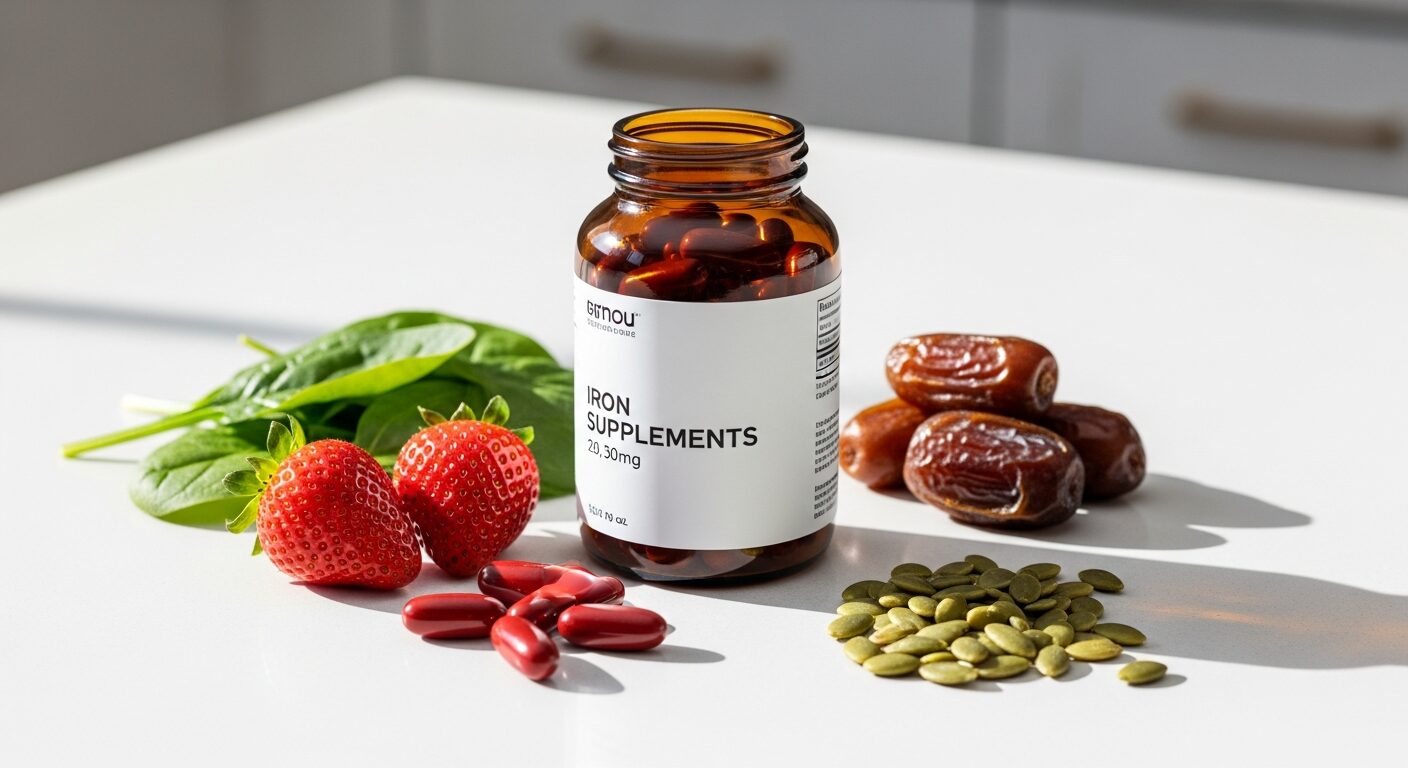
When it comes to understanding iron in your body, confusion runs rampant. Most people use “iron” and “ferritin” interchangeably, not realizing they’re talking about two completely different things. This misunderstanding can lead to poor supplement choices, misinterpreted blood tests, and ineffective treatment of iron deficiency.
Iron is the actual mineral your body needs for oxygen transport, energy production, and countless cellular processes. Ferritin, on the other hand, is your body’s storage protein that holds onto iron for future use. Think of iron as cash in your wallet and ferritin as your savings account. Both are crucial for your financial health, but they serve very different purposes.
Understanding this distinction isn’t just academic—it’s essential for making informed decisions about your health. Whether you’re dealing with fatigue, considering supplementation, or trying to interpret lab results, knowing the difference between iron and ferritin can transform how you approach iron status optimization.
🌿 Looking for Iron supplements? Shop Amazon →
Contents
What is Iron
Iron is an essential mineral that your body cannot produce on its own, making dietary intake and supplementation crucial for maintaining optimal health. This trace element exists in two primary forms in food: heme iron (found in animal products) and non-heme iron (found in plant sources and supplements).
In your body, iron serves as the cornerstone of hemoglobin, the protein in red blood cells responsible for carrying oxygen from your lungs to every tissue and organ. Beyond oxygen transport, iron is integral to myoglobin formation in muscles, energy metabolism through the electron transport chain, DNA synthesis, and neurotransmitter production.
Your body maintains a sophisticated iron recycling system, recovering about 90% of iron from old red blood cells. However, you still lose approximately 1-2 milligrams daily through skin cell shedding, intestinal cell turnover, and other normal bodily processes. Women of childbearing age lose additional iron through menstruation, increasing their daily requirements significantly.
Iron absorption occurs primarily in the duodenum and upper jejunum of your small intestine. This process is highly regulated by hepcidin, a hormone that acts as your body’s iron thermostat, increasing or decreasing absorption based on current iron stores and physiological needs.
Key Benefits of Iron
Iron supplementation provides numerous science-backed benefits, particularly for individuals with suboptimal iron status. The most well-documented benefit is improved oxygen-carrying capacity through enhanced hemoglobin production. This translates directly into increased energy levels, reduced fatigue, and better exercise performance.
Research consistently shows that iron supplementation can significantly improve cognitive function, particularly in iron-deficient individuals. Iron plays crucial roles in dopamine synthesis, myelination of nerve fibers, and overall brain metabolism. Studies have demonstrated improvements in attention span, memory, and learning capacity following iron repletion.
For athletes and physically active individuals, adequate iron status is essential for optimal performance. Iron deficiency, even without anemia, can impair endurance, reduce VO2 max, and increase perceived exertion during exercise. Supplementation in deficient athletes consistently shows performance improvements and faster recovery times.
Iron also supports immune function through its role in white blood cell production and function. T-lymphocyte proliferation, neutrophil function, and overall immune response depend heavily on adequate iron availability. However, the relationship is complex, as excess iron can actually impair immune function by promoting pathogen growth.
What Most People Get Wrong About Iron
Myth 1: Higher iron doses are always better. This misconception leads many people to take massive iron doses, believing more will work faster. In reality, your intestinal iron absorption is inversely related to dose size. Taking 60mg of elemental iron results in approximately 10-15% absorption, while 200mg might only achieve 5-7% absorption. Higher doses primarily increase side effects like nausea, constipation, and stomach upset without proportional benefits.
Myth 2: Plant-based iron is inferior to heme iron. While heme iron from animal sources has higher bioavailability (15-35% vs 2-20% for non-heme iron), this doesn’t make plant-based iron worthless. Non-heme iron absorption can be dramatically enhanced by consuming it with vitamin C, avoiding calcium and tannins during the same meal, and taking it on an empty stomach. Many successful iron supplementation programs use non-heme iron with strategic co-factors.
Myth 3: Normal hemoglobin means iron status is optimal. This dangerous misconception causes many people to dismiss iron deficiency symptoms when their hemoglobin falls within “normal” ranges. Iron deficiency exists on a spectrum, progressing through depleted iron stores, iron-deficient erythropoiesis, and finally iron-deficiency anemia. You can experience significant symptoms—fatigue, brain fog, exercise intolerance—long before hemoglobin drops below normal ranges.
Myth 4: Iron supplements work immediately. Popular culture promotes the idea that iron supplements provide instant energy boosts, leading to disappointment when people don’t feel dramatically different after a few days. Iron repletion is a gradual process requiring weeks to months. Red blood cells live approximately 120 days, so meaningful changes in oxygen-carrying capacity require patience and consistent supplementation.
What Happens to Your Body After 30 Days of Taking Iron
Week 1: Absorption and initial adaptation During your first week of iron supplementation, your body begins adapting to increased iron availability. You likely won’t notice dramatic changes yet, but several important processes start occurring. Your intestinal absorption mechanisms adjust to the new iron load, and hepcidin levels may initially increase to regulate uptake. Some people experience mild gastrointestinal adjustments as their digestive system adapts to the supplement.
Week 2: Early physiological changes By the second week, measurable changes begin occurring in your blood chemistry. Serum iron levels start stabilizing at higher levels, and transferrin saturation begins improving. You might notice subtle improvements in energy levels, particularly if you were significantly deficient initially. Some individuals report better sleep quality and reduced restless leg symptoms during this period.
Week 3-4: Noticeable improvements emerge The third and fourth weeks typically bring the most noticeable benefits. New red blood cells incorporating the additional iron begin entering circulation, improving oxygen transport capacity. Many people report increased energy, better exercise tolerance, and improved cognitive function. Hair and nail health may begin showing signs of improvement, and immune function parameters often normalize.
Research indicates that hemoglobin levels typically increase by 1-2 grams per deciliter over 3-4 weeks of appropriate iron supplementation in deficient individuals. However, complete iron store repletion—reflected in ferritin levels—often requires 3-6 months of consistent supplementation even after anemia correction.
Who Should NOT Take Iron
Iron supplementation isn’t appropriate for everyone and can be dangerous in certain populations. Individuals with hemochromatosis, a genetic condition causing excessive iron absorption, should never take iron supplements without medical supervision. This condition affects approximately 1 in 300 people of Northern European descent and can lead to organ damage from iron overload.
People with chronic kidney disease require careful iron management, as their altered metabolism can lead to iron accumulation. Similarly, individuals with thalassemia, sickle cell disease, or other hemoglobinopathies often have complex iron metabolism requiring specialized medical management.
Certain medications interact significantly with iron supplements. Proton pump inhibitors, H2 blockers, and antacids reduce iron absorption by increasing stomach pH. Tetracycline antibiotics, levothyroxine, and quinolone antibiotics can have their effectiveness reduced by iron. Always separate iron supplements from these medications by at least 2-4 hours.
Pregnant women should only take iron supplements under medical guidance, despite increased iron needs during pregnancy. While iron deficiency anemia during pregnancy poses serious risks, excessive iron can also be problematic. Healthcare providers can monitor iron status and adjust supplementation accordingly.
Elderly individuals may be at higher risk for iron overload due to decreased iron losses and altered metabolism. Additionally, people with active infections should avoid iron supplementation, as many pathogens require iron for growth and reproduction.
Dosage and Best Forms
Iron dosage recommendations vary significantly based on individual needs, deficiency severity, and absorption capacity. For prevention of iron deficiency, doses of 15-18mg of elemental iron daily are typically sufficient for most adults. Therapeutic doses for treating deficiency usually range from 60-120mg of elemental iron daily, divided into 2-3 doses.
The most common and cost-effective form is ferrous sulfate, containing about 20% elemental iron. Ferrous gluconate and ferrous fumarate offer alternatives with potentially fewer gastrointestinal side effects. Newer forms like iron bisglycinate (chelated iron) claim superior absorption and tolerability, though they’re significantly more expensive.
Timing matters significantly for iron absorption. Taking iron supplements on an empty stomach maximizes absorption but increases side effects. Taking with a small amount of food reduces absorption by about 30-40% but dramatically improves tolerance. Avoid taking iron with dairy products, coffee, tea, or calcium supplements, which can reduce absorption by 50-60%.
Vitamin C enhances iron absorption substantially—taking 100mg of vitamin C with iron can double absorption rates. Other enhancers include meat proteins and citric acid. Consider taking iron supplements with orange juice or adding a vitamin C supplement to maximize effectiveness.
🌿 Looking for Iron Supplements?
Browse top-rated Iron supplements, independently tested and recommended by our editorial team.
Affiliate disclosure: We may earn a small commission at no extra cost to you.
Frequently Asked Questions
Can I take iron every other day instead of daily?
Recent research suggests alternate-day dosing may actually be more effective than daily supplementation. Moretti et al., 2017 found that every-other-day iron supplementation resulted in better absorption and fewer side effects because it allows hepcidin levels to decrease between doses, improving subsequent absorption.
How long should I take iron supplements?
The duration depends on your initial deficiency severity and treatment goals. Correcting anemia typically requires 2-3 months, while fully replenishing iron stores can take 6-12 months. Regular blood testing helps determine when supplementation can be reduced or discontinued safely.
Why do iron supplements cause constipation and nausea?
Iron supplements commonly cause gastrointestinal side effects because unabsorbed iron in the intestines can irritate the gut lining and alter the microbiome. These effects are dose-dependent, which is why starting with lower doses and gradually increasing can improve tolerance.
Can iron supplements interfere with other nutrients?
Iron can compete with zinc, copper, and manganese for absorption. Long-term high-dose iron supplementation may require monitoring of these other minerals. However, this typically only becomes problematic with very high doses taken for extended periods.
What’s the difference between iron and ferritin tests?
Serum iron measures iron currently circulating in your bloodstream, while ferritin reflects your body’s iron storage levels. Camaschella, 2015 explains that ferritin is generally considered the best single test for assessing iron status, as it indicates long-term iron availability rather than short-term fluctuations.
Medical Disclaimer
This article is for educational purposes only and does not constitute medical advice. Iron supplementation can interact with medications and medical conditions in complex ways. Always consult with a healthcare provider before starting any iron supplement regimen, especially if you have underlying health conditions, take medications, or are pregnant or breastfeeding. Pasricha et al., 2019 emphasizes the importance of proper iron status assessment before beginning supplementation to avoid both under-treatment of deficiency and risks associated with iron overload. Regular monitoring through appropriate blood tests is essential for safe and effective iron supplementation.