
If you’ve been struggling with anxiety, you’ve likely encountered countless recommendations for supplements, lifestyle changes, and natural remedies. Among these, GABA supplements have gained significant attention as a potential solution for calming the mind and reducing stress. But with so much conflicting information online, it’s crucial to separate fact from fiction when it comes to this popular supplement.
GABA, or gamma-aminobutyric acid, is often marketed as nature’s tranquilizer—a safe, natural way to achieve the calm that many people desperately seek. However, the reality is more complex than the marketing claims suggest. While GABA plays an undeniably important role in brain function and anxiety regulation, the question of whether oral GABA supplements actually work involves some surprising scientific nuances that most people don’t understand.
In this comprehensive guide, we’ll examine the current research on GABA supplementation, explore what really happens in your body when you take it, and address the common misconceptions that could be affecting your results. Whether you’re considering GABA for the first time or you’ve been taking it without the results you expected, this article will provide you with the evidence-based information you need to make an informed decision.
🌿 Looking for GABA supplements? Shop Amazon →
Contents
What is GABA
Gamma-aminobutyric acid (GABA) is the brain’s primary inhibitory neurotransmitter, meaning it acts like a natural brake system for neural activity. When GABA binds to receptors in your brain, it reduces the likelihood that neurons will fire, creating a calming effect that counterbalances the brain’s excitatory signals.
Your brain naturally produces GABA from glutamate, another neurotransmitter, through the action of an enzyme called glutamic acid decarboxylase (GAD). This conversion is crucial for maintaining the delicate balance between excitation and inhibition in your nervous system. When this balance is disrupted—often due to chronic stress, poor sleep, or certain health conditions—anxiety and other mood disorders can develop.
GABA receptors are found throughout the central nervous system, with particularly high concentrations in areas responsible for emotional regulation, such as the amygdala and hippocampus. These receptors come in two main types: GABA-A receptors, which provide fast inhibitory responses, and GABA-B receptors, which produce slower, longer-lasting effects.
Interestingly, GABA isn’t just limited to the brain. Recent research has revealed that GABA receptors also exist in the peripheral nervous system and even in the gut, where they may influence the gut-brain axis—the communication pathway between your digestive system and your brain. This discovery has opened new avenues for understanding how GABA might affect overall well-being beyond just anxiety reduction.
Key Benefits of GABA
Research on GABA supplementation has revealed several potential benefits, though it’s important to understand that the mechanisms aren’t always what you might expect. The most well-documented benefits include anxiety reduction, improved sleep quality, and enhanced stress resilience.
Anxiety reduction represents the most studied application of GABA supplements. Clinical studies have shown that GABA supplementation can reduce anxiety-related symptoms, though the effects are generally mild to moderate rather than dramatic. Participants in controlled trials typically report feeling more relaxed and less reactive to stressful situations, with improvements becoming more noticeable with consistent use over several weeks.
Sleep improvements are another significant benefit reported by GABA users. The supplement appears to help with both falling asleep faster and achieving deeper, more restorative sleep phases. This makes sense from a neurochemical perspective, as GABA’s inhibitory effects naturally promote the relaxation necessary for quality sleep. Users often report waking up feeling more refreshed and experiencing fewer middle-of-the-night awakenings.
Cognitive benefits have also emerged in research, particularly related to stress-induced cognitive impairment. When you’re anxious or stressed, your cognitive performance—including memory, attention, and decision-making—typically suffers. GABA supplementation may help maintain cognitive clarity during stressful periods by preventing the overwhelming neural activity that disrupts clear thinking.
Some studies suggest additional benefits including improved mood stability, reduced muscle tension, and better stress recovery. Athletes have shown interest in GABA for its potential to reduce exercise-induced stress and improve recovery, though more research is needed in this area.
Recommended by our team
Top-rated GABA supplements on Amazon
Affiliate disclosure: small commission at no extra cost to you
What Most People Get Wrong About GABA
Despite its popularity, there are several persistent misconceptions about GABA that can lead to unrealistic expectations and suboptimal results. Understanding these myths is crucial for anyone considering supplementation.
Myth 1: GABA Supplements Directly Increase Brain GABA Levels
The most common misconception is that taking GABA supplements directly increases GABA levels in your brain. This assumption seems logical, but it oversimplifies how the blood-brain barrier works. The blood-brain barrier is a protective mechanism that prevents most substances in your bloodstream from entering brain tissue, and GABA is largely blocked by this barrier.
However, this doesn’t mean GABA supplements are ineffective. Recent research suggests that oral GABA may work through alternative pathways, including effects on peripheral GABA receptors that communicate with the brain via the vagus nerve. Additionally, some GABA may cross the blood-brain barrier in small amounts, particularly in areas where the barrier is naturally more permeable or when it’s compromised by stress or inflammation.
Myth 2: Higher Doses Always Work Better
Many people believe that if a standard dose doesn’t work, they should simply take more. This approach can backfire with GABA. Research indicates that GABA follows a bell curve response pattern, meaning there’s an optimal dose range where benefits are maximized. Taking too much can actually reduce effectiveness and may cause unwanted side effects like drowsiness or digestive upset.
The optimal dose varies significantly between individuals based on factors like body weight, metabolism, existing GABA levels, and the severity of anxiety symptoms. Most research suggests that doses between 100-200mg are effective for anxiety, while higher doses (up to 750mg) may be beneficial for sleep, but individual response varies considerably.
Myth 3: GABA Works Immediately Like Prescription Anxiety Medications
Unlike benzodiazepines or other fast-acting anxiety medications, GABA supplements typically don’t provide immediate relief. This leads many people to conclude they don’t work when they don’t feel dramatically different after the first dose. In reality, GABA supplementation often requires consistent daily use for 2-4 weeks before optimal benefits are realized.
The delayed onset occurs because GABA supplements likely work by gradually influencing neurotransmitter balance and receptor sensitivity rather than providing acute pharmacological effects. This slower mechanism actually offers advantages, including fewer side effects and no risk of dependence, but it requires patience and realistic expectations.
Myth 4: All GABA Supplements Are the Same
The form and quality of GABA supplements can significantly impact their effectiveness, yet many people assume all products are equivalent. Factors like manufacturing method, particle size, additional ingredients, and quality control can all influence bioavailability and results. Some forms, such as PharmaGABA (a naturally fermented form), may be more bioactive than synthetic alternatives, though more research is needed to confirm these differences.
What Happens to Your Body After 30 Days of Taking GABA
Understanding the timeline of GABA supplementation can help set realistic expectations and ensure you give the supplement adequate time to work. The effects typically unfold in phases over the first month of consistent use.
Week 1: Initial Adaptation
During the first week, your body begins adapting to the supplemental GABA. Many people notice subtle changes in sleep quality, often reporting that they fall asleep slightly easier or sleep more soundly. Some individuals experience mild relaxation effects within the first few days, though dramatic anxiety reduction is uncommon during this initial period.
It’s normal to experience minor digestive adjustment during the first week, as your gut adapts to the supplement. Some people report feeling slightly drowsy if taking GABA during the day, which usually resolves as the body adjusts to the timing and dosage.
Week 2: Building Effects
By the second week, more noticeable benefits typically emerge. Research indicates that consistent GABA supplementation over 2-4 weeks leads to more pronounced anxiety reduction compared to single doses or short-term use. Users often report feeling more resilient to daily stressors and experiencing fewer physical symptoms of anxiety, such as muscle tension or restlessness.
Sleep improvements usually become more consistent during this phase. Rather than occasionally sleeping better, many people find their sleep quality is reliably improved, with deeper sleep phases and fewer nighttime awakenings becoming the norm rather than the exception.
Weeks 3-4: Full Benefits Realized
The third and fourth weeks typically represent the period when GABA’s full benefits become apparent. Anxiety levels often stabilize at lower baseline levels, meaning you’re not just better at handling stress when it occurs, but you’re experiencing less background anxiety throughout the day.
Cognitive benefits often become noticeable during this phase, with improved focus, better decision-making under pressure, and enhanced emotional regulation. Many users report feeling more emotionally balanced, with less reactivity to situations that previously triggered significant anxiety responses.
Physical symptoms of chronic stress and anxiety—such as muscle tension, digestive issues, and headaches—may also improve during this phase, as the nervous system achieves better balance between excitatory and inhibitory signals.
Who Should NOT Take GABA
While GABA is generally considered safe for most adults, certain individuals should exercise caution or avoid supplementation entirely. Understanding these contraindications is essential for safe and effective use.
Pregnant and breastfeeding women should avoid GABA supplements due to insufficient safety data. Since GABA affects neurotransmitter activity, there’s potential for unknown effects on fetal brain development or nursing infants. The hormonal changes during pregnancy and breastfeeding also alter neurotransmitter sensitivity, making responses to GABA supplementation unpredictable.
Individuals taking prescription medications for anxiety, depression, or seizure disorders should consult with their healthcare provider before adding GABA supplements. The combination of GABA with benzodiazepines, barbiturates, or other CNS depressants could potentially cause excessive sedation or respiratory depression. Similarly, interactions with antidepressants, particularly those affecting GABA systems, could lead to unpredictable effects.
People with liver or kidney disease should use caution with GABA supplementation, as these organs are responsible for processing and eliminating the compound. Impaired liver or kidney function could lead to accumulation of GABA in the system, potentially causing side effects or interfering with other treatments.
Children and adolescents should not take GABA supplements without medical supervision. The developing nervous system responds differently to neurotransmitter modulators, and the safety and appropriate dosing for younger populations haven’t been established through clinical research.
Individuals with bipolar disorder or other mood disorders involving manic episodes should be particularly cautious, as altering neurotransmitter balance could potentially trigger mood episodes. Anyone with a history of substance abuse should also consult with healthcare providers, as some individuals may be more susceptible to psychological dependence on anxiety-reducing substances.
Dosage and Best Forms
Determining the optimal GABA dosage requires considering individual factors and intended outcomes. Research suggests that effective doses typically range from 100mg to 750mg daily, with most people finding benefits in the 100-200mg range for anxiety and stress management.
For anxiety relief, starting with 100-125mg taken once or twice daily is generally recommended. This dose should be maintained for at least two weeks before increasing, as the full effects take time to develop. If needed, the dose can be gradually increased by 50-100mg increments until optimal benefits are achieved, though exceeding 400mg daily is rarely necessary and may increase the risk of side effects.
For sleep support, higher doses of 500-750mg taken 30-60 minutes before bedtime may be more effective. However, it’s important to start with lower doses (200-300mg) to assess individual tolerance and avoid excessive morning drowsiness.
Timing is crucial for GABA supplementation. For anxiety management, splitting the daily dose between morning and evening often provides more consistent benefits throughout the day. For sleep support, taking the entire dose before bedtime is typically most effective.
The form of GABA can influence its effectiveness. PharmaGABA, produced through natural fermentation, may offer superior bioavailability compared to synthetic forms, though both can be effective. Capsules and tablets are most common, but powder forms allow for more precise dosing adjustments.
Quality factors to consider include third-party testing for purity, absence of contaminants, and proper manufacturing practices. Look for products that specify the exact amount of active GABA and avoid formulations with excessive fillers or artificial additives that could interfere with absorption.
🌿 Looking for GABA Supplements?
Browse top-rated GABA supplements, independently tested and recommended by our editorial team.
Affiliate disclosure: We may earn a small commission at no extra cost to you.
Frequently Asked Questions
Can I take GABA with other supplements?
GABA generally combines well with other calming supplements like magnesium, L-theanine, and melatonin, and may even enhance their effects. However, combining multiple sedating supplements can increase drowsiness, so it’s best to start with lower doses of each when using combinations. Avoid combining GABA with supplements that have stimulating effects, as they may counteract each other. Always introduce new supplement combinations gradually to monitor for any unexpected reactions.
How long can I safely take GABA supplements?
Current research suggests that GABA supplementation is safe for long-term use in healthy adults, with studies lasting up to 12 weeks showing no significant adverse effects. Unlike prescription anxiety medications, GABA doesn’t appear to cause dependence or withdrawal symptoms. However, it’s wise to periodically evaluate whether continued supplementation is necessary and to take breaks every few months to assess your baseline anxiety levels without supplementation.
Will GABA make me drowsy during the day?
Daytime drowsiness can occur, especially when first starting GABA or when taking higher doses. This effect typically diminishes as your body adapts to the supplement. To minimize daytime sleepiness, start with lower doses, take GABA with food, and consider splitting your daily dose rather than taking it all at once. If drowsiness persists, reducing the dose or timing the supplement closer to bedtime may help.
Can GABA help with panic attacks?
While GABA may help reduce overall anxiety levels and potentially decrease the frequency of panic attacks over time, it’s not effective for stopping acute panic attacks in progress. GABA’s effects are too gradual for immediate panic relief. If you experience panic attacks, it’s important to work with a healthcare provider to develop an appropriate treatment plan, which may include GABA as part of a broader approach but shouldn’t rely on it as the sole intervention.
Are there any foods that naturally boost GABA levels?
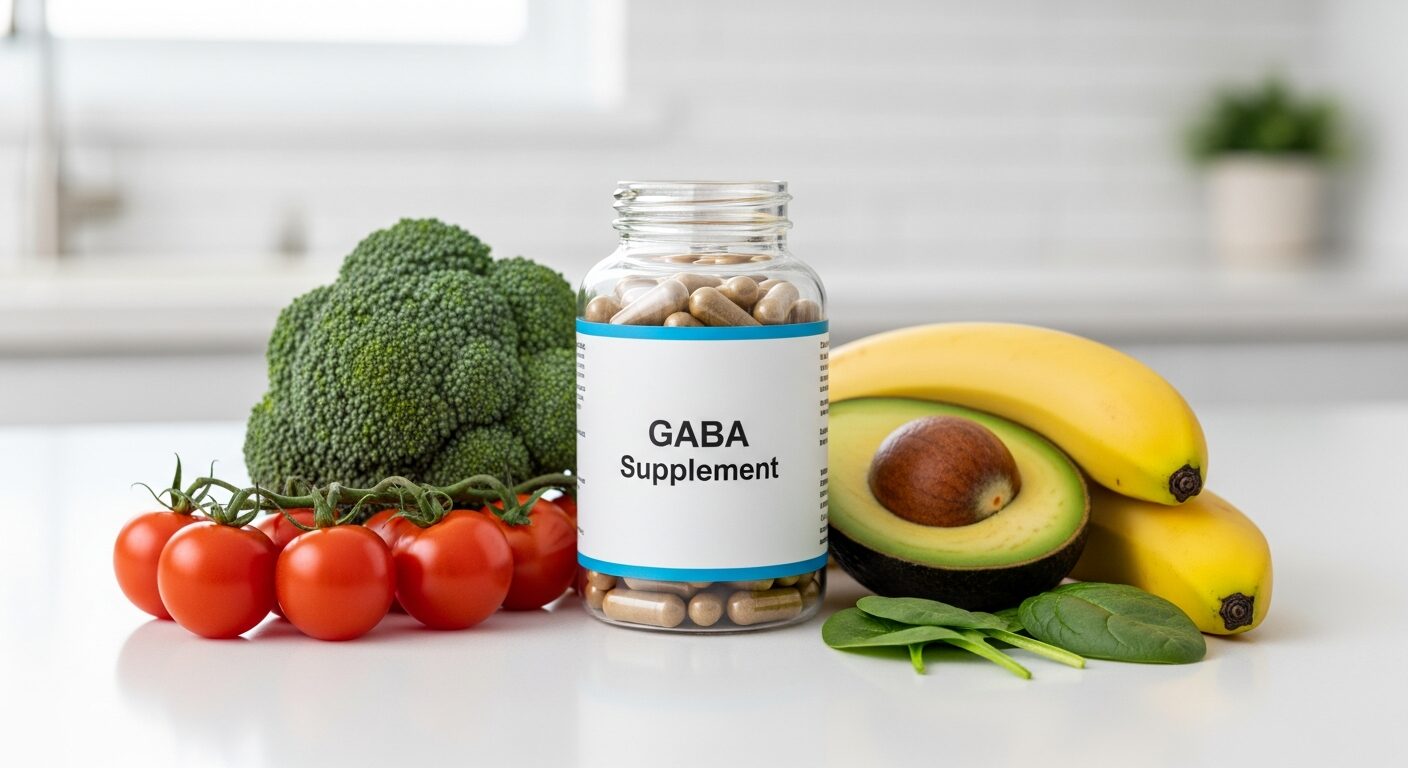
Several foods may support natural GABA production or contain GABA itself. Fermented foods like yogurt, kefir, and kimchi contain beneficial bacteria that can produce GABA in the gut. Green tea contains L-theanine, which can increase GABA activity in the brain. Other foods that may support GABA function include sprouted grains, legumes, and certain vegetables like broccoli and tomatoes. However, dietary sources alone are unlikely to provide therapeutic levels comparable to supplementation.
Medical Disclaimer
The information provided in this article is for educational purposes only and is not intended as medical advice. GABA supplements are not intended to diagnose, treat, cure, or prevent any disease. Individual responses to supplements can vary significantly, and what works for one person may not work for another.
Before starting any new supplement regimen, especially if you have existing health conditions, take medications, or experience severe anxiety symptoms, consult with a qualified healthcare provider. This is particularly important if you’re pregnant, breastfeeding, have liver or kidney disease, or take prescription medications for mood disorders.
If you experience persistent or severe anxiety symptoms, seek professional medical evaluation rather than relying solely on supplements. Anxiety disorders are serious medical conditions that may require comprehensive treatment approaches including therapy, lifestyle modifications, and possibly prescription medications.
The statements in this article have not been evaluated by the Food and Drug Administration. Always purchase supplements from reputable manufacturers and follow label instructions carefully. Discontinue use and consult a healthcare provider if you experience any adverse reactions.