
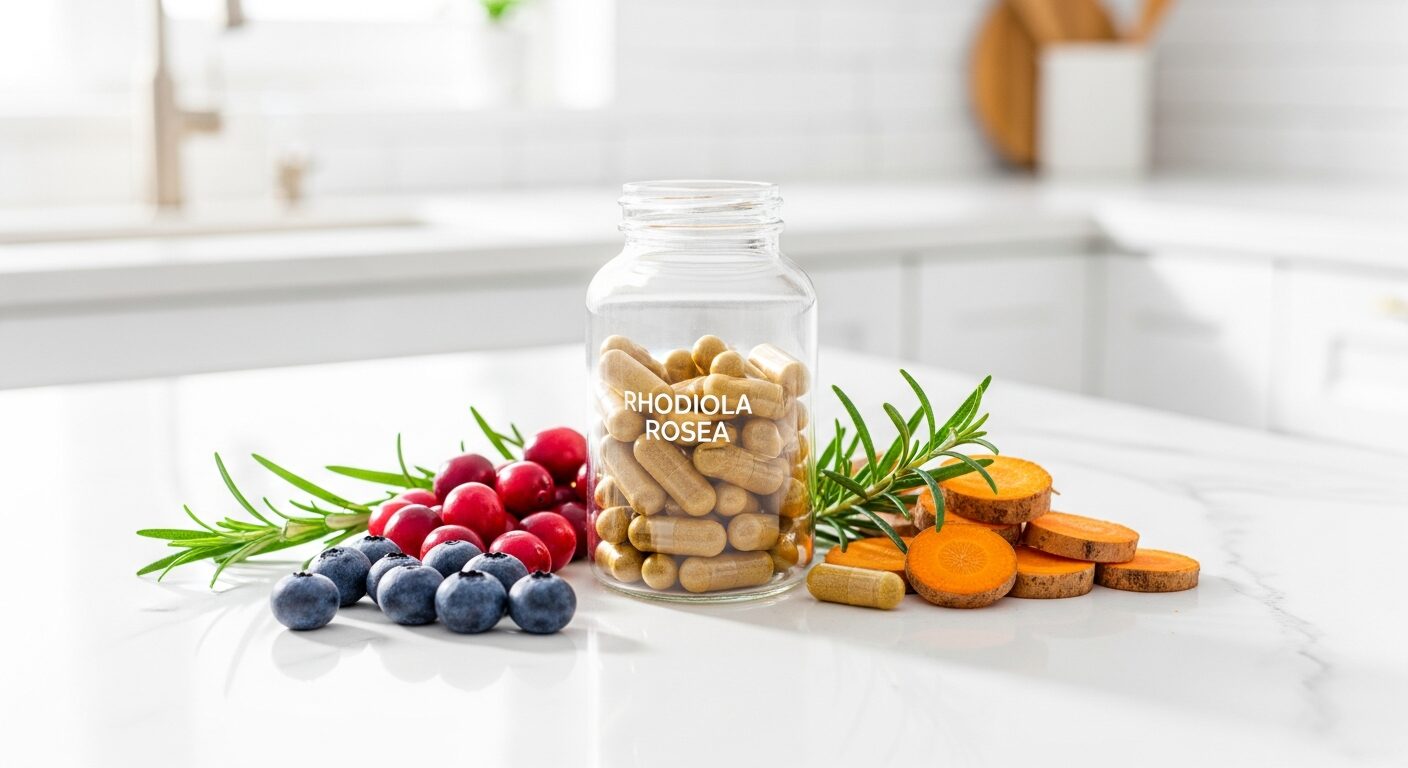
Rhodiola rosea, often called the “golden root” or “arctic rose,” has been quietly revolutionizing the supplement world with its remarkable ability to help the human body adapt to stress. This hardy flowering plant, thriving in the harsh mountainous regions of Europe, Asia, and North America, has been used for centuries by traditional healers who recognized its extraordinary properties long before modern science could explain them.
What makes rhodiola particularly fascinating is its classification as an adaptogen – a rare class of herbs that help regulate the body’s stress response system. Unlike stimulants that provide temporary energy followed by a crash, or sedatives that simply mask symptoms, adaptogens work by supporting your body’s natural ability to maintain balance during challenging situations. As our understanding of stress-related health issues continues to grow, rhodiola has emerged as one of the most researched and promising natural solutions for modern wellness challenges.
Whether you’re a high-performing professional dealing with chronic stress, an athlete seeking natural performance enhancement, or someone simply looking to improve your overall resilience and well-being, understanding rhodiola’s unique mechanisms and benefits could be a game-changer for your health journey.
Contents
What is Rhodiola
Rhodiola rosea belongs to the Crassulaceae family and grows in cold, mountainous regions where few other plants can survive. This resilience isn’t just environmental – it’s biochemical. The plant produces a complex array of bioactive compounds that help it withstand extreme temperature fluctuations, UV radiation, and oxygen-poor conditions. These same compounds, when consumed by humans, appear to confer similar protective benefits.
The primary active compounds in rhodiola include rosavins (rosavin, rosin, and rosarin) and salidroside (also known as rhodioloside). These compounds work synergistically to influence key neurotransmitter systems in the brain, including serotonin, dopamine, and norepinephrine. Additionally, rhodiola contains more than 140 other compounds, including phenolic acids, flavonoids, and tannins, which contribute to its overall therapeutic effects.
Historically, rhodiola has been used across various cultures for remarkably similar purposes. Scandinavian Vikings consumed it for physical strength and endurance, while Siberian populations used it to adapt to harsh climatic conditions. In traditional Chinese medicine, it was valued for its ability to enhance mental clarity and physical performance. Soviet researchers extensively studied rhodiola in the mid-20th century, leading to its use by cosmonauts, athletes, and military personnel to enhance performance under stress.
What sets rhodiola apart from other botanical supplements is its bidirectional effect – it can both energize when you’re fatigued and calm when you’re overstimulated. This unique property stems from its ability to modulate the hypothalamic-pituitary-adrenal (HPA) axis, the body’s primary stress response system, helping to normalize cortisol levels and improve overall stress resilience.
Key Benefits of Rhodiola
The scientific literature on rhodiola rosea reveals a impressive range of evidence-based benefits that extend far beyond simple stress relief. One of the most well-documented effects is its ability to reduce both physical and mental fatigue. A randomized, double-blind study published in 2009 demonstrated that individuals taking rhodiola extract showed significant improvements in fatigue symptoms and enhanced attention capacity compared to placebo groups.
Cognitive enhancement represents another major area of rhodiola’s benefits. Research indicates that regular supplementation can improve working memory, mental processing speed, and overall cognitive performance, particularly during stressful situations. This makes it particularly valuable for students, professionals, and anyone facing mentally demanding tasks. The mechanism appears to involve increased neurotransmitter availability and improved neural efficiency under stress conditions.
Physical performance benefits are equally impressive. Athletes and fitness enthusiasts often report improved endurance, faster recovery times, and enhanced exercise capacity when using rhodiola. These effects likely result from the herb’s ability to optimize oxygen utilization at the cellular level and reduce exercise-induced oxidative stress. Some studies have shown improvements in time-to-exhaustion during endurance activities and reduced perceived exertion during intense physical tasks.
Mental health support is another significant benefit area. Rhodiola has shown promise in managing symptoms of mild to moderate depression, anxiety, and stress-related mood disorders. Unlike pharmaceutical interventions, rhodiola typically produces these mood-enhancing effects without significant side effects or dependency concerns. The herb appears to work by supporting healthy neurotransmitter balance and improving the brain’s resilience to stress.
Additionally, emerging research suggests rhodiola may support cardiovascular health, immune function, and even longevity. Some studies indicate it may help regulate blood sugar levels, support healthy inflammation responses, and protect against age-related cognitive decline, though more research is needed to fully establish these additional benefits.
What Most People Get Wrong About Rhodiola
Despite its growing popularity, several persistent misconceptions about rhodiola continue to circulate, leading to suboptimal usage and unrealistic expectations. Understanding these myths is crucial for anyone considering adding this powerful adaptogen to their wellness routine.
Myth 1: “More is Always Better”
Perhaps the most dangerous misconception about rhodiola is that higher doses produce better results. In reality, rhodiola follows what researchers call a “biphasic dose response,” meaning that moderate doses provide optimal benefits while both very low and very high doses may be less effective or even counterproductive. Studies consistently show that doses between 200-400mg daily of standardized extract produce the best outcomes. Taking excessive amounts can actually increase anxiety, irritability, and sleep disturbances – the exact opposite of what most people seek from rhodiola.
Myth 2: “It Works Immediately Like a Stimulant”
Many people expect rhodiola to work like caffeine, providing an immediate energy boost within hours of consumption. This expectation leads to disappointment and premature discontinuation. Unlike stimulants, rhodiola is a true adaptogen that works by gradually optimizing your body’s stress response systems. While some people may notice subtle effects within a few days, the full benefits typically develop over 2-4 weeks of consistent use. The energy increase from rhodiola is sustainable and doesn’t come with the jitters or crash associated with stimulants.
Myth 3: “All Rhodiola Supplements are the Same”
The supplement market is flooded with rhodiola products of vastly different quality and potency. Many consumers assume all rhodiola supplements are equivalent, but this couldn’t be further from the truth. Authentic rhodiola rosea should be standardized to contain both rosavins (typically 3%) and salidroside (typically 1%) in the proper ratio. Products that don’t specify these standardizations or contain only one class of compounds may not provide the researched benefits. Additionally, some products on the market contain different Rhodiola species or adulterants that lack the therapeutic properties of genuine Rhodiola rosea.
Myth 4: “It’s Safe to Combine with Any Medication”
While rhodiola has an excellent safety profile for most people, the assumption that it can be safely combined with any medication is potentially dangerous. Rhodiola can influence neurotransmitter systems and may theoretically interact with certain medications, particularly those affecting serotonin, dopamine, or blood clotting. It may also enhance or interfere with medications for diabetes, hypertension, and autoimmune conditions. The myth of universal safety leads some people to skip important conversations with their healthcare providers about potential interactions.
What Happens to Your Body After 30 Days of Taking Rhodiola
Understanding the timeline of rhodiola’s effects can help set realistic expectations and ensure you give this powerful adaptogen adequate time to work. Based on clinical research and user reports, here’s what typically occurs during your first month of consistent rhodiola supplementation.
Week 1: Subtle Foundation Building
During the first week, most people experience subtle changes that are easy to miss if you’re not paying attention. You might notice slightly better sleep quality, with some users reporting they feel more rested upon waking even if total sleep time remains the same. Energy levels may feel more stable throughout the day, with fewer dramatic peaks and valleys. Some individuals report a mild reduction in their typical afternoon energy crash. These early effects reflect rhodiola’s initial influence on cortisol patterns and neurotransmitter regulation, though the changes are still quite modest.
Week 2: Noticeable Stress Response Improvements
By the second week, rhodiola’s adaptogenic properties become more apparent. Many users report feeling more resilient when facing daily stressors – situations that previously felt overwhelming may feel more manageable. Mental clarity often improves, with better focus during demanding tasks and reduced mental fog. Physical energy typically becomes more sustained, and exercise recovery may begin to improve. Research has shown that rhodiola’s effects on stress-induced fatigue become measurable within 2 weeks of consistent use, aligning with what users commonly experience.
Week 3-4: Full Adaptogenic Benefits Emerge
The third and fourth weeks represent the period when rhodiola’s full spectrum of benefits typically manifests. Cognitive performance often reaches its peak improvement, with enhanced working memory, faster mental processing, and better decision-making under pressure becoming clearly noticeable. Physical endurance and strength gains may become apparent for those who exercise regularly. Mood stabilization is often most pronounced during this period, with users reporting feeling more emotionally balanced and less reactive to stressors.
Sleep quality improvements usually plateau around week three, with many people experiencing deeper, more restorative sleep and more consistent sleep patterns. The cumulative effect of better sleep, improved stress response, and enhanced energy creates a positive feedback loop that supports overall well-being. Importantly, these benefits tend to be sustainable rather than diminishing over time, unlike the tolerance that develops with many stimulants.
By day 30, most people have established whether rhodiola is providing meaningful benefits for their individual physiology and lifestyle. Those who respond well often report feeling like they have access to a “higher baseline” of energy, focus, and stress resilience that enhances their daily performance and quality of life.
Who Should NOT Take Rhodiola
While rhodiola has an excellent safety profile for most adults, certain individuals should exercise caution or avoid it entirely. Understanding these contraindications is essential for safe and effective use.
Individuals with bipolar disorder or manic episodes should be particularly cautious with rhodiola. The herb’s ability to influence neurotransmitter systems, particularly dopamine and norepinephrine, may potentially trigger manic episodes in susceptible individuals. Anyone with a history of bipolar disorder should only consider rhodiola under close medical supervision.
Pregnant and breastfeeding women should avoid rhodiola due to insufficient safety data in these populations. While no specific harm has been documented, the lack of comprehensive studies means the risk-benefit profile cannot be adequately assessed for developing babies or nursing infants.
People taking certain medications need careful consideration before using rhodiola. Those on antidepressants, particularly SSRIs or MAOIs, should consult their healthcare provider as rhodiola may theoretically enhance or interfere with these medications’ effects. Individuals taking anticoagulant medications should also exercise caution, as rhodiola may have mild blood-thinning properties. Diabetes medications may need adjustment, as rhodiola can influence blood sugar levels.
Those with autoimmune conditions should approach rhodiola cautiously. While some research suggests potential immune-modulating benefits, the herb’s effects on immune system activity could theoretically exacerbate autoimmune conditions in some individuals. Conditions like multiple sclerosis, rheumatoid arthritis, and lupus warrant particular caution.
Individuals with severe cardiovascular conditions, particularly those involving irregular heart rhythms or recent heart attacks, should consult with their cardiologist before using rhodiola. While generally heart-friendly, the herb’s influence on stress hormone systems could theoretically affect cardiovascular function in compromised individuals.
Children and adolescents under 18 should avoid rhodiola unless specifically recommended by a pediatric healthcare provider. The developing nervous system may respond differently to adaptogenic herbs, and safety data in younger populations is limited.
Dosage and Best Forms
Optimal rhodiola dosing requires attention to both quantity and quality to achieve the best therapeutic outcomes. The most extensively researched dose range is 200-400mg daily of standardized rhodiola rosea extract, typically taken on an empty stomach 30 minutes before breakfast. This timing maximizes absorption and aligns with natural cortisol rhythms.
The gold standard for rhodiola supplementation is extracts standardized to contain 3% rosavins and 1% salidroside. This 3:1 ratio reflects the natural composition found in wild rhodiola rosea and matches the concentrations used in most successful clinical studies. Products that don’t specify these standardizations or provide different ratios may not deliver equivalent benefits.
Starting with the lower end of the dosage range (200mg daily) is advisable for most people, particularly those sensitive to supplements or new to adaptogens. After 1-2 weeks, the dose can be gradually increased to 300-400mg if needed and well-tolerated. Some research suggests that doses above 400mg daily may actually reduce effectiveness due to rhodiola’s biphasic dose response curve.
Regarding forms, high-quality capsules or tablets containing standardized dry extract are generally most reliable and convenient. Liquid extracts can be effective but may have shorter shelf lives and variable concentrations. Raw rhodiola root powder is less predictable in terms of active compound content and bioavailability compared to standardized extracts.
Cycling rhodiola intake is often recommended, though not strictly necessary for most people. A common approach involves taking rhodiola for 6-8 weeks followed by a 1-2 week break. This cycling may help maintain sensitivity to the herb’s effects and prevent any potential tolerance, though clinical evidence for this practice is limited.
For optimal results, rhodiola should be part of a comprehensive approach to stress management that includes adequate sleep, regular exercise, and a balanced diet. The herb works best as a supportive tool rather than a standalone solution for stress-related challenges.
🌿 Looking for Rhodiola Supplements?
Browse top-rated Rhodiola supplements, independently tested and recommended by our editorial team.
Affiliate disclosure: We may earn a small commission at no extra cost to you.
Frequently Asked Questions
Can I take rhodiola with coffee or other stimulants?
Rhodiola can generally be combined with moderate amounts of caffeine, but the combination should be approached cautiously. Research indicates that rhodiola works through different mechanisms than stimulants, focusing on stress adaptation rather than direct stimulation. However, combining the two may increase the risk of jitters, anxiety, or sleep disturbances in sensitive individuals. Start with lower doses of both if combining, and avoid this combination if you’re prone to anxiety or have cardiovascular concerns.
How long can I safely take rhodiola?
Current research suggests that rhodiola can be safely used for extended periods by most healthy adults. Studies have followed participants for up to 12 weeks without significant adverse effects, and traditional use patterns suggest even longer-term use may be appropriate. However, many practitioners recommend periodic breaks (1-2 weeks every 2-3 months) to maintain effectiveness and allow the body to reset. Long-term safety beyond one year hasn’t been extensively studied in clinical trials.
Will rhodiola help with my sleep problems?
Rhodiola’s effect on sleep is generally positive but indirect. Rather than acting as a sedative, rhodiola helps normalize cortisol patterns and reduce stress-related sleep disruption. Many users report falling asleep more easily and experiencing more restful sleep within 2-3 weeks of consistent use. However, taking rhodiola too late in the day may interfere with sleep in some individuals due to its energizing effects. For sleep benefits, morning dosing is typically recommended.
Can rhodiola cause weight loss?
While not primarily a weight-loss supplement, rhodiola may support healthy weight management indirectly through several mechanisms. By reducing stress-related cortisol elevation, it may help decrease stress-induced cravings and abdominal fat storage. Additionally, improved energy levels and exercise capacity may support more active lifestyles. However, rhodiola should not be relied upon as a primary weight-loss intervention, and any weight-related benefits are typically modest and part of overall health improvements.
Is rhodiola safe for seniors?
Rhodiola appears to be generally well-tolerated by older adults, and some research suggests it may be particularly beneficial for age-related fatigue and cognitive concerns. However, seniors often take multiple medications and may have underlying health conditions that increase the risk of interactions. Older adults should start with lower doses (100-200mg daily) and work closely with their healthcare providers to monitor for any adverse effects or drug interactions. The herb’s potential benefits for cognitive function and energy make it an attractive option for healthy aging when used appropriately.
Medical Disclaimer
This article is for informational and educational purposes only and should not be considered medical advice. The information provided is not intended to diagnose, treat, cure, or prevent any disease or health condition. Individual responses to rhodiola rosea may vary significantly, and what works for one person may not be appropriate for another.
Before starting any new supplement regimen, including rhodiola rosea, consult with a qualified healthcare professional, especially if you have pre-existing medical conditions, take prescription medications, are pregnant or breastfeeding, or have concerns about potential interactions. Your healthcare provider can help determine whether rhodiola is appropriate for your individual circumstances and can monitor for any potential adverse effects.
The statements in this article have not been evaluated by the Food and Drug Administration. Rhodiola rosea supplements are not intended to diagnose, treat, cure, or prevent any disease. Always choose high-quality supplements from reputable manufacturers and follow dosing instructions carefully.
If you experience any adverse reactions while taking rhodiola, discontinue use immediately and consult with your healthcare provider. This is particularly important if you experience symptoms such as rapid heartbeat, severe headaches, difficulty sleeping, or unusual mood changes.