
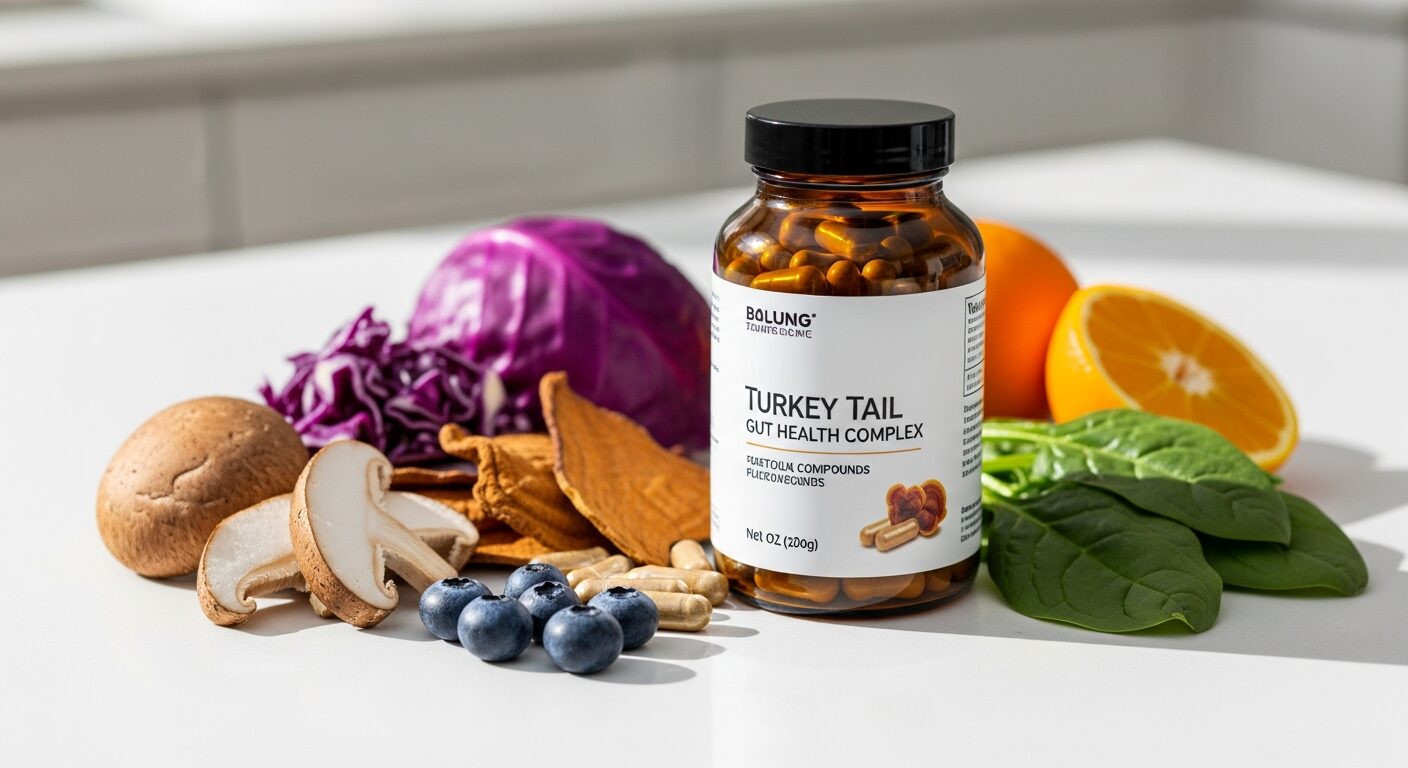
Turkey tail mushroom has emerged as one of the most researched functional fungi in modern science, particularly for its profound effects on digestive health and immune function. Named for its distinctive fan-shaped appearance that resembles a wild turkey’s colorful plumage, this remarkable organism contains unique compounds that can fundamentally transform your gut microbiome within weeks of consistent use.
What sets turkey tail apart from other medicinal mushrooms isn’t just its accessibility—you can literally find it growing on dead logs in most temperate forests worldwide—but its exceptional concentration of prebiotic polysaccharides that feed beneficial gut bacteria in ways that standard probiotics simply cannot match. Recent clinical research has revealed that turkey tail’s active compounds can increase beneficial bacteria populations by up to 400% while simultaneously strengthening the intestinal barrier and reducing inflammatory markers throughout the digestive tract.
However, despite growing consumer interest, most people fundamentally misunderstand how turkey tail works, when to take it, and what realistic expectations they should have. This evidence-based guide will cut through the marketing hype and provide you with scientifically-backed information about turkey tail’s genuine effects on gut health, including surprising findings that challenge common assumptions about this powerful fungal ally.
🌿 Looking for Turkey Tail supplements? Shop Amazon →
Contents
What is Turkey Tail
Turkey tail (Trametes versicolor) is a polypore mushroom that grows as overlapping brackets on dead and dying hardwood trees throughout North America, Europe, and Asia. Unlike many rare medicinal mushrooms, turkey tail is abundant and easily identifiable by its concentric zones of brown, tan, and sometimes blue or green colors that create a striped pattern resembling turkey feathers.
The mushroom’s therapeutic properties stem from its complex array of bioactive compounds, most notably polysaccharide-K (PSK) and polysaccharide-peptide (PSP). These beta-glucan polysaccharides represent up to 40% of the mushroom’s dry weight and serve as the primary drivers of its gut health benefits. Turkey tail also contains triterpenes, phenolic compounds, and various proteins that work synergistically to support digestive function.
What makes turkey tail particularly valuable for gut health is its unique prebiotic profile. Unlike simple prebiotics like inulin that feed a limited range of beneficial bacteria, turkey tail’s complex polysaccharides serve as food for multiple bacterial strains simultaneously, creating a more diverse and resilient microbiome ecosystem. The mushroom’s cell wall structure also provides additional benefits, as it must be properly extracted to release these valuable compounds in bioavailable forms.
Key Benefits of Turkey Tail
Scientific research has identified several significant benefits of turkey tail supplementation for digestive and overall health. The most well-documented advantage is its powerful prebiotic effect on gut microbiome diversity. A groundbreaking study published in Applied and Environmental Microbiology demonstrated that turkey tail supplementation significantly increased populations of beneficial Bifidobacterium and Lactobacillus species while reducing harmful bacterial strains within just eight weeks of consistent use.
Turkey tail’s immune-supporting properties represent another major benefit, particularly relevant since approximately 70% of immune system function originates in the gut. The mushroom’s PSK and PSP compounds have been shown to activate multiple immune pathways, including natural killer cells and T-helper cells, while simultaneously reducing excessive inflammatory responses that can damage intestinal tissue. This dual-action approach helps maintain optimal immune balance rather than simply stimulating or suppressing immune activity.
Digestive barrier integrity receives substantial support from turkey tail’s bioactive compounds. Research indicates that regular supplementation strengthens tight junctions between intestinal cells, reducing intestinal permeability often referred to as “leaky gut syndrome.” This enhanced barrier function prevents toxins, undigested food particles, and harmful bacteria from crossing into systemic circulation, thereby reducing whole-body inflammation and supporting better nutrient absorption.
Additional benefits include improved antioxidant status throughout the digestive tract, enhanced production of short-chain fatty acids by beneficial bacteria, and potential support for healthy cellular function in digestive tissues. Some studies suggest turkey tail may also help regulate digestive transit time and reduce occasional digestive discomfort, though individual responses can vary significantly.
What Most People Get Wrong About Turkey Tail
One of the most persistent misconceptions about turkey tail is that it works like a probiotic supplement, directly introducing beneficial bacteria to the gut. In reality, turkey tail functions as a sophisticated prebiotic, feeding existing beneficial bacteria rather than adding new ones. This fundamental misunderstanding leads people to expect immediate results similar to probiotic supplements, when turkey tail’s benefits actually require weeks to fully manifest as it gradually reshapes the existing microbiome ecosystem.
Another widespread myth suggests that all turkey tail products provide equivalent benefits, leading consumers to choose based primarily on price rather than extraction quality. The truth is that turkey tail’s active compounds are locked within tough cellular structures called chitin that human digestive enzymes cannot break down effectively. Products made from simple ground mushroom powder provide minimal bioavailable compounds, while properly extracted supplements using hot water and alcohol extraction methods can deliver up to 10 times more active polysaccharides per dose.
Many people also believe that higher doses always produce better results with turkey tail, but research suggests this isn’t necessarily true. Studies indicate that moderate, consistent doses often prove more effective than sporadic high doses because the beneficial gut bacteria need steady, sustained nutrition to establish stable populations. Taking excessive amounts can actually overwhelm beneficial bacteria and potentially cause digestive upset, while consistent moderate dosing allows for gradual, sustainable microbiome improvements.
Perhaps the most surprising misconception involves timing expectations. Social media and marketing materials often promise rapid gut health improvements within days of starting turkey tail supplementation. However, legitimate scientific research shows that meaningful microbiome changes typically require 2-4 weeks of consistent use, with optimal benefits often emerging after 6-8 weeks. This slower timeline reflects the natural pace at which bacterial populations shift and establish new equilibrium states within the complex gut ecosystem.
What Happens to Your Body After 30 Days of Taking Turkey Tail
During the first week of turkey tail supplementation, most users experience subtle changes that are easy to overlook. The mushroom’s prebiotic compounds begin feeding existing beneficial bacteria, potentially causing mild digestive adjustments as bacterial populations start shifting. Some people notice slight changes in bowel movement consistency or frequency, while others might experience temporary bloating as gut bacteria begin metabolizing the new prebiotic substrates. Energy levels may remain unchanged during this initial period, as significant microbiome alterations haven’t yet occurred.
Week two typically brings more noticeable effects as beneficial bacterial populations begin expanding significantly. Research published in Molecular Nutrition & Food Research shows that polysaccharide supplementation can increase beneficial bacteria counts by 200-300% within two weeks, leading to improved short-chain fatty acid production. Users often report better digestive regularity, reduced occasional bloating, and the first hints of improved energy levels. Sleep quality may also begin improving as gut bacteria produce neurotransmitter precursors that influence circadian rhythms.
Weeks three and four represent the period when turkey tail’s full benefits typically emerge. By this point, the enhanced microbiome diversity begins producing measurable improvements in immune function and inflammatory markers. Users frequently report increased resistance to minor illnesses, improved recovery from physical stress, and more stable energy throughout the day. Digestive comfort generally reaches optimal levels, with many people experiencing their best gut health in years. Some individuals also notice improvements in skin clarity and mood stability, reflecting the gut-brain-skin axis connections.
The 30-day mark often represents a turning point where benefits become self-reinforcing. The strengthened gut barrier reduces systemic inflammation, while diverse bacterial populations continue producing beneficial metabolites that support overall health. However, it’s crucial to understand that stopping supplementation at this point may gradually reverse these improvements, as the enhanced bacterial populations need ongoing prebiotic support to maintain their elevated numbers and activity levels.
Who Should NOT Take Turkey Tail
Individuals with mushroom allergies should absolutely avoid turkey tail supplements, as allergic reactions can range from mild digestive upset to severe systemic responses. Even people with seasonal or environmental allergies should exercise caution, as mushroom proteins can sometimes trigger unexpected allergic reactions in sensitive individuals. Anyone with a history of severe food allergies should consult with an allergist before beginning turkey tail supplementation.
Pregnant and breastfeeding women should avoid turkey tail supplements due to insufficient safety data for these populations. While turkey tail has an excellent safety profile in healthy adults, the hormonal and physiological changes during pregnancy and lactation create unique considerations that haven’t been adequately studied. The potential for interactions with fetal development or breast milk composition remains unknown, making avoidance the most prudent approach.
People taking immunosuppressive medications, including those prescribed after organ transplants or for autoimmune conditions, should not use turkey tail without explicit medical supervision. The mushroom’s immune-activating properties could potentially interfere with medications designed to suppress immune function, leading to treatment failures or adverse reactions. Clinical research confirms that mushroom polysaccharides can significantly modulate immune responses, making medical oversight essential for immunocompromised individuals.
Individuals scheduled for surgery should discontinue turkey tail supplementation at least two weeks before procedures, as the mushroom’s effects on immune function and potential interactions with anesthesia or other medications remain unclear. People with bleeding disorders or those taking anticoagulant medications should also exercise caution, as some mushroom compounds may influence blood clotting mechanisms.
Anyone with severe digestive disorders, including active inflammatory bowel disease flares, severe gastroparesis, or recent gastrointestinal surgery, should consult healthcare providers before using turkey tail. While the mushroom generally supports digestive health, rapid microbiome changes could potentially exacerbate certain acute digestive conditions or interfere with post-surgical healing processes.
Dosage and Best Forms
Optimal turkey tail dosing typically ranges from 1-3 grams of standardized extract daily, taken with meals to enhance absorption and reduce potential digestive sensitivity. Most clinical studies showing significant benefits have used doses within this range, with higher amounts not necessarily providing proportional increases in effectiveness. Starting with 500mg daily for the first week allows your digestive system to adapt gradually before increasing to the full therapeutic dose.
Hot water extracts represent the gold standard for turkey tail supplementation, as this extraction method specifically concentrates the beneficial polysaccharides while removing indigestible cellular material. Look for products standardized to contain at least 30% beta-glucans, with reputable manufacturers providing third-party testing certificates confirming potency and purity. Dual extraction products that combine hot water and alcohol extraction methods may offer additional benefits by capturing both water-soluble and alcohol-soluble compounds.
Capsulated extracts offer the most convenient and consistent dosing option, while powder forms allow for more flexible dosing adjustments and can be easily mixed into smoothies or other foods. Whole dried mushroom powders, while less expensive, provide significantly lower bioavailability and should generally be avoided for therapeutic purposes. Tinctures and liquid extracts can work well but often provide less concentrated doses compared to quality capsulated extracts.
Timing considerations suggest taking turkey tail with meals containing some dietary fat, as this can enhance absorption of certain bioactive compounds. Consistency proves more important than specific timing, with daily supplementation producing superior results compared to sporadic higher doses. Some users prefer splitting larger doses throughout the day to maintain steady prebiotic support for beneficial bacteria.
🌿 Looking for Turkey Tail Supplements?
Browse top-rated Turkey Tail supplements, independently tested and recommended by our editorial team.
Affiliate disclosure: We may earn a small commission at no extra cost to you.
Frequently Asked Questions
How long does it take to see results from turkey tail?
Most people begin noticing subtle digestive improvements within 2-3 weeks of consistent use, with significant benefits typically emerging by weeks 4-6. However, optimal microbiome changes may require 8-12 weeks of regular supplementation. Individual responses vary based on starting gut health status, diet quality, and other lifestyle factors that influence microbiome composition.
Can I take turkey tail with other supplements?
Turkey tail generally combines well with other gut health supplements, including probiotics, digestive enzymes, and other prebiotic fibers. The mushroom may actually enhance probiotic effectiveness by providing sustained nutrition for beneficial bacteria. However, avoid taking turkey tail simultaneously with antibiotics, as this may reduce the mushroom’s prebiotic benefits while beneficial bacteria populations are suppressed.
Should I cycle turkey tail or take it continuously?
Continuous daily use typically provides better results than cycling protocols, as beneficial gut bacteria need consistent prebiotic support to maintain elevated populations. However, some practitioners recommend taking 1-2 days off weekly to prevent bacterial adaptation. There’s no evidence that continuous turkey tail use leads to tolerance or diminished effects over time.
What side effects should I expect from turkey tail?
Most people tolerate turkey tail excellently, with side effects being rare and generally mild. Possible initial effects include temporary digestive changes, slight bloating, or altered bowel movements as gut bacteria populations shift. These effects typically resolve within 1-2 weeks. Serious adverse reactions are extremely uncommon in healthy individuals using appropriate doses.
Can children take turkey tail supplements?
While turkey tail has an excellent safety profile, there’s limited research on pediatric use, making it difficult to recommend appropriate dosing for children. Parents should consult with pediatric healthcare providers before giving turkey tail to children, especially those under 12 years old. When used in children, significantly reduced doses are typically appropriate, often starting with 1/4 to 1/2 of adult recommendations.
Medical Disclaimer
The information provided in this article is for educational purposes only and is not intended to diagnose, treat, cure, or prevent any disease. Turkey tail supplements have not been evaluated by the Food and Drug Administration for safety or efficacy. Individual results may vary, and this information should not be considered a substitute for professional medical advice, diagnosis, or treatment.
Always consult with a qualified healthcare provider before beginning any new supplement regimen, especially if you have existing medical conditions, take prescription medications, or are pregnant or breastfeeding. If you experience any adverse reactions while taking turkey tail supplements, discontinue use immediately and seek appropriate medical attention.