
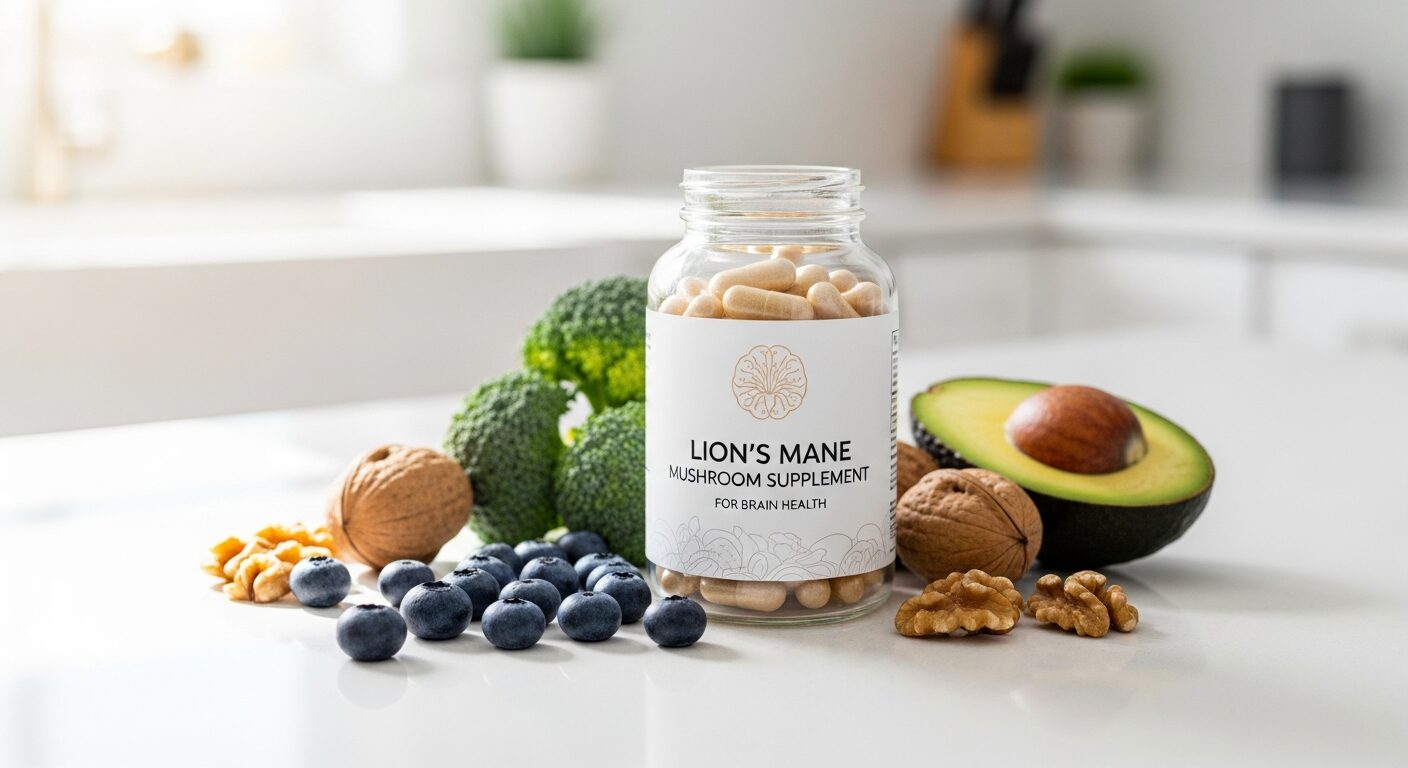
In the quest for cognitive enhancement and brain health, few natural supplements have captured scientific attention quite like Lion’s Mane mushroom. This distinctive fungus, with its cascading white spines resembling a lion’s flowing mane, has emerged from traditional Chinese medicine into the spotlight of modern neuroscience research. What makes this mushroom particularly intriguing isn’t just its unique appearance, but its remarkable ability to support brain function in ways that researchers are only beginning to understand.
Recent studies have revealed that Lion’s Mane contains powerful bioactive compounds that may promote neurogenesis, protect against cognitive decline, and enhance memory formation. As our understanding of neuroplasticity and brain health continues to evolve, Lion’s Mane stands out as one of the most promising natural nootropics available today. However, separating the science from the marketing hype requires a careful examination of the current research and a realistic understanding of what this fascinating fungus can and cannot do for your brain.
🌿 Looking for Lions Mane supplements? Shop Amazon →
Contents
- 1 What is Lions Mane
- 2 Key Benefits of Lions Mane
- 3 What Most People Get Wrong About Lions Mane
- 4 What Happens to Your Body After 30 Days of Taking Lions Mane
- 5 Who Should NOT Take Lions Mane
- 6 Dosage and Best Forms
- 7 Frequently Asked Questions
- 7.1 How long does it take to see results from Lion’s Mane?
- 7.2 Can I take Lion’s Mane with other supplements or medications?
- 7.3 Is it better to take Lion’s Mane on an empty stomach or with food?
- 7.4 What’s the difference between Lion’s Mane extract and powder?
- 7.5 Are there any long-term side effects of taking Lion’s Mane?
- 8 Medical Disclaimer
What is Lions Mane
Lion’s Mane (Hericium erinaceus) is a distinctive edible mushroom that grows naturally on hardwood trees throughout North America, Europe, and Asia. Unlike typical cap-and-stem mushrooms, Lion’s Mane develops as a globular mass of cascading white icicle-like spines that can reach impressive sizes of up to 40 centimeters in diameter. This unique appearance has earned it various common names including bearded tooth mushroom, pom pom mushroom, and yamabushitake in Japan.
What sets Lion’s Mane apart from other mushrooms isn’t just its appearance, but its unique chemical composition. The mushroom contains two primary groups of bioactive compounds: hericenones and erinacines. These compounds are particularly noteworthy because they can cross the blood-brain barrier, a selective barrier that typically prevents many substances from reaching brain tissue. Once in the brain, these compounds demonstrate the remarkable ability to stimulate the production of nerve growth factor (NGF), a protein essential for the growth, maintenance, and survival of neurons.
Historically, Lion’s Mane has been prized in traditional Chinese medicine for centuries, where it was reserved for royalty and considered one of the four sacred mushrooms. Buddhist monks reportedly used Lion’s Mane tea to enhance their focus during meditation, believing it helped achieve mental clarity and concentration. Modern cultivation techniques have made this once-rare mushroom more accessible, leading to increased research into its potential therapeutic applications.
Key Benefits of Lions Mane
The scientific research surrounding Lion’s Mane has revealed several compelling benefits for brain health and cognitive function. The most well-documented benefit is its ability to support neurogenesis – the formation of new neurons. Bioactive compounds from Hericium erinaceus enhance nerve growth factor synthesis in primary aortic endothelial cells, 2013 demonstrated that Lion’s Mane extract significantly increases nerve growth factor production, which is crucial for maintaining healthy brain function as we age.
Cognitive enhancement represents another major area of benefit. Studies suggest that regular Lion’s Mane supplementation may improve memory formation, enhance learning capacity, and support overall cognitive performance. The mushroom’s neuroprotective properties appear to work through multiple mechanisms, including reducing inflammation in brain tissue, protecting against oxidative stress, and supporting the maintenance of existing neural pathways.
Lion’s Mane also shows promise for supporting mood and emotional well-being. Research indicates that the mushroom may help reduce symptoms of anxiety and depression, possibly through its effects on the hippocampus, a brain region crucial for emotional processing and memory formation. Additionally, some studies suggest that Lion’s Mane may support the regeneration of damaged nerve tissue, making it a subject of interest for researchers studying neurodegenerative conditions.
The mushroom’s benefits extend beyond the brain to include potential support for the digestive system and immune function. Lion’s Mane contains beta-glucans, complex carbohydrates that may help modulate immune system activity and support gut health, which is increasingly recognized as important for overall brain function through the gut-brain axis.
What Most People Get Wrong About Lions Mane
One of the most pervasive misconceptions about Lion’s Mane is that it works as an immediate cognitive enhancer, similar to caffeine or other stimulants. Many people expect to feel noticeably sharper or more focused within hours of taking their first dose. However, Lion’s Mane works through neuroplastic changes that occur over weeks or months, not minutes or hours. The mushroom supports the gradual growth and strengthening of neural pathways rather than providing an instant cognitive boost.
Another common myth is that Lion’s Mane can cure or reverse neurodegenerative diseases like Alzheimer’s or Parkinson’s. While research shows promising neuroprotective effects, most studies have been conducted in laboratory settings or animal models. Improving effects of the mushroom Yamabushitake on mild cognitive impairment: a double-blind placebo-controlled clinical trial, 2009 showed improvements in cognitive function in older adults with mild cognitive impairment, but this doesn’t translate to curing established neurodegenerative diseases. It’s important to view Lion’s Mane as a supportive supplement rather than a medical treatment.
Many people also believe that all Lion’s Mane supplements are created equal, leading them to choose products based solely on price. In reality, the extraction method, concentration of active compounds, and part of the mushroom used can dramatically affect the supplement’s potency. Some products contain mostly mycelium grown on grain substrates, which may have lower concentrations of the beneficial hericenones and erinacines compared to supplements made from the actual fruiting body of the mushroom.
Perhaps the most dangerous misconception is that Lion’s Mane is completely safe for everyone because it’s “natural.” While Lion’s Mane is generally well-tolerated, it can cause allergic reactions in some individuals and may interact with certain medications. Some people experience skin rashes, difficulty breathing, or gastrointestinal distress. Additionally, because Lion’s Mane affects nerve growth factor, it could potentially interfere with certain neurological treatments or conditions, making medical consultation important for some individuals.
What Happens to Your Body After 30 Days of Taking Lions Mane
During the first week of Lion’s Mane supplementation, most people won’t notice dramatic changes, though some individuals report subtle improvements in sleep quality or a slight reduction in mental fatigue. This initial period is when the bioactive compounds begin accumulating in your system and starting to influence nerve growth factor production. Your body is essentially laying the groundwork for more noticeable changes to come.
By the second week, many users begin experiencing the first tangible benefits. Reduction of depression and anxiety by 4 weeks Hericium erinaceus intake, 2010 found that participants began showing measurable improvements in mood and anxiety levels around this time frame. You might notice improved focus during complex tasks, better word recall, or enhanced ability to concentrate for extended periods. Some people also report feeling more emotionally balanced or experiencing less brain fog during mentally demanding activities.
Weeks three and four typically represent the period when Lion’s Mane’s full spectrum of benefits becomes apparent. By this point, the mushroom has had sufficient time to promote meaningful neuroplastic changes. Users often report improvements in working memory, enhanced creative thinking, and better ability to learn new information. Sleep quality may continue to improve, and some individuals notice better stress resilience and emotional regulation.
It’s important to note that individual responses can vary significantly based on factors including age, baseline cognitive function, dosage, product quality, and overall health status. Some people may experience benefits earlier, while others might need 6-8 weeks to notice substantial changes. Consistency in dosing appears to be crucial for achieving optimal results, as the neuroplastic benefits of Lion’s Mane seem to be cumulative rather than acute.
Who Should NOT Take Lions Mane
Individuals with known mushroom allergies should exercise extreme caution or avoid Lion’s Mane entirely. Allergic reactions can range from mild skin irritation and digestive upset to more severe symptoms including difficulty breathing, swelling, and anaphylaxis. If you have any history of food allergies, particularly to fungi, it’s essential to start with a very small dose and monitor for adverse reactions, or consult with a healthcare provider before beginning supplementation.
People taking medications that affect the nervous system should be particularly cautious with Lion’s Mane supplementation. Because the mushroom influences nerve growth factor and can affect neuroplasticity, it may potentially interact with antidepressants, anticonvulsants, or other neurological medications. The combination could either enhance or diminish the effects of prescription drugs, potentially leading to unwanted side effects or reduced therapeutic efficacy.
Pregnant and breastfeeding women should avoid Lion’s Mane supplements due to insufficient safety data. While Lion’s Mane is generally considered safe for most adults, there haven’t been adequate studies examining its effects during pregnancy or lactation. The mushroom’s influence on nerve growth factor could potentially affect fetal development, making it prudent to err on the side of caution during these critical periods.
Individuals scheduled for surgery should discontinue Lion’s Mane at least two weeks before any procedure. Some evidence suggests that Lion’s Mane may affect blood clotting, though this interaction isn’t well-established. Additionally, people with autoimmune conditions should consult with their healthcare providers before using Lion’s Mane, as its immune-modulating effects could potentially exacerbate certain autoimmune responses. Anyone with serious medical conditions or taking multiple medications should always discuss Lion’s Mane supplementation with their healthcare provider to ensure it’s appropriate for their specific situation.
Dosage and Best Forms
The optimal dosage of Lion’s Mane varies depending on the form and concentration of the supplement. Most clinical studies have used doses ranging from 500mg to 3000mg of extract daily, typically divided into two or three doses taken with meals. For standardized extracts containing at least 30% beta-glucans, a common starting dose is 500-1000mg daily, which can be gradually increased based on individual response and tolerance.
Lion’s Mane supplements come in several forms, each with distinct advantages. Powder extracts offer versatility and can be easily mixed into smoothies, coffee, or other beverages, allowing for flexible dosing. Capsules provide convenience and precise dosing, making them ideal for consistent daily supplementation. Liquid extracts typically offer higher bioavailability but may have a stronger, sometimes unpalatable taste.
When selecting a Lion’s Mane supplement, look for products that specify the extraction ratio and concentration of active compounds. High-quality supplements should contain extract from the fruiting body rather than just mycelium, as the fruiting body contains higher concentrations of the beneficial hericenones and erinacines. Third-party testing for purity and potency is also an important quality indicator.
Timing can influence Lion’s Mane’s effectiveness. Many users find that taking the supplement with meals helps reduce the risk of gastrointestinal upset while potentially enhancing absorption. Some people prefer taking Lion’s Mane in the morning to support cognitive function throughout the day, while others split their dose between morning and early afternoon to maintain consistent levels.
🌿 Looking for Lions Mane Supplements?
Browse top-rated Lions Mane supplements, independently tested and recommended by our editorial team.
Affiliate disclosure: We may earn a small commission at no extra cost to you.
Frequently Asked Questions
How long does it take to see results from Lion’s Mane?
Most people begin noticing subtle benefits within 2-4 weeks of consistent daily use, with more pronounced effects typically appearing after 4-8 weeks. However, individual responses can vary significantly based on factors like age, dosage, product quality, and baseline cognitive function. Consistency in daily dosing appears to be more important than taking large occasional doses.
Can I take Lion’s Mane with other supplements or medications?
Lion’s Mane is generally compatible with most supplements, but caution is advised when combining it with medications that affect the nervous system, blood clotting, or immune function. Always consult with a healthcare provider before adding Lion’s Mane to your regimen if you’re taking prescription medications, especially antidepressants, anticonvulsants, or immunosuppressive drugs.
Is it better to take Lion’s Mane on an empty stomach or with food?
Taking Lion’s Mane with food is generally recommended as it can help reduce the risk of gastrointestinal upset and may enhance absorption of the active compounds. Many users find that taking it with breakfast provides the best balance of effectiveness and digestive tolerance.
What’s the difference between Lion’s Mane extract and powder?
Lion’s Mane extract is concentrated and typically contains higher levels of active compounds like hericenones and erinacines, making it more potent than regular powder. Extracts often specify concentration ratios (like 8:1 or 10:1), meaning eight or ten parts of raw mushroom are used to create one part extract. Raw powder contains the whole mushroom but in lower concentrations of active compounds.
Are there any long-term side effects of taking Lion’s Mane?
Current research suggests that Lion’s Mane is safe for long-term use in healthy adults when taken at recommended dosages. However, long-term safety studies are limited, so it’s advisable to take periodic breaks from supplementation and monitor for any changes in health or medication effectiveness. Anyone experiencing persistent side effects should discontinue use and consult a healthcare provider.
Medical Disclaimer
The information provided in this article is for educational purposes only and is not intended to diagnose, treat, cure, or prevent any disease. Lion’s Mane supplements have not been evaluated by the Food and Drug Administration for safety or effectiveness. While research shows promising results, individual experiences may vary significantly.
Before starting any new supplement regimen, including Lion’s Mane, consult with a qualified healthcare professional, especially if you have pre-existing medical conditions, are pregnant or breastfeeding, or are taking prescription medications. This is particularly important for individuals with mushroom allergies, autoimmune conditions, or neurological disorders.
If you experience any adverse reactions while taking Lion’s Mane, discontinue use immediately and seek medical attention if symptoms are severe. This article does not constitute medical advice and should not replace professional medical consultation for your specific health circumstances.