
Nicotinamide mononucleotide (NMN) has captured the attention of longevity researchers and health enthusiasts worldwide as a promising anti-aging supplement. This naturally occurring compound serves as a precursor to NAD+ (nicotinamide adenine dinucleotide), a crucial coenzyme that plays a vital role in cellular energy production and DNA repair. As we age, our NAD+ levels decline significantly, which many scientists believe contributes to the aging process and age-related diseases.
Despite growing interest in NMN supplementation, there’s considerable confusion about proper dosing, timing, and what realistic expectations should be. Many people jump into NMN supplementation without understanding the science behind optimal dosing or the timeline for experiencing benefits. This comprehensive guide will help you navigate the complex world of NMN dosage, separating fact from fiction while providing evidence-based recommendations for safe and effective use.
Whether you’re considering NMN for its potential anti-aging properties, metabolic benefits, or cellular health support, understanding the proper approach to supplementation is crucial for maximizing benefits while minimizing risks. Let’s explore what the current research tells us about this fascinating compound and how to use it effectively.
Contents
What is NMN
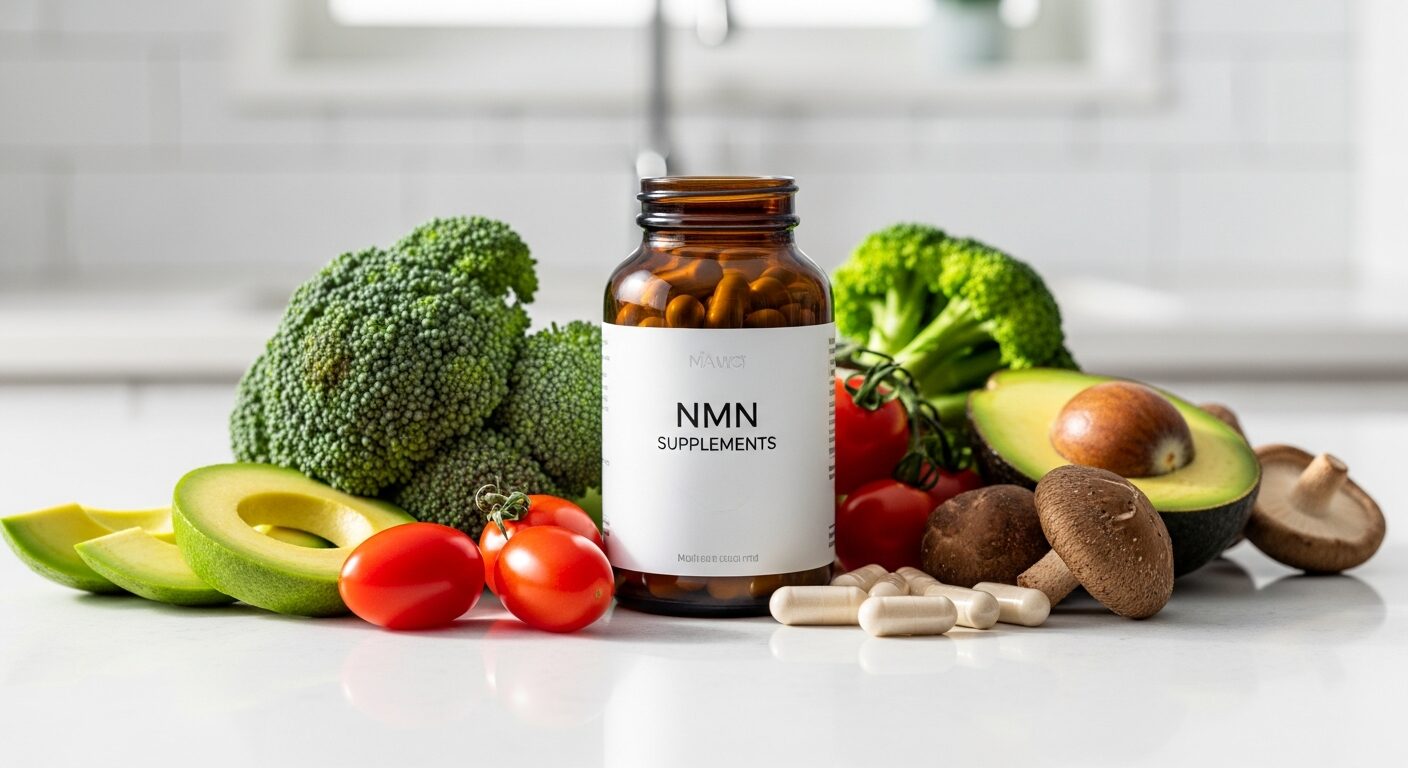
Nicotinamide mononucleotide (NMN) is a nucleotide derived from ribose and nicotinamide. It’s naturally found in small amounts in various foods including broccoli, cabbage, cucumber, edamame, and avocados. However, the concentrations in food sources are relatively low compared to what’s typically used in supplementation.
The primary importance of NMN lies in its role as a direct precursor to NAD+, one of the most important coenzymes in the human body. NAD+ is essential for numerous cellular processes, including energy metabolism, DNA repair, gene expression regulation, and cellular communication. Every cell in your body requires NAD+ to function properly, making it fundamental to life itself.
As we age, NAD+ levels decline dramatically. Research shows that NAD+ levels can drop by as much as 50% between ages 40 and 60. This decline is associated with many hallmarks of aging, including decreased mitochondrial function, reduced cellular repair mechanisms, and increased susceptibility to age-related diseases. NMN supplementation aims to restore NAD+ levels by providing the raw materials needed for NAD+ synthesis.
Unlike other NAD+ precursors like nicotinic acid or nicotinamide riboside (NR), NMN can be directly converted to NAD+ through a more efficient pathway. This has led many researchers to focus on NMN as a potentially superior option for NAD+ enhancement, though the debate between NMN and NR continues in scientific circles.
Key Benefits of NMN
Current research on NMN has revealed several promising benefits, though it’s important to note that much of the research is still in early stages, with most studies conducted in animal models. However, the results have been encouraging enough to warrant human clinical trials, some of which are now providing valuable insights.
One of the most significant areas of research involves metabolic health. Studies have shown that NMN supplementation may improve glucose tolerance, enhance insulin sensitivity, and support healthy weight management. Effect of 12-Week Intake of Nicotinamide Mononucleotide on Sleep Quality, Fatigue, and Physical Performance in Older Japanese Adults, 2021 demonstrated improvements in physical performance and reduced fatigue in older adults, suggesting metabolic benefits translate to real-world improvements in daily function.
Cardiovascular health represents another promising area of research. NMN supplementation has been associated with improved endothelial function, better blood flow, and enhanced cardiovascular resilience. The compound appears to support the health of blood vessels and may help maintain healthy blood pressure levels, though more human research is needed to confirm these effects.
Cognitive function and neuroprotection have also shown promise in NMN research. Some studies suggest that maintaining higher NAD+ levels through NMN supplementation may support brain health, improve memory function, and potentially protect against neurodegenerative processes. While these findings are preliminary, they align with our understanding of NAD+’s role in neuronal health and repair.
Additionally, NMN may support cellular repair mechanisms, including DNA repair processes that become less efficient with age. This could potentially slow down certain aspects of cellular aging and support overall healthspan, though long-term studies in humans are still needed to confirm these effects.
What Most People Get Wrong About NMN
Despite growing popularity, several persistent myths and misconceptions surround NMN supplementation that can lead to unrealistic expectations or suboptimal usage. Understanding these misconceptions is crucial for anyone considering NMN supplementation.
Myth 1: More is Always Better
One of the most common mistakes people make is assuming that higher doses of NMN will produce better results. This “more is better” mentality often leads people to take excessive amounts, sometimes 2-3 times the recommended dose. However, research suggests that NAD+ synthesis has natural limitations, and flooding the system with excessive NMN doesn’t necessarily translate to proportionally higher NAD+ levels. In fact, some studies indicate that extremely high doses may lead to diminishing returns and potentially interfere with other metabolic processes. The optimal dose appears to be within a specific range that supports natural NAD+ synthesis without overwhelming cellular machinery.
Myth 2: Results Should Be Immediate
Many people expect to feel dramatic changes within days of starting NMN supplementation, similar to how one might feel effects from caffeine or other stimulants. This expectation is fundamentally flawed because NMN works at the cellular level to gradually restore NAD+ levels and improve cellular function. The benefits of NMN are generally subtle and cumulative, building over weeks and months rather than hours or days. People who expect immediate, dramatic changes often discontinue supplementation prematurely, missing out on the potential long-term benefits that research suggests may take 4-8 weeks to become noticeable.
Myth 3: All NMN Supplements Are Equally Effective
The supplement market is flooded with NMN products of varying quality, purity, and bioavailability. Many consumers assume that all NMN supplements are essentially the same, leading them to choose based solely on price. However, factors like manufacturing quality, purity, stability, and formulation can significantly impact effectiveness. Some cheaper products may contain lower actual NMN content than advertised, degraded compounds, or poor bioavailability. Third-party testing, proper storage conditions, and pharmaceutical-grade manufacturing are crucial factors that many consumers overlook.
Myth 4: NMN Works the Same for Everyone
Individual variation in response to NMN supplementation is significant, yet many people expect standardized results. Factors like age, baseline NAD+ levels, genetic variations in NAD+ metabolism, overall health status, and lifestyle factors all influence how effectively someone responds to NMN supplementation. Younger individuals with naturally higher NAD+ levels may not experience the same benefits as older adults with more significant NAD+ depletion. Additionally, people with certain genetic polymorphisms may metabolize NMN differently, leading to varied responses even at the same dose.
What Happens to Your Body After 30 Days of Taking NMN
Understanding the timeline of NMN effects can help set realistic expectations and ensure consistent supplementation during the period when benefits are developing. Based on current research and clinical observations, the progression of NMN benefits follows a fairly predictable pattern, though individual experiences may vary.
Week 1: Cellular Foundation Building
During the first week of NMN supplementation, most people won’t notice dramatic changes in how they feel, but important cellular processes are already beginning. NAD+ levels start to increase gradually, and cellular machinery begins adapting to higher substrate availability. Some individuals may notice very subtle improvements in sleep quality or slight increases in energy levels, but these changes are often so mild they could be attributed to placebo effect. The most important thing happening during this week is the establishment of consistent blood levels of NMN and the beginning of NAD+ restoration.
Week 2: Early Functional Improvements
By the second week, cellular NAD+ levels have typically increased enough for some people to begin noticing functional improvements. Energy levels may become more stable throughout the day, with less pronounced afternoon fatigue. Sleep quality often improves, with some people reporting deeper, more restorative sleep and easier morning awakening. Physical recovery from exercise may begin to improve, with reduced muscle soreness and faster bounce-back from workouts. However, these effects are still relatively subtle and may not be noticeable to everyone.
Week 3-4: Full Benefit Emergence
The third and fourth weeks typically represent the period when the most noticeable benefits emerge. Nicotinamide mononucleotide increases muscle insulin sensitivity in prediabetic women, 2021 showed that metabolic improvements in insulin sensitivity became apparent around this timeframe in clinical trials. Energy levels may be more consistently higher, with improved mental clarity and focus. Physical endurance during exercise often improves, and recovery times continue to decrease. Some people report improvements in skin appearance, though this is more anecdotal than scientifically documented. Cardiovascular benefits, such as improved exercise tolerance and better sleep quality, typically become more pronounced during this period.
It’s important to note that the timeline can vary significantly between individuals. Older adults or those with more significant NAD+ depletion may notice benefits earlier and more dramatically, while younger, healthier individuals might experience more subtle changes. Consistency in supplementation during this 30-day period is crucial, as sporadic dosing can prevent the accumulation of benefits that characterizes effective NMN supplementation.
Who Should NOT Take NMN
While NMN appears to be generally safe for most healthy adults, certain populations should exercise caution or avoid NMN supplementation entirely. Understanding contraindications and potential risks is essential for safe supplementation.
Pregnant and Breastfeeding Women
Currently, there is insufficient research on the safety of NMN supplementation during pregnancy and breastfeeding. Since NAD+ metabolism is crucial for fetal development and any supplement that affects cellular metabolism could potentially impact pregnancy outcomes, pregnant and breastfeeding women should avoid NMN supplementation until more safety data becomes available.
Children and Adolescents
NMN supplementation is not recommended for individuals under 18 years of age. Young people typically have naturally high NAD+ levels and robust cellular repair mechanisms. Supplementing with NMN during periods of natural growth and development could potentially interfere with normal metabolic processes, and no safety or efficacy data exists for this population.
Individuals with Cancer History or Active Cancer
This is perhaps the most important contraindication to understand. Since NAD+ supports cellular energy production and repair mechanisms, there’s theoretical concern that NMN supplementation could potentially fuel the growth of cancer cells, which have high energy demands. While research is limited, individuals with active cancer or a recent history of cancer should consult with their oncologist before considering NMN supplementation. NAD+ metabolism in cancer, 2017 highlights the complex relationship between NAD+ and cancer cell metabolism, emphasizing the need for caution in this population.
People Taking Certain Medications
NMN may interact with certain medications, particularly those that affect NAD+ metabolism or cellular energy processes. Individuals taking diabetes medications should be particularly cautious, as NMN may enhance insulin sensitivity and could potentially lead to hypoglycemia when combined with glucose-lowering drugs. Blood thinners, chemotherapy drugs, and medications that affect liver metabolism may also interact with NMN supplementation.
Those with Autoimmune Conditions
Since NMN affects cellular metabolism and potentially immune function, individuals with autoimmune conditions should consult with their healthcare provider before starting supplementation. The effects of enhanced NAD+ levels on immune system activity in autoimmune conditions are not well understood.
When to Consult a Doctor
Anyone with chronic health conditions, those taking prescription medications, or individuals over 65 should consult with a healthcare provider before starting NMN supplementation. Additionally, if you experience any unusual symptoms after starting NMN, such as digestive issues, sleep disturbances, or changes in energy levels that seem excessive, discontinue use and consult with a healthcare professional.
Dosage and Best Forms
Determining the optimal NMN dosage requires consideration of multiple factors, including age, health status, goals, and individual response. Current research provides some guidance, though optimal dosing continues to evolve as more clinical data becomes available.
Standard Dosing Guidelines
Most clinical studies have used doses ranging from 250mg to 500mg daily, with some studies exploring doses up to 1000mg. For most adults beginning NMN supplementation, starting with 250-300mg daily appears to be a reasonable approach. This allows the body to adapt to increased NAD+ levels while minimizing the risk of side effects.
After 2-4 weeks at the starting dose, individuals can assess their response and consider increasing to 500mg daily if needed. Some people find that 250-300mg provides sufficient benefits, while others may benefit from higher doses up to 500-750mg daily. Doses above 1000mg daily are generally not recommended, as they haven’t shown superior benefits in research and may increase the risk of side effects.
Age-Based Considerations
Younger adults (20s-30s) with naturally higher NAD+ levels may find that lower doses (250-400mg) are sufficient, while older adults (50+) with more significant NAD+ decline might benefit from doses in the 500-750mg range. However, it’s still recommended to start with lower doses regardless of age and adjust based on individual response.
Forms and Bioavailability
NMN is available in several forms, including capsules, tablets, powders, and sublingual formulations. Capsules and tablets are the most convenient and widely studied forms. Some manufacturers claim superior bioavailability for sublingual forms, but current evidence doesn’t strongly support significantly better absorption compared to oral capsules when taken properly.
Powder forms can be more cost-effective but require careful measurement and may have stability issues if not stored properly. Regardless of form, choosing products that provide third-party testing for purity and potency is crucial.
Timing and Administration
Most research suggests taking NMN in the morning, preferably on an empty stomach for optimal absorption. This timing aligns with natural circadian rhythms and NAD+ metabolism patterns. Some people prefer splitting doses, taking half in the morning and half in the early afternoon, though there’s limited research comparing different timing strategies.
🌿 Looking for NMN Supplements?
Browse top-rated NMN supplements, independently tested and recommended by our editorial team.
Affiliate disclosure: We may earn a small commission at no extra cost to you.
Frequently Asked Questions
Can I take NMN with other supplements?
Generally, NMN can be safely combined with most other supplements. Some people choose to combine it with resveratrol, as these compounds may work synergistically to support cellular health. However, avoid taking NMN with other NAD+ precursors like nicotinamide riboside simultaneously, as this may lead to excessive NAD+ substrate availability. Always consult with a healthcare provider if you’re taking multiple supplements or have concerns about interactions.
Should I cycle NMN supplementation or take it continuously?
Current research doesn’t indicate a need for cycling NMN supplementation. Most studies have used continuous daily dosing, and the gradual nature of NAD+ level changes suggests that consistent supplementation is more beneficial than cycling. However, some practitioners recommend occasional breaks (1-2 weeks every few months) to assess whether continued supplementation is providing ongoing benefits, though this is more precautionary than evidence-based.
How long does it take to see results from NMN?
Most people begin noticing subtle improvements in energy and sleep quality within 2-3 weeks, with more pronounced benefits typically emerging after 4-8 weeks of consistent supplementation. However, some of the most significant benefits, particularly those related to metabolic health and cellular repair, may take 2-3 months to become fully apparent. Individual response times can vary significantly based on age, health status, and baseline NAD+ levels.
What’s the difference between NMN and NR (nicotinamide riboside)?
Both NMN and NR are precursors to NAD+, but they use slightly different pathways for conversion. NMN can be directly converted to NAD+ in some tissues, while NR must first be converted to NMN before becoming NAD+. Some research suggests NMN may be more efficient, while other studies show similar effectiveness. The choice between them often comes down to individual response, availability, and cost considerations.
Are there any foods that can boost NAD+ levels naturally?
While foods contain small amounts of NAD+ precursors, the concentrations are generally too low to significantly impact NAD+ levels compared to supplementation. Foods like fish, mushrooms, green vegetables, and whole grains contain some precursors, and maintaining a healthy diet with these foods can support overall NAD+ metabolism. However, dietary sources alone are unlikely to reverse age-related NAD+ decline significantly.
Medical Disclaimer
The information provided in this article is for educational purposes only and is not intended as medical advice, diagnosis, or treatment. NMN supplementation should not replace conventional medical treatment or be used to treat, cure, or prevent any disease. Individual responses to supplementation can vary significantly, and what works for one person may not work for another.
Before starting any new supplement regimen, especially if you have existing health conditions, take medications, or have concerns about potential interactions, consult with a qualified healthcare provider. This is particularly important for individuals with diabetes, cardiovascular conditions, autoimmune disorders, or cancer history.
The FDA has not approved NMN for the treatment or prevention of any disease. While research is promising, many studies are still in early stages, and long-term effects of NMN supplementation in humans are not yet fully understood. Always purchase supplements from reputable manufacturers that provide third-party testing for purity and potency.
If you experience any adverse effects while taking NMN, discontinue use immediately and consult with a healthcare professional. This article does not constitute medical advice and should not be used as a substitute for professional medical consultation, diagnosis, or treatment.