
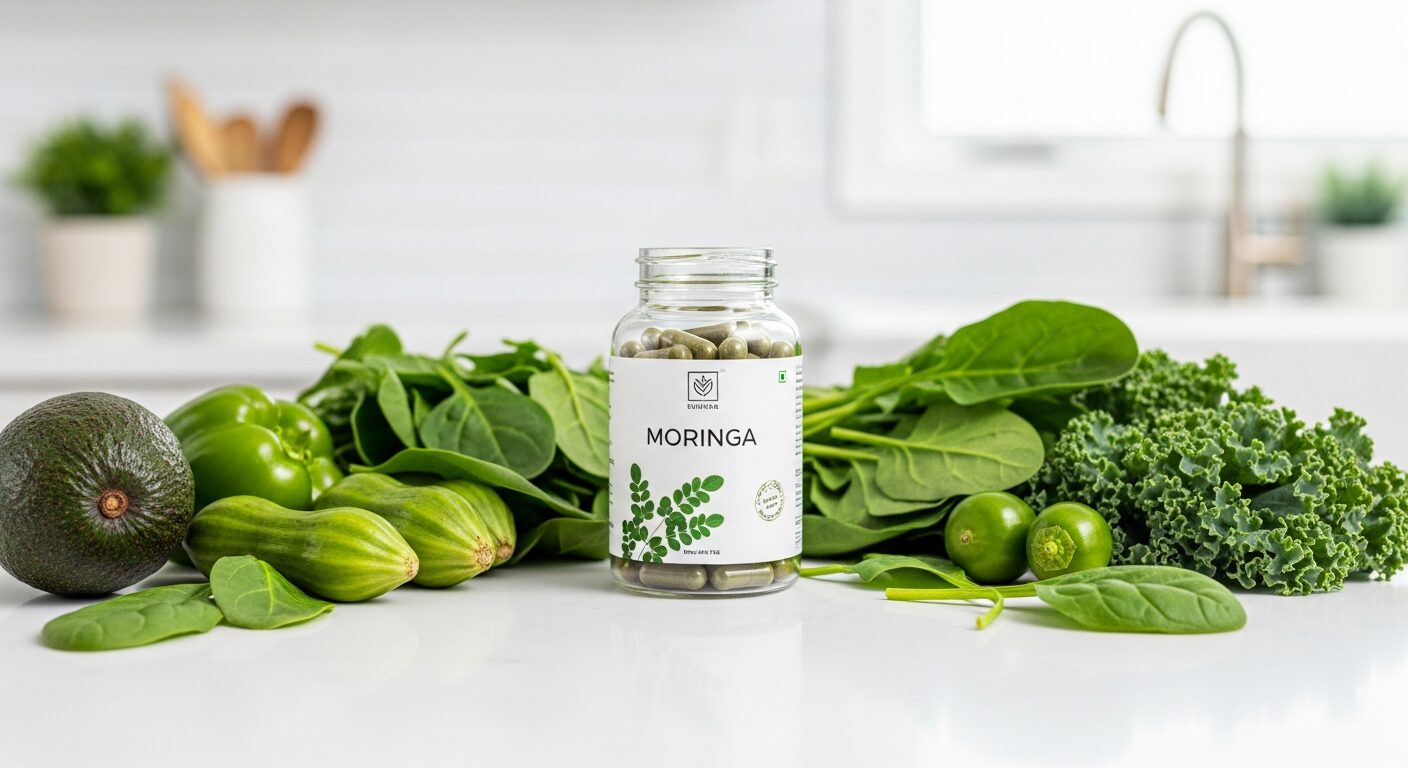
In the remote villages of northern India and parts of Africa, there grows a tree so nutritionally dense that locals call it the “miracle tree” or “tree of life.” This isn’t folklore or exaggeration – Moringa oleifera has been sustaining communities for thousands of years, and modern science is now validating what traditional cultures have long known about this remarkable plant.
What makes moringa truly extraordinary isn’t just one standout nutrient, but rather its unprecedented combination of vitamins, minerals, antioxidants, and bioactive compounds packed into every leaf. While the supplement industry is flooded with single-nutrient extracts and synthetic compounds, moringa offers something increasingly rare: a whole-food source of nutrition that works synergistically within your body’s natural processes.
But despite growing popularity in health circles, most people fundamentally misunderstand what moringa is, how it works, and what realistic expectations they should have. This comprehensive guide will cut through the marketing hype to give you the science-backed truth about moringa – including who should avoid it entirely.
🌿 Looking for Moringa supplements? Shop Amazon →
Contents
What is Moringa
Moringa oleifera is a fast-growing tree native to the sub-Himalayan areas of India, Pakistan, Bangladesh, and Afghanistan. Now cultivated throughout the tropics, this drought-resistant tree belongs to the family Moringaceae and is the most widely cultivated species of the genus Moringa.
Every part of the moringa tree is edible and nutritious, but the leaves have gained the most attention for their exceptional nutrient density. Fresh moringa leaves contain all nine essential amino acids, making it one of the few plant sources that provides a complete protein profile. The leaves also contain significant amounts of vitamin A, vitamin C, calcium, potassium, iron, and magnesium.
What sets moringa apart from other nutrient-dense plants is its bioavailability – the degree to which nutrients can be absorbed and used by your body. The plant’s natural composition includes compounds that enhance nutrient absorption, making it more effective than many isolated vitamin supplements.
The tree’s seeds, pods, flowers, and even bark have traditional medicinal uses, though most commercial supplements focus on leaf powder or extract. Moringa seeds contain oil with a unique fatty acid profile, while the pods are eaten as vegetables in many cultures. However, it’s the leaves that contain the highest concentration of beneficial compounds that have caught the attention of nutritional researchers worldwide.
Key Benefits of Moringa
Scientific research has identified several significant health benefits of moringa supplementation, backed by both human clinical trials and extensive laboratory studies.
The most well-documented benefit is moringa’s powerful antioxidant activity. Antioxidant and free radical scavenging activity of Moringa oleifera leaves, 2008 demonstrated that moringa leaves contain multiple antioxidant compounds including quercetin, chlorogenic acid, and beta-carotene. These compounds work together to neutralize harmful free radicals that contribute to cellular aging and chronic disease.
Blood sugar regulation represents another major benefit area. Multiple studies have shown that moringa can help stabilize blood glucose levels, particularly after meals. The plant contains compounds that may improve insulin sensitivity and slow the absorption of sugar in the intestines. This makes it particularly valuable for people with prediabetes or those looking to maintain stable energy levels throughout the day.
Cardiovascular health benefits have also been documented, with research showing moringa’s ability to help maintain healthy cholesterol levels and support overall heart function. The plant’s high potassium content supports proper blood pressure regulation, while its anti-inflammatory compounds may help protect blood vessels from damage.
Perhaps most importantly for many users, moringa provides sustained energy without the crash associated with caffeine or sugar-based stimulants. This occurs through its rich B-vitamin content, iron for oxygen transport, and magnesium for cellular energy production. Users often report improved mental clarity and reduced afternoon fatigue within the first week of consistent use.
The plant’s anti-inflammatory properties extend throughout the body, potentially benefiting joint health, skin condition, and overall inflammatory markers. This broad-spectrum anti-inflammatory effect may explain why traditional cultures have used moringa to address such a wide variety of health concerns.
What Most People Get Wrong About Moringa
Despite its growing popularity, several persistent myths about moringa continue to mislead consumers and set unrealistic expectations.
Myth 1: Moringa is a Weight Loss Miracle
One of the most pervasive misconceptions is that moringa directly burns fat or causes rapid weight loss. While moringa can support healthy weight management through improved metabolism, stable blood sugar, and reduced cravings, it’s not a magic weight loss bullet. The plant’s benefits for weight management are indirect – it provides sustained energy that may increase activity levels, helps regulate appetite through blood sugar stabilization, and its high nutrient density may reduce cravings for processed foods. However, expecting dramatic weight loss from moringa alone will lead to disappointment.
Myth 2: All Moringa Products Are the Same
Quality varies dramatically between moringa products, yet most consumers assume all moringa supplements are equivalent. Factors like harvesting methods, drying techniques, storage conditions, and processing all significantly impact the final product’s nutritional value. Leaves harvested at the wrong time, exposed to excessive heat during drying, or stored improperly can lose up to 60% of their beneficial compounds. Additionally, some products are diluted with fillers or contain moringa from trees grown in contaminated soil. The source, processing method, and third-party testing make enormous differences in effectiveness.
Myth 3: More Moringa is Always Better
Many people believe that if moringa is natural and beneficial, taking larger doses will provide greater benefits. This approach can backfire and may even cause side effects. Moringa contains compounds that can have mild laxative effects in high doses, and excessive intake may interfere with certain medications. The plant’s high vitamin K content means that very large doses could affect blood clotting in people taking anticoagulant medications. Research shows that moderate, consistent doses provide optimal benefits without risk of adverse effects.
Myth 4: Moringa Works Immediately for Everyone
Social media and marketing materials often suggest that moringa provides instant energy boosts and immediate health improvements for everyone. In reality, individual responses vary significantly based on baseline nutritional status, overall health, digestive function, and genetic factors. People with nutrient deficiencies may notice benefits more quickly than those with adequate nutrition. Some individuals may need several weeks of consistent use before experiencing noticeable effects, while others might see improvements within days. Setting realistic timelines prevents premature discontinuation of what could be a beneficial supplement.
What Happens to Your Body After 30 Days of Taking Moringa
Understanding the timeline of moringa’s effects helps set appropriate expectations and allows you to track your progress effectively.
Week 1: Initial Adaptations
During the first week, your body begins adapting to moringa’s nutrient influx. Most people notice improved digestion due to the plant’s fiber content and digestive enzymes. Some individuals experience increased energy levels, particularly those who were deficient in B vitamins, iron, or magnesium. However, a small percentage may experience mild digestive adjustment symptoms like increased bowel movements or slight stomach sensitivity as their system adapts to the new nutrients.
Sleep quality often begins improving during this first week, likely due to moringa’s magnesium content and its role in neurotransmitter production. Mental clarity may start to improve, especially in people who were experiencing brain fog related to nutrient deficiencies.
Week 2: Noticeable Improvements
By the second week, the cumulative effects of consistent moringa intake become more apparent. Energy levels typically stabilize at a higher baseline, with less reliance on caffeine or sugar for energy boosts. Hypoglycemic and anti-hyperglycemic effect of Moringa oleifera leaves, 2006 supports the blood sugar stabilizing effects that become noticeable during this period, with many users reporting fewer energy crashes and more stable appetite patterns.
Skin improvements often become visible during week two, as the high vitamin A and C content, combined with antioxidants, begins supporting cellular repair and collagen production. Hair and nail health may also start improving due to the complete amino acid profile and mineral content.
Week 3-4: Full Benefit Realization
The third and fourth weeks represent the period when moringa’s full benefits typically manifest. Immune function improvements become apparent, with many users reporting fewer minor illnesses or faster recovery times. This aligns with research showing moringa’s immune-supporting compounds reach optimal levels in the bloodstream after consistent daily intake.
Anti-inflammatory effects reach their peak during this period. Joint comfort may improve, and overall feelings of wellness and vitality typically reach their highest levels. Cardiovascular benefits, including improved circulation and heart rate variability, become measurable through this timeframe.
Cognitive benefits fully develop by week four, with improved focus, memory, and mental endurance becoming consistently noticeable. This occurs as the brain receives optimal nutrition and inflammatory markers decrease throughout the nervous system.
Who Should NOT Take Moringa
While moringa is generally safe for most adults, certain individuals should exercise caution or avoid it entirely.
Pregnant and breastfeeding women should avoid moringa supplements, particularly root and bark extracts, which may have uterine stimulant properties. While moringa leaves are consumed as food in many cultures during pregnancy, concentrated supplements have not been adequately studied for safety during pregnancy and lactation.
People taking anticoagulant medications like warfarin should consult their healthcare provider before using moringa due to its high vitamin K content, which can interfere with blood-clotting medications. Similarly, individuals scheduled for surgery should discontinue moringa at least two weeks beforehand to avoid potential bleeding complications.
Those with diabetes who take glucose-lowering medications need medical supervision when adding moringa, as it may enhance the effects of diabetes medications and potentially cause hypoglycemia. Blood sugar monitoring becomes crucial when combining moringa with diabetes treatments.
Individuals with kidney stones or a history of kidney problems should approach moringa cautiously due to its oxalate content. While not extremely high in oxalates compared to spinach or rhubarb, people prone to kidney stones should limit intake and ensure adequate hydration.
People with hypotension (low blood pressure) should monitor their blood pressure when starting moringa, as it may have mild blood pressure-lowering effects that could be problematic for those already dealing with low blood pressure.
Anyone taking prescription medications should consult their healthcare provider before starting moringa supplementation, as it may interact with various drugs through effects on drug metabolism pathways in the liver.
Dosage and Best Forms
The optimal moringa dosage depends on the form you choose and your individual health goals. Research suggests that 1-2 grams of moringa leaf powder daily provides therapeutic benefits without side effects for most adults.
Moringa leaf powder represents the most studied and traditional form. Start with 1/2 teaspoon (approximately 1 gram) daily, mixed into smoothies, yogurt, or water. This can be gradually increased to 1 teaspoon (2 grams) daily based on tolerance and desired effects.
Capsulated moringa extract offers convenience and standardized dosing. Look for products containing 400-500mg of moringa leaf extract per capsule, taking 1-2 capsules daily with food to improve absorption and reduce any potential stomach irritation.
Fresh moringa leaves, when available, can be consumed in larger quantities – up to 20-25 grams daily – as they’re less concentrated than dried powder. However, fresh leaves are rarely available outside of tropical growing regions.
Timing matters for optimal absorption. Taking moringa with a meal containing healthy fats improves the absorption of fat-soluble vitamins A, D, E, and K. Morning consumption is often preferred as moringa’s energizing effects might interfere with sleep if taken late in the day.
Quality indicators include organic certification, third-party testing for heavy metals and contaminants, and products that specify the leaf-to-powder ratio. Avoid products with unnecessary additives, artificial colors, or those that don’t specify the moringa species (should be Moringa oleifera).
🌿 Looking for Moringa Supplements?
Browse top-rated Moringa supplements, independently tested and recommended by our editorial team.
Affiliate disclosure: We may earn a small commission at no extra cost to you.
Frequently Asked Questions
How long does it take to see results from moringa?
Most people begin noticing increased energy and improved digestion within the first week, while more significant benefits like improved skin health, better immune function, and enhanced mental clarity typically develop over 2-4 weeks of consistent daily use. Individual results vary based on baseline health status and nutritional needs.
Can I take moringa with other supplements?
Moringa generally combines well with other supplements and may even enhance the absorption of certain nutrients. However, avoid taking it simultaneously with iron supplements, as the calcium in moringa can interfere with iron absorption. Space them at least 2 hours apart. Always consult healthcare providers about potential interactions with medications.
Does moringa have any side effects?
Moringa is well-tolerated by most people when used in recommended doses. Some individuals may experience mild digestive effects like increased bowel movements or stomach sensitivity when first starting. These effects typically resolve within a few days as the body adapts. Very high doses may cause diarrhea or nausea.
Is moringa safe for children?
Moringa leaves are consumed as food by children in many cultures where the tree grows naturally. However, concentrated supplements haven’t been specifically studied in children. Consult a pediatrician before giving moringa supplements to children, and consider starting with very small amounts if approved by their healthcare provider.
Can moringa replace a multivitamin?
While moringa provides an impressive array of nutrients, it shouldn’t be considered a complete replacement for a well-formulated multivitamin. Nutritional quality of the leaves of some African indigenous vegetables, 2009 shows moringa’s exceptional nutrient density, but it lacks certain nutrients like vitamin B12, vitamin D, and omega-3 fatty acids that may be important for optimal health. Consider moringa as a powerful complement to, rather than replacement for, a comprehensive nutritional program.
Medical Disclaimer
The information provided in this article is for educational purposes only and is not intended as medical advice, diagnosis, or treatment. Always consult with qualified healthcare professionals before starting any new supplement regimen, especially if you have pre-existing health conditions, take medications, or are pregnant or breastfeeding. Individual results may vary, and this information should not replace professional medical consultation. The statements regarding moringa have not been evaluated by the Food and Drug Administration, and moringa supplements are not intended to diagnose, treat, cure, or prevent any disease.