
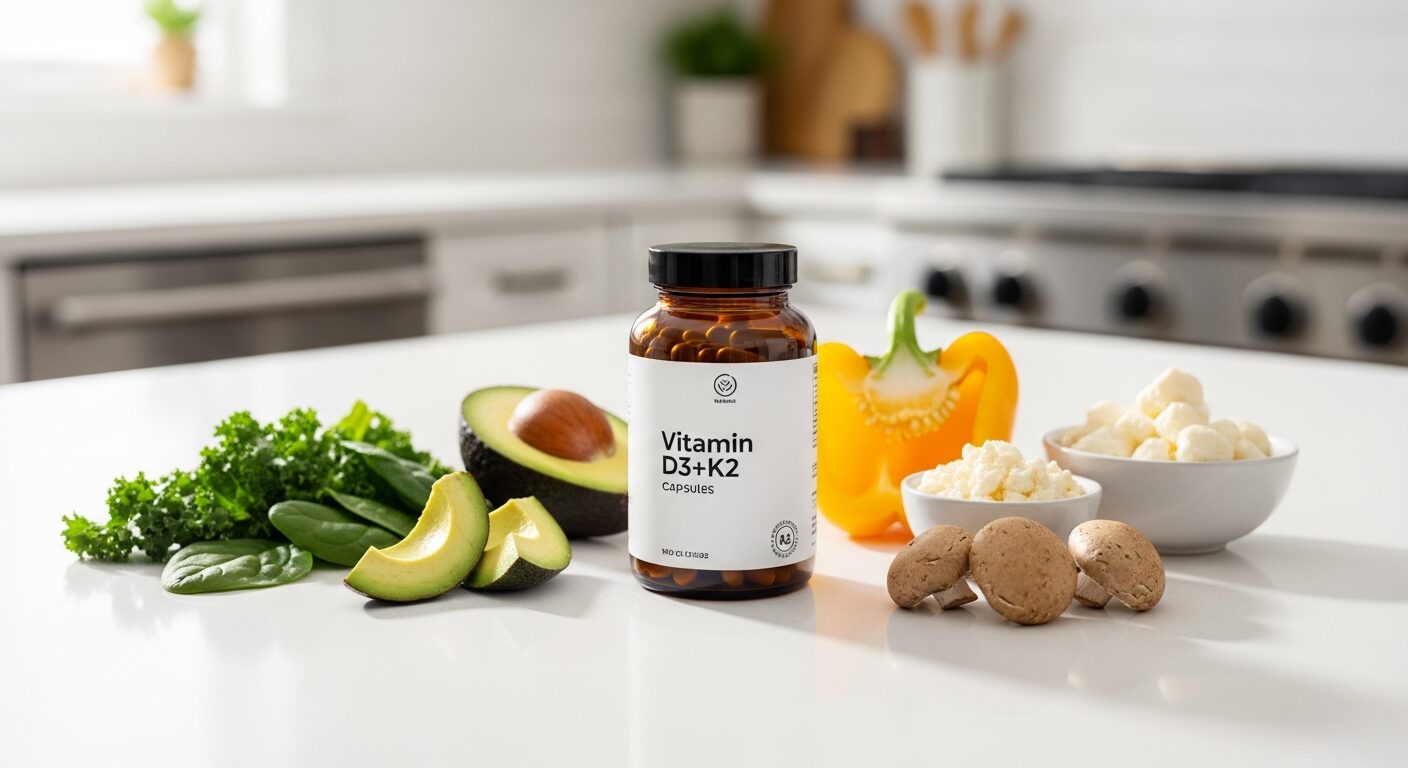
Vitamin D and vitamin K2 are two essential nutrients that work synergistically to support bone health, cardiovascular function, and overall wellness. While each vitamin provides unique benefits on its own, emerging research suggests that taking them together may optimize their individual effects and create powerful health advantages that neither could achieve alone.
Understanding why these vitamins complement each other requires examining their distinct roles in calcium metabolism, bone formation, and cardiovascular health. This comprehensive guide explores the science behind this dynamic duo and explains why combining vitamin D and K2 supplementation may be one of the most important decisions you can make for your long-term health.
Contents
- 1 Understanding Vitamin D: The Sunshine Vitamin
- 2 Vitamin K2: The Forgotten Vitamin
- 3 The Synergistic Relationship: Why D and K2 Work Better Together
- 4 Scientific Evidence Supporting Combined Supplementation
- 5 Optimal Dosing and Timing
- 6 Safety Considerations and Contraindications
- 7 Who Should Consider D and K2 Supplementation?
- 8 Frequently Asked Questions
- 9 Medical Disclaimer
Understanding Vitamin D: The Sunshine Vitamin
Vitamin D is a fat-soluble vitamin that functions more like a hormone in the body. It exists in two primary forms: vitamin D2 (ergocalciferol) and vitamin D3 (cholecalciferol). Vitamin D3, which is produced in the skin when exposed to UVB radiation from sunlight, is the more potent and bioactive form.
The primary role of vitamin D involves calcium absorption in the intestines. Without adequate vitamin D levels, your body can only absorb about 10-15% of dietary calcium. With sufficient vitamin D, this absorption rate increases to 30-40%. Beyond calcium absorption, vitamin D supports immune function, muscle strength, and cellular health.
Vitamin D Deficiency: A Global Health Concern
Despite its critical importance, vitamin D deficiency affects an estimated 1 billion people worldwide. Factors contributing to this widespread deficiency include limited sun exposure, geographical location, skin pigmentation, age, and dietary insufficiency. Deficiency symptoms may include bone pain, muscle weakness, increased infection risk, and mood changes.
Vitamin K2: The Forgotten Vitamin
Vitamin K2, also known as menaquinone, is often overshadowed by its more famous cousin, vitamin K1 (phylloquinone). While vitamin K1 primarily supports blood clotting, vitamin K2 plays distinct roles in bone metabolism and cardiovascular health. K2 exists in several subtypes, with MK-4 and MK-7 being the most clinically studied forms.
The key function of vitamin K2 involves activating proteins that regulate calcium placement in the body. Specifically, K2 activates osteocalcin, a protein that binds calcium to bones, and matrix Gla protein (MGP), which prevents calcium from depositing in soft tissues like arteries.
Sources and Deficiency
Vitamin K2 is found primarily in fermented foods, animal products, and certain aged cheeses. Natto, a traditional Japanese fermented soybean dish, contains the highest concentrations of K2. However, these foods are not commonly consumed in Western diets, making K2 deficiency relatively common in populations that don’t regularly eat fermented foods or organ meats.
The Synergistic Relationship: Why D and K2 Work Better Together
The relationship between vitamin D and K2 centers on calcium metabolism and utilization. While vitamin D increases calcium absorption from the digestive system, it doesn’t direct where that calcium goes in the body. This is where vitamin K2 becomes crucial – it ensures calcium ends up in bones and teeth rather than soft tissues.
Calcium Paradox Prevention
Taking vitamin D without adequate K2 can potentially lead to what researchers call the “calcium paradox” – a situation where bones remain weak despite adequate calcium intake, while calcium simultaneously accumulates in arteries and other soft tissues. Vitamin K2 supplementation and arterial calcification prevention, 2007 demonstrated that K2 supplementation could help prevent this problematic calcium misallocation.
Scientific Evidence Supporting Combined Supplementation
Research investigating the combined effects of vitamin D and K2 supplementation has yielded promising results across multiple health parameters. Studies have examined their synergistic effects on bone density, cardiovascular health, and overall mortality risk.
Bone Health Benefits
A landmark study published in the Journal of Bone and Mineral Research found that postmenopausal women taking both vitamin D3 and K2 showed significantly greater improvements in bone mineral density compared to those taking either vitamin alone. The combination appeared to enhance the bone-building effects of each individual nutrient.
Combined vitamin D3 and K2 supplementation in postmenopausal women, 2013 showed that the combination therapy resulted in improved bone strength markers and reduced bone turnover compared to placebo or individual vitamin supplementation.
Cardiovascular Protection
The cardiovascular benefits of combining D and K2 stem primarily from their complementary effects on calcium metabolism. While vitamin D supports overall cardiovascular function through multiple mechanisms, K2 specifically prevents arterial calcification by activating MGP.
Population studies have shown that individuals with higher K2 intake have significantly lower rates of coronary artery calcification and cardiovascular mortality. When combined with adequate vitamin D levels, these protective effects appear to be enhanced.
Optimal Dosing and Timing
Determining the appropriate doses of vitamin D and K2 depends on individual factors including current blood levels, age, body weight, and health status. For vitamin D, most experts recommend maintaining blood levels of 25(OH)D between 30-50 ng/mL (75-125 nmol/L), which typically requires daily supplementation of 1000-4000 IU for most adults.
For vitamin K2, research suggests daily doses of 90-200 mcg are effective for most adults, with MK-7 being the preferred form due to its longer half-life and better absorption. Vitamin K2 bioavailability and optimal dosing, 2015 confirmed that MK-7 provides superior bioavailability compared to other K2 forms.
Timing and Absorption
Both vitamins D and K2 are fat-soluble, meaning they’re best absorbed when taken with dietary fat. Taking them together with a meal containing healthy fats optimizes absorption of both nutrients. There are no known interactions between D and K2 that would require separated dosing.
Safety Considerations and Contraindications
The combination of vitamin D and K2 is generally safe for most individuals when taken at recommended doses. However, certain populations should exercise caution or consult healthcare providers before supplementation.
Individuals taking warfarin or other vitamin K-antagonist anticoagulants should avoid K2 supplementation unless specifically approved and monitored by their healthcare provider, as K2 can interfere with these medications’ effectiveness.
Vitamin D toxicity, while rare, can occur with extremely high doses over extended periods. Symptoms include hypercalcemia, kidney stones, and cardiovascular complications. Regular monitoring of 25(OH)D blood levels helps prevent toxicity.
Who Should Consider D and K2 Supplementation?
Several populations may particularly benefit from combined vitamin D and K2 supplementation. These include postmenopausal women at risk for osteoporosis, elderly individuals with limited sun exposure, people following plant-based diets with minimal K2-rich foods, and individuals with documented deficiencies in either vitamin.
Those living in northern latitudes, working indoors, or having darker skin pigmentation may have increased risk of vitamin D deficiency. Similarly, individuals who don’t consume fermented foods or organ meats regularly may have suboptimal K2 status.
🌿 Looking for Vitamin D Supplements?
Browse top-rated Vitamin D supplements, independently tested and recommended by our editorial team.
Affiliate disclosure: We may earn a small commission at no extra cost to you.
Frequently Asked Questions
Can I take vitamin D without K2?
While you can take vitamin D alone, combining it with K2 optimizes calcium utilization and may prevent potential side effects from calcium misallocation. For long-term supplementation, especially at higher doses, including K2 is recommended.
How long does it take to see benefits from D and K2 supplementation?
Vitamin D levels typically improve within 6-8 weeks of consistent supplementation, while K2’s effects on protein activation occur more gradually. Bone health improvements may take 6-12 months to become measurable, while some individuals report improved energy and mood within weeks.
Are there any foods that provide both vitamins naturally?
Few foods contain significant amounts of both vitamins. Fatty fish provides vitamin D, while fermented dairy products contain K2, but you’d need to consume both regularly. Supplementation often provides more reliable and consistent intake.
What’s the difference between K1 and K2?
Vitamin K1 primarily supports blood clotting, while K2 activates proteins involved in calcium metabolism and bone health. They have different functions and dietary sources, with K2 being more relevant for the synergistic relationship with vitamin D.
Should children take D and K2 supplements?
Children may benefit from vitamin D supplementation, especially during winter months or with limited sun exposure. K2 needs in children are less well-established, but food sources like cheese can provide adequate amounts. Consult a pediatrician before supplementing children with either vitamin.
Medical Disclaimer
This article is for informational purposes only and should not replace professional medical advice, diagnosis, or treatment. Always consult with a qualified healthcare provider before starting any new supplement regimen, especially if you have existing health conditions, take medications, or are pregnant or nursing. Individual nutritional needs vary, and what works for one person may not be appropriate for another. Blood testing can help determine your current vitamin D status and guide appropriate supplementation decisions.