
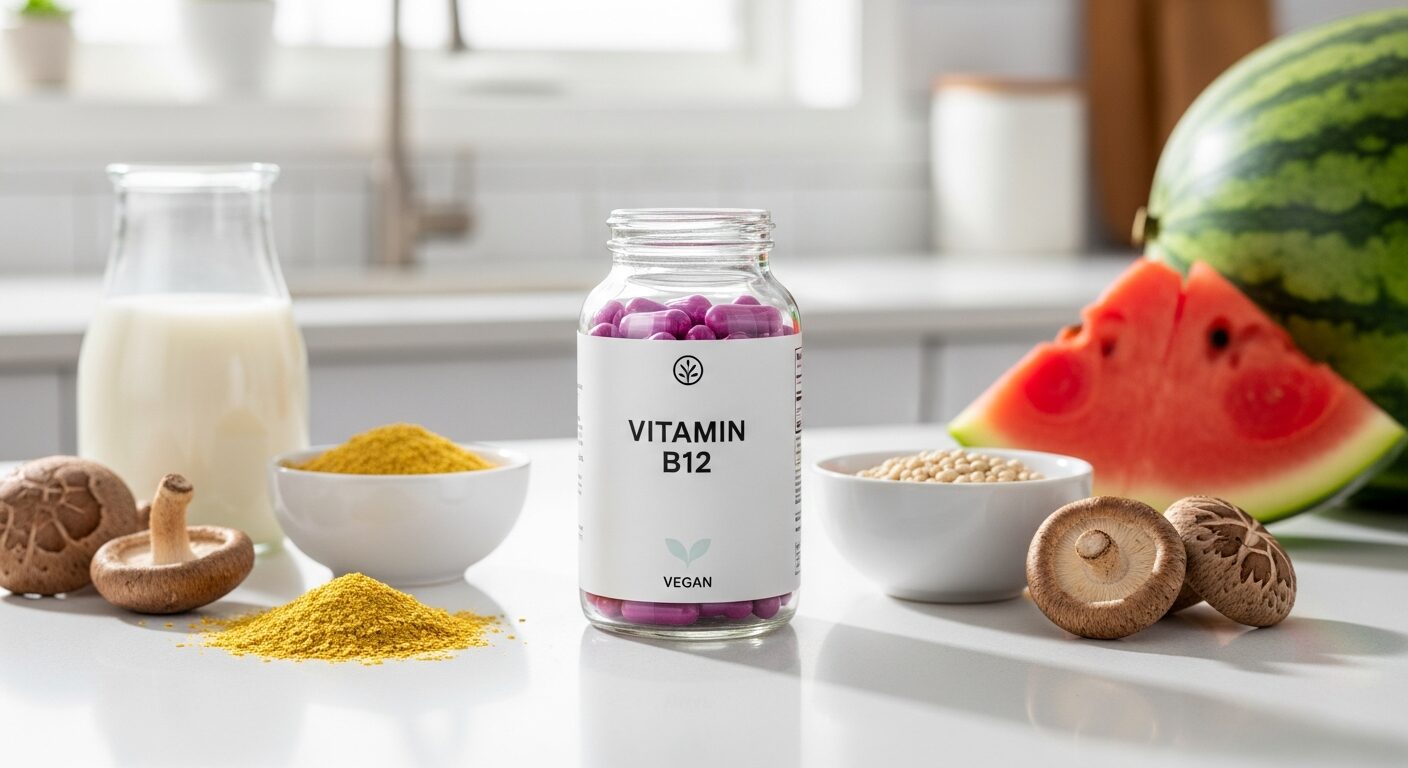
Vitamin B12 deficiency represents one of the most significant nutritional challenges facing vegans today. While plant-based diets offer numerous health benefits, they naturally lack this essential nutrient, making supplementation not just recommended but necessary for optimal health. Understanding the science behind B12, its critical functions in the body, and how to effectively supplement can mean the difference between thriving on a vegan diet and experiencing serious health complications.
This comprehensive guide explores everything vegans need to know about vitamin B12, from recognizing deficiency symptoms to choosing the right supplements and dosages for long-term health.
Contents
- 1 Understanding Vitamin B12: The Essential Nutrient Missing from Plants
- 2 Recognizing B12 Deficiency: Signs and Symptoms
- 3 Testing for B12 Status: Beyond the Standard Blood Test
- 4 B12 Supplementation for Vegans: Forms and Dosages
- 5 Fortified Foods vs. Supplements: Making the Right Choice
- 6 Special Considerations for Different Life Stages
- 7 Frequently Asked Questions
- 8 Medical Disclaimer
Understanding Vitamin B12: The Essential Nutrient Missing from Plants
Vitamin B12, also known as cobalamin, is a water-soluble vitamin that plays crucial roles in DNA synthesis, red blood cell formation, and nervous system function. Unlike other B vitamins that can be found in plant sources, B12 is primarily produced by bacteria and is naturally present only in animal products.
The human body requires B12 for several critical processes. It serves as a cofactor in the conversion of homocysteine to methionine, a process essential for DNA methylation and cellular repair. Additionally, B12 is vital for myelin synthesis, the protective coating around nerve fibers that enables proper nervous system communication.
What makes B12 particularly challenging is the body’s complex absorption mechanism. The vitamin must bind to intrinsic factor, a protein produced in the stomach, before it can be absorbed in the small intestine. This process can be compromised by various factors, including age, certain medications, and digestive disorders.
Why Plants Don’t Contain B12
The absence of B12 in plants isn’t an oversight of nature but rather a result of modern agricultural practices. While B12-producing bacteria exist in soil, contemporary farming methods, including sanitization and the use of pesticides, have largely eliminated these bacteria from our food supply. Even foods like spirulina and nutritional yeast, often touted as B12 sources, contain primarily inactive analogs that cannot fulfill the body’s B12 requirements.
Recognizing B12 Deficiency: Signs and Symptoms
B12 deficiency develops gradually, often taking years to manifest as the body maintains significant stores in the liver. However, once these reserves are depleted, symptoms can be severe and, in some cases, irreversible.
Early Warning Signs
Initial symptoms of B12 deficiency are often subtle and easily dismissed. These may include fatigue, weakness, and difficulty concentrating. Many vegans attribute these symptoms to other factors, such as stress or inadequate sleep, potentially delaying proper diagnosis and treatment.
As deficiency progresses, more pronounced symptoms emerge, including numbness and tingling in the hands and feet, difficulty walking, mood changes, and memory problems. Hunt et al., 2014 demonstrated that vegans have significantly lower B12 levels compared to omnivores, with 62% of pregnant vegans, 25-86% of vegan children, and 11-90% of vegan adults being B12 deficient.
Severe Consequences of Prolonged Deficiency
Untreated B12 deficiency can lead to megaloblastic anemia, a condition characterized by the production of large, immature red blood cells that cannot effectively transport oxygen. More concerning is the potential for irreversible neurological damage, including peripheral neuropathy and cognitive impairment.
Elevated homocysteine levels, a consequence of B12 deficiency, are associated with increased cardiovascular disease risk and may contribute to stroke and heart attack. For pregnant women, B12 deficiency can result in neural tube defects and developmental delays in their children.
Testing for B12 Status: Beyond the Standard Blood Test
Determining B12 status requires more than a simple serum B12 test, which can be misleading due to inactive analogs and individual variations in binding proteins. Healthcare providers should consider multiple markers for accurate assessment.
Comprehensive Testing Approach
The most reliable markers include methylmalonic acid (MMA) and homocysteine levels, which become elevated when B12 function is impaired. These functional markers can detect deficiency even when serum B12 levels appear normal. Holotranscobalamin II, the active form of B12, provides another valuable measurement for assessing true B12 status.
Optimal serum B12 levels for vegans should be maintained above 400 pg/mL (300 pmol/L), significantly higher than the lower limit of normal ranges used in many laboratories. This higher threshold accounts for the increased risk of deficiency in plant-based populations and ensures adequate tissue stores.
B12 Supplementation for Vegans: Forms and Dosages
Effective B12 supplementation requires understanding the different forms available and their respective advantages. The most common supplemental forms include cyanocobalamin and methylcobalamin, each with distinct characteristics and applications.
Cyanocobalamin vs. Methylcobalamin
Cyanocobalamin, the synthetic form of B12, is the most studied and cost-effective option. Despite concerns about its cyanide content, the amounts are negligible and pose no health risks. This form is stable, well-absorbed, and efficiently converted to active forms in the body.
Methylcobalamin, the naturally occurring form, is often marketed as superior due to its bioactive status. However, research suggests that cyanocobalamin is equally effective for most individuals and offers better stability and shelf life.
Dosage Recommendations
The Vegan Society and other plant-based nutrition authorities recommend specific dosing strategies based on frequency of supplementation. For daily supplementation, 25-100 mcg is typically sufficient. For those preferring less frequent dosing, 1,000 mcg twice weekly or 2,500 mcg weekly can maintain adequate levels.
Obersby et al., 2013 found that vegans taking B12 supplements had significantly higher serum B12 levels and lower homocysteine compared to those relying on fortified foods alone, emphasizing the importance of dedicated supplementation.
Fortified Foods vs. Supplements: Making the Right Choice
While B12-fortified foods provide an alternative to supplements, they present certain challenges for vegans seeking optimal nutrition. Fortified plant milks, nutritional yeast, and cereals can contribute to B12 intake, but relying solely on these sources may be insufficient.
Limitations of Fortified Foods
The B12 content in fortified foods can vary significantly between brands and batches. Additionally, the amounts provided are often lower than therapeutic doses found in supplements. Storage conditions, cooking methods, and food processing can further reduce B12 bioavailability from fortified products.
For vegans serious about maintaining optimal B12 status, supplements provide more reliable and consistent dosing. However, incorporating fortified foods can serve as a complementary strategy, particularly for those who occasionally miss their supplement regimen.
Special Considerations for Different Life Stages
B12 requirements and considerations vary across different life stages, with pregnant and breastfeeding women, infants, children, and older adults requiring special attention to ensure adequate intake and absorption.
Pregnancy and Breastfeeding
Pregnant and breastfeeding vegans have increased B12 needs, with recommendations suggesting 2.6 mcg and 2.8 mcg daily, respectively. Sebastiani et al., 2019 highlighted that B12 deficiency during pregnancy can result in serious complications for both mother and child, making adequate supplementation critical.
Breast milk B12 content directly correlates with maternal status, meaning deficient mothers cannot provide adequate B12 to their infants through breastfeeding alone. Vegan mothers should maintain serum B12 levels well above normal ranges to ensure optimal transfer to their babies.
Children and Adolescents
Vegan children require careful B12 monitoring, as deficiency can impact growth, development, and cognitive function. Age-appropriate dosing and regular testing ensure healthy development throughout childhood and adolescence.
🌿 Looking for Vitamin B12 Supplements?
Browse top-rated Vitamin B12 supplements, independently tested and recommended by our editorial team.
Affiliate disclosure: We may earn a small commission at no extra cost to you.
Frequently Asked Questions
How long does it take to correct B12 deficiency?
With adequate supplementation, serum B12 levels typically normalize within 6-12 weeks. However, neurological symptoms may take several months to improve, and some damage may be irreversible if deficiency was prolonged and severe.
Can you take too much B12?
B12 is water-soluble and generally considered safe even at high doses. Excess amounts are typically excreted in urine. However, extremely high doses (over 1,000 mcg daily) may interfere with folate metabolism in some individuals.
Do B12 injections work better than oral supplements?
For most people, oral supplements are equally effective as injections when taken in adequate doses. Injections may be necessary for individuals with severe absorption issues or pernicious anemia.
How often should vegans test their B12 levels?
Newly transitioned vegans should test within 3-6 months, then annually once levels are stable. Those with absorption issues or other risk factors may need more frequent monitoring.
Can B12 deficiency cause permanent damage?
Yes, prolonged B12 deficiency can cause irreversible neurological damage, including peripheral neuropathy and cognitive impairment. Early detection and treatment are crucial for preventing permanent complications.
Medical Disclaimer
This article is for informational purposes only and should not replace professional medical advice, diagnosis, or treatment. Always consult with qualified healthcare providers before starting any supplementation regimen, especially if you have existing health conditions or take medications. Individual nutritional needs may vary, and regular monitoring of B12 status is recommended for all vegans.