
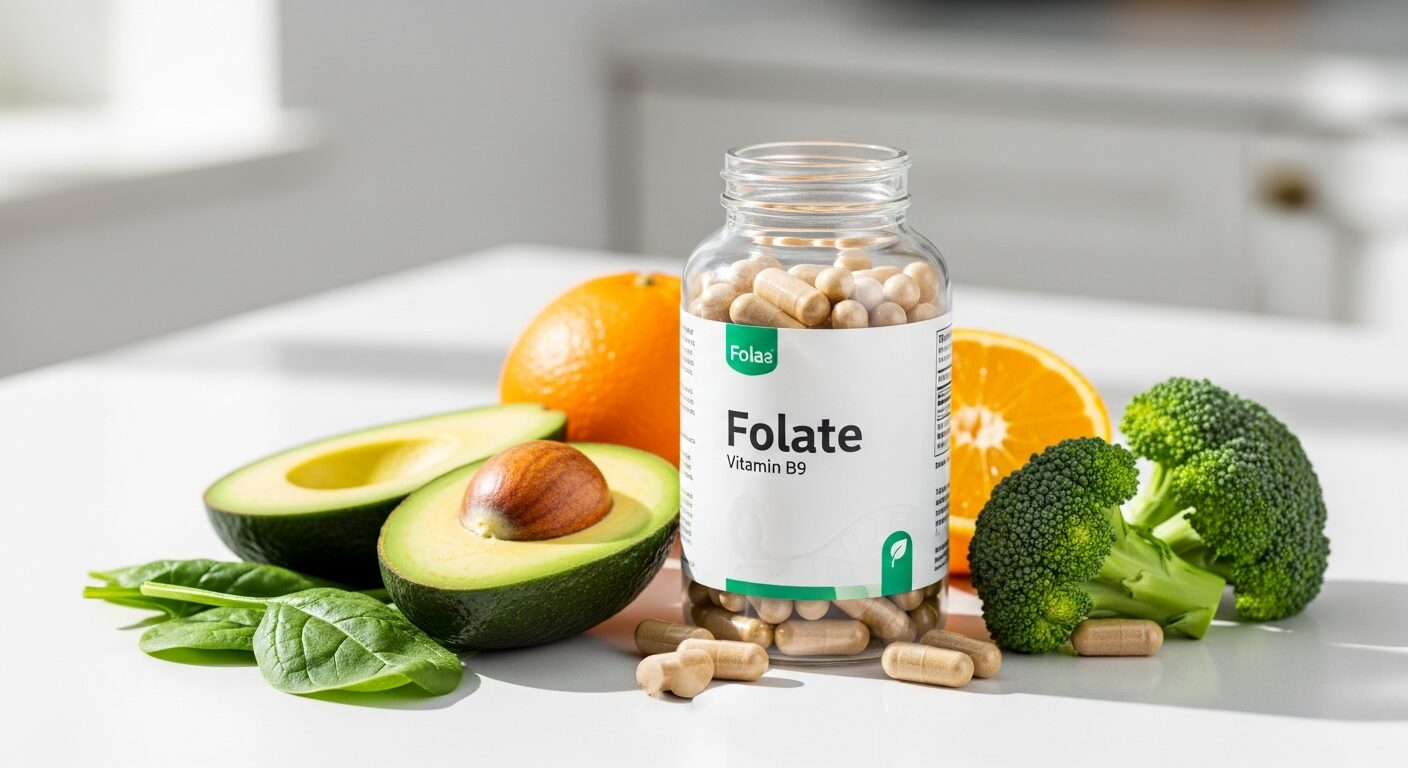
Folate, also known as vitamin B9, is one of the most crucial water-soluble vitamins your body needs for optimal health. This essential nutrient plays a fundamental role in DNA synthesis, red blood cell formation, and proper nervous system function. Despite its critical importance, folate deficiency remains surprisingly common worldwide, affecting millions of people and leading to serious health complications when left unaddressed.
Understanding folate’s role in your body, recognizing the signs of deficiency, and knowing how to maintain adequate levels through diet and supplementation can significantly impact your overall health and wellbeing. This comprehensive guide will explore everything you need to know about this vital nutrient.
Contents
- 1 Understanding Folate: The Science Behind Vitamin B9
- 2 Essential Functions of Folate in the Body
- 3 Recognizing Folate Deficiency
- 4 Daily Folate Requirements
- 5 Best Food Sources of Folate
- 6 Folate Supplementation: When and How
- 7 The Connection Between Folate and Pregnancy
- 8 Folate and Chronic Disease Prevention
- 9 Frequently Asked Questions
- 10 Medical Disclaimer
Understanding Folate: The Science Behind Vitamin B9
Folate is a naturally occurring B-vitamin found in various foods, particularly leafy green vegetables, legumes, and fortified grains. The term “folate” actually encompasses a group of chemically related compounds that share similar biological activity. When we consume folate from food sources, our bodies convert it into its active form, called 5-methyltetrahydrofolate (5-MTHF), which can then participate in essential metabolic processes.
The synthetic form of folate, known as folic acid, is commonly used in supplements and food fortification programs. While both forms provide vitamin B9 activity, they differ in how the body processes and utilizes them. Understanding this distinction is crucial for making informed decisions about supplementation and dietary choices.
Folate vs. Folic Acid: Key Differences
Natural folate from food sources is immediately bioavailable and easily absorbed by the body. In contrast, folic acid must undergo conversion processes in the liver before it can be utilized. Some individuals have genetic variations that affect their ability to efficiently convert folic acid to its active form, making natural folate or pre-converted supplements potentially more beneficial for these populations.
Essential Functions of Folate in the Body
Folate serves as a coenzyme in numerous metabolic pathways, making it indispensable for several critical bodily functions. Its primary roles include supporting cellular division, maintaining genetic stability, and ensuring proper nervous system development and function.
DNA Synthesis and Repair
One of folate’s most important functions is facilitating DNA synthesis and repair. Every time a cell divides, it must create an exact copy of its genetic material. Folate provides the necessary building blocks for this process, ensuring that new cells receive complete and accurate genetic information. Without adequate folate, cells cannot divide properly, leading to various health problems including anemia and increased cancer risk.
Red Blood Cell Formation
Folate works closely with vitamin B12 to produce healthy red blood cells in the bone marrow. These cells are responsible for carrying oxygen throughout your body. When folate levels are insufficient, the body produces abnormally large, immature red blood cells that cannot function effectively, resulting in megaloblastic anemia.
Nervous System Support
The nervous system requires folate for proper development and maintenance. During pregnancy, adequate folate levels are crucial for preventing neural tube defects in developing babies. Folic acid supplementation and the prevention of neural tube defects, 2013 demonstrates the significant impact of folate supplementation on reducing birth defects.
Homocysteine Metabolism
Folate plays a vital role in converting homocysteine, a potentially harmful amino acid, into methionine, an essential amino acid. Elevated homocysteine levels are associated with increased risk of cardiovascular disease, making folate’s role in this conversion process particularly important for heart health.
Recognizing Folate Deficiency
Folate deficiency can develop gradually, and symptoms may not become apparent until levels become severely depleted. Understanding the signs and symptoms of deficiency can help you identify potential problems early and take appropriate action.
Common Symptoms
Early signs of folate deficiency often include fatigue, weakness, and irritability. As the deficiency progresses, more serious symptoms may develop, including pale skin, shortness of breath, difficulty concentrating, and hair loss. Digestive issues such as diarrhea, loss of appetite, and weight loss may also occur.
Risk Factors
Certain populations are at higher risk for folate deficiency. Pregnant women have increased folate requirements to support fetal development. Individuals with digestive disorders, such as celiac disease or Crohn’s disease, may have difficulty absorbing folate from food. Heavy alcohol consumption interferes with folate absorption and metabolism, significantly increasing deficiency risk.
People taking certain medications, including some anticonvulsants, methotrexate, and sulfasalazine, may also be at increased risk due to drug-nutrient interactions that affect folate metabolism.
Daily Folate Requirements
The recommended daily allowance (RDA) for folate varies by age, sex, and life stage. Adult men and non-pregnant women require 400 micrograms of dietary folate equivalents (DFE) daily. Pregnant women need significantly more, with recommendations increasing to 600 micrograms DFE daily to support fetal development and prevent birth defects.
Breastfeeding women should consume 500 micrograms DFE daily to maintain adequate levels while supporting milk production. Children’s requirements range from 65 micrograms for infants to 400 micrograms for teenagers, reflecting their growing bodies’ needs for this essential nutrient.
Best Food Sources of Folate
A well-balanced diet can provide adequate folate for most people. Dark leafy greens such as spinach, kale, and romaine lettuce are excellent sources, with one cup of cooked spinach providing nearly 60% of the daily requirement.
Vegetables and Fruits
Asparagus, broccoli, Brussels sprouts, and avocados are rich in folate. Citrus fruits, including oranges and grapefruits, also contribute significant amounts. One medium orange provides approximately 10% of daily folate needs.
Legumes and Grains
Beans, lentils, and peas are outstanding folate sources. One cup of cooked lentils provides nearly 90% of daily requirements. Many grain products are fortified with folic acid, making bread, cereals, and pasta important dietary sources in many countries.
Protein Sources
Liver and other organ meats contain high folate concentrations, though they’re less commonly consumed in modern diets. Eggs, particularly the yolks, also provide meaningful amounts of this essential vitamin.
Folate Supplementation: When and How
While a balanced diet should provide adequate folate for most people, certain circumstances may warrant supplementation. Folate supplementation and cardiovascular disease prevention, 2015 highlights the potential benefits of supplementation in specific populations.
Who Should Consider Supplements
Pregnant women and those planning to become pregnant should take folate supplements to prevent neural tube defects. Individuals with absorption disorders, those taking interfering medications, or people with limited dietary variety may also benefit from supplementation.
Older adults may have increased needs due to decreased absorption efficiency, and individuals following restrictive diets might struggle to obtain adequate amounts from food alone.
Choosing the Right Supplement
When selecting a folate supplement, consider the form of folate used. Some people may benefit from supplements containing 5-MTHF, the active form of folate, rather than synthetic folic acid. This is particularly relevant for individuals with MTHFR gene mutations that affect folic acid conversion.
The Connection Between Folate and Pregnancy
Folate’s role in pregnancy cannot be overstated. Adequate folate levels before conception and during early pregnancy are crucial for preventing serious birth defects of the brain and spine, collectively known as neural tube defects.
Periconceptional folic acid supplementation and neural tube defects, 2011 provides compelling evidence for the importance of adequate folate status during the periconceptional period.
The neural tube forms very early in pregnancy, often before women know they’re pregnant, making preconception folate status critical. This is why healthcare providers recommend that all women of reproductive age maintain adequate folate levels, regardless of pregnancy plans.
Folate and Chronic Disease Prevention
Beyond its role in basic cellular functions and pregnancy, folate may play important roles in chronic disease prevention. Research suggests that adequate folate status may help reduce the risk of certain cancers, particularly colorectal cancer, by supporting proper DNA synthesis and repair mechanisms.
Folate’s involvement in homocysteine metabolism also makes it relevant for cardiovascular health. Elevated homocysteine levels are associated with increased risk of heart disease and stroke, and adequate folate intake helps maintain healthy homocysteine levels.
Some studies have also explored folate’s potential role in cognitive health and depression, though more research is needed to establish definitive connections in these areas.
🌿 Looking for Folate Supplements?
Browse top-rated Folate supplements, independently tested and recommended by our editorial team.
Affiliate disclosure: We may earn a small commission at no extra cost to you.
Frequently Asked Questions
Can you take too much folate?
While folate from natural food sources is generally safe even in large amounts, excessive synthetic folic acid from supplements can potentially mask vitamin B12 deficiency symptoms. The upper limit for adults is 1,000 micrograms daily from supplements and fortified foods.
How long does it take to correct folate deficiency?
With appropriate supplementation, folate levels typically normalize within 1-4 weeks. However, it may take several months for symptoms like anemia to fully resolve and for red blood cell populations to return to normal.
Do cooking methods affect folate content in foods?
Yes, folate is sensitive to heat, light, and air. Steaming or microwaving vegetables preserves more folate than boiling. Eating some folate-rich foods raw, such as leafy greens in salads, helps maximize intake.
Is folate deficiency common?
Folate deficiency rates have decreased significantly in countries with folic acid fortification programs. However, certain populations, including pregnant women, older adults, and those with absorption disorders, remain at higher risk.
Can medications interfere with folate absorption?
Yes, several medications can interfere with folate absorption or metabolism, including methotrexate, phenytoin, sulfasalazine, and trimethoprim-sulfamethoxazole. If you take these medications regularly, discuss folate status with your healthcare provider.
Medical Disclaimer
This article is for informational purposes only and does not constitute medical advice. The information provided should not be used to diagnose, treat, cure, or prevent any disease or health condition. Always consult with a qualified healthcare professional before making changes to your diet, supplement regimen, or treatment plan. Individual nutritional needs vary, and what works for one person may not be appropriate for another. Pregnant women, nursing mothers, and individuals with existing health conditions should be particularly cautious and seek professional guidance before taking folate supplements.