
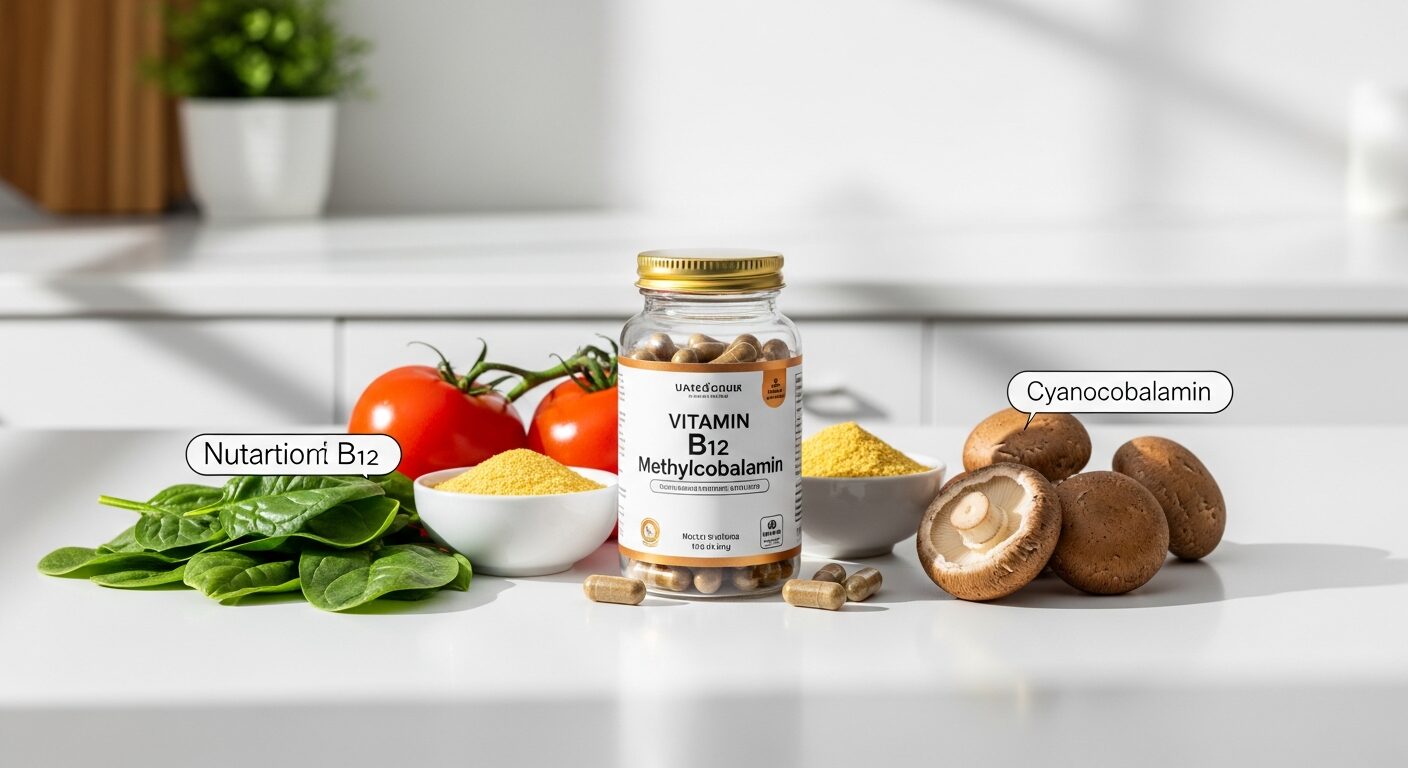
Vitamin B12 is one of the most crucial nutrients for optimal health, playing essential roles in nerve function, red blood cell formation, and DNA synthesis. However, not all B12 supplements are created equal. The two most common forms found in supplements are methylcobalamin and cyanocobalamin, each with distinct characteristics that may influence their effectiveness for different individuals.
Understanding the differences between these two forms can help you make an informed decision about which B12 supplement might work best for your specific needs. While both forms can effectively address B12 deficiency, their bioavailability, stability, and potential benefits vary significantly.
Contents
Understanding Vitamin B12 Forms
Vitamin B12, also known as cobalamin, exists in several forms in nature. The “cobalamin” portion refers to the cobalt-containing core structure that all B12 vitamins share. What distinguishes different forms of B12 is the molecule attached to this core structure.
In the human body, B12 must be converted into its active coenzyme forms – methylcobalamin and adenosylcobalamin – to perform its biological functions. These active forms are essential for processes like methylation reactions, which affect everything from mood regulation to cardiovascular health.
Natural vs. Synthetic Forms
Methylcobalamin occurs naturally in foods and represents one of the two bioactive forms of B12 in human physiology. It’s the form primarily found in animal products and is readily utilized by the body without requiring conversion.
Cyanocobalamin, on the other hand, is a synthetic form created for supplement manufacturing. It contains a cyanide molecule attached to the cobalamin core, which must be removed and replaced during the body’s conversion process to create usable B12.
Methylcobalamin: The Active Form
Methylcobalamin is often considered the premium form of B12 supplementation due to its immediate bioavailability. As one of the body’s active coenzyme forms, it can begin working immediately upon absorption without requiring metabolic conversion.
Benefits of Methylcobalamin
The primary advantage of methylcobalamin lies in its direct participation in methylation reactions. These processes are crucial for neurotransmitter synthesis, including serotonin and dopamine production, which directly impact mood and cognitive function.
Research suggests that methylcobalamin may be particularly beneficial for neurological health. A study examining B12 forms in neurological applications found that methylcobalamin showed superior nerve regeneration properties compared to cyanocobalamin, 2015. This makes it potentially more effective for addressing B12 deficiency-related neurological symptoms.
Additionally, methylcobalamin doesn’t require the body to process and eliminate cyanide, making it a cleaner option for individuals with compromised detoxification pathways or those who prefer to minimize synthetic additives.
Absorption and Bioavailability
Methylcobalamin demonstrates excellent absorption characteristics, particularly when administered sublingually or through injection. Its natural form allows for efficient cellular uptake and immediate utilization in metabolic processes.
However, methylcobalamin is less stable than cyanocobalamin and may degrade more quickly when exposed to light and heat. This requires more careful storage and may result in higher manufacturing costs.
Cyanocobalamin: The Traditional Standard
Cyanocobalamin has been the gold standard for B12 supplementation for decades, primarily due to its stability and cost-effectiveness. Most clinical studies examining B12 supplementation have used cyanocobalamin, providing extensive safety and efficacy data.
Advantages of Cyanocobalamin
The synthetic nature of cyanocobalamin provides several practical advantages. It’s highly stable, has a long shelf life, and is significantly less expensive to manufacture than methylcobalamin. These factors make it accessible to a broader population and ensure consistent potency over time.
Cyanocobalamin also demonstrates excellent absorption rates when taken orally, making it effective for most people with normal digestive function. Clinical trials have consistently shown that cyanocobalamin effectively raises serum B12 levels and corrects deficiency markers, 2011.
Conversion Requirements
Upon absorption, cyanocobalamin must undergo conversion to active forms within the body. This process requires the removal of the cyanide molecule and attachment of either a methyl group (creating methylcobalamin) or an adenosyl group (creating adenosylcobalamin).
For most healthy individuals, this conversion process occurs efficiently. However, people with genetic variations affecting B12 metabolism, liver dysfunction, or compromised detoxification capacity may experience reduced conversion efficiency.
Comparing Effectiveness and Safety
Both forms of B12 are generally safe and effective for addressing deficiency, but their performance may vary depending on individual circumstances and health goals.
Clinical Evidence
The majority of clinical research has focused on cyanocobalamin due to its historical use and stability in research settings. Studies consistently demonstrate its effectiveness in correcting B12 deficiency and improving related symptoms.
However, emerging research suggests that methylcobalamin may offer advantages in specific applications. A comparative study found that methylcobalamin produced more sustained increases in cellular B12 levels compared to cyanocobalamin in certain populations, 2018.
Safety Considerations
Both forms are considered extremely safe, with no established upper intake limits due to B12’s water-soluble nature. However, some individuals express concern about the cyanide content in cyanocobalamin.
It’s important to note that the amount of cyanide released from cyanocobalamin is minimal and well within safe limits established by regulatory agencies. For context, the cyanide exposure from B12 supplements is significantly lower than that from many common foods like almonds or cassava.
Who Should Choose Which Form?
The choice between methylcobalamin and cyanocobalamin often depends on individual health status, preferences, and specific goals.
Methylcobalamin May Be Preferred For:
- Individuals with neurological symptoms related to B12 deficiency
- Those with genetic variations affecting B12 metabolism (such as MTHFR mutations)
- People with liver dysfunction or compromised detoxification capacity
- Individuals seeking the most bioactive form regardless of cost
- Those following protocols focused on methylation support
Cyanocobalamin May Be Suitable For:
- General B12 deficiency correction in healthy individuals
- Budget-conscious consumers seeking proven effectiveness
- Those requiring long-term storage without refrigeration
- Individuals participating in clinical protocols using established forms
- People who prefer extensively researched supplement forms
Dosage and Administration Considerations
Regardless of the form chosen, proper dosage and administration are crucial for optimal results. B12 absorption involves complex mechanisms including intrinsic factor, which can become saturated at higher doses.
For oral supplementation, doses typically range from 250-1000 mcg daily for maintenance, while deficiency correction may require higher amounts. Sublingual administration may enhance absorption for both forms, particularly methylcobalamin.
Individuals with severe deficiency or absorption issues may benefit from professional guidance regarding injection therapy or high-dose oral protocols.
🌿 Looking for Vitamin B12 Supplements?
Browse top-rated Vitamin B12 supplements, independently tested and recommended by our editorial team.
Affiliate disclosure: We may earn a small commission at no extra cost to you.
Frequently Asked Questions
Is methylcobalamin really better than cyanocobalamin?
Methylcobalamin offers theoretical advantages due to its active form and immediate bioavailability, but both forms are effective for most people. The “better” choice depends on individual health status, genetic factors, and specific goals. Healthy individuals typically do well with either form, while those with neurological symptoms or metabolic variations may benefit more from methylcobalamin.
Can I switch between different forms of B12?
Yes, switching between B12 forms is generally safe and may even be beneficial for some individuals. If you’re currently using cyanocobalamin successfully, there’s no urgent need to switch unless you have specific reasons. However, if you’re experiencing suboptimal results or have concerns about conversion efficiency, trying methylcobalamin may be worthwhile.
How long does it take to see results from B12 supplementation?
Timeline varies depending on deficiency severity and individual factors. Energy improvements may be noticed within days to weeks, while neurological symptoms can take several months to improve. Blood level improvements typically occur within 4-6 weeks of consistent supplementation with either form.
Should I be concerned about the cyanide in cyanocobalamin?
The cyanide content in cyanocobalamin is extremely minimal and well within safe limits. Your body naturally processes and eliminates this small amount without difficulty. The cyanide exposure from B12 supplements is far less than what you’d get from eating almonds or other common foods. However, if you prefer to avoid synthetic additives entirely, methylcobalamin is a suitable alternative.
Which form is better for vegetarians and vegans?
Both forms are equally important for vegetarians and vegans since B12 is primarily found in animal products. The choice between forms should be based on the same factors as for omnivores: individual health status, budget, and preferences. Vegans with long-term deficiency might benefit from methylcobalamin’s immediate bioavailability, but cyanocobalamin is also highly effective and more budget-friendly for long-term supplementation.
Medical Disclaimer
This article is for informational purposes only and should not be considered medical advice. The information provided is not intended to diagnose, treat, cure, or prevent any disease. Always consult with a qualified healthcare professional before starting any supplementation regimen, especially if you have existing health conditions, take medications, or are pregnant or nursing. Individual responses to supplements may vary, and what works for one person may not work for another. If you suspect you have a vitamin B12 deficiency, seek proper medical evaluation and testing rather than self-diagnosing or self-treating.