
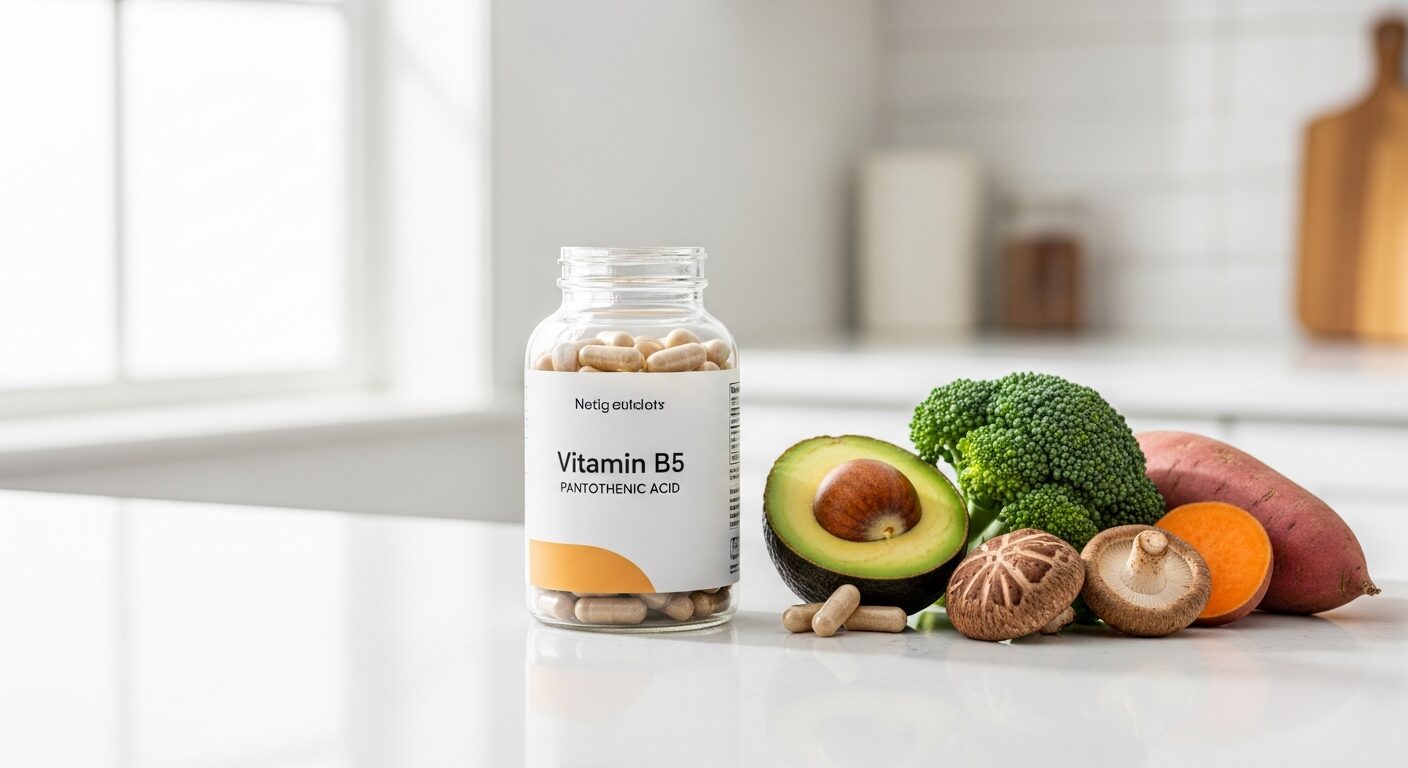
Pantothenic acid, more commonly known as vitamin B5, is a water-soluble vitamin that plays a crucial role in numerous metabolic processes throughout your body. As one of the eight B-complex vitamins, it serves as a building block for coenzyme A (CoA), which is essential for energy production, hormone synthesis, and cellular function. Despite being discovered nearly a century ago, vitamin B5 continues to be one of the most important yet underappreciated nutrients in human health.
Understanding vitamin B5 is particularly important because deficiency, while rare, can lead to significant health issues, and optimal levels support everything from skin health to stress management. This comprehensive guide will explore what makes vitamin B5 so essential, how it functions in your body, and why ensuring adequate intake should be a priority in your nutritional strategy.
Contents
What is Pantothenic Acid?
Pantothenic acid derives its name from the Greek word “pantos,” meaning “everywhere,” which aptly describes both its widespread presence in foods and its universal importance in cellular metabolism. This vitamin was first identified in the 1930s by researcher Roger Williams, who discovered its essential role in preventing certain deficiency diseases in animals.
Chemically, pantothenic acid is composed of pantoic acid linked to β-alanine. In the body, it’s converted into its active forms: coenzyme A and acyl carrier protein (ACP). These compounds are fundamental to cellular energy production and are involved in the synthesis and breakdown of carbohydrates, proteins, and fats.
Forms of Vitamin B5
Vitamin B5 exists in several forms, each with specific functions:
- Pantothenic acid: The basic form found naturally in foods
- Calcium pantothenate: The most common supplemental form, offering better stability
- Panthenol: Also known as provitamin B5, commonly used in cosmetic products
- Pantethine: The active form that’s directly converted to coenzyme A
How Pantothenic Acid Works in the Body
The primary function of vitamin B5 centers around its conversion to coenzyme A, often called the “metabolic hub” of the cell. This conversion process involves several steps and requires other B vitamins, highlighting the interconnected nature of B-complex nutrients.
Energy Metabolism
Coenzyme A is indispensable for the citric acid cycle (Krebs cycle), where your cells generate ATP—the universal energy currency. Without adequate vitamin B5, your body’s ability to extract energy from food becomes significantly impaired. Pantothenic acid supplementation has been shown to improve energy metabolism in both healthy individuals and those with metabolic disorders, 2005.
Hormone and Neurotransmitter Synthesis
Vitamin B5 is essential for synthesizing steroid hormones in the adrenal glands, including cortisol, aldosterone, and sex hormones. It also plays a role in producing acetylcholine, a neurotransmitter crucial for memory, learning, and muscle function. This connection explains why B5 deficiency can lead to fatigue, depression, and cognitive issues.
Fat and Cholesterol Metabolism
The vitamin is integral to fatty acid synthesis and breakdown. Coenzyme A combines with acetate to form acetyl-CoA, the starting point for cholesterol and fatty acid production. This process is vital for creating cell membranes, myelin sheaths around nerves, and various signaling molecules.
Health Benefits of Pantothenic Acid
Stress Response and Adrenal Function
One of vitamin B5’s most notable benefits is its support of adrenal gland function. During periods of stress, your body increases cortisol production, which requires additional coenzyme A. Adequate B5 levels help maintain healthy stress response and may reduce symptoms of chronic stress and fatigue.
Skin Health and Wound Healing
Pantothenic acid supports skin health through multiple mechanisms. It aids in the production of skin lipids, helps maintain the skin barrier function, and supports cellular repair processes. Clinical studies have demonstrated that pantothenic acid supplementation can improve skin hydration and reduce signs of aging, 2014.
Cardiovascular Support
Research suggests that vitamin B5 may help maintain healthy cholesterol levels. Pantethine, the active form of B5, has shown particular promise in supporting cardiovascular health by helping to optimize lipid profiles and supporting arterial health.
Cognitive Function
As a precursor to acetylcholine synthesis, vitamin B5 supports cognitive function, memory, and learning. Some studies suggest that adequate B5 levels may help protect against age-related cognitive decline and support overall brain health.
Daily Requirements and Dosage
The recommended daily intake for pantothenic acid varies by age and life stage:
- Adults (19+ years): 5 mg per day
- Pregnant women: 6 mg per day
- Breastfeeding women: 7 mg per day
- Children (1-3 years): 2 mg per day
- Children (4-8 years): 3 mg per day
- Adolescents (9-13 years): 4 mg per day
Therapeutic Dosages
For specific health concerns, higher doses may be beneficial under professional guidance. Studies using pantothenic acid for acne treatment have employed doses ranging from 10-20 grams daily, though such high doses should only be used under medical supervision, 2017.
Food Sources of Vitamin B5
Pantothenic acid is indeed found “everywhere” in the food supply, though processing and cooking can significantly reduce its content. The best dietary sources include:
Animal Sources
- Liver and organ meats (highest concentration)
- Chicken and turkey
- Beef and pork
- Fish, especially salmon and tuna
- Eggs
- Dairy products
Plant Sources
- Avocados
- Mushrooms
- Sweet potatoes
- Legumes and lentils
- Whole grains
- Broccoli and other cruciferous vegetables
Deficiency Symptoms and Risk Factors
Pantothenic acid deficiency is rare in developed countries due to its widespread availability in foods. However, certain populations may be at higher risk:
Symptoms of Deficiency
- Fatigue and weakness
- Irritability and restlessness
- Sleep disturbances
- Stomach pain and cramping
- Numbness and burning sensations in hands and feet
- Muscle cramps
- Increased susceptibility to infections
Risk Factors
- Chronic alcoholism
- Severe malnutrition
- Certain genetic disorders affecting B5 metabolism
- Chronic stress (increases B5 requirements)
- Gastrointestinal disorders affecting absorption
Supplementation Considerations
While most people can meet their vitamin B5 needs through diet alone, supplementation may be beneficial for certain individuals. Vitamin B5 supplements are generally well-tolerated, with few reported side effects even at higher doses.
When to Consider Supplementation
- Chronic stress or adrenal fatigue
- Skin conditions like acne
- High cholesterol levels
- Frequent infections or poor wound healing
- Vegetarian or vegan diets with limited variety
Interactions and Safety
Vitamin B5 is generally safe, but high doses (over 10 grams daily) may cause digestive upset or diarrhea. It works synergistically with other B vitamins, so taking a B-complex supplement is often more beneficial than isolated B5 supplementation.
🌿 Looking for Vitamin B5 Supplements?
Browse top-rated Vitamin B5 supplements, independently tested and recommended by our editorial team.
Affiliate disclosure: We may earn a small commission at no extra cost to you.
Frequently Asked Questions
Can you take too much vitamin B5?
Vitamin B5 is water-soluble, so excess amounts are typically excreted in urine. However, extremely high doses (over 10 grams daily) may cause digestive issues including diarrhea and stomach upset. No upper limit has been established, but moderate supplementation is generally recommended.
Does vitamin B5 help with acne?
Some studies suggest that high-dose vitamin B5 supplementation may help reduce acne by regulating oil production and supporting skin health. However, the doses used in research are very high and should only be attempted under medical supervision.
Is vitamin B5 better absorbed from food or supplements?
Both food and supplement forms are well-absorbed, though calcium pantothenate (the common supplement form) may have slightly better bioavailability than the pantothenic acid found naturally in foods. Taking supplements with food can improve absorption and reduce stomach upset.
How long does it take to correct a vitamin B5 deficiency?
Because vitamin B5 is water-soluble and rapidly utilized by the body, improvements in deficiency symptoms can often be seen within days to weeks of adequate supplementation, depending on the severity of the deficiency and individual factors.
Should I take vitamin B5 alone or with other B vitamins?
B vitamins work synergistically, so taking a B-complex supplement is often more beneficial than isolated B5 supplementation. This approach helps maintain proper ratios and prevents potential imbalances that could occur with single vitamin supplementation.
Medical Disclaimer
The information provided in this article is for educational purposes only and is not intended as medical advice, diagnosis, or treatment. Always consult with a qualified healthcare professional before starting any new supplement regimen, especially if you have existing health conditions or are taking medications. Individual nutritional needs may vary, and what works for one person may not be appropriate for another. If you suspect you have a vitamin B5 deficiency or any health condition, please seek professional medical evaluation and guidance.