
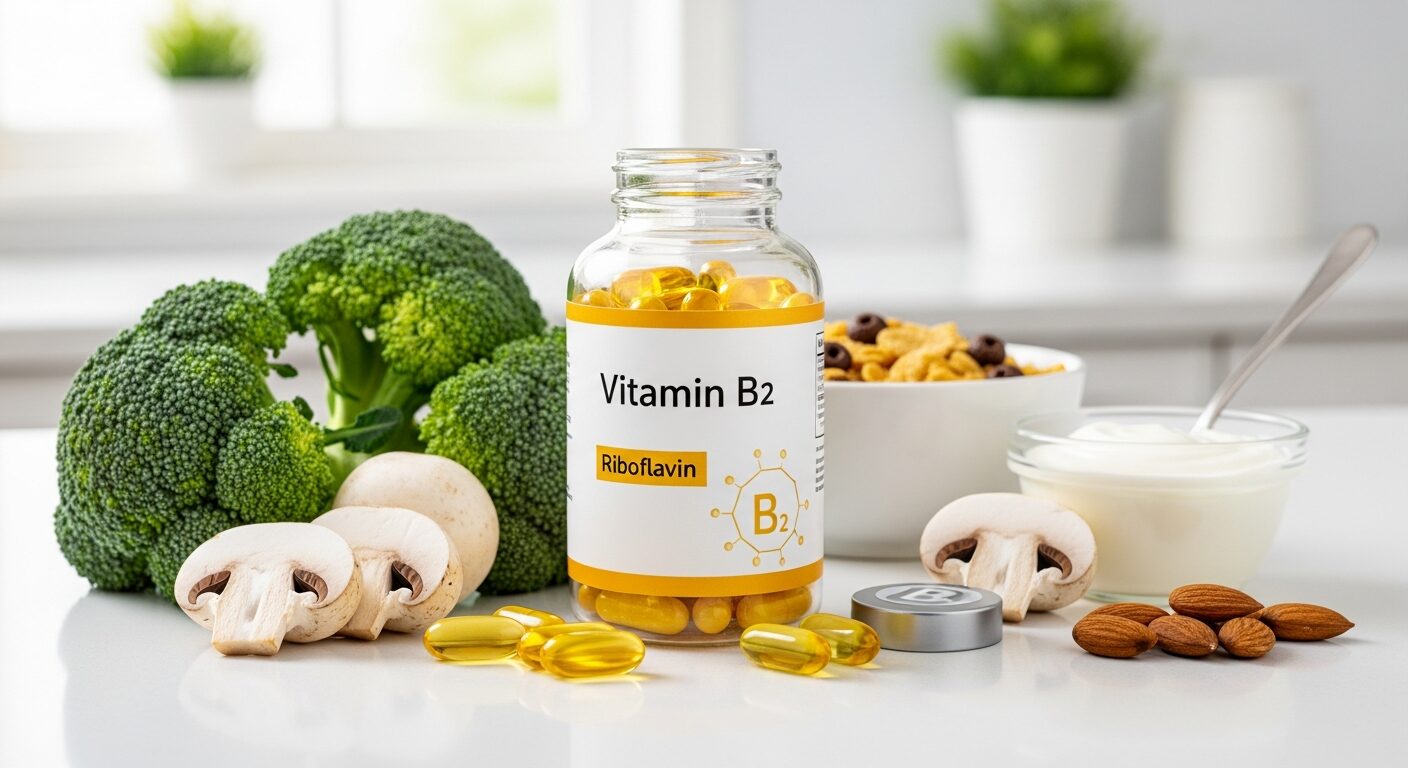
Riboflavin, commonly known as vitamin B2, is one of eight essential B-vitamins that plays a crucial role in maintaining optimal health. This water-soluble vitamin serves as a vital component in energy production, cellular function, and antioxidant protection throughout the body. Despite its importance, many people are unaware of riboflavin’s significant impact on their daily well-being and may not be getting adequate amounts through their diet alone.
Understanding riboflavin’s functions, sources, and benefits can help you make informed decisions about your nutritional needs and supplementation strategies. This comprehensive guide explores everything you need to know about vitamin B2, from its biochemical mechanisms to practical recommendations for optimizing your intake.
Contents
What is Riboflavin?
Riboflavin is a yellow-orange colored vitamin that belongs to the B-complex family. Chemically known as 7,8-dimethyl-10-ribityl-isoalloxazine, it was first discovered in 1922 and isolated in 1933. The vitamin gets its name from its chemical structure, which contains a ribitol sugar molecule attached to a flavin compound.
As a water-soluble vitamin, riboflavin cannot be stored in large quantities in the body, making regular intake essential. The body absorbs riboflavin in the small intestine and converts it into two active coenzyme forms: flavin mononucleotide (FMN) and flavin adenine dinucleotide (FAD). These coenzymes are fundamental to numerous metabolic processes.
Chemical Properties and Stability
Riboflavin is relatively stable in acidic conditions and when heated, but it’s highly sensitive to light and alkaline environments. This light sensitivity is why milk was traditionally stored in dark containers, and it explains why riboflavin can be easily destroyed during food processing and storage. The vitamin’s distinctive yellow color is responsible for the bright yellow appearance of B-complex supplements and can cause urine to turn bright yellow when consumed in larger amounts.
How Riboflavin Functions in the Body
The primary role of riboflavin centers around its function as a precursor to the coenzymes FMN and FAD. These coenzymes participate in numerous enzymatic reactions throughout the body, making riboflavin essential for proper cellular function.
Energy Metabolism
Riboflavin plays a central role in the body’s energy production systems. The coenzymes derived from riboflavin are integral components of the electron transport chain, which generates ATP (adenosine triphosphate) – the body’s primary energy currency. This process occurs in the mitochondria, often called the powerhouses of cells.
Additionally, riboflavin is essential for metabolizing carbohydrates, fats, and proteins. It helps break down these macronutrients and convert them into usable energy, supporting everything from basic cellular functions to physical performance.
Antioxidant Protection
One of riboflavin’s most important functions involves supporting the body’s antioxidant defense system. The vitamin is crucial for regenerating glutathione, one of the body’s most powerful antioxidants. Riboflavin and health: A review of recent human research, 2005 demonstrates how adequate riboflavin levels are necessary for maintaining optimal antioxidant status and protecting cells from oxidative damage.
Other Vital Functions
Riboflavin supports various other physiological processes, including iron metabolism, immune function, and the metabolism of other B-vitamins, particularly B6, folate, and niacin. It also plays a role in maintaining healthy skin, eyes, and nervous system function.
Health Benefits of Riboflavin
Research has identified numerous health benefits associated with adequate riboflavin intake, ranging from basic physiological support to specific therapeutic applications.
Migraine Prevention
One of the most well-researched therapeutic uses of riboflavin is in migraine prevention. High-dose riboflavin treatment of migraine: an open pilot study, 1998 showed that high-dose riboflavin supplementation (400mg daily) significantly reduced migraine frequency and severity in many participants. The mechanism is thought to involve improved mitochondrial function in brain cells.
Eye Health
Riboflavin is essential for maintaining healthy vision and may help prevent certain eye conditions. The vitamin supports the health of the cornea and may reduce the risk of cataracts. Its role in antioxidant protection is particularly important for the eyes, which are constantly exposed to light-induced oxidative stress.
Skin and Tissue Health
Adequate riboflavin levels are crucial for maintaining healthy skin, hair, and mucous membranes. The vitamin supports cellular repair and regeneration, helping to maintain the integrity of these tissues. Riboflavin deficiency can lead to skin disorders, including dermatitis and cracked lips.
Cardiovascular Support
Emerging research suggests that riboflavin may support cardiovascular health through its role in homocysteine metabolism and blood pressure regulation. Some studies indicate that riboflavin supplementation may help reduce blood pressure in individuals with certain genetic variations.
Food Sources of Riboflavin
Riboflavin is naturally found in a variety of foods, though the amounts can vary significantly. Understanding good dietary sources can help ensure adequate intake without necessarily requiring supplementation.
Animal-Based Sources
Animal products are among the richest sources of riboflavin. Organ meats, particularly liver, contain the highest concentrations. Other excellent sources include:
- Beef liver (3.5 oz): approximately 3.0mg
- Lamb kidney (3.5 oz): approximately 2.3mg
- Milk and dairy products (1 cup): 0.3-0.4mg
- Eggs (1 large): approximately 0.3mg
- Lean meats and poultry: 0.1-0.3mg per serving
Plant-Based Sources
While generally lower in riboflavin than animal products, several plant foods provide meaningful amounts:
- Fortified cereals and grains: 0.4-1.7mg per serving
- Almonds (1 oz): approximately 0.3mg
- Spinach (1 cup cooked): approximately 0.4mg
- Mushrooms (1 cup): 0.2-0.4mg
- Avocados (1 medium): approximately 0.2mg
Factors Affecting Riboflavin Content
The riboflavin content in foods can be significantly affected by processing, storage, and cooking methods. Light exposure, alkaline conditions, and prolonged cooking can reduce riboflavin levels. To maximize intake, store riboflavin-rich foods in dark containers and use gentle cooking methods when possible.
Recommended Daily Intake and Dosage
The recommended daily allowance (RDA) for riboflavin varies by age, sex, and life stage. These recommendations are designed to meet the needs of most healthy individuals.
Standard RDA Guidelines
- Adult men (19+ years): 1.3mg daily
- Adult women (19+ years): 1.1mg daily
- Pregnant women: 1.4mg daily
- Breastfeeding women: 1.6mg daily
- Children (1-3 years): 0.5mg daily
- Children (4-8 years): 0.6mg daily
Therapeutic Dosages
For specific therapeutic purposes, such as migraine prevention, much higher doses may be recommended under medical supervision. Riboflavin supplementation for the reduction of migraine frequency, 2014 supports the use of 400mg daily for migraine prevention, though such high doses should only be taken under healthcare provider guidance.
Riboflavin Deficiency
While severe riboflavin deficiency is relatively rare in developed countries due to food fortification, mild deficiency may be more common than previously thought, particularly in certain populations.
Symptoms and Signs
Riboflavin deficiency, known as ariboflavinosis, can cause various symptoms including:
- Cracked and sore lips (cheilosis)
- Inflammation of the tongue (glossitis)
- Skin disorders, particularly around the nose and mouth
- Eye irritation and sensitivity to light
- Fatigue and weakness
- Anemia
- Impaired wound healing
Risk Factors for Deficiency
Certain groups are at higher risk for riboflavin deficiency, including vegetarians and vegans (due to lower dietary intake), elderly individuals (due to reduced absorption and intake), people with chronic illnesses, and those taking certain medications that interfere with riboflavin absorption or metabolism.
Riboflavin Supplementation
For many people, a balanced diet provides adequate riboflavin. However, supplementation may be beneficial for certain individuals or specific health goals.
Types of Supplements
Riboflavin supplements are available in various forms, including individual riboflavin capsules or tablets, B-complex vitamins, and multivitamin formulations. The most common supplemental form is riboflavin itself, though some products use riboflavin-5′-phosphate, which is the active coenzyme form.
Absorption and Bioavailability
Riboflavin absorption is limited and occurs primarily in the small intestine. The body can only absorb a certain amount at one time, so taking large doses may not significantly increase tissue levels. This is why divided doses throughout the day may be more effective than single large doses.
Safety and Side Effects
Riboflavin is generally considered very safe, with no established upper intake level. Because it’s water-soluble, excess amounts are typically excreted in urine. The most common “side effect” is bright yellow urine, which is harmless and indicates that the body is processing the vitamin. Very high doses may occasionally cause diarrhea or increased urination.
🌿 Looking for Vitamin B2 Supplements?
Browse top-rated Vitamin B2 supplements, independently tested and recommended by our editorial team.
Affiliate disclosure: We may earn a small commission at no extra cost to you.
Frequently Asked Questions
Can you take too much riboflavin?
Riboflavin toxicity is extremely rare because it’s water-soluble and excess amounts are excreted in urine. However, very high doses (several hundred milligrams) may cause minor gastrointestinal upset in some individuals. The bright yellow urine that results from riboflavin supplementation is normal and harmless.
Why does riboflavin make urine bright yellow?
The bright yellow color occurs because riboflavin is a naturally yellow compound. When you consume more than your body needs, the excess is filtered out by the kidneys and excreted in urine, giving it a distinctive fluorescent yellow appearance. This is completely normal and indicates your body is processing the vitamin.
Is riboflavin better absorbed with food?
Yes, riboflavin is generally better absorbed when taken with food. Food slows the transit time through the intestines, allowing for better absorption. Additionally, taking riboflavin with other B-vitamins may enhance its utilization, as these vitamins work synergistically in many metabolic processes.
Can riboflavin help with fatigue?
Riboflavin plays a crucial role in energy metabolism, so adequate levels are essential for optimal energy production. If fatigue is related to riboflavin deficiency, supplementation may help improve energy levels. However, fatigue has many potential causes, so it’s important to consult with a healthcare provider for persistent tiredness.
How long does it take to see benefits from riboflavin supplementation?
The timeline for experiencing benefits depends on the reason for supplementation and individual factors. For migraine prevention, studies suggest it may take 2-3 months of consistent supplementation to see significant effects. For correcting deficiency symptoms, improvements may be noticed within a few weeks of adequate intake.
Medical Disclaimer
This article is for informational purposes only and is not intended to replace professional medical advice, diagnosis, or treatment. Always consult with a qualified healthcare provider before starting any new supplement regimen, especially if you have existing health conditions or are taking medications. The information provided here should not be used to diagnose or treat any health condition. Individual responses to supplements may vary, and what works for one person may not work for another.